
The cookies come out of the oven puffed, pale and domed. They smell right. They taste fine. But they are soft all the way through, with a crumb rather than a chew, and what is on the tray is unmistakably a batch of small muffin tops wearing cinnamon sugar.
Nobody did anything wrong except add pumpkin. Canned pumpkin puree is around ninety percent water, and half a cup of it drops something close to four tablespoons of extra liquid into a dough that was engineered around a fixed amount. Water turns to steam in a hot oven, steam inflates, and an inflated cookie is a cake.
The fix is one extra step that takes eight minutes and happens before anything else. Everything after that is adjusting the fat and the sugar to match what the pumpkin took away.
- The problem: canned pumpkin is roughly 90 percent water
- The step: drain or reduce 1 cup down to about half a cup
- Fat: melted butter, not creamed, and no egg at all
- Sugar: granulated, not brown, if you want the crackled top
- Leavening: cream of tartar and baking soda, in that pairing
- Bake: 350 degrees, 11 to 13 minutes, pulled looking underdone
The cookie you got instead of the one you wanted
A chewy cookie depends on a fairly narrow set of conditions. Enough sugar to stay soft, enough fat to spread, enough structure to hold, and not much free water. Chew comes from sugar and fat interacting with a modest amount of gluten, and it disappears the moment the dough gets wet.
Add pumpkin and three things happen at once. The dough gains water, which generates steam and lift. It gains fiber and pectin, which hold onto that water and produce a soft, slightly gummy crumb. And it gains volume without gaining fat, so the ratio that made the cookie spread is diluted.
The result is not a failed cookie so much as a different baked good that happens to be the shape of one. It goes stale faster, too, because the extra moisture migrates out to the surface and softens whatever crust the sugar managed to form.
Canned pumpkin is mostly water
A cup of canned pumpkin puree weighs about 245 grams and the overwhelming majority of that is water. Squeeze it in a cloth and a startling amount runs out, and what remains has an intensely orange color and a flavor several times more concentrated than what went in.
That concentration is the part nobody expects. Draining does not weaken the pumpkin flavor, it strengthens it, because everything except the water stays behind. A cookie made with drained puree tastes more of pumpkin than one made with twice as much of it straight from the can.
Brands vary in how wet they are, which is why the same recipe can behave differently between one can and another. If a puree looks loose enough to pour, it needs more draining than one that holds a spoon upright.
Draining, and the two ways to do it
The paper towel method is the fast one. Spread a cup of puree in an even layer about a quarter inch thick across three or four sheets of paper towel on a plate, press another sheet on top, and leave it for ten minutes. Peel it up, scrape it off, and repeat once with fresh towels if it still looks wet.
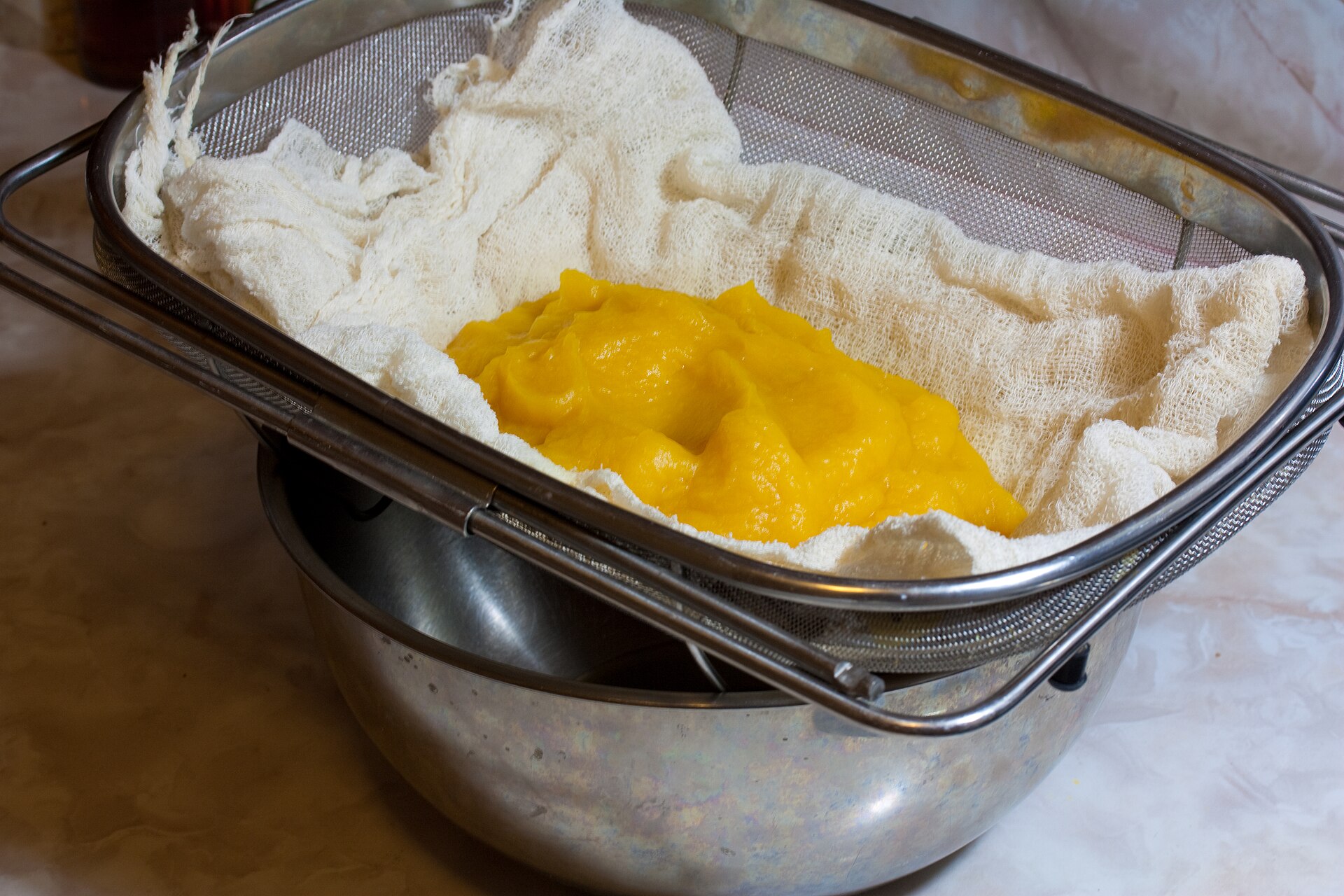
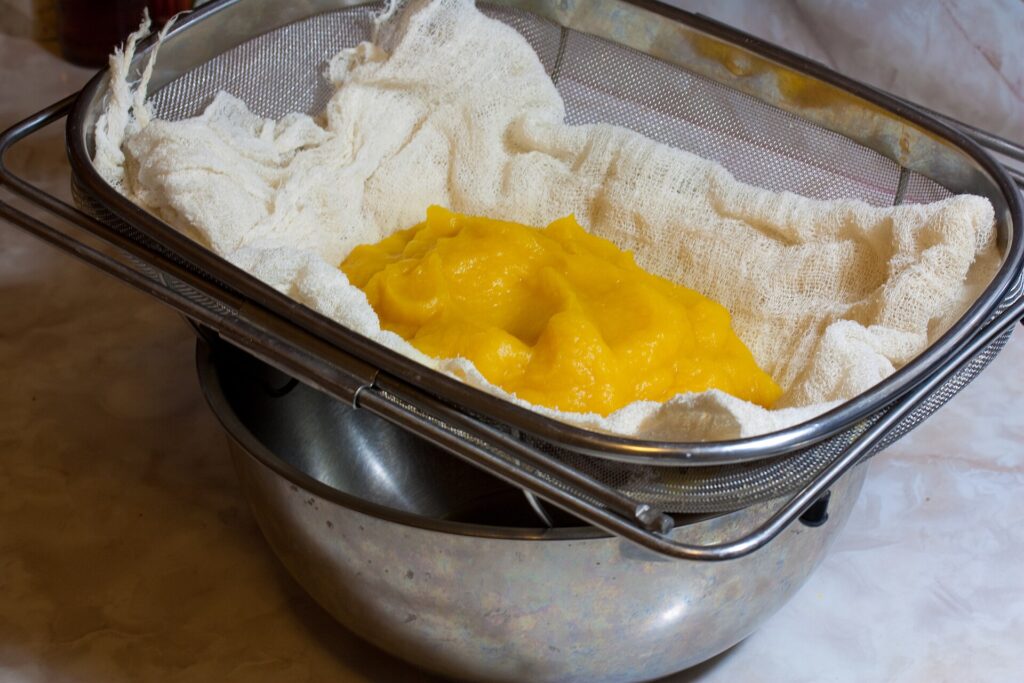
The sieve method is cleaner and slower. Line a fine sieve with a double layer of cheesecloth, spoon the puree in, set it over a bowl and refrigerate for one to two hours. It works unattended and produces a slightly drier result, which suits anyone who plans ahead.
Either way, the target is a cup reduced to roughly half a cup, or about 120 grams. Weigh it if you can, since eyeballing the reduction is the step where the whole exercise usually goes soft.
Reducing it in a pan instead, which tastes better
The third method is the one worth learning. Put the cup of puree in a wide skillet over medium heat and stir it constantly for six to eight minutes. It spits, so a splatter screen or a long spoon is sensible.
What comes out is not just drier, it is browner and deeper, because the sugars in the pumpkin caramelize slightly against the hot pan. The flavor moves from vegetal toward something closer to roasted squash, which is the direction a cookie wants.
Stop when it has visibly darkened and pulls away from the pan in a mass, then spread it on a plate and cool it completely. Warm pumpkin added to melted butter and sugar starts dissolving the sugar early and makes the dough greasy. Fifteen minutes in the refrigerator sorts it out.
What to change once the water is gone
Two adjustments come with the drained puree and both are subtractions.
The first is the egg. Pumpkin is an effective binder on its own, full of fiber and starch, and a standard cookie recipe that keeps both the pumpkin and the egg ends up with too much moisture and too much protein. Leaving the egg out entirely gives a denser, chewier cookie and has the side benefit of removing the raw egg from the bowl.
The second is the creaming step. Creamed softened butter and sugar whips air into the dough, which is what you want in a cake and precisely what you are trying to avoid here. Melted butter, cooled slightly, mixed with the sugar by hand, gives a denser dough that spreads instead of rising.
Melted butter also brings its own small water content, around fifteen percent, which is one more reason the pumpkin has to give up most of its own before it goes in.
Why brown sugar makes this worse
Brown sugar is the default in most autumn baking and it is the wrong call here. It contains molasses, which is hygroscopic, meaning it attracts and holds water, and it makes doughs softer and cakier. In a cookie that is already fighting excess moisture, it pushes in exactly the wrong direction.
Granulated sugar does the opposite. It dissolves into the melted butter, helps the dough spread across the sheet, and recrystallizes at the surface as the cookie cools, which is what produces a thin crisp shell and the fissures across the top.
| Sugar | Spread | Surface | Texture |
|---|---|---|---|
| All granulated | Good | Crackled and shiny | Crisp edge, chewy middle |
| Three quarters granulated | Moderate | Slightly crackled | Softer, still chewy |
| Half and half | Limited | Smooth and matte | Soft throughout |
| All brown | Very little | Domed, no cracks | Cakey, the muffin top |
A tablespoon or two of brown sugar for flavor is fine and will not undo the structure. Swapping half the sugar is what turns the tray back into what you were trying to escape.
Cream of tartar, and where the crackle comes from
The thing that makes a snickerdoodle a snickerdoodle rather than a sugar cookie rolled in cinnamon is cream of tartar. It is an acid, chemically potassium bitartrate, and it does two jobs.
It reacts with baking soda to produce lift, quickly and early in the bake, which is what gives the cookie its initial puff before it collapses back into a cracked surface. And it interferes with sugar crystallizing into large crystals, which keeps the interior chewy rather than sandy. It also contributes the faint tang that people recognize without being able to name.
Two teaspoons of cream of tartar to one teaspoon of baking soda is the working pairing for a batch using two and a half cups of flour. Substituting baking powder for both is possible and produces a cookie that is noticeably rounder, milder and less cracked, since baking powder releases its gas more gradually.
Pumpkin is mildly acidic itself, which nudges the reaction along slightly. It is not enough to change the ratio, but it is enough that the dough starts working as soon as it is mixed, which is an argument for getting the tray into the oven rather than leaving the bowl on the counter for an hour.
Pumpkin snickerdoodles, the working ratio
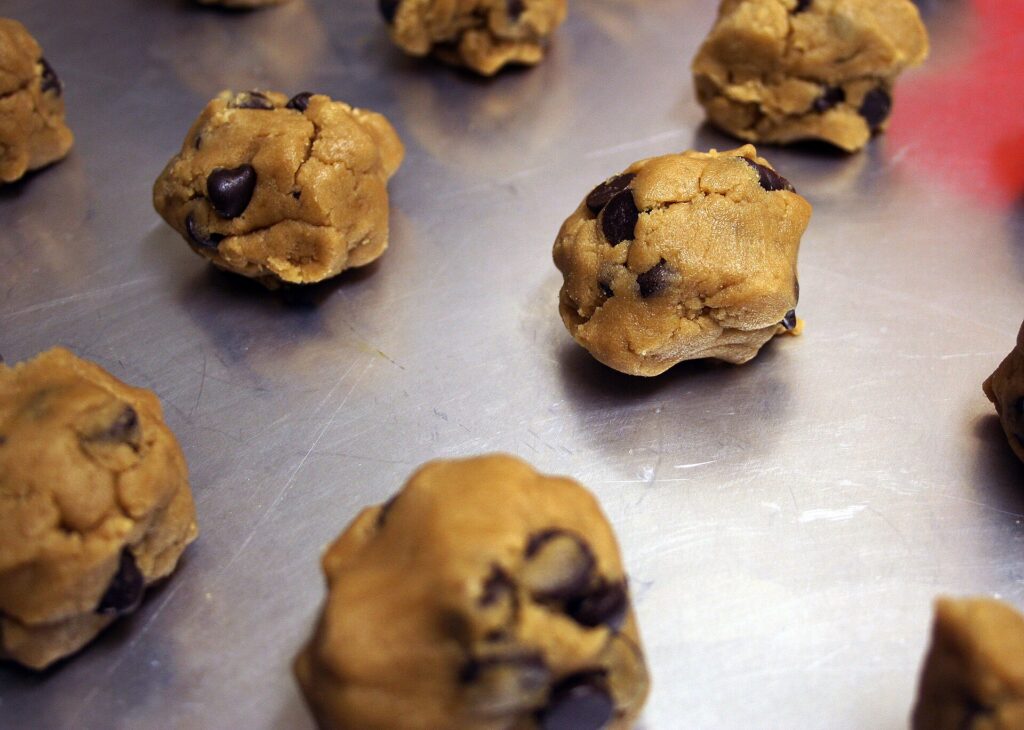
This makes about twenty-four cookies. The pumpkin snickerdoodles that come out of it spread to roughly three inches, crack across the top, and stay chewy for two days.
- Reduce 1 cup of canned pumpkin puree to about half a cup by pan or by draining, then cool it completely.
- Whisk together 300 grams of all-purpose flour, 2 teaspoons cream of tartar, 1 teaspoon baking soda, half a teaspoon fine salt and 1 and a half teaspoons cinnamon.
- In a second bowl, stir 170 grams of melted and cooled butter into 250 grams of granulated sugar until it looks like wet sand.
- Add the cooled pumpkin and 1 teaspoon of vanilla and mix until uniform. No egg.
- Fold the dry into the wet with a spatula until the last streak of flour disappears, then stop. Overmixing here builds gluten and takes the tenderness out.
- Chill the dough for 30 minutes. It will be soft, and chilling firms the butter so the cookies do not spread into one sheet.
- Roll into balls of about 40 grams and roll each one in a mix of a quarter cup granulated sugar and 2 teaspoons cinnamon, coating it heavily.
- Bake at 350 degrees for 11 to 13 minutes, spaced three inches apart, until the edges are set and the centers still look slightly underdone.
- Rap the pan hard on the counter as they come out, then cool on the sheet for five minutes before moving them.
Step eight is where people lose the chew. A cookie that looks fully baked in the oven is overbaked by the time it cools, because the residual heat in the tray keeps cooking it for several minutes.
Chilling, scooping, and the pan bang
Thirty minutes of chilling is the minimum and two hours is better. Cold butter melts more slowly in the oven, which means the structure sets before the cookie has finished spreading, and that is what produces a thick edge with a chewy center rather than a thin uniform disc.
Scoop by weight if the batch is going anywhere it will be compared. Forty grams per ball is a generous cookie and a consistent one, and consistency is what makes the bake time reliable across the tray.
The pan bang is not a gimmick. Dropping the hot tray flat onto the counter as it comes out knocks the air out of the risen center and pulls the surface into ridges, which deepens the crackle and improves the texture. It works on most drop cookies and it is the same corrective logic behind the usual cookie failures and their fixes.
Pumpkin pie filling is not pumpkin puree
The two cans sit side by side and look alike. One says pumpkin, or 100 percent pumpkin, and contains nothing else. The other says pumpkin pie filling or pumpkin pie mix and contains sugar, spices and often thickeners already.
Using the filling in this recipe gives a cookie that is too sweet, oddly spiced and structurally strange, and it cannot be corrected by reducing the sugar because the thickeners behave differently in a dough. Read the ingredient list rather than the front of the label.
Homemade puree from a roasted squash works and is wetter than canned, so it needs more reduction, usually down to about a third of its original volume. Sugar pumpkins and kabocha both give better flavor than a carving pumpkin, which is bland and stringy and not worth the oven time.
The rest of the can, and how to keep it
A 15 ounce can holds about a cup and three quarters, so a batch of these leaves roughly three quarters of a cup behind. That leftover does not stay in the can.
Transfer it to a covered container the moment the can is open. Metal cans are lined and the lining is not designed for storage after opening, and an open can in the refrigerator picks up flavors and can leave a metallic taste. Refrigerated in a sealed container it holds five to seven days.
Freezing is the better answer. Half-cup portions in a muffin tin, frozen solid, then transferred to a bag, keep about three months and thaw in an hour on the counter. Frozen and thawed puree weeps liquid, which is irrelevant here since it was getting drained anyway.
One thing not to attempt: canning pumpkin puree at home. Pureed pumpkin is dense and low in acid, and heat cannot reliably reach the center of a jar of it, which is the classic setup for botulism. The tested home method for pumpkin is pressure canning it in cubes, never mashed or pureed, and the puree gets made after the jar is opened. Freezing sidesteps the whole question and is what most people should do with a glut of autumn squash.
Five things that go wrong, and the cause
- Domed and cakey. Puree not drained, or drained and then measured before it had reduced far enough.
- Spread into one sheet. Dough not chilled, or butter still warm when the pumpkin went in.
- No cracks on top. Brown sugar in place of granulated, or baking powder instead of the cream of tartar and soda pairing.
- Tough and dry. Overmixed after the flour went in, or two extra minutes in the oven.
- Tastes faintly of nothing. Too much pumpkin by volume and too little by concentration, which is what happens when the water stays in.
Store them in an airtight container at room temperature for up to three days, with a piece of parchment between layers. They freeze well baked, and the dough balls freeze even better: roll them in the cinnamon sugar, freeze on a tray, bag them, and bake from frozen with two extra minutes. And keep the raw dough out of anybody’s mouth, since raw flour is not a ready-to-eat ingredient regardless of whether there is an egg in the bowl. A little restraint there is worth the same attention as any upgrade to a baked good.
Frequently Asked Questions
Can I skip the draining and just add more flour?
It compensates for the moisture and it does not fix the texture. The extra flour makes the cookie drier and more bread-like while the pumpkin keeps it soft, so you end up with something both dry and cakey. Removing the water is the only version that works.
How much does a cup of puree lose when reduced?
Roughly half its volume and slightly more than half its weight, going from about 245 grams to around 115 to 125. It reduces faster in a wide pan than a narrow one, so a skillet beats a saucepan by several minutes.
Why did my cookies taste bitter?
Almost always too much baking soda, or soda that got measured heaped. Soda that is not fully neutralized by acid leaves a soapy, metallic edge. Level the spoon and make sure the cream of tartar went in at the full two teaspoons.
Can I use pumpkin pie spice instead of cinnamon?
Yes, in the dough. In the rolling sugar, straight cinnamon is better, because the clove and allspice in a blend go bitter at the surface where the sugar caramelizes. A blend inside and cinnamon outside is the arrangement that tastes best.
Do these keep as well as regular snickerdoodles?
Not quite. Even drained, there is more moisture here, so they are best on day one and good on day two, and by day three the surface has softened and the crackle has gone. Freezing the dough and baking a few at a time solves it.
Reduce a cup of puree in a pan tonight, taste a spoonful of it against a spoonful straight from the can, and the rest of this stops being a rule to follow. The difference in flavor is enough on its own, and the cookie texture is the bonus.