

A bunch of kale and two cans of beans cost less than a sandwich and sit in the house for a week without complaining. The problem is that most soups built from that shopping list taste like hot bean water, and the usual fix is a splash of cream that nobody actually wanted in there.
There is a better fix and it takes ninety seconds. Scoop out about a cup of the beans, mash them against the side of a bowl with a fork, and stir the paste back into the pot. The starch does what cream was going to do, only it tastes like beans instead of like dairy, and the soup thickens while you are cutting the kale.
Twenty minutes, one pot, and a parmesan rind if there happens to be one in the refrigerator door. The rind is optional in the sense that the soup works without it and is noticeably better with it.
- Total time: 20 minutes, of which 6 are chopping
- The pot: anything that holds three quarts
- The cans: two 15 ounce cans of cannellini, drained and rinsed
- The bunch: one bunch of lacinato kale, ribs off
- The thickener: one cup of the beans, mashed
- Feeds: two as a main, four as a first course
Twenty minutes, and where each one goes
The claim needs to survive a stopwatch, so here is the accounting. Two minutes to get the pot hot and the onion sliced, five minutes of the onion softening while the kale gets stripped and the beans get rinsed, one minute for garlic and chili flakes.
Then the liquid goes in, and that is the long stretch: eight minutes of simmering, of which the last four are with the kale in. Mashing happens during the simmer, not before it, because a warm bean mashes better than a cold one. Two minutes at the end for lemon, oil and salt.
Nothing in that sequence requires standing over the pot. The only step with a real deadline is the garlic, which goes from fragrant to bitter in about forty seconds over medium heat, and the only way to miss it is to walk away.
The two cans, and which beans to buy
Cannellini are the default because they hold their shape in the whole-bean half of the pot and turn silky in the mashed half. Great Northern beans work and give a slightly smoother result. Navy beans break down on their own, which means less mashing and a soup that reads closer to a puree.
Drain and rinse both cans here, which is the opposite of what a skillet dinner wants. A soup already has liquid in it, so the canning liquid brings salt and cloudiness without bringing anything the pot needs, and rinsing removes a meaningful share of the sodium before any broth goes in.
Chickpeas are the one substitution that changes the outcome. They stay firm and they mash into something grainy rather than creamy, so if chickpeas are what is in the cupboard, expect a brothier soup and add a peeled potato, diced small, to do the thickening instead.
Quick white bean kale soup, from can to bowl
- Warm two tablespoons of olive oil in a three quart pot over medium heat. Add one sliced onion and a large pinch of salt, and cook five minutes until translucent, stirring twice.
- While that happens, strip the kale off its ribs, stack the leaves and cut them into ribbons about half an inch wide. Drain and rinse both cans of beans.
- Add three sliced garlic cloves and a pinch of chili flakes to the pot. Forty seconds, stirring, and no longer.
- Pour in four cups of broth or water. Add the beans and the parmesan rind. Bring to a simmer.
- Lift out about a cup of the beans with a slotted spoon into a bowl. Mash them to a rough paste with a fork and stir the paste back into the pot.
- Simmer four minutes. The liquid should thicken enough to leave a film on the back of a spoon.
- Add the kale. Simmer four more minutes, until the ribbons are tender but still dark green rather than olive.
- Fish out the rind. Off the heat, add the juice of half a lemon, a slug of good olive oil and plenty of black pepper. Taste for salt now, not earlier.
Step five is the one people skip, and skipping it produces exactly the thin soup this recipe exists to avoid. It costs ninety seconds and it is the difference between broth with things in it and something that coats a spoon.
Mashing a cup of the beans instead of adding cream
Beans are roughly two thirds starch by dry weight, and canning has already gelatinized most of it. Breaking the skins releases that starch into the liquid, where it swells and raises the viscosity of the whole pot. It is the same mechanism as a roux, arriving from an ingredient that was going in anyway.
One cup out of two cans is the ratio that works. Half a cup barely registers. Two cups tips the soup toward puree and loses the contrast between whole beans and thickened liquid, which is most of what makes it interesting to eat.
A fork against the side of a bowl is the correct tool. An immersion blender pulverizes the skins along with everything else and produces a slightly pasty texture, and a food processor is more washing up than the step deserves. If the pot goes cold before this happens, warm the beans for thirty seconds first, because a cold bean skin resists.
The parmesan rind, and what it is actually doing
The rind is the outer layer of a wheel of aged hard cheese, and it is not wax or packaging. It is the same cheese, dried harder over the months the wheel spends aging, which is why it will not melt but will slowly release glutamates into a simmering liquid.
What arrives in the pot is savory depth rather than cheese flavor. A soup with a rind in it tastes fuller and slightly meaty without anyone being able to name the addition, which is the whole point. Twenty minutes is enough for a noticeable effect and an hour is better, so it is worth adding at the start of any longer simmer.
Keep them in a bag in the freezer as the block gets used up. They do not need thawing and they keep for months. A rind that has been in the pot can be fished out, wiped and used once more, though the second run gives less.
If there is no rind in the house, a tablespoon of white miso stirred in off the heat gets partway there, and so does a teaspoon of fish sauce, which disappears entirely into a bean pot and leaves only depth behind.
Stripping and cutting the kale so it does not go stringy
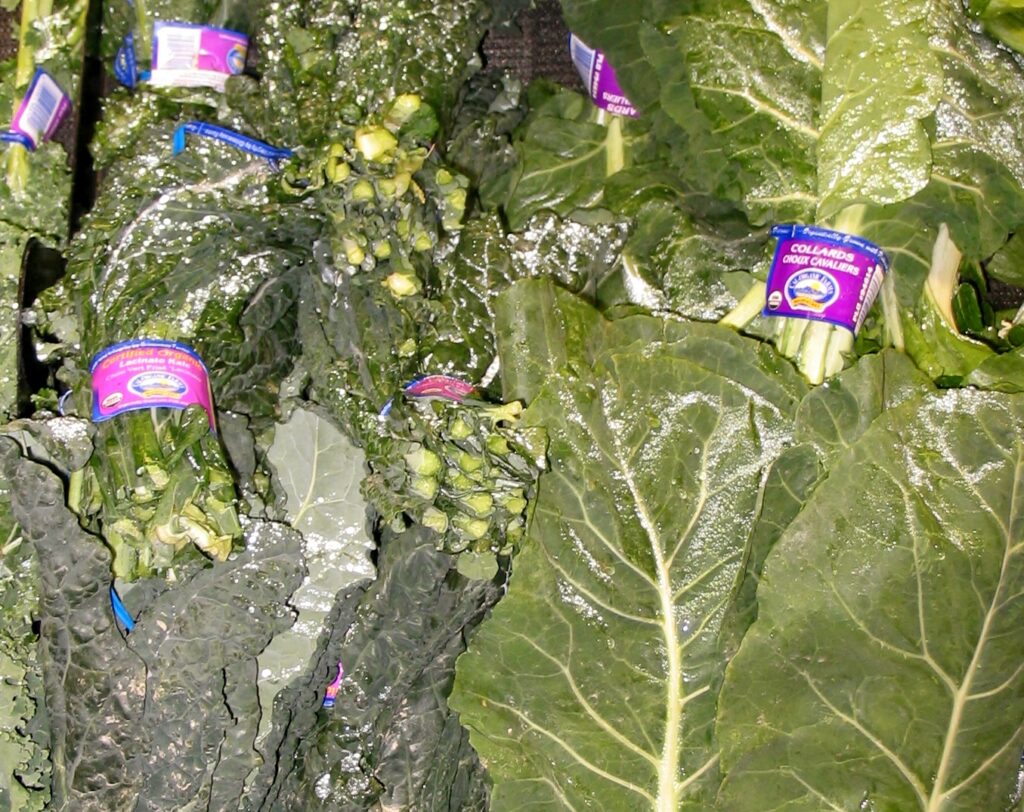
Hold the base of the stem in one hand and pull the leaf away from the rib with the other, from bottom to top. It comes off in two pieces and takes about four seconds per leaf. A knife works and is slower.
The ribs are edible and they are not going in this pot. They need fifteen minutes to become tender, which is longer than the leaves can survive, so they either go in the stock bag or get sliced thin and sauteed on their own. Leaving them in the ribbons is the main reason a kale soup has chewy bits in it.
Cut the leaves into half inch ribbons. Wider than that and they wrap around the spoon; narrower and they disappear into the broth. Stack four or five leaves, roll them loosely and cut across the roll.
Wash after cutting, not before, in a bowl of cold water where the grit sinks and the leaves float. Lacinato in particular holds sand in the folds near the rib, and a gritty soup cannot be rescued.
When the kale goes in, by variety
| Green | Minutes in the pot | Texture at the end |
|---|---|---|
| Lacinato kale | 4 | Tender, holds its shape |
| Curly kale | 6 to 7 | Chewier, needs the extra time |
| Red Russian kale | 3 | Delicate, goes soft quickly |
| Swiss chard leaves | 3 | Silky, tints the broth |
| Escarole | 3 | Slightly bitter, very good here |
| Baby spinach | Off the heat | Collapses in 45 seconds |
| Frozen chopped kale | 5, from frozen | Softer, no stripping needed |
Frozen kale is a legitimate shortcut and the honest note is that it is softer and darker than fresh. A ten ounce block replaces a bunch, goes in still frozen, and saves the stripping and washing entirely. For a pot that is going to be reheated anyway, the difference on day two is small.
Broth, water, and the sodium question
Water plus a rinsed can of beans plus a parmesan rind makes a better soup than most people expect, because the beans and the rind are both contributing. Broth makes it better still, and boxed low sodium chicken or vegetable broth is the practical choice.
Full sodium broth is the trap. Four cups of it, plus canned beans, plus salted cooking water and a hard cheese, stacks four sources of salt in one pot, and the correction at the end is a bigger squeeze of lemon and a splash of water, which dilutes everything else too.
Salt the onion at the start and then leave the container alone until the pot comes off the heat. That first pinch draws water out of the onion and helps it soften; everything after that is adjustment, and adjustment done at the end is the only kind that can be judged accurately. Anyone cooking to a sodium target will find the same logic running through most lower salt cooking, where the acid at the end does the work that salt was doing.
Day two is a different soup
The starch keeps working overnight. A soup that coated the spoon on the first evening is close to a stew by the following afternoon, and the beans have absorbed a share of the liquid on top of that. This is an improvement rather than a problem, but it needs a splash of water or broth in the pot when it is reheated.
The kale changes too. It softens and darkens, and the bright green of the first bowl is gone. In exchange the flavors have settled into each other, and the garlic and chili that were separate notes on night one read as one thing on night two.
Three or four days in the refrigerator is the window. It also freezes for about three months, and it freezes better than most soups because there is no dairy in it to separate. Freeze it in portions in shallow containers and label the container with the date and how many bowls are inside, because a frozen block of anything looks like every other frozen block of anything.
Cooling it fast enough to be worth reheating
A hot pot of soup left on the stove to cool at its own pace spends hours in the temperature range where bacteria multiply fastest, roughly 40 to 140 degrees. The pot holds heat in the middle long after the surface feels cool, and a deep pot can stay warm inside for four or five hours.
Get it into shallow containers within two hours of coming off the heat, and inside one hour if the kitchen is above 90 degrees. Shallow means the soup is no more than two inches deep, which is what lets the refrigerator do its job. An ice bath in the sink cuts the time further if the pot is large.
Reheat to a full simmer rather than to warm, and reheat only the portion being eaten. Repeatedly warming and re-cooling the whole container is how a perfectly good soup becomes a problem on day three, and it is also what turns the kale to mush.
Five additions, ranked by what they cost in time
A tablespoon of tomato paste, stirred into the onions for a minute before the liquid, costs sixty seconds and deepens the color and the savor more than anything else on this list. It is the first thing to add if the soup tastes flat.
A handful of small pasta, added with the broth and given ten minutes, turns the pot into a heavier dinner and thickens it further. Stale bread torn into the bowl does the same job for no cooking time at all, which is the traditional route and still the best one.
Browned sausage or pancetta at the start costs six minutes and changes the dish into something else. A fried egg on top costs three minutes and is the fastest way to make one bowl feel like a full dinner. Toasted breadcrumbs fried in olive oil cost four minutes and give the only crunch in the bowl, which matters more than it sounds.
The one to leave out is cream, for the same reason the mashing step exists. It flattens the bean flavor into something generic and takes the pot somewhere that a can of beans and a bunch of kale were never trying to go. The same restraint pays off across most simple soup building, where the thickener that is already in the pot usually beats the one that has to be bought.
For a version with nothing else in the house, a can of beans, a handful of any green and a rind still makes a bowl worth eating, which is the argument for keeping all three around. It sits comfortably alongside the rest of the cooking that starts from what is already in the cupboard.
Frequently Asked Questions
Can I use dried beans instead of canned?
Yes, and they make a better soup with a better broth. A cup and a half of cooked beans replaces one can. Cook them ahead with a bay leaf and keep them in their liquid, and use some of that liquid as part of the four cups. The weeknight effort is then identical.
Why did my soup stay watery?
Almost always because the mashed beans were skipped or under-mashed, or because the pot never reached a real simmer. Mash another half cup, return it, and give it three more minutes with the lid off. A soup thickens as liquid evaporates, and a covered pot cannot do that.
Is the parmesan rind safe to eat afterward?
It is edible, though after a simmer it is chewy rather than pleasant. Some people cut it into small pieces and leave it in the bowl. There is no reason to avoid it, but there is also not much reward in it.
Can this be made in a slow cooker?
It can, though it gives up the main advantage, which is speed. Everything except the kale and the lemon goes in for three hours on low, with the kale added for the final twenty minutes. Mash the beans at the end rather than the beginning.
What makes it taste flat even with salt in it?
Missing acid, nine times out of ten. Lemon at the end is not a garnish here; it is what makes a pot of beans and greens taste like a finished dish. A splash of white wine vinegar does the same job if there is no lemon.
Make it once with the mashing step and once without, a week apart, and the second pot will explain itself at minute twelve without any further argument.