
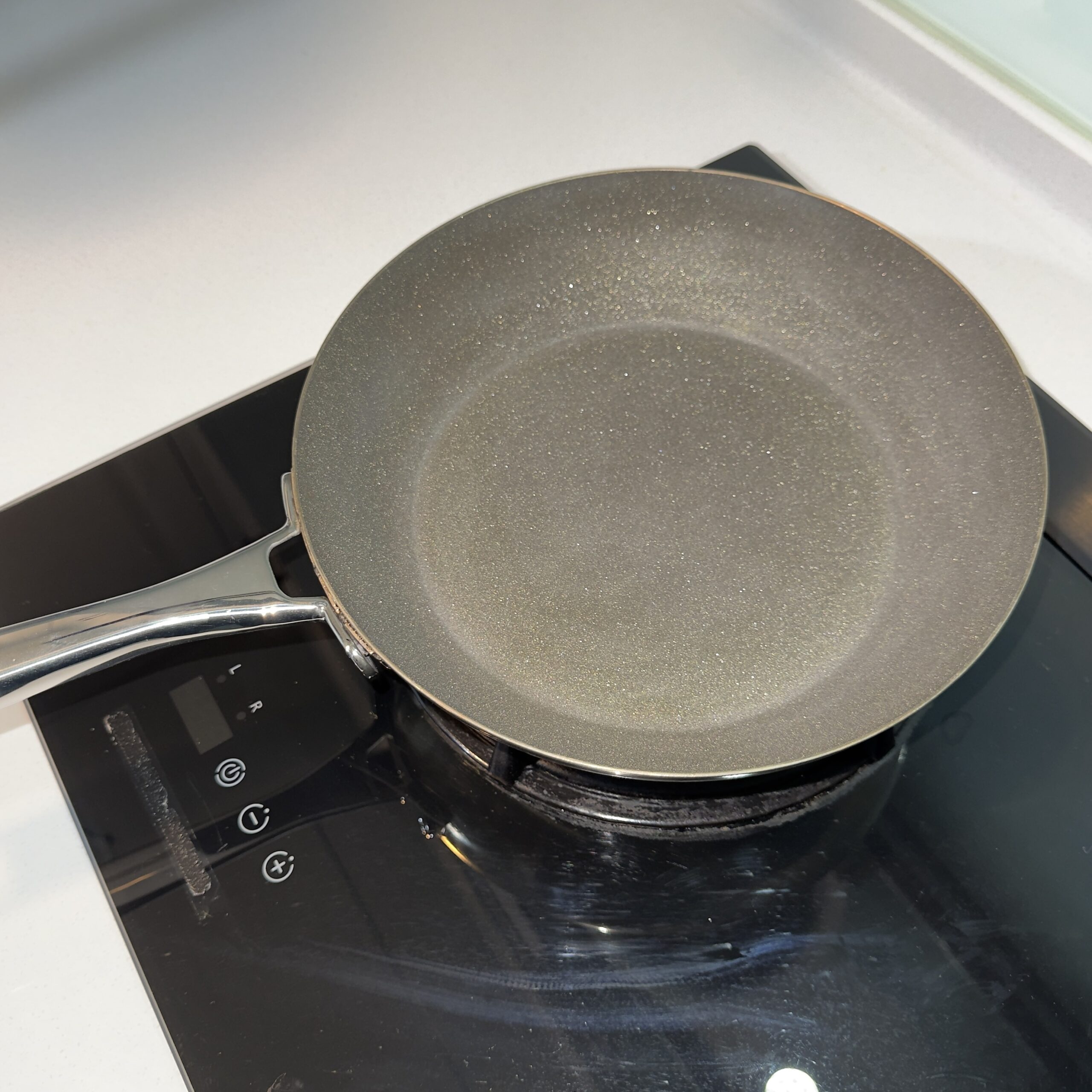
A nonstick skillet that released a fried egg with a flick of the wrist in March will usually be holding onto that same egg by November. Nobody remembers doing anything to it. The pan looks fine, there are no visible scratches, and it simply stopped working.
The coating did not wear off from use. In almost every case it was cooked off, in short bursts, by heat that the pan was never rated for. A skillet left empty on a high burner for three minutes gets hotter than a hot oven, and the damage from that is invisible and permanent.
What follows is the practical version: what the coating actually is, the three habits that take a pan from five years to eight months, why seasoning it does nothing, and the point at which replacing it is the correct answer rather than an upsell.
- The single biggest cause: preheating an empty pan on high
- Safe working range: low to medium, under about 450 degrees
- Where the coating starts to break down: around 500 degrees
- Realistic lifespan, treated well: three to five years
- Realistic lifespan, treated badly: eight to twelve months
- The myth to drop: seasoning a nonstick pan
What actually kills a nonstick coating?
Most nonstick cookware is coated with a fluoropolymer sprayed onto roughened aluminum and baked on. The layer is thin, on the order of a few thousandths of an inch, and it works because almost nothing sticks to it chemically, not because it is slippery in a mechanical sense.
That layer has three enemies, in order of how much damage they do. Heat above its rated range, which breaks the polymer down and leaves a duller, tackier surface. Abrasion, which removes it outright. And polymerized residue, which is a film of burnt oil sitting on top of a coating that is still perfectly good underneath.
The third one is worth separating out, because it is the only failure that is fully reversible. A pan that has gone brownish and tacky rather than dull and gray is often carrying a varnish of old cooking spray, and it can be brought back.
Why is my nonstick pan not working the way it did?
Run three checks before deciding anything. Look across the surface at a low angle under a bright light: a healthy coating is uniformly matte and one color, while a heat-damaged one has lighter patches in the center where the burner sat. Second, run a fingertip over the middle. It should feel glassy, not tacky.
Third, do the water test. Put a tablespoon of water in a cold pan and tilt it. On an intact coating the bead rolls as a single drop and leaves the surface dry behind it. On a spent one it spreads and wets the metal.
A tacky surface with normal color is residue and can be cleaned off. Light patches and a spreading water bead mean the coating itself is gone in the middle, and no cleaning brings that back. That is the fork in the road, and everything below follows from which side of it the pan is on.
Which three habits shorten a pan to eight months?
The first is preheating empty. An empty aluminum skillet has nothing to absorb the energy going into it, so its surface temperature climbs fast and without any visual cue. On a strong gas burner it can pass 500 degrees inside two or three minutes, and it does not have to smoke for that to have happened.
The second is aerosol cooking spray. The propellants and lecithin in the can polymerize at a lower temperature than oil does, and they build a sticky brown film in the cooler ring around the outside of the pan where nothing scrubs it away. Two months of daily use and the pan reads as failed while the coating is intact.
The third is thermal shock. Taking a screaming hot pan to the sink and running cold water into it warps a thin aluminum base, and a warped base rocks on a flat hob so the center overheats while the edges stay cool. That produces exactly the pattern of central damage described above.
None of the three feels destructive at the time, which is why they persist. All three are habits rather than accidents, and all three can be dropped this week.
How hot is too hot?
| What is happening | Approximate surface temperature | Effect on the coating |
|---|---|---|
| Eggs, pancakes, fish on medium-low | 250 to 350 | None |
| Sauteing vegetables on medium | 350 to 400 | None |
| Searing on medium-high with food in | 400 to 450 | Acceptable, not ideal |
| Empty pan, high burner, two minutes | 500 and climbing | Degradation begins |
| Empty pan, high burner, four minutes | 600 or more | Fumes, permanent damage |
| Under a broiler or in a hot oven | 500 plus | Depends entirely on the maker’s rating |
There is a safety point inside that table that deserves stating plainly. Fluoropolymer coatings taken well past their rated temperature release fumes, and those fumes cause temporary flu-like symptoms in people and are rapidly fatal to pet birds. Anyone who keeps birds should move them well away from the kitchen and should not use a nonstick pan on high heat at all.
The practical rule is simple enough to follow without a thermometer: fat or food goes into the pan before the burner is lit, and the dial never goes past medium-high. A nonstick skillet is not the tool for a hard sear, and asking it to do that job is what kills it.
Does seasoning a nonstick pan do anything?
No, and the instruction survives because it was copied across from cast iron, where it means something entirely different. Seasoning cast iron builds a bonded layer of polymerized oil that fills the pores of the metal and becomes the nonstick surface. A fluoropolymer coating has no pores and nothing to bond to.
Rubbing oil into a nonstick pan and heating it does one of two things. If the pan is intact, the oil sits there and eventually contributes to the residue film described above. If the coating is gone, the oil polymerizes on bare roughened aluminum and gives a marginal, patchy improvement that washes off.
Some manufacturers do suggest wiping a thin film of oil on before storage. That is corrosion protection for the rim and the exterior, not seasoning, and it should be wiped nearly dry rather than left as a coat.
The one useful piece of maintenance is the opposite: getting old oil off. Simmer an inch of water with two tablespoons of baking soda in the pan for ten minutes, cool it, and wipe with a soft sponge. That lifts polymerized residue without abrading anything, and it restores a surprising number of pans that owners had written off.
Are metal utensils really the problem people say they are?
They are a real problem and they are not the main one. A metal spatula dragged across a coating removes material, and edges and corners on cheap utensils remove more of it. Wooden, silicone and nylon tools cost almost nothing and there is no argument for not using them.
The larger abrasion risk is storage. Pans nested inside one another with nothing in between grind against each other every time the stack is moved, and the damage lands in the center of the cooking surface where it matters most. A paper towel, a cheap felt pad or a folded cloth between each pan solves it entirely.
Scouring pads and powdered cleansers are the other abrasion source. A nonstick pan should never meet steel wool, and burnt-on food comes off with a soak in warm soapy water in far less total time than scrubbing takes. That is one of the few places where the patient method is also the faster one, and it fits with the general logic of choosing tools that do not fight the pan.
Can the dishwasher be blamed for this?
Partly, yes. Dishwasher detergent is strongly alkaline and mildly abrasive, and it is formulated to strip baked-on food rather than to be gentle with a thin polymer film. Over dozens of cycles it dulls the surface and attacks the edge where the coating meets the rim.
The heat of the drying cycle is a secondary issue, and the rattling against other items is a third. A pan labeled dishwasher safe will survive the machine without corroding; that label is about the aluminum and the handle, not about how long the coating will keep releasing an egg.
Handwashing a nonstick pan takes about twenty seconds because nothing sticks to it, which is the whole point of owning one. Warm water, dish soap, a soft sponge, and dry it before it goes away. That single change adds a year or more to a pan that was otherwise being treated well.
Is a scratched pan dangerous to keep using?
Small flakes of fluoropolymer that come off a scratched pan pass through the body without being absorbed. The health concern that dominated the news for years was about a processing chemical that has not been used in the manufacture of these coatings for well over a decade, not about the coating itself.
The real reason to stop using a badly scratched pan is that it has stopped doing its job. Food catches in the scratches, cleaning gets harder, and the exposed aluminum underneath discolors with acidic ingredients. A pan that needs oil and constant attention to release an omelet is a worse pan than a cheap stainless one.
The exception worth taking seriously is heat, not scratches. A pan that has been overheated repeatedly, that smells acrid when it warms up, or that has visibly blistered or bubbled coating should come out of rotation now. Blistering means the polymer has broken down, and that is a different situation from a knife mark.
When is it time to replace it?
Four signals, any one of which is enough. Blistered, bubbled or peeling coating. Bare metal visible through the middle. A base that rocks when set on a flat counter. Or a surface that still fails the water test after a full baking soda simmer and a proper degrease.
Absent those, a dull-looking pan often has years left. Discoloration on the outside, staining around the rivets and a slightly faded interior are cosmetic. The test that matters is whether an egg cooked in a teaspoon of butter on medium-low slides, and plenty of ugly pans pass it.
Set an expectation before buying rather than after. A nonstick skillet is a consumable, like a knife sharpener or a cutting board, and three to five years is a good run for one that gets used several times a week. Budgeting for that is more useful than hunting for the pan that never wears out, since the tools that earn their space tend to be the ones that are replaced without drama.
What should I buy next, and does price matter?
| Type | Release quality | Heat tolerance | Typical useful life | Best at |
|---|---|---|---|---|
| Standard fluoropolymer, thin | Excellent at first | Low | 1 to 2 years | Eggs, if treated gently |
| Fluoropolymer, thick hard-anodized base | Excellent | Moderate | 3 to 5 years | The everyday choice |
| Ceramic, sol-gel type | Very good, fades faster | Higher | 1 to 2 years | People who want no fluoropolymer |
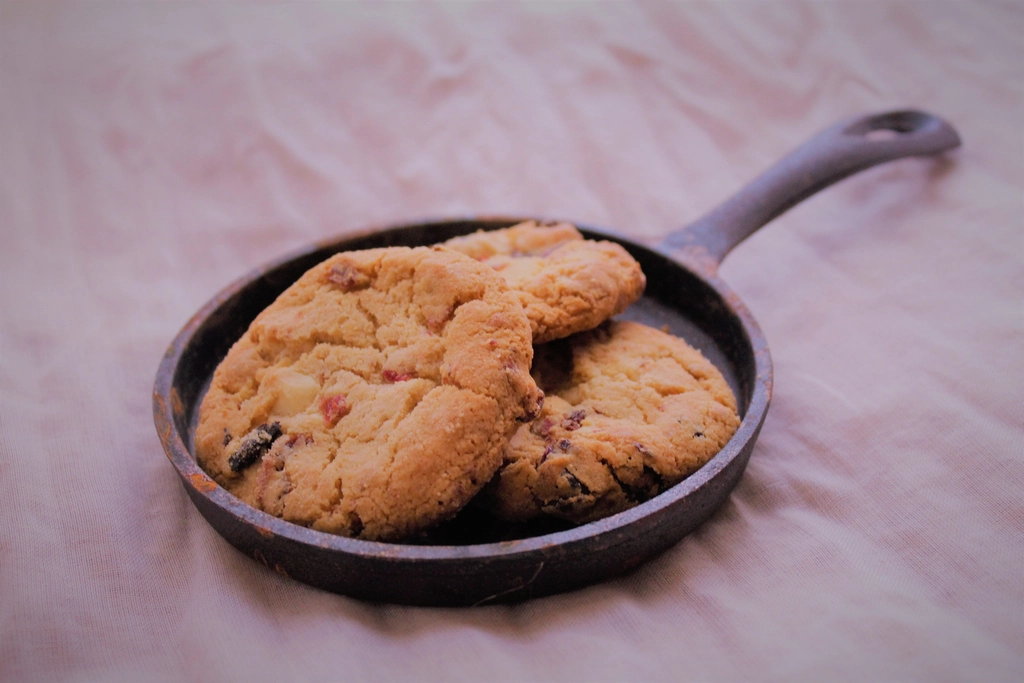
| Cast iron, seasoned | Good, improves with use | Very high | Decades | Searing, cornbread, high heat |
| Carbon steel, seasoned | Good once established | Very high | Decades | Crepes, stir fry, eggs eventually |
| Stainless, uncoated | None without technique | Very high | Decades | Fond, pan sauces, deglazing |
Price buys thickness rather than slipperiness. An expensive skillet and a cheap one release food about equally well on the first day; the expensive one has a heavier base that resists warping and a coating applied in more layers, so it keeps doing it longer. Beyond a moderate price the returns flatten quickly.
The sensible household setup is one nonstick pan of about ten inches reserved for eggs, pancakes and fish, plus a cast iron or stainless skillet for everything that needs real heat. Splitting the work that way is the single change that extends the life of the coated pan the most, and it costs nothing if both pans are already in the cupboard. It is the same reasoning behind most of the equipment questions worth answering once.
How do I make the new one last three years?
- Never heat it empty. Oil or butter goes in first, then the burner.
- Keep the dial at medium or below for everything except a brief finish.
- Use wood, silicone or nylon, and no metal edges of any kind.
- Let it cool on the hob before it goes near water. Ten minutes, not zero.
- Handwash with a soft sponge, and dry it before it goes away.
- Store it with a cloth or a felt pad between it and the next pan.
- Keep aerosol spray out of it. Use oil from a bottle or a brush instead.
- Send hard searing, broiling and anything that needs 450 degrees to a different pan.
Seven of those eight cost nothing and take no extra time. The cooling step is the only one that requires patience, and it is also the one that prevents the warping that no amount of careful washing can undo.
Frequently Asked Questions
Can a nonstick pan be re-coated?
Industrial re-coating services exist for commercial cookware and the price rarely makes sense for a home skillet. The pan has to be stripped, blasted, re-sprayed and cured in an oven at high temperature. For most households a replacement costs less than the shipping.
Why does food stick only around the outer edge?
That ring is the coolest part of the pan and the place where residue accumulates, so it is almost always the burnt oil film rather than coating failure. A baking soda simmer usually clears it. If it does not, check whether the base has warped and is no longer sitting flat.
Is ceramic nonstick better?
It tolerates higher heat and contains no fluoropolymer, which is why some people prefer it. In exchange it loses its release properties faster, often noticeably within a year, because the silica layer is harder but more brittle. Neither is clearly better; they fail in different ways.
Does a nonstick pan work on induction?
Only if it has a magnetic stainless layer in the base, which many do and many do not. Hold a refrigerator magnet against the bottom: if it grips firmly, the pan will work. Induction is otherwise excellent for nonstick because it responds instantly when the dial comes down.
Can I put a small amount of oil in and preheat then?
Yes, and that is the correct method. A teaspoon of oil spread across the surface gives the heat somewhere to go and gives a visual cue, since oil shimmers before the pan is anywhere near a damaging temperature. Two minutes on medium is plenty.
What is the white haze that appeared after boiling water in it?
Mineral deposits from hard water, not coating damage. Simmer a cup of water with a splash of white vinegar for a few minutes and wipe it out. The same haze on the outside of the base comes from the same source and is harmless.
Put a hand on the handle of the pan you use most, turn the burner to medium, and count how long it usually sits there before anything goes in. If the honest answer is more than thirty seconds, that is the habit that has been quietly ending pans.