
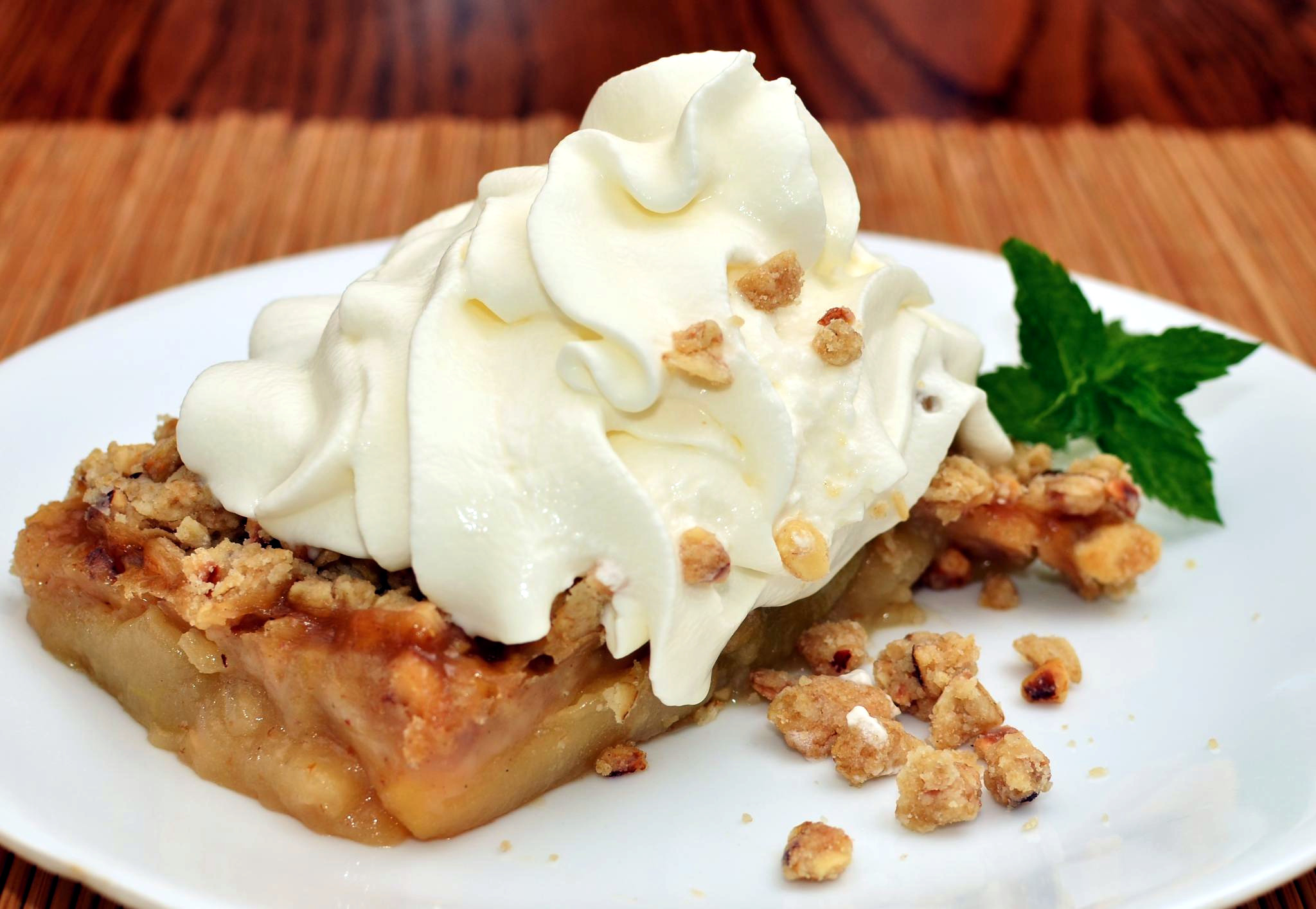
The topping went into the oven as a bowl of buttery crumbs and came out as a damp beige layer that had to be scraped rather than spooned. The recipe gets blamed, then the oats, then the oven. None of those are usually responsible.
An apple is somewhere around 85 percent water. Six cups of sliced apples put roughly a cup and a half of liquid into a baking dish over forty-five minutes, and that liquid goes up as steam through the only thing standing above it. A topping does not go soggy from the top down. It goes soggy from underneath, and it happens in the last fifteen minutes.
Everything that fixes it is about managing that water: how much the fruit releases, whether anything binds it before it reaches the crumbs, how deep the crumb layer is, and whether the steam has anywhere to go. Ingredients barely enter into it.
- The real cause: steam from the fruit, not too little butter
- Depth ratio: topping at least half as deep as the fruit
- Butter: cold, cut to pea size, never softened
- Thickener: two tablespoons of cornstarch for six cups of fruit
- Oven: 375 degrees, dish on a low rack
- The finish: the last 15 minutes uncovered, and no foil after
The topping was fine when it went in the oven
That is almost always true, and it is why the ingredient list is the wrong place to look. A crumb mixture with enough butter in it holds together in clumps when squeezed and falls apart when poked. If it did that in the bowl, it was correct.
What happens next is a race. The butter needs to melt and the sugars need to caramelize before the rising steam saturates the flour and oats. Whichever gets there first decides the texture. A shallow topping over a very juicy fruit layer loses that race every time, no matter how good the crumbs were.
This is also why the same recipe works in October and fails in January. Storage apples that have sat for months release more free liquid than fresh-picked ones, and a bag of frozen fruit releases more still. The recipe did not change; the water content did.
Where the water comes from, and how much of it there is
Six cups of peeled, sliced apples weigh about a pound and a half. At roughly 85 percent water, that is close to twenty ounces of liquid sitting in the dish, most of it locked inside cell walls that heat is about to break open.
Sugar accelerates the release. Tossing the fruit with sugar half an hour before baking draws liquid out by osmosis, which is useful when that liquid is drained off and useless when the whole bowl gets tipped into the dish. Either macerate and drain, or sugar the fruit and put it straight in the oven, but do not do half of each.
The other quiet contributor is the pan itself. A deep, narrow dish holds steam against the topping; a wide, shallow one lets it escape from a larger surface. The same quantity of fruit in an eight inch square and in a nine by thirteen produces visibly different toppings, and the wider dish wins.
The depth ratio: topping against fruit
| Fruit depth | Topping depth | What comes out |
|---|---|---|
| 2 inches | Quarter inch | Saturated within twenty minutes |
| 2 inches | Half inch | Crisp on top, damp underneath |
| 2 inches | One inch | Crisp through, the working ratio |
| 1.5 inches | One inch | Very crisp, more topping than fruit for some tastes |
| 3 inches | One inch | Needs a thickener and ten extra minutes |
The rule of thumb that survives most kitchens is that the topping should be at least half as deep as the fruit, and a full inch is the safe number for a standard nine inch dish. That is more topping than most recipes call for, which is a large part of why most recipes disappoint.
Depth also matters more than coverage. A thick layer with a few gaps in it crisps better than a thin layer spread edge to edge, because the gaps act as vents for the steam. Do not press it flat and do not smooth it out.
Cold butter, cut in, not creamed
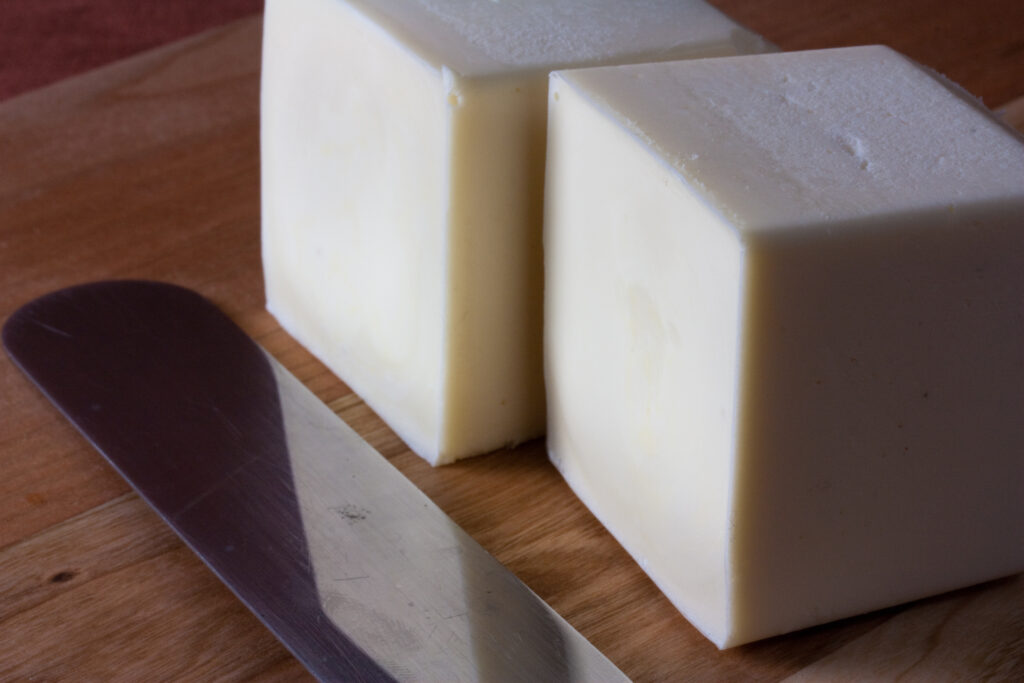
Butter straight from the refrigerator, cut into quarter inch cubes, worked into the dry ingredients until the largest pieces are the size of peas. Fingertips are fine and fast. A pastry cutter is fine. A stand mixer on low for thirty seconds is fine.
Softened butter is what ruins it. Soft butter coats every particle of flour evenly and produces a paste that bakes into a solid sheet, which is a cookie rather than a crumb. The whole texture depends on discrete lumps of fat that melt and leave air behind them.
Melted butter is a separate case and it is not a mistake, only a different result. Poured over the dry mix and stirred with a fork it makes large, craggy clusters that are excellent in their own right and slightly denser. If the goal is a shattering, sandy crumb, cold and cubed is the route.
Warm hands are the enemy of the fingertip method. Work quickly, and if the mixture starts to look greasy rather than sandy, put the bowl in the freezer for ten minutes and carry on. A topping that goes into the oven cold has a head start in the race against the steam.
Oats, flour and the third thing that makes it crunch
Old-fashioned rolled oats, not quick oats and not steel cut. Quick oats are cut small and pre-steamed, so they absorb liquid fast and turn pasty. Steel cut oats never soften at all and stay like gravel. Rolled oats hold their shape and toast.
Flour binds and browns. Half a cup to a cup of rolled oats is the usual balance. More flour makes a shortbread-like layer, less makes something loose and granola-ish that scatters when served.
The third element is what most home versions leave out: something coarse that will not soften. Chopped nuts are the obvious one, and a half cup of pecans, walnuts or almonds changes the texture more than any adjustment to the butter. Turbinado sugar sprinkled over the top in the last stretch is the second, because the crystals are large enough to survive and they caramelize into a brittle glaze.
Brown sugar goes in the body of the topping and white or turbinado goes on top. Brown sugar contains molasses and therefore moisture, which is exactly right for flavor and exactly wrong as the surface layer, since it stays slightly tacky where a dry crystal sugar sets hard.
The crunchy apple crisp topping, mixed and pressed correctly
- Heat the oven to 375 degrees with a rack in the lower third. Butter a nine inch square or a shallow two quart dish.
- Toss six cups of sliced apples with a third of a cup of sugar, two tablespoons of cornstarch, the juice of half a lemon and a teaspoon of cinnamon. Tip into the dish and level it.
- In a separate bowl combine one cup of rolled oats, three quarters of a cup of flour, half a cup of brown sugar, half a cup of chopped nuts and a half teaspoon of salt.
- Add ten tablespoons of cold cubed butter and work it in until the largest pieces are the size of peas and the mixture clumps when squeezed.
- Scatter the topping over the fruit in loose clumps about an inch deep. Do not pat it down and do not seal the edges.
- Sprinkle two tablespoons of turbinado sugar over the surface.
- Bake 30 minutes, then check. The fruit should be bubbling at the edges and the topping just starting to color.
- Bake 15 more minutes uncovered, moving the dish up a rack if the top needs color. Total 45 to 50 minutes.
- Rest 20 minutes before serving. The juices set as it cools and the topping firms up in that window.
Step five is where good intentions do damage. Pressing the topping into a solid crust seals the steam underneath it, and the underside turns to paste while the surface browns. Loose clumps with visible gaps let the water out.
Which apples release the least water
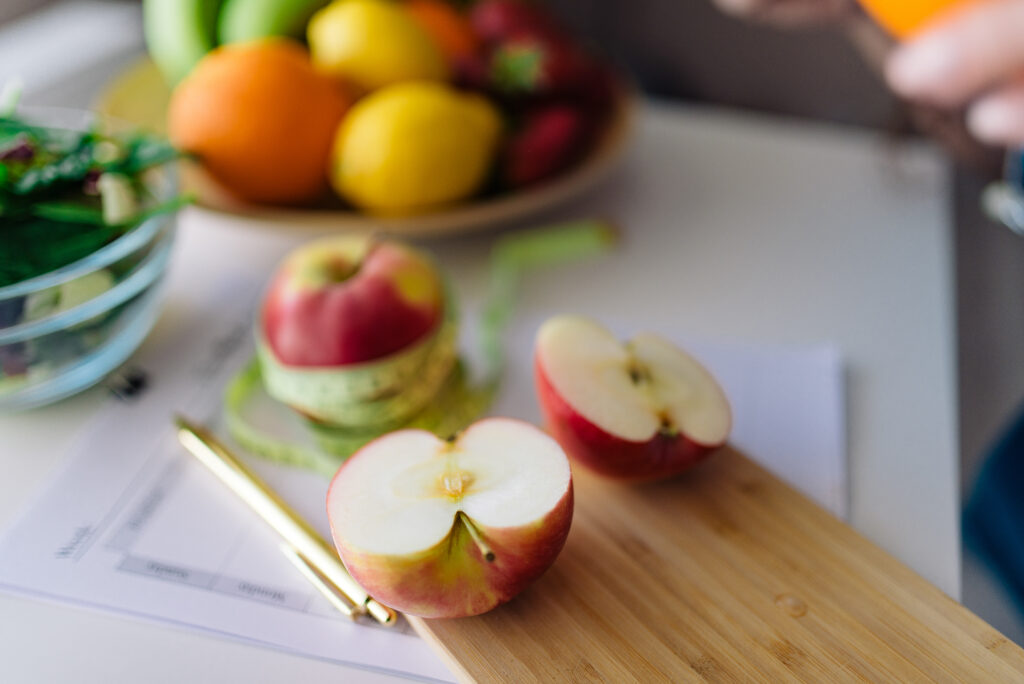
| Apple | Liquid released | Shape after baking | Use it for |
|---|---|---|---|
| Granny Smith | Low | Holds firmly | The reliable base, needs more sugar |
| Braeburn | Low | Holds well | Excellent on its own |
| Pink Lady | Low to moderate | Holds well | Sweet-tart, good solo |
| Honeycrisp | High | Softens, stays intact | Flavor, but thicken the juice |
| Golden Delicious | Moderate | Goes soft | Blending with a firm variety |
| McIntosh | Very high | Collapses to sauce | A quarter of the mix at most |
Mixing two varieties is the standard advice and it holds up: two thirds of something firm and one third of something that breaks down gives both structure and a sauced texture between the slices. The mistake is using only the collapsing varieties, which produces applesauce under a raft.
Slice thickness matters as much as variety. Quarter inch slices release liquid fast and go soft; half inch slices hold their shape and cook through in the same time in a 375 degree oven. Chunks larger than that stay crunchy in the middle after the topping is done.
The starch that thickens the juice before it reaches the topping
Two tablespoons of cornstarch tossed with six cups of fruit turns free liquid into a syrup that stays in the bottom of the dish instead of steaming upward. It is the single most effective intervention after depth, and it is invisible in the finished dessert.
Cornstarch sets clear and firm and loses strength if it boils hard for a long time. Tapioca starch is more forgiving and gives a glossier, slightly stretchy set. All-purpose flour works and needs about double the quantity, and it leaves a faint cloudiness and a slightly floury edge.
Apples also bring their own thickener. The pectin in the fruit gels as it heats, which is why an apple filling sets more readily than a berry one and why a mixed berry crisp usually needs an extra tablespoon of starch. Acid helps that gel form, so the lemon juice is doing two jobs at once.
Skip the starch entirely for a very firm variety like Granny Smith in a wide dish, where evaporation handles it. Do not skip it for Honeycrisp, for frozen fruit, or for anything with berries in it.
Fifteen minutes uncovered, and where in the bake they go
Foil is useful early and destructive late. A dish covered for the first twenty minutes cooks the fruit through with less browning on top, which is helpful for very firm apples in thick slices. Covered at the end, it condenses steam directly onto the topping and undoes the whole exercise.
The last fifteen minutes must be uncovered, on a higher rack if the top is pale, with the fruit visibly bubbling at the edges of the dish. Bubbling at the edges is the signal that the starch has reached temperature and the filling has set; a dish pulled before that point will be soupy under a crisp lid.
Do not cover it after it comes out either. A crisp tented with foil to keep it warm for an hour arrives at the table soft. Leave it exposed on a rack, and if it needs to be warm later, put it back in a 350 degree oven for ten minutes rather than trapping it.
Serving hot, storing cold, and what happens by morning
Rest it twenty minutes. A filling straight from a 375 degree oven is sugar syrup near boiling point, and it holds that heat far longer than the surface suggests, which is a genuine burn risk with children at the table. The same rest is what lets the starch finish setting.
There is no egg or dairy in the dessert itself, so a covered crisp keeps two days at room temperature. Once it is served with ice cream or custard, the leftovers of that plate go in the refrigerator within two hours. Anything held longer than two days goes in the refrigerator regardless, where it keeps for four or five.
Overnight, the topping absorbs moisture from below no matter what was done. That is expected and it is fixable: fifteen minutes in a 350 degree oven, uncovered, drives the water back off and returns most of the crunch. A microwave does the opposite and should not be used for this.
One note that gets skipped: the raw topping contains uncooked flour, which is not a safe thing to taste from the bowl, however tempting the buttery crumbs are. It is a small discipline and the same one that applies across any baking that starts with a bowl of dry ingredients.
Baking dish material and depth change the result
Glass and ceramic heat slowly and hold that heat, which favors the fruit and gives the topping less bottom browning. Metal heats fast and conducts better, which browns the underside of the topping and dries the filling slightly. For a crisp specifically, metal has the edge.
Depth matters more than material. Anything deeper than about two and a half inches of fruit is a baked pudding with crumbs on it, no matter what the recipe promised. Two quarts of fruit in a wide shallow dish is right; the same fruit in a tall casserole is not.
An oven thermometer is worth the five dollars here. A domestic oven running 25 degrees cool stretches the bake long enough that the fruit collapses before the topping colors, and that is one of the most common versions of this failure. Ovens drift, and almost nobody checks. It fits in with the rest of the small equipment habits that make cold weather baking repeatable rather than lucky.
Individual ramekins are the shortcut for a guaranteed crisp result, because the ratio of surface to volume is far higher and the steam escapes readily. Twenty-five minutes at 375 and the topping shatters. They also portion themselves, which is the other reason to keep six of them.
Frequently Asked Questions
Can I make the topping in advance?
Yes, and it is better cold. Mix it, put it in a bag and refrigerate it for up to five days, or freeze it for three months and use it straight from frozen with an extra five minutes in the oven. Cold topping crisps more reliably than room temperature topping.
Does the fruit need peeling?
Not strictly. Skins hold their shape and add a slight chew, and in a dish with thick slices they are barely noticeable. In thin slices they separate and curl, which some people dislike. Peeling costs about six minutes for six cups.
Why is my crisp swimming in liquid?
Either no thickener, or the fruit was macerated in sugar and the drawn-off juice went into the dish, or it was pulled from the oven before the edges bubbled. All three are fixable next time; this time, spoon off the excess and put the dish back for ten minutes uncovered.
What is the difference between a crisp and a crumble?
Regional usage varies, but in most American kitchens a crumble topping is flour, sugar and butter, and a crisp adds oats and often nuts. The oats are what supply the crisp texture the name refers to.
Can I use frozen fruit?
Yes, without thawing, and add an extra tablespoon of starch plus about fifteen minutes of baking time. Thawing first and draining works too but costs more liquid than it saves. Frozen berries in particular need the extra starch or the dish floods.
Is there a version without oats?
Yes. Replace the oats with an equal volume of flour plus a quarter cup of chopped nuts, and expect a shortbread-textured layer rather than a granola-textured one. It browns faster, so check it ten minutes earlier. The seasonal fruit underneath behaves the same either way, which is the point of building desserts around whatever the market has.
Make it once with a half inch of topping and once with a full inch, in the same dish, a week apart. The second one will settle the argument without any need to change a single ingredient.