
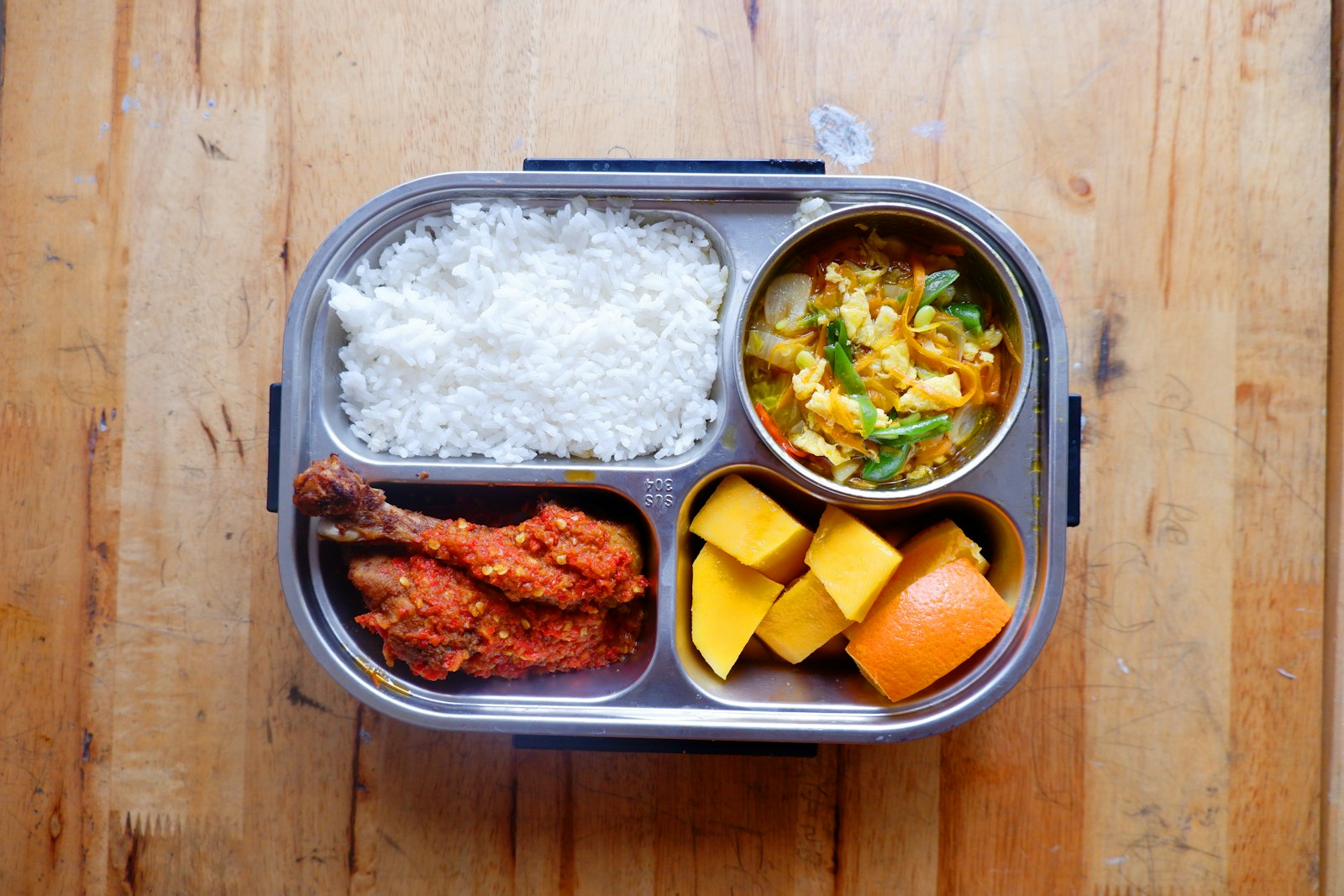
September in my house means one thing: someone has to pack lunches again. And every year, I have to remind myself of the same thing, which is that most of what looks good on a Sunday afternoon meal-prep video does not actually survive twelve hours in a lunchbox, followed by whatever a nine-year-old does at recess. The list of things that make it home eaten versus half-eaten and squashed is shorter than the internet suggests.
This piece is about what actually works. I have a school-age kid, and I trained in classical French cooking, which is to say I care about how food tastes and I also care about whether the container I opened at 5pm still contains something recognizable. These two priorities are more compatible than they seem, but only if you are honest about the constraints of a lunchbox as a cooking format.
The three components approach
Instead of prepping five complete lunches on Sunday, prep three or four things that can be combined into different meals through the week. This is how most restaurant kitchens run, and it works for lunchboxes. Cook a big batch of a grain (farro, brown rice, orzo). Roast a tray of vegetables. Prep a protein or two (hard-boiled eggs, cold roast chicken, chickpeas). Make one good dressing.
Then each morning, you are assembling a bowl or a container in five minutes: grain, vegetables, protein, dressing packed separately. This is much more sustainable than doing all the work in one Sunday afternoon and eating the same identical lunch four days in a row, which everyone gets tired of by Wednesday.
What survives the trip and what does not
The lunchbox is a hostile environment. Warm, closed, dark, and bounced around. Food that is fine at room temperature for four hours is not the same as food that is fine after four hours in these conditions. Here is what I have learned by trial and, mostly, error.
| Food | Survives the lunchbox | Notes |
|---|---|---|
| Farro, orzo, quinoa (cooked, cool) | Very well | Better with dressing than without |
| Roasted vegetables at room temp | Very well | Broccoli, carrots, sweet potato all excellent |
| Hard cheese cubes | Very well | Cheddar, gruyere, hard goat cheeses |
| Whole fruit (apples, oranges, grapes) | Excellent | Cut fruit oxidizes; whole holds up |
| Hummus with dippers | Very well | Pack in separate container |
| Homemade muffins and bars | Excellent | Reduces reliance on packaged snacks |
| Cold noodle salad | Well, with dressing on the side | Soba, udon, or rice noodles |
| Sandwiches with dry fillings | Well | Nut butter, cheese, cured meat; avoid wet |
| Tortilla wraps | Poorly | They unwrap and get soggy |
| Green salads | Poorly | Wilt within 3 hours |
| Anything meant to be crunchy | Poorly | Chips get stale, crackers get soft |
| Hot pasta | Poorly | Unless in a proper thermos |
The thermos changes everything
If you want to send warm food, a real vacuum thermos is not optional. Preheat it by filling with boiling water for five minutes before adding food. This one step makes the difference between “still warm at noon” and “barely warm at 10am.” A well-preheated thermos holds hot food at safe temperatures for four to five hours.
What works in a thermos: soup, stew, chili, a small portion of pasta with sauce, rice with meat or beans on top. What does not work: anything crispy, anything with a distinct texture you want to preserve. A thermos is a slow, moist environment. Plan accordingly.
The best Sunday prep list
Here is what I actually do most Sundays for a week of school lunches, without making it feel like a second job. It takes about ninety minutes total, most of which is passive oven time while I do other things.
Cook a big batch of a grain (about three cups dry, so around nine cups cooked). Roast two full sheet pans of vegetables (one savory, one sweet; say broccoli with garlic on one, sweet potatoes with cumin on the other). Hard boil eight eggs. Wash and dry a batch of fruit and portion into snack containers. Bake one batch of muffins or oat bars (chocolate chip, banana walnut, whatever your kid actually eats). Make one salad dressing in a jar.
That is the full prep. Assembly of individual lunches happens in the morning, takes five to ten minutes, and lets you make small adjustments based on what your kid actually ate the day before.
Snacks and add-ons that hold up
Half the lunchbox is snacks, and the packaged snack aisle is not the only option. Homemade oat bars (basically a baked granola bar) keep for a week and cost a fraction of the packaged version. Popcorn holds up if you pack it in a hard-sided container. Trail mix is exactly what it sounds like and requires no recipe. A slice of good homemade banana bread is a snack.
The rule I try to follow: half the snack should be something with real nutritional content (nuts, seeds, dried fruit, cheese, whole grain), and half can be whatever your kid loves. This is more sustainable than trying to eliminate all treats, which produces both parental exhaustion and kid rebellion.
How to make it not feel like a chore
Some honest advice from someone who has been doing this for a while. Do not try to be perfect. Two or three genuinely well-packed lunches a week and pizza-day cash on Friday is better than a burnt-out attempt at five gourmet lunches a week. Involve the kid in choosing what goes in when they are old enough (usually around six or seven). Rotate through a set of five to seven meals rather than trying to be creative every day. And accept that some lunches will come home mostly uneaten, and that is not always about the food; sometimes it is about a bad recess or an interesting library book.
Frequently asked questions
How do I keep sandwich bread from getting soggy?
Put a barrier of dry ingredient (cheese, lettuce that will get thrown out, a spread) between the wet ingredients and the bread. Better: pack the components separately and let the kid assemble. Toasted bread also holds up better than untoasted for most fillings.
Are ice packs enough to keep cold food safe?
For most well-insulated lunchboxes with a fresh ice pack, yes, food stays below the food-safety threshold (40F) for four to five hours. Two ice packs are better than one for warmer weather or long stretches. If you have real concerns, focus on shelf-stable food (nut butter sandwich, dry cheese, whole fruit, crackers) rather than trying to keep dairy or deli meats cold all day.
What about hot lunches?
A quality vacuum thermos, preheated with boiling water for five minutes, will hold soup or stew at safe temperatures for four hours. This is your best option if your kid wants hot food. Do not try to keep pasta hot without a thermos. It becomes an unsafe temperature within an hour and will not taste good either way.
Is it okay to send leftovers?
Yes, if the leftovers are chosen well. Cold roasted chicken over grains, cold noodles with dressing, cold rice with beans, any grain bowl made from last night’s dinner. Leftovers that reheat well but taste bad cold (curry, pasta with cheese sauce, stir fries) are not great lunchbox picks unless you have a thermos.
How do I deal with a picky eater?
Rotate a short list of things they will reliably eat and slowly introduce one new thing at a time in small amounts. Bento-style lunchboxes with several small compartments help because a kid can eat the parts they like without feeling forced to try everything. Do not send only new foods on the same day. That is a lunch that comes home uneaten.
The short version
School lunch prep works best as a system, not as a heroic Sunday effort. Cook a grain. Roast some vegetables. Bake something sweet. Wash the fruit. Have a good dressing. Assemble each morning based on what fits. Pack whole fruit, not cut. Pack dressings separately. Preheat the thermos if you want hot food to arrive warm. Send the sandwich on toasted bread. And keep the ambitions modest, because a lunchbox eaten is worth more than a lunchbox aspired to.