
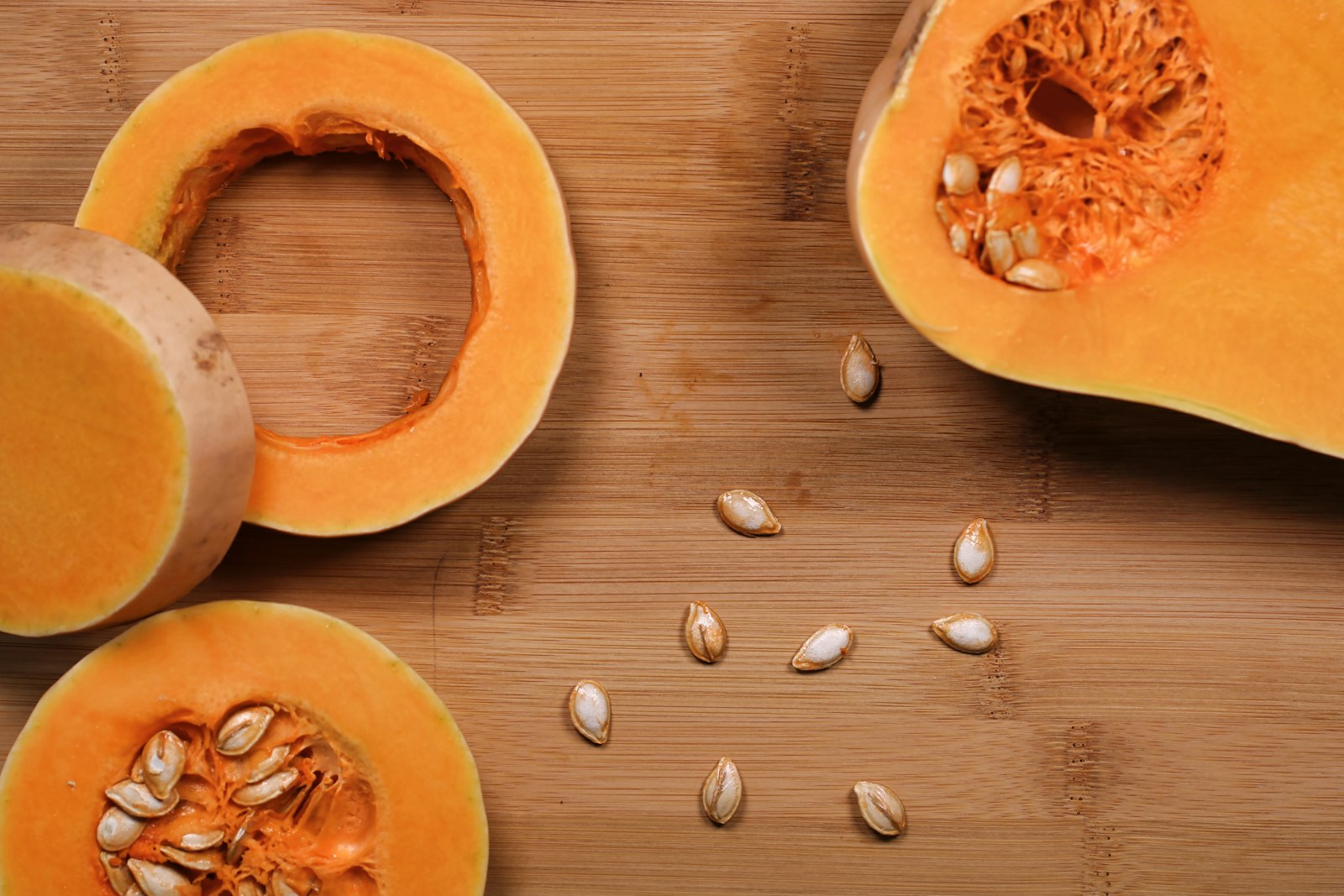
Every September, my mother’s grocery bag comes back from the Korean market with at least two squashes in it. Usually a kabocha, sometimes a butternut, and always something I have not seen before because she likes to try things. Winter squash is the produce category most home cooks are least confident with, mostly because the varieties look similar, cook differently, and are annoying to break down. This is a guide to the four you should actually get comfortable with.
The good news is that squash rewards a shorter list of techniques than most vegetables. Roast, puree, or braise, in that order of usefulness. Once you know the differences between varieties, you can substitute freely and stop being intimidated by the ones you have not tried before.
Butternut: the workhorse
Butternut is the squash you buy when you need squash and are not sure what you are making. It peels cleanly with a Y-shaped vegetable peeler (do not use a regular one, you will hurt yourself), roasts predictably, purees beautifully, and holds its shape when cut into cubes. It is sweet enough for pie and mild enough for savory applications. If you are only going to learn one winter squash well, learn this one.
My default preparation: peel with a Y-peeler, cut into one-inch cubes, toss with olive oil and salt, roast at 425F on a sheet pan for 25 to 30 minutes until deeply browned in places. Do not crowd the pan (this is the number one home cooking mistake with roasted vegetables). Use two sheet pans if you have to. Browned squash tastes like caramel. Steamed squash tastes like nothing.
For a puree: peel, cube, roast the same way, then blend hot with butter and a little salt. That is the base for soup, pasta filling, or a side dish. Nothing else required.
Delicata: the one you have been missing
Delicata is the shortest bridge from “I do not cook squash” to “I cook squash all the time.” Its skin is edible after roasting, which means no peeling. It has a shorter growing season (mostly September through November) and cooks faster than any other winter squash. Slice into half-moons, remove the seeds with a spoon, toss with oil and salt, roast at 425F for 20 minutes. That is the whole recipe.
The flavor is milder than butternut, with a slight sweetness. It holds up well to bold seasonings (chili, sage, brown butter, maple, feta). I make it at least once a week from mid-September through November because it takes fifteen minutes of active work and turns a boring dinner into something worth eating.
Kabocha: the one worth the effort
Kabocha (also called Japanese pumpkin) is the densest and most flavorful of the four. Its flesh tastes like a cross between a sweet potato and a chestnut, and it holds up to strong seasonings without disappearing. The catch is that it is hard to break down. The skin is thick and the flesh is dense, and you will need a large heavy chef’s knife and some caution.
The technique: put the whole kabocha in the microwave for two to three minutes to soften it slightly. This makes cutting significantly safer. Halve it, scoop out the seeds, cut into wedges. The skin is edible after roasting (this is a signature of kabocha in Japanese cooking) so you do not need to peel. Roast at 400F for 30 to 40 minutes.
Kabocha is the squash to use when you want the squash to be the point of the dish. It is not a background vegetable. Serve it as a wedge with a good tahini sauce, or braise it with soy and mirin and ginger, or roast it and puree it as the base for a substantial pumpkin pie.
Acorn: better than you remember
Acorn squash has a reputation for being watery and bland, which is partly deserved and partly the result of decades of mediocre preparations. The truth is that acorn squash is mild, holds its shape better than any other squash, and is the ideal candidate for stuffing because of its natural bowl shape when halved.
The technique that changed my mind about acorn: halve, remove the seeds, roast cut-side down at 425F on a parchment-lined sheet pan for 40 minutes until the flesh is very soft and the cut side has caramelized brown. This concentrates the flavor and drives off water. Flip cut-side up, fill with something interesting (wild rice with mushrooms and cranberries, sausage and apple, farro with kale and goat cheese), and return to the oven for ten minutes.
| Squash | Peel required? | Best use | Roast time (cubed, 425F) |
|---|---|---|---|
| Butternut | Yes (Y-peeler) | Roasting, pureeing, everything | 25 to 30 minutes |
| Delicata | No | Weeknight roasting | 20 minutes |
| Kabocha | No (skin edible when roasted) | Wedges, braising, feature dish | 30 to 40 minutes |
| Acorn | No (or scoop out flesh) | Stuffing, halves as a serving vessel | 40 minutes halved |
How to choose a squash at the store
Weight is the best signal. A good squash feels heavy for its size, meaning the flesh is dense and mature. Skin should be dull, not shiny (shiny often means picked too early). The stem should still be attached and dry, not moldy or soft. Small nicks in the skin are fine. Soft spots or bruises are not.
Store on the counter, not the fridge, for two to four weeks. A freshly harvested squash actually improves with a couple of weeks of storage as some of the starch converts to sugar. Cut squash goes in the fridge, wrapped, and should be used within four days.
Common mistakes to stop making
The three most common home squash mistakes: peeling a delicata (unnecessary and time-consuming), boiling any squash (it turns to sad wet mush), and roasting at too low a temperature (400F is the floor; 425F is better). If your squash is coming out gray, watery, and flavorless, one of these three is the reason.
Also worth mentioning: do not throw out the seeds. Butternut seeds are smaller and a bit fussy to clean, but pumpkin, kabocha, and acorn seeds all toast beautifully. Rinse, dry, toss with oil and salt, roast at 300F for 20 minutes. Snack, salad topper, done.
Frequently asked questions
What is the easiest way to cut a butternut squash?
Cut off the top and bottom so it can stand flat. Cut it in half where the neck meets the round base (they cook slightly differently). Peel with a Y-shaped vegetable peeler. Split each piece, scoop the seeds from the base, and cube. This is significantly safer than trying to peel and cube a whole raw squash.
Can I substitute one squash for another in a recipe?
Generally yes, with adjustments. Butternut and kabocha are close in density and flavor, and swap well. Delicata and acorn are milder and more watery. If a recipe calls for a puree, use butternut or kabocha. If it calls for roasted wedges, any of them work.
Do I need to peel kabocha squash?
No. Kabocha skin becomes tender and edible when roasted, and eating it is standard in Japanese cooking. If you are using it in a soup that gets blended, peel it. For wedges or braises, leave the skin on.
Why is my roasted squash always mushy?
Two likely reasons: too crowded on the pan (steam escapes and vegetables braise instead of roasting), or too low a temperature (below 400F does not caramelize the exterior). Spread the cubes on two pans if needed, and roast at 425F. A little space around each piece is not optional.
How long does whole winter squash last on the counter?
Butternut and kabocha will keep two to three months at cool room temperature. Delicata is more perishable, closer to one month. Acorn falls in between, about two months. All of them should be stored in a cool, dry, dark place, not on top of the fridge (too warm) or in a plastic bag (too humid).
The short version
Winter squash is easier than most home cooks give it credit for, and the four varieties above cover almost every use case. Learn butternut first because it is the workhorse. Add delicata for weeknight speed. Reach for kabocha when you want squash to be the star. Use acorn when you want to stuff something. Roast at 425F, do not peel what you do not have to, and buy heavy squash with dull skin. Fall dinners get a lot easier when you stop being intimidated by the produce section in September.