
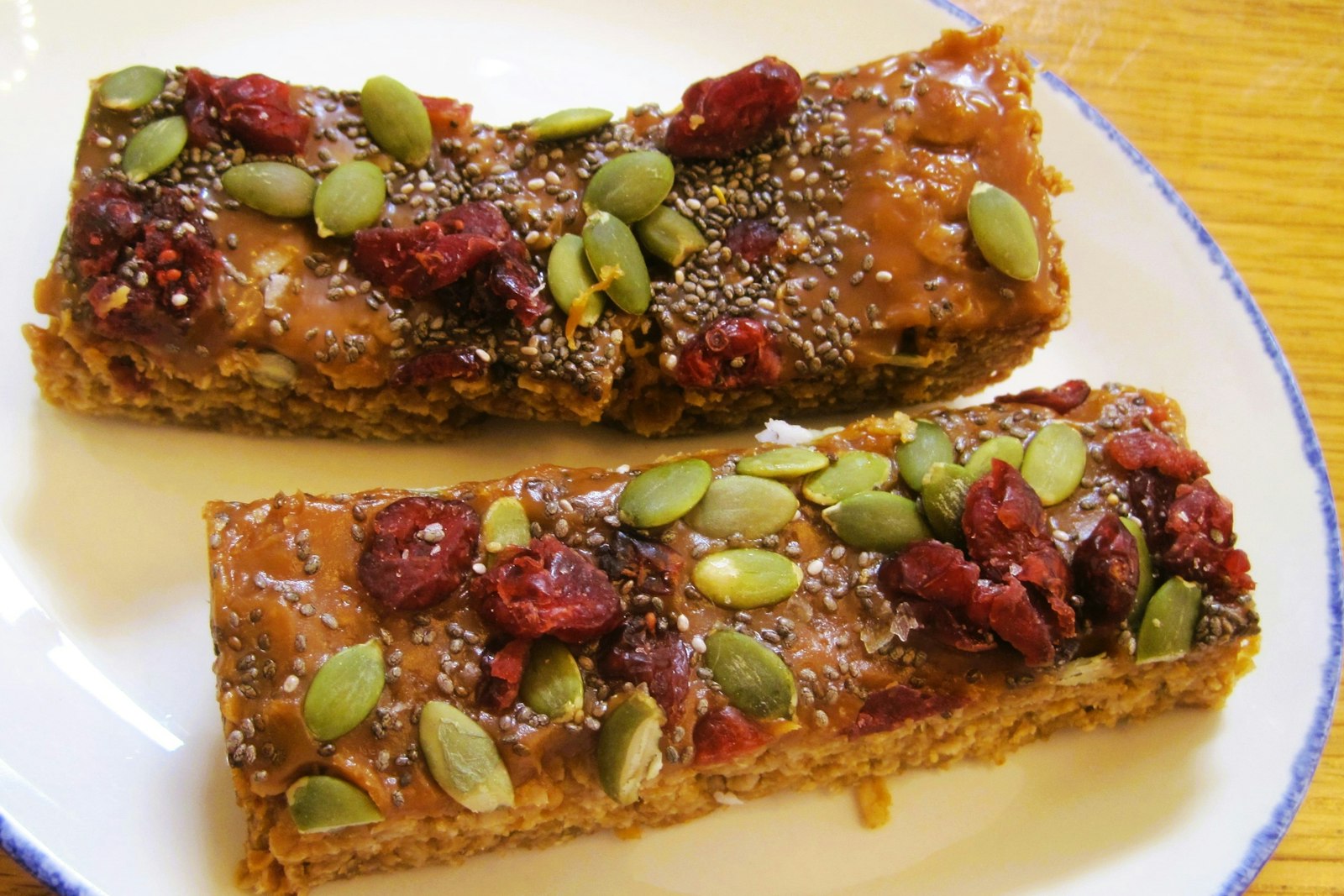
Store-bought granola bars can be excellent, but they are almost always sweeter, softer, and more expensive per serving than a homemade batch. Making them at home takes about 30 minutes, produces enough for a week of snacks, and lets you control the sweetness and texture in a way that packaged bars simply do not allow. The math is not fancy — once you understand the two working formulas below, you can build countless variations from what you already have in the pantry.
This guide covers the two main methods — no-bake pressed bars held together by nut butter and syrup, and baked oat bars that get their structure from egg and gentle browning — plus base ratios you can memorize and swap ingredients into. The variations at the end suggest specific combinations, but the underlying formulas do the real work.
Time: 15 min active + 30 min chill (no-bake) or 25 min bake (baked)
Yield: 10–12 bars
Difficulty: Easy
Cost per bar: roughly $0.40–$0.60 depending on mix-ins
Keeps: 1 week at room temperature, 3 weeks refrigerated
Which method to choose
No-bake bars are faster, hold together with less mess, and give you a chewy-crisp texture similar to a slightly softer version of a bar you would buy. They rely on a sticky mixture of nut butter and syrup to bind everything, and they set in the fridge without heat.
Baked oat bars have a firmer, drier bite closer to granola than to a chewy bar. They hold together through toasting and a small amount of egg, and they keep longer at room temperature. Both are legitimate — pick based on the texture you want and whether you want to turn on the oven.
The no-bake base ratio
Memorize this and you will not need a recipe again:
| Component | Amount | Role |
|---|---|---|
| Rolled oats | 2 cups | Structure and bulk |
| Nut butter | ½ cup | Binder and fat |
| Liquid sweetener (honey, maple syrup, brown rice syrup) | ⅓ cup | Binder and sweetness |
| Mix-ins (nuts, seeds, dried fruit, chocolate) | 1 cup total | Flavor and texture |
| Salt | ¼ teaspoon | Balance |
| Optional: vanilla, cinnamon, cocoa | to taste | Flavor |
Method
- Line an 8×8-inch square pan with parchment paper, leaving overhang on two sides for lifting the finished bars out.
- Warm the nut butter and syrup together in a small saucepan or the microwave until they loosen and stir together smoothly — about 45 seconds in the microwave or 2 minutes over low heat. You want them pourable but not hot.
- In a large bowl, combine the oats, salt, and mix-ins. Pour the warm nut butter mixture over and stir until every oat is coated. If the mixture looks dry, add another tablespoon of syrup; if it looks wet, add another few tablespoons of oats.
- Transfer to the parchment-lined pan. Press down hard and evenly using the bottom of a measuring cup, another piece of parchment, or your hands — compression is the difference between bars that hold and bars that crumble.
- Refrigerate for at least 30 minutes, or up to 2 hours. Lift out using the parchment, place on a cutting board, and slice into 10–12 bars with a sharp knife.
The baked oat bar base ratio
Baked bars use egg for extra binding and get their structure from toasting, which drives off moisture and firms the oats.
| Component | Amount | Role |
|---|---|---|
| Rolled oats | 2 cups | Structure |
| Nut butter | ⅓ cup | Binder and fat |
| Honey or maple syrup | ⅓ cup | Binder and sweetness |
| Egg | 1 large | Structural binder |
| Mix-ins | 1 cup | Flavor and texture |
| Salt | ¼ teaspoon | Balance |
| Baking powder | ¼ teaspoon | Slight lift |
Method
- Preheat oven to 350°F and line an 8×8-inch pan with parchment paper.
- Warm the nut butter and syrup as in the no-bake method, then whisk in the egg once the mixture has cooled slightly — hot syrup will scramble the egg.
- Combine oats, salt, baking powder, and mix-ins in a large bowl. Pour the wet mixture over and stir until evenly combined.
- Press firmly into the prepared pan. Even pressure means even baking.
- Bake for 20–25 minutes, until the edges are golden brown and the center is set but still slightly soft. It will firm up as it cools.
- Cool completely in the pan before lifting out and slicing — cutting while warm crumbles them.
Ingredient notes
Oats: Rolled (old-fashioned) oats are the standard. Quick oats work but produce a denser bar. Do not use steel-cut oats — they stay crunchy and never soften properly.
Nut butter: Natural peanut butter, almond butter, sunflower seed butter (for nut-free), or tahini all work. Avoid nut butters with a lot of added sugar or oil, which throw off the ratios. If your nut butter is very stiff, warm it before measuring.
Sweetener: Honey gives the most binding power because it stays sticky. Maple syrup is thinner and slightly less binding — use a tablespoon less liquid or a tablespoon more oats. Brown rice syrup is what commercial bars often use because it holds firmly at room temperature. Agave works but produces softer bars.
Mix-ins: Combine textures — something crunchy (chopped nuts, seeds), something chewy (dried fruit, coconut flakes), and something for interest (chocolate chips, cacao nibs). Keep total mix-ins to about 1 cup or the bars will not hold together.
Five variations built on the base
Classic peanut butter chocolate chip
Peanut butter, honey, ½ cup mini chocolate chips, ¼ cup chopped roasted peanuts, ¼ cup unsweetened coconut flakes. This is the closest to a commercial protein bar in flavor.
Almond cranberry breakfast
Almond butter, maple syrup, ½ cup dried cranberries, ¼ cup slivered almonds, ¼ cup raw pumpkin seeds. Add 1 teaspoon cinnamon and 1 teaspoon vanilla to the syrup mixture.
Tahini date power bar
Tahini, honey, ½ cup chopped Medjool dates (pitted), ¼ cup toasted sesame seeds, ¼ cup chopped pistachios. Add ½ teaspoon cardamom for a Middle Eastern flavor profile.
Trail mix bar
Sunflower seed butter (nut-free version) or peanut butter, honey, ⅓ cup raisins, ⅓ cup chopped mixed nuts (whatever you have), ⅓ cup mini chocolate chips or M&Ms. Standard trail mix ratios in bar form.
Cocoa hazelnut
Hazelnut butter or peanut butter, maple syrup, ½ cup chopped toasted hazelnuts, ¼ cup mini chocolate chips, 2 tablespoons cocoa powder mixed into the oats. This one tastes surprisingly close to a chocolate breakfast biscuit.
Common problems and fixes
Bars crumble when cut: Not compressed enough, or too many mix-ins for the amount of binder. Press harder next time and chill longer, or reduce mix-ins to ¾ cup.
Bars are too sticky/soft: Nut butter or syrup was too warm, or the ratio drifted toward wet. For no-bake, refrigerate longer. For baked, increase bake time by 3–5 minutes.
Bars are too hard/dry: Overbaked, or too much oat and not enough binder. For baked, pull them out when the edges are just golden. Add a tablespoon of extra nut butter to the base next time.
Chocolate chips melted into a mess: The nut butter and syrup mixture was too hot when you added the chips. Let it cool slightly first, or add chocolate chips right before pressing into the pan.
Storage
Cut bars keep in an airtight container at room temperature for 5–7 days, or refrigerated for up to 3 weeks. To freeze, wrap individually in parchment or wax paper, then store in a freezer bag for up to 3 months. Thaw at room temperature for 15 minutes before eating, or eat straight from the freezer for a firmer, cooler bar.
If the bars soften in humid weather, refrigerate them. If they harden in the fridge, let them sit at room temperature for 10 minutes before eating.
Frequently asked questions
Can I make these bars without added sweetener?
The syrup is doing structural work, not just adding sweetness — it binds the bars together. You can reduce to ¼ cup and add mashed banana or unsweetened applesauce, but the bars will be softer and need refrigeration to hold shape.
Are these good for meal prep?
Yes. Both versions are designed for it. Make a batch on Sunday, cut into individual bars, wrap in parchment, and grab one each morning. Refrigerated they stay fresh at least a week.
Can I use quick oats instead of rolled?
You can, but the bars will be denser and slightly powdery. Rolled oats give the best texture. Avoid steel-cut oats entirely.
How do I make these nut-free?
Use sunflower seed butter or tahini instead of nut butter, and swap chopped nuts for extra seeds — pumpkin, sunflower, or hemp. Roasted chickpeas add crunch without nuts.
Can I add protein powder?
Yes, add up to ¼ cup and reduce oats by ¼ cup. Whey powder can make bars dry — try plant-based protein or use collagen peptides, which do not affect texture. Add an extra tablespoon of nut butter to compensate for the additional dry ingredient.
Why did my baked bars turn out too soft in the middle?
They were underbaked, or the pan was too full. Bake a few minutes longer and let them cool completely — they firm up significantly during cooling.
The short version
Two ratios cover almost every homemade granola bar you will ever want to make: 2 cups oats plus ½ cup nut butter plus ⅓ cup syrup for no-bake, or the same with an egg and slightly less nut butter for baked. Everything else is preference. Once you know this, you stop needing recipes and start making bars from whatever the pantry gives you.