
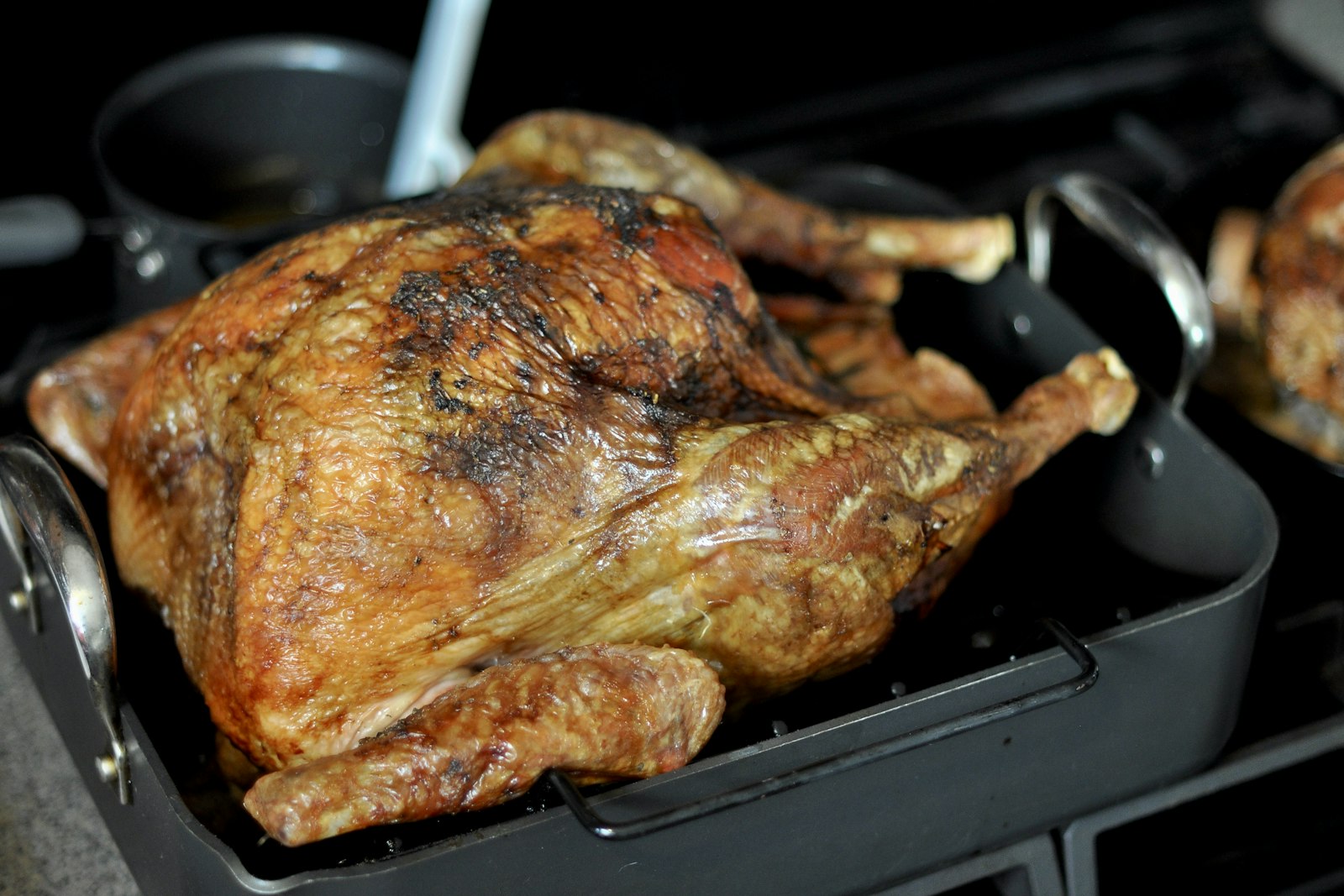
Every November, the same debate cycles through American food media. Dry-brine, wet-brine, or spatchcock. All three have strong advocates and all three produce a good turkey when done properly. But the recommendations tend to come with a certainty that is not warranted, and the actual choice depends on your oven, your schedule, and how much you care about the presentation. Here is my honest take after cooking Thanksgiving turkey most of the last twenty years.
The most important thing to say up front: any of these three methods will produce a better turkey than what most Americans grew up eating. If you brine, spatchcock, or both, you have already crossed the biggest hurdle. The question is which one fits your specific situation. This is not the kind of question with one correct answer.
Dry-brine: my default recommendation
Dry-brining is rubbing salt directly on the turkey (skin and inside the cavity) and letting it sit uncovered in the fridge for two to three days before cooking. It does three things: seasons the meat all the way through, dries the skin so it crisps in the oven, and slowly draws out and reabsorbs moisture in the muscle fibers so the meat cooks juicier.
The math is a teaspoon of kosher salt per pound of turkey, applied evenly. Uncover the turkey on a sheet pan or rack in the fridge for at least 24 hours, ideally 48 or 72. That is it. No liquid, no bucket, no fussing. It is the technique that most working cookbook authors and restaurant cooks use for holiday birds because it is reliable, forgiving, and produces the best skin of any method.
The tradeoff: it takes fridge space and planning. If you buy your turkey on Wednesday night and cook Thursday morning, you have missed the window. Buy Sunday for a Thursday bird if you want to dry-brine properly.
Wet-brine: still useful for specific situations
Wet-brining is submerging the turkey in salty water (with or without aromatics, sugar, herbs) for eight to eighteen hours. It produces the juiciest white meat of any method because the meat actually absorbs some of the brine. This matters most for people who care about the driest part of a turkey (the breast) being maximally moist.
The downsides are real. You need a container big enough to hold a 15-pound turkey submerged in a gallon or two of liquid, which typically means a five-gallon bucket, a cooler with ice, or a specialty brining bag. It takes significant fridge or cool space you probably do not have. The skin will not crisp as well because it starts the oven wet. And overbrined turkey tastes like ham, which is a real risk if you leave it in longer than the recipe recommends.
Who wet-brining is for: people who want maximum juiciness, do not care as much about crisp skin, have the space, and are cooking a bird from a producer that has not already been injected with a salt solution (most supermarket turkeys, including Butterball, are already salted, and wet-brining them makes them oversalted).
Spatchcock: the game-changer for time and evenness
Spatchcocking is removing the backbone with kitchen shears (or asking your butcher to do it) and pressing the bird flat before roasting. It looks weird if you are used to seeing a whole bird presented at the table. It also cooks in roughly half the time and produces the most evenly cooked turkey of any method. The breast and thigh finish at nearly the same time, which is the whole ballgame.
A 12-pound spatchcocked turkey cooks in about 80 to 90 minutes at 450F, compared to 3 to 4 hours for a whole bird at 325F. This frees up your oven for the sides. The presentation is undeniably less traditional. If you carve the turkey in the kitchen and bring it out on a platter (which you should be doing anyway, whole bird or not), the presentation issue disappears entirely.
| Method | Prep time before cooking | Cook time (12 lb bird) | Best for |
|---|---|---|---|
| Dry-brine, whole roast | 48 to 72 hours | 3 to 4 hours | Best skin, classic presentation |
| Wet-brine, whole roast | 12 to 18 hours in brine | 3 to 4 hours | Juiciest breast, if you have space |
| Spatchcock, dry-brine | 48 to 72 hours | 80 to 90 minutes | Best result overall, less traditional |
| Spatchcock, wet-brine | 12 to 18 hours in brine | 75 to 90 minutes | Fastest, juiciest, worst skin |
| No brine, whole roast | 0 | 3 to 4 hours | You forgot; make good gravy |
Temperature and timing, actually
The number one home Thanksgiving mistake is not pulling the turkey when it is done. USDA says 165F. Serious home cooking has moved to pulling at 155F to 160F in the deepest part of the breast, resting for 20 to 30 minutes tented with foil, during which the temperature rises another 5F to 10F and the juices redistribute. This produces dramatically juicier white meat than pulling at 165F.
The dark meat can go higher, up to 175F or even 180F, and be better for it. Thigh meat has more connective tissue that benefits from a longer cook. This is one of the reasons spatchcocking is so useful: with the bird flat and the thighs exposed to more direct heat, the temperature difference between breast and thigh at pull time is only about 15F, which is much easier to manage than the 25F difference in a traditional roast.
Skip these turkey mistakes
Stuffing the cavity slows cooking, dries the breast, and produces stuffing that is often either underdone (food safety risk) or overdone by the time the turkey is right. Cook your dressing in a pan. It will be crispier and better and safer.
Basting does nothing for the meat (the liquid does not penetrate the skin) and cools the oven every time you open the door. Skip it. If you want browned skin, use butter or oil under the skin before roasting, or brush the skin with butter every 45 minutes for the last hour if you must.
Frozen turkeys need three to five days in the fridge to thaw. This is longer than most people plan for. Buy your turkey on Saturday for a Thursday cook if you are working from frozen, which most supermarket birds are.
The gravy conversation
The best turkey in the world is undermined by a bad gravy. Make your gravy in advance from stock you built from a small turkey (or from turkey wings you buy separately for this purpose). Deglaze the roasting pan on Thursday and add those drippings to your pre-made gravy. This is the professional trick. It takes the panic out of finishing gravy while everything else needs to be plated.
Cook’s Illustrated has advocated the make-ahead gravy for at least fifteen years and it is right about this. The gravy is often the difference between a merely fine turkey dinner and a great one.
Frequently asked questions
Which method makes the best turkey overall?
Dry-brined and spatchcocked is the technical winner for most home cooks: crispy skin, evenly cooked, juicy meat, and cooks in an hour and a half. If presentation matters more to you than convenience, dry-brined and whole-roasted is the next best. Neither wet-brine method beats these unless you specifically need the extra juiciness in the breast.
Can I dry-brine an already-brined supermarket turkey?
Yes, but use less salt (about half the usual amount, so a half teaspoon of kosher salt per pound) because the bird has already been injected with salt solution. Read the label. Anything that says “self-basting” or “enhanced with X% solution” has been pre-brined.
What size turkey do I need?
About one and a quarter pounds per person for a whole bird, less for a spatchcocked or portioned turkey because there is less bone waste in the recipe. For eight adults, a 10-pound bird is sufficient. For twelve, get a 15-pound bird. Bigger than 18 pounds cooks unevenly no matter what technique you use; if you have more people, get two smaller birds.
How long does spatchcocking really save?
A 12-pound spatchcocked turkey at 450F cooks in about 80 minutes. A 12-pound whole turkey at 325F cooks in about 3 hours. So you save close to two hours of oven time and get more even doneness in the process.
Should I truss the turkey?
No. Trussing was recommended when turkeys came from wild sources and were leaner. Modern birds do not need it, and trussing actually slows cooking and makes the thighs cook slower than the breast. Leave the legs free.
The short version
Dry-brine and spatchcock is the best home turkey method for the largest number of home cooks. Two to three days of planning, an hour and a half in the oven, evenly cooked meat with crispy skin, and enough oven time freed up for real sides. Wet-brine if you have space and want maximum juiciness in the breast. Skip stuffing the cavity, basting, and trussing. Pull the breast at 155F to 160F and rest for real. And make your gravy in advance. That is 90% of a great Thanksgiving turkey, and the other 10% is not overthinking it.