
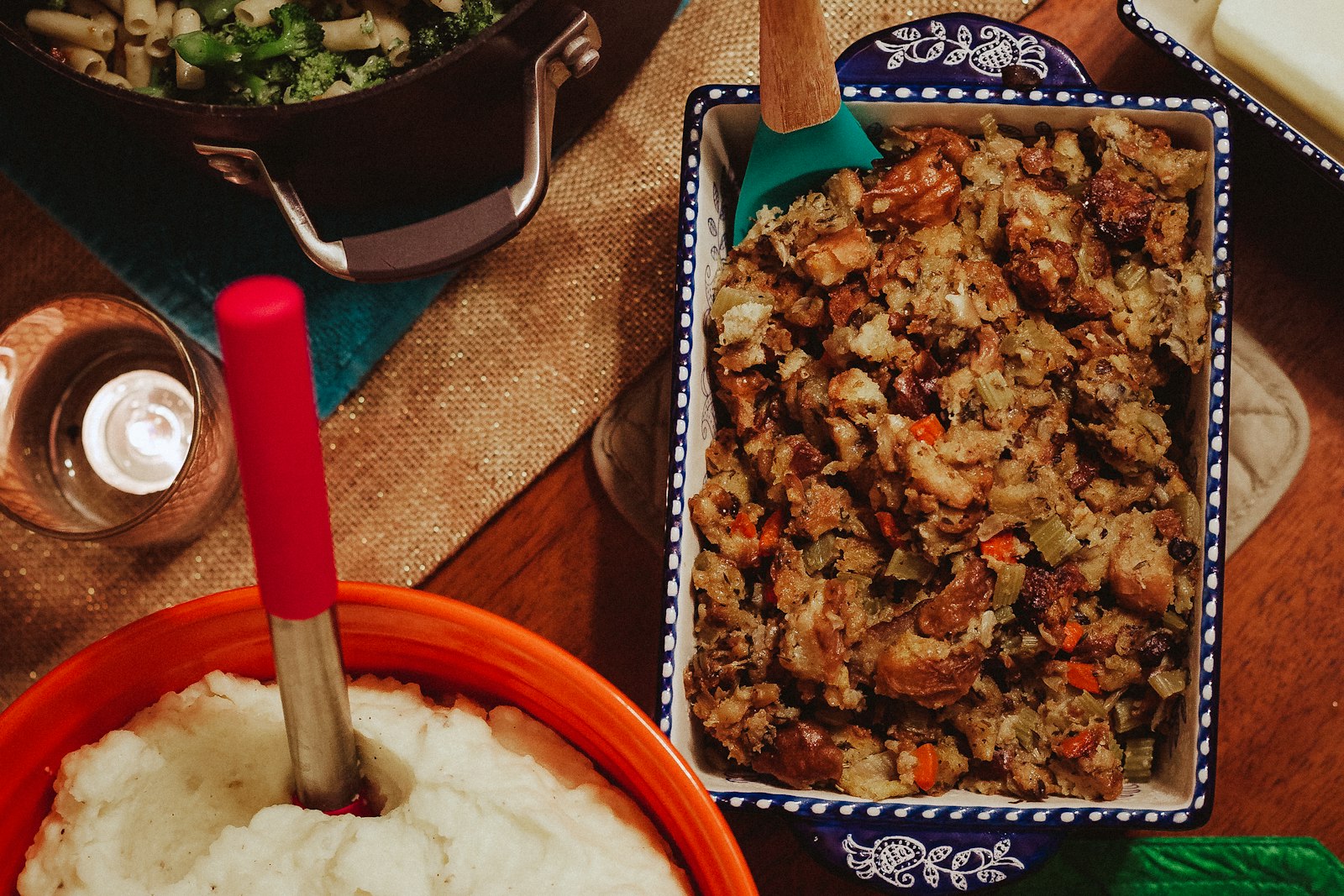
The dirty secret of Thanksgiving is that most of the sides sit half-eaten at the end of the meal. Everyone has one or two they love, everyone politely takes a small scoop of the rest, and the leftovers become a science experiment in the back of the fridge for a week. Nobody wants to admit this, because Thanksgiving is a holiday about tradition and abundance, and admitting that half the food goes uneaten feels like a betrayal of both.
I am going to admit it anyway, because I would rather cook five sides that get eaten than nine that get pushed around. Here are the five that, in my experience, actually get finished, and why they work when others do not.
Real mashed potatoes, not a shortcut
Mashed potatoes are the most eaten side of Thanksgiving in almost every household, and they are also the most commonly ruined. The mistakes: using the wrong potato (waxy potatoes make gluey mash), boiling in unsalted water, adding cold cream or butter, and mashing so aggressively that the starch breaks down. The result is glue with butter on top.
The right approach: Yukon Gold or Russet, peeled and cut into even chunks, started in cold heavily salted water, brought to a boil, cooked until a knife slides through easily. Drain, return to the pot, dry over low heat for a minute. Warm cream and melted butter together. Pass the potatoes through a ricer or a food mill (not a food processor, ever), then fold in the warm dairy and salt to taste. Serve hot.
Amount: about a pound of potatoes per two people. This is more than seems reasonable and gets eaten anyway.
One vegetable that has actually been seasoned
The saddest thing about Thanksgiving is the green bean casserole from the can, or its cousin, the plain steamed green vegetable that sits untouched. Green vegetables at Thanksgiving get eaten when they taste like something. That means garlic, chili flakes, lemon, cheese, brown butter, or all of the above.
My default is roasted brussels sprouts with balsamic vinegar and pomegranate seeds. Halve the sprouts, toss with olive oil and salt, roast at 425F cut-side down for 25 minutes until deeply browned. Off the heat, toss with balsamic vinegar, pomegranate seeds, and shaved parmesan. This is a side that gets eaten. So does green beans with brown butter, garlic, and toasted almonds. So does a big platter of roasted broccoli with anchovy and chili.
What does not get eaten: green bean casserole from the can (make it from scratch if you love the concept, or skip it), plain steamed anything, and the “healthy” vegetable side that got no salt and no fat.
Stuffing or dressing, cooked outside the bird
Dressing, made in a pan outside the turkey, is better than stuffing cooked inside the turkey. It cooks faster, cooks safer, has a crispy top, and does not slow down your turkey. Whatever you call it (New Englanders say stuffing, Southerners say dressing, and everyone is technically correct depending on their tradition), make it in a casserole dish.
The base: cubed and dried bread (I like a mix of sourdough and cornbread), onions and celery cooked in butter, herbs (sage, thyme, parsley), stock, eggs. Bake covered until set, uncover for the last 20 minutes to crisp the top. The variations are endless (sausage, chestnuts, dried cranberries, oysters if you are from a certain part of the country) but the base is what matters.
This is a side that people eat all of. Then they eat the leftovers cold. Then they fight over the last of it.
Cranberry sauce, with actual acidity
Cranberry sauce from the can with the ridges from the tin is a nostalgic food that many people love and I am not going to try to talk you out of. But if you are making cranberry sauce from scratch, the mistake most home cooks make is too much sugar. Cranberries need sugar to be edible. They do not need to taste like jam.
My cranberry sauce: a bag of cranberries, three-quarters of a cup of sugar (not the full cup most recipes call for), half a cup of orange juice, the zest of an orange, and a pinch of salt. Simmer 15 minutes until the cranberries burst. Cool. Refrigerate. It gets better on day two. It cuts through the richness of everything else on the plate, which is the whole point of a cranberry sauce.
One salad or slaw for balance
The Thanksgiving plate is heavy. Potatoes, gravy, buttery vegetables, bread stuffing, rich meat. One cold, crunchy, acidic thing rebalances everything and is the side people are most surprised to enjoy. A shaved brussels sprouts salad with lemon, olive oil, and pecorino. A cabbage and apple slaw with mustard vinaigrette. An arugula salad with pears, walnuts, and blue cheese. Any of these takes ten minutes and rescues the second half of the meal.
This is the side that gets remembered afterward. Not the marshmallow-topped sweet potatoes, not the fourth starch. The bright, crunchy, acidic thing on a plate otherwise dominated by beige.
| Side | Get eaten? | Notes |
|---|---|---|
| Mashed potatoes done well | Yes, always | Make more than seems reasonable |
| Roasted brussels sprouts with balsamic | Yes | The vegetable side that converts skeptics |
| Homemade dressing (stuffing) | Yes | Cook outside the bird for a crispy top |
| Cranberry sauce with acid | Yes, in small scoops | Better next day; make ahead |
| Cabbage or arugula salad | Yes | The plate needs one bright cold thing |
| Green bean casserole from can | Sometimes | Nostalgia dish; skip or make from scratch |
| Sweet potato casserole with marshmallows | Partially | Divisive; kids eat marshmallows, adults do not |
| Corn pudding | Sometimes | Another starchy side is often too much |
| Rolls | Yes | People eat these mostly for the leftover sandwiches |
| Creamed onions | Rarely | Traditional in some families; often untouched |
What to skip
The Thanksgiving table does not need seven starches. It needs one great potato dish, one great bread dish (stuffing or rolls, not both in large quantities), and vegetables that are not another starch in disguise. Sweet potato casserole with marshmallows is not a vegetable side; it is a dessert with a savory nametag. If you love it, keep it. If it is on the table out of obligation, skip it.
Also worth skipping unless someone in your family will genuinely eat them: creamed onions, most jellied salads, ambrosia, and any casserole with cream of mushroom soup as the base. If a dish shows up every year and everyone takes a scoop out of politeness, it is not doing its job.
The strategy that works
Five sides done well beats nine sides done adequately. Pick your one great potato, your one great vegetable, your dressing, your cranberry sauce, your salad. Make the gravy in advance. Add rolls if your family will eat them. This is enough food for the meal, and you will actually enjoy cooking it instead of running the kitchen like a diner shift.
The other benefit: you have space in your oven and on your stove to execute the fewer dishes well. Thanksgiving disasters come from trying to cook too many things in too little space, not from any individual dish being too hard.
Frequently asked questions
How many sides should I make for Thanksgiving?
Five is enough for most gatherings up to ten people. Add a sixth if you have a strong family tradition (a specific casserole or dish that would be missed). More than seven sides means someone’s contribution is definitely going home in a container mostly full.
What is the best make-ahead side?
Cranberry sauce is the winner (better on day two or three than fresh). Mashed potatoes can be made a day ahead and reheated with additional cream or milk. Stuffing can be assembled the day before, refrigerated unbaked, and baked on the day. Salads and roasted vegetables are day-of.
Should I make sweet potatoes with marshmallows if no one loves them?
No. Make a savory sweet potato dish instead (roasted with olive oil and rosemary, or mashed with brown butter and sage). Or skip sweet potatoes entirely. Nobody at your table will complain if a dish they did not eat last year is not there this year.
How do I keep mashed potatoes warm and not gluey?
Cover with a clean kitchen towel then a lid (the towel absorbs steam that would otherwise turn the potatoes gummy) and keep on very low heat, or in a slow cooker on warm. Reheat leftovers with a splash of warm milk or cream, stirred in gently.
What is the one side worth adding if I have room for another?
A really good salad or slaw. The Thanksgiving plate is deficient in bright, crunchy, acidic food, and even a very simple salad with lemon vinaigrette rebalances the meal. If your family is not a salad family, a slaw with vinegar dressing works too.
The short version
Thanksgiving sides work better when you make fewer of them and make them well. Real mashed potatoes with warm cream. A green vegetable that has actually been seasoned. Stuffing baked outside the bird. Cranberry sauce with acidity. One salad or slaw for balance. Skip the casseroles that nobody eats. Trust that four or five good things will make a fuller meal than eight mediocre ones. And if your family expects a specific traditional dish, keep it. The point of Thanksgiving is people, not proving anything about the food.