
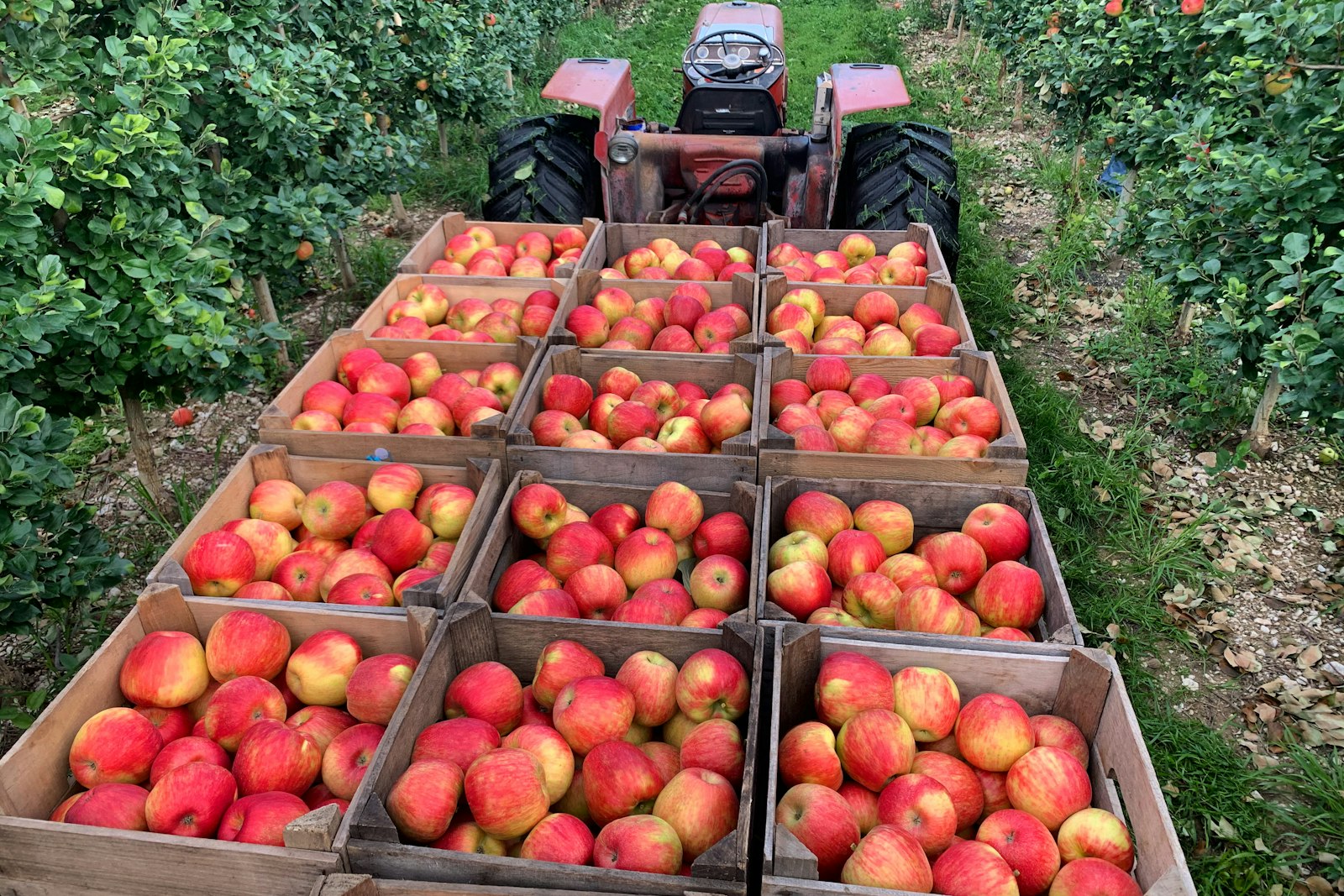
October is my favorite month in the bakery calendar because it is when the good apples start showing up. Not the four-varieties-year-round supermarket lineup, but the actual harvest: Honeycrisps that were on the tree three days ago, Cortlands that make the best pie you have ever tasted, and heirloom varieties like Cox’s Orange Pippin or Newtown Pippin that you cannot get in July. If you have access to an orchard or a good farmers market this fall, apples are the ingredient to plan around.
Pie is fine. Pie is great. But pie is also the least interesting thing to do with a bag of good apples, and if you keep buying apples with only pie in mind, you will end up with a fridge drawer of shriveled fruit and a lot of guilt. Here is the more useful version of apple season.
The variety chart everyone should have
Apple recipes rarely tell you what variety to use, and when they do, they often just say “a tart baking apple.” This is not helpful if you are standing at a market with fifteen varieties in front of you. Here is a rough guide that will save you a lot of trial and error.
| Variety | Best for | Notes |
|---|---|---|
| Honeycrisp | Eating raw, salads | Crisp, sweet, expensive; does not bake into a great pie because it stays too firm |
| Granny Smith | Pie, tarts, pork dishes | Very tart, holds shape, benefits from butter and sugar |
| Braeburn | Pie, roasting, applesauce blend | Balance of tart and sweet, good all-purpose baker |
| McIntosh | Applesauce, cider | Collapses on cooking; do not use for pie |
| Cortland | Pie, salads (doesn’t brown fast) | Legendary pie apple in the Northeast |
| Cox’s Orange Pippin | Eating raw, cider | Fragrant, complex; worth seeking out |
| Golden Delicious | Cake, quick breads, applesauce | Sweet, cooks down easily, underrated in baking |
| Fuji | Eating raw, salads | Too sweet for most baking, great with cheese |
The dessert that beats pie for weeknight use
An apple tart or a French galette takes twenty minutes of active work and produces something you will eat more of than a pie because it is not overwhelming to make. My default is a simple galette: roll out a disc of butter pie dough, pile on sliced apples tossed with sugar and a little flour, fold the edges up loosely over the fruit, brush with egg, sprinkle with more sugar, bake at 400F for 40 minutes.
The reason to make this instead of pie: no pan, no top crust, no lattice weaving, no rolling twice. It looks rustic and beautiful without effort, and it feeds four to six people. If I have to choose one apple dessert to make from scratch every week of October, it is this.
Apple cake, actually
The single most useful apple dessert to have in your repertoire is a good apple cake. Not upside-down. Not fussy. Just a moist, spiced cake with a lot of apple pieces baked into it, that keeps well for four days on the counter and tastes better on day two than day one. There are hundreds of good versions. The Marian Burros plum torte adapted for apples is one. Any brown-butter apple cake is another. The point is to have one that works for you and make it three or four times in October.
My rule for apple cake: use twice as much apple as you think you should. A cake that has apples “in it” is boring. A cake that is barely holding together around apples is what you want. Use Braeburn or Golden Delicious for cake; they release enough moisture to keep the crumb tender without turning the cake to mush.
Applesauce and apple butter
Homemade applesauce is one of the most underrated foods in the American kitchen. It costs almost nothing, takes 30 minutes of mostly passive work, and is better than any commercial version. Quarter and core apples (do not peel; the pectin in the skins helps texture, and you strain them out later if you want smooth sauce). Cook with a splash of water and a pinch of salt for about 20 minutes until falling apart. Pass through a food mill or a fine sieve. Sweeten to taste. Done.
Apple butter is applesauce cooked longer. Put your finished sauce in a slow cooker with brown sugar and cinnamon and let it cook down for eight hours on low, uncovered, stirring occasionally. It reduces by half, turns dark brown, and becomes something you spread on toast for months. Both freeze beautifully.
Roasted apples on the savory side
Apples are not just for dessert, and this is where a lot of home cooks miss the point of apple season. Sliced apples roasted with pork chops in a hot oven are one of the best fall dinners of the year. Cut in wedges, tossed with olive oil, salt, and a little maple syrup, roasted at 425F for 20 minutes alongside chicken thighs, they become a side dish that requires no thought.
Cabbage braised with apples and bacon is a European classic for a reason. Grated apple in a slaw with cabbage, walnuts, and blue cheese is a genuinely great salad. And apples poached in wine with peppercorns and star anise, then served with a roast, is the kind of thing that makes people think you did more work than you did.
Preserving what you cannot eat now
If you find yourself with more apples than you can use in two weeks, you have three good options. Applesauce, frozen in bags. Apple butter, canned in a water bath or frozen. And frozen apple pie filling: sliced apples tossed with sugar, cinnamon, and cornstarch, portioned into pie-sized amounts, and frozen flat in bags. In February, you have Sunday pie in an hour.
For long-term storage of whole apples, wrap each one loosely in newspaper and keep them in a cool, dark place (ideally 35F to 45F). A cold garage or a proper root cellar keeps most varieties three months. A fridge works but takes up a lot of space. Check regularly and remove any that start to soften; one bad apple actually will spoil the whole bunch through ethylene release.
Frequently asked questions
What is the best apple for pie?
Most professional bakers use a blend rather than a single variety. A common combination is Granny Smith for structure and tartness plus Golden Delicious or Braeburn for sweetness and flavor. Straight Honeycrisp does not bake well (too firm, too watery). Cortland alone makes an excellent pie in the Northeast tradition. Serious Eats has done extensive testing on this and generally recommends a blend.
Should I peel apples before baking?
For pie, tarts, and most baked desserts, yes, because the skins get chewy in a way most people do not like. For applesauce, no, leave them on and strain later. For a rustic galette, either works, and unpeeled is more attractive.
How do I keep cut apples from browning?
Toss with a small amount of lemon juice, or drop into a bowl of cold water with a squeeze of lemon. For salads and cheese boards, the lemon method works for several hours. The browning is oxidation; it does not make the apple unsafe or worse tasting, just less pretty.
Do I need to add pectin to apple butter or applesauce?
No. Apples are naturally high in pectin, especially in the cores and skins. If you leave the skins on during cooking and strain them out at the end, you get plenty of body without adding anything.
What is the shelf life of homemade applesauce?
Refrigerated, about two weeks. Frozen in a sealed container or bag, about a year without noticeable quality loss. Properly water-bath canned, one year at room temperature. If you plan to make more than three quarts, canning is worth the setup time.
The short version
Apple season is short and worth planning for. Match the variety to the job (Granny Smith and Cortland for pie, Braeburn for cake, McIntosh for sauce, Honeycrisp for eating). Make a galette instead of a pie when you want less work for a similar payoff. Bake a good apple cake and put it on the counter for the week. Cook apples with pork, chicken, or cabbage on the savory side of the kitchen. And if you find yourself overwhelmed, applesauce takes 30 minutes and freezes for a year. Pie is fine. It is not the whole story.