
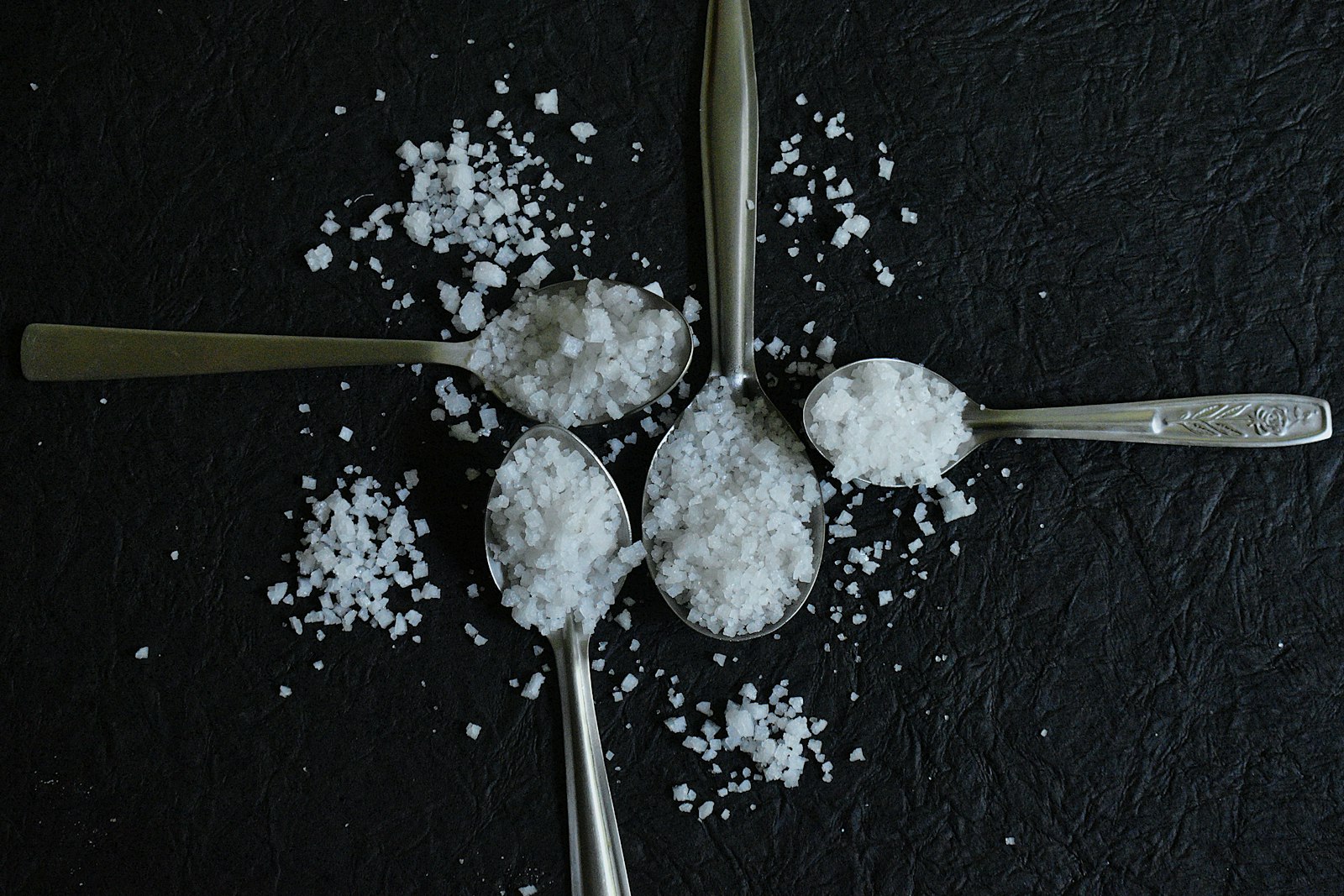
Salt is the single most important ingredient in cooking and, oddly, the one most home cooks feel most uncertain about. A recipe says “one teaspoon salt” but the size of a teaspoon of Diamond Crystal kosher differs from a teaspoon of Morton kosher, differs from a teaspoon of fine sea salt, differs from a teaspoon of table salt — sometimes by a factor of two. Which is why the same recipe cooked by two people using different salts can turn out completely differently.
This guide explains what salt actually does in cooking, the practical differences between the main types you will encounter, when each one is right, and how to season with confidence when a recipe assumes a salt you do not have. Once you understand the underlying variables, most cookbook instructions become easier to interpret, not more confusing.
Everyday cooking: kosher salt (Diamond Crystal or Morton)
Baking: fine sea salt or table salt, measured by weight if possible
Finishing: flaky salt (Maldon or fleur de sel)
Key rule: salt in layers throughout cooking, not just at the end
Salinity of seawater ≈ 3.5% — reference for pasta water and brines
What salt actually does
Salt does more than make food taste “salty.” It sharpens other flavors by suppressing bitterness and heightening sweetness and umami. It changes texture — drawing water out of meat and vegetables through osmosis, tightening egg proteins, weakening gluten in dough, and preserving food by making environments hostile to bacteria and mold.
In everyday cooking, salt applied early gives ingredients time to season all the way through. Salt applied only at the end sits on the surface — you taste it strongly, but the flavor stays superficial. This is why professional cooks salt in layers: a pinch on vegetables as they cook, a pinch in the sauce, a small amount at the end for adjustment. Each layer builds depth that a single seasoning at the end cannot replicate.
The main types you will actually use
| Salt | Grain | Volume equivalent (1 tsp table salt =) | Best for |
|---|---|---|---|
| Table salt (fine, iodized) | Very fine | 1 tsp | Baking, dishes where salt must dissolve fully |
| Fine sea salt | Fine | ~1 tsp | Baking, sauces, general use when table salt is not preferred |
| Diamond Crystal kosher | Large, hollow flakes | ~2 tsp | Cook’s default; forgiving to pinch and adjust |
| Morton kosher | Dense flakes | ~1.5 tsp | General cooking; more concentrated than Diamond Crystal |
| Maldon or flaky sea salt | Large flat flakes | ~1.5 tsp | Finishing only — sprinkle on cooked food |
| Fleur de sel | Delicate, moist flakes | ~1.5 tsp | High-end finishing; more expensive |
| Pink Himalayan | Varies (fine to coarse) | Depends | Cosmetic; no functional difference from other salts |
The main insight from this table: Diamond Crystal kosher takes twice as much salt by volume to equal table salt. Following a recipe that says “1 teaspoon kosher salt” with Diamond Crystal gives you half the sodium of the same recipe cooked with Morton kosher, and one-quarter the sodium if the writer meant table salt. This is the single biggest source of variance in recipes.
Kosher salt in depth
Kosher salt is the standard in most American professional and food-media kitchens because its large grains are easier to pinch, sprinkle, and control by feel. The word “kosher” refers to its historical use in the koshering process for meat — not that it is itself kosher-certified (though it usually is).
The two main brands, Diamond Crystal and Morton, are meaningfully different. Diamond Crystal is hollow and flaky, so a tablespoon weighs about 8 grams. Morton is denser and more crystalline, so a tablespoon weighs about 12 grams — half again as much salt per volume measure. Cooks and cookbooks usually specify which brand they use because the substitution is not one-for-one.
If a recipe just says “kosher salt” without specifying, assume Diamond Crystal — it is the more common assumption in modern American cookbooks. If you use Morton, reduce by about a third. If you use table salt, cut by half.
Sea salt and finishing salts
Sea salt is any salt harvested by evaporating seawater. Depending on where it comes from and how it is processed, it can range from very fine (Baleine, La Baleine) to coarse (Cyprus flakes) to delicate flake structures (Maldon, fleur de sel). Fine sea salt behaves similarly to table salt in recipes. Flake and finishing sea salts are used differently — sprinkled on food after cooking to add both salinity and a distinct crunch.
Flake salt is not for seasoning through cooking. Its large, flat crystals dissolve quickly on the tongue, giving a burst of saltiness plus texture that is lost when melted into a sauce or brine. Use it as the last thing you do — on a steak just before serving, on tomatoes with olive oil, on a fresh salad, on chocolate desserts to sharpen the sweetness.
Iodized table salt
Table salt is finely ground and often iodized (containing potassium iodide as a public-health additive). The iodine can impart a subtle metallic note in some applications, which is why many cooks prefer kosher or non-iodized sea salt for high-heat searing and delicate sauces. In baking, however, table salt is often the best choice because its fine grain dissolves evenly and its measure is predictable.
Specialty and colored salts
Pink Himalayan, black lava, smoked, and other specialty salts exist mostly for appearance and marketing. Chemically, they are all sodium chloride with trace mineral impurities that add color but almost no flavor difference in cooking. The exception is smoked salt, which does add a distinct wood-smoked flavor useful in certain contexts (finishing grilled foods, vegan dishes going for a savory-smoky note).
There is no meaningful nutritional advantage to any specialty salt over ordinary sea or kosher salt. Buy them if you like how they look, but do not expect a functional difference.
How much salt to use
Rules of thumb that work in most kitchens:
- Pasta water: 1 tablespoon Diamond Crystal (or 2 teaspoons Morton) per quart of water. The water should taste noticeably salty.
- Meat seasoning (dry brine): about ½ teaspoon Diamond Crystal per pound. Let sit at least 45 minutes; ideally overnight uncovered in the refrigerator.
- Vegetable roasting: a generous pinch per handful, evenly tossed. Better to under-salt during roasting and adjust at the end than to over-commit.
- Soups and stews: season lightly throughout cooking, then adjust at the end. Long-simmered dishes concentrate as liquid evaporates, so early seasoning becomes stronger by the finish.
- Baking: ½ teaspoon table salt (or ~1 tsp Diamond Crystal) per cup of flour for most bread doughs; less for pastries. Baking salt should be measured accurately — bread and cookies notice the difference.
Substitutes for reduced sodium
If you need to reduce sodium for health reasons, plain salt substitution rarely works — most “low-sodium” salts substitute potassium chloride, which has a distinct off-flavor and is contraindicated for people on certain medications. Better strategies for lower-sodium cooking include:
- Building flavor through acid (lemon, vinegar), aromatics (garlic, onion, herbs), and umami (mushrooms, tomato paste, miso, aged cheese).
- Using seasonings that amplify the perception of salt (black pepper, chile, smoked paprika, freshly ground pepper).
- Salting at the end of cooking rather than throughout. Surface salt is perceived more strongly per gram than salt cooked into food.
- Choosing recipes and cuisines that rely less on salt for flavor (many Indian, Mexican, and Middle Eastern dishes build flavor around spice and acid).
Common mistakes
Under-salting throughout cooking, over-salting at the end. Adjusting only at the end means the salt sits on the surface and does not penetrate. Bland food that tastes salty on the first bite is a symptom of this.
Using flake salt to season. Sprinkling Maldon into a sauce during cooking is a waste — the delicate flakes dissolve and become indistinguishable from any other salt. Save it for the finish.
Assuming all kosher salt is the same. As noted, Diamond Crystal and Morton are meaningfully different. If a recipe writer says “kosher salt” without specifying, ask or taste as you go.
Salting boiling water instead of tasting it. Pasta water should taste noticeably salty — like weak sea water. If it does not, add more.
Frequently asked questions
Is one type of salt healthier than another?
No — all common salts are essentially sodium chloride. Trace minerals in specialty salts (pink Himalayan, sea salts) are present in amounts too small to affect health. Iodized table salt provides iodine, which is a legitimate public-health additive but not always necessary if you eat other iodine sources (dairy, seafood).
Can I substitute table salt for kosher salt in any recipe?
Yes, with adjustment. About ½ teaspoon table salt equals 1 teaspoon Diamond Crystal kosher, or about ¾ teaspoon Morton kosher. Adjust to taste. Baking recipes benefit from weighing salt when possible; savory cooking is more forgiving.
How much salt should be in pasta water?
Enough that it tastes noticeably salty when you taste a spoonful. A common rule is 1 tablespoon Diamond Crystal (or 2 teaspoons Morton, or 1 teaspoon table salt) per quart of water. The pasta absorbs a small amount as it cooks; most is discarded with the water.
Does salting meat before cooking dry it out?
Only if you salt just before cooking, when the surface has drawn out moisture but has not yet reabsorbed it. Salt applied 45 minutes or more before cooking — a “dry brine” — draws moisture out, dissolves in the surface water, then gets reabsorbed with a saltier, more evenly seasoned juice. This produces juicier, better-seasoned meat, not drier.
Why does my food sometimes taste salty and flat at the same time?
Because salt was applied only on the surface, at the end, rather than in layers throughout. The first bite hits surface salt hard; the interior is unsalted. Salting in stages during cooking distributes flavor and prevents this contrast.
Is sea salt worth the extra cost?
For finishing, yes — the texture is genuinely different and a small amount of flake sea salt makes a visible and tactile difference on finished dishes. For general cooking through, ordinary kosher or table salt is functionally identical.
The short version
Salt matters more than any other single ingredient in cooking. Pick a default (Diamond Crystal kosher is a good one), learn its weight and volume by feel, and season in layers throughout cooking rather than just at the end. Keep a flake salt handy for finishing. When a recipe assumes a different salt than the one you have, convert by weight, not by volume. Everything else is variations on those basics.