
There is a container in the back of every freezer that nobody is going to open. It is brown, or orange, or it is a solid white brick, and the last person who could have identified it has forgotten. It will sit there until the freezer is defrosted, and then it will go in the trash.
That container was labeled. It said soup. Which was true and completely useless eight weeks later, standing in front of an open door at half past six with two hungry people behind you.
A label that works has four fields on it, not one. Each of the four answers a question you are actually going to ask, and none of them takes more than three seconds to write while the container is still empty and warm.
- The four fields: what it is, the date it went in, how much, and one instruction
- Where to write it: on the empty container, before it is filled
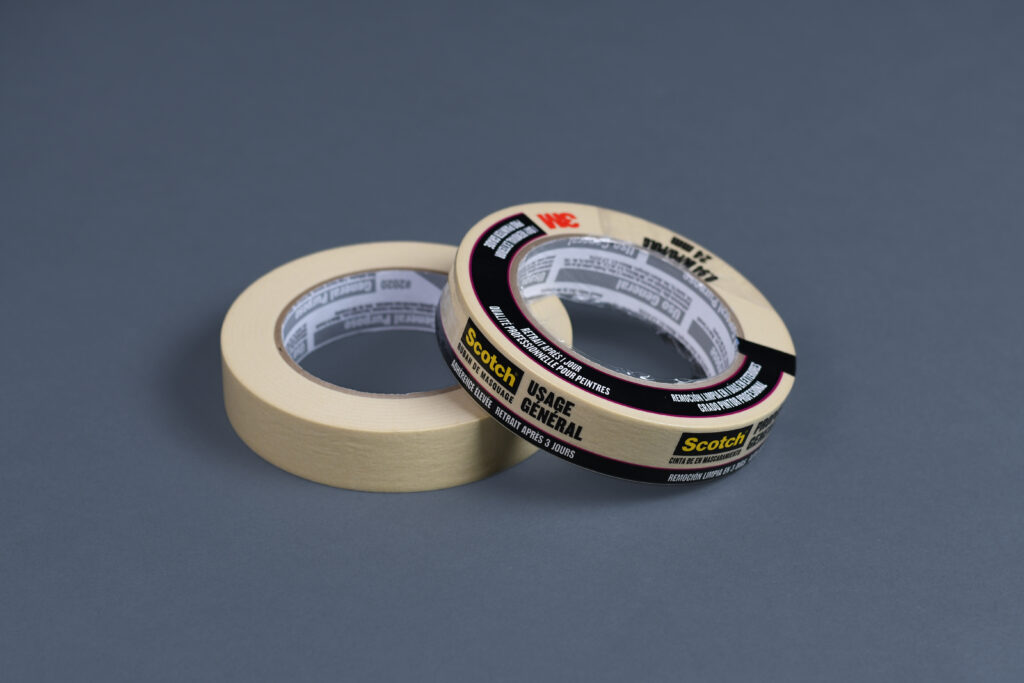
- What holds: painter’s tape on a dry room-temperature surface, permanent marker
- What fails: masking tape on a cold wet lid, and marker straight onto frosted plastic
- Freezer temperature: zero degrees, measured, not assumed
- The layout: newest at the back, everything standing on its edge
Four fields, and why three of them are not enough
The test for a label is not whether it describes the contents. It is whether it answers the question that gets asked at the moment the door opens, and that question is never “what is this.” It is “can this be dinner tonight, for these people, without a plan.”
One field answers a quarter of that. A container marked chili still leaves you guessing whether it is one portion or four, whether it has been in there for six weeks or six months, and whether it goes in a pan or a microwave. Three of those four are unknowable by looking at a frozen block.
So the four fields are not decoration. Drop any one of them and the container joins the group at the back that nobody opens. The whole system costs about eight seconds per container and it is the difference between a freezer that is an asset and a freezer that is a storage unit for food you paid for twice.
Field one, a name you can read at six in the evening
Write the dish, not the category. Soup is a category. White bean and kale is a dish, and it tells you in three words whether it fits what is already thawing on the counter.
Add the one detail that would change your mind. Chicken curry, mild matters if a seven-year-old is eating. Bolognese, no dairy matters if someone in the house cannot have it. If you froze it in two different sizes, note which one this is.
Skip the adjectives. Nobody has ever been helped by a container labeled amazing lentils. Skip your own shorthand too, because the version of you standing at the freezer in eight weeks is a stranger who does not remember what OD chick 2 meant.
Passes if: a person who did not cook it could read the label out loud and know what is inside.
Field two is a date, and it is the date it went in
Write the day it entered the freezer. Not a use-by date, not a guess about how long it will last. The entry date is a fact and it never needs revising, while a guessed expiry date is a prediction you made with less information than you will have later.
Use a format with the month in letters. 9 SEP cannot be misread; 9/12 can be September twelfth or the ninth of December depending on who is looking. On a household where more than one person cooks, that ambiguity is not theoretical.
If you want a second number, add the month it should be used by rather than a full date. IN 9 SEP, BY DEC is readable at a glance and takes two extra seconds. That is the version worth using for anything with a short quality window, like ground meat or bacon.
Passes if: the date cannot be read two ways, and it refers to when the food was frozen.
Field three, how much, counted in dinners
Volume is less useful than portions. 4 cups requires arithmetic. 2 dinners or 4 lunches is the answer to the question you were actually asking.
This field is what makes a freezer stop producing awkward evenings. Two adults and a container marked 1 dinner means you know before you commit that something else has to happen. Two adults and a container marked 3 dinners means you thaw it and plan a second meal around the leftovers, which is the entire point of having frozen it.
Where the food is going to be split later, note the split. 6 muffins, 2 per bag saves you thawing all six to get two.
Passes if: you can decide whether to take it out without opening it.
Field four is an instruction, not a description
The last line is what future you has to do. Four or five words. Thaw overnight, 20 min at 350. Straight in the pan, add stock. Do not thaw, bake from frozen.
This field is the one people skip and it is the one that saves the most time, because it removes the decision. A container with an instruction on it gets used on a weeknight. A container without one gets left for a day when there is time to think about it, and that day does not arrive.
It also captures the thing you learned last time. If the sauce needed a splash of water on reheating, that goes on the label, and the next batch is better without anyone having to remember why. Anyone running a weekly cooking session ends up with a freezer full of these small corrections, which is most of what makes the second month easier than the first.
Passes if: someone who has never made the dish could get it onto a plate.
How to label freezer food so the writing survives frost
The order of operations matters more than the materials. Label the container while it is empty, dry and at room temperature, sitting on the counter. Then fill it, then close it, then freeze it.
Every failure mode comes from doing it in the wrong order. Tape applied to a lid that has condensation on it lifts within a week. Marker applied to a container that has already been in the freezer beads up and wipes off with a sleeve. Writing on a full bag pushes contents around and dents the panel you are writing on.
For zip bags, write on the flat white strip before anything goes in, lay the bag on the counter, and press the air out before sealing. A bag frozen flat stacks like a book and thaws in roughly half the time of the same food frozen in a lump, because there is less distance from the surface to the middle.
One habit worth building: write the label as the first step of the recipe rather than the last step of the cleanup. At the end of cooking you are tired and holding a hot pot, which is exactly when a label becomes the word soup.
Tape and marker, tested on a cold wet container
Four combinations went into a freezer running at zero and came out at four weeks and again at four months. What failed, failed early.
| Combination | At four weeks | At four months | Verdict |
|---|---|---|---|
| Permanent marker directly on plastic | Legible, slightly faded | Ghosted, smears under a thumb | Acceptable for short stays only |
| Painter’s tape, applied dry, permanent marker | Flat, fully legible | Flat, fully legible, peels clean | The one to use |
| Masking tape applied to a cold lid | Corners lifted | On the floor of the drawer | Fails, every time |
| Ballpoint pen on any tape | Faint, scratchy | Unreadable | Do not |
Painter’s tape wins on the part nobody thinks about, which is removal. It comes off a container in one piece months later without leaving adhesive, so the container goes back into rotation instead of accumulating a fossil record of previous labels. Dedicated freezer tape performs the same and costs more.
A silver or white oil-based paint marker is the only thing that writes reliably straight onto a dark or already frosted surface. It is worth owning if you freeze in glass, where tape on a curved side is a losing battle. Otherwise the cheap combination is the better one, which is not usually how this goes.
The pass-fail check before the door closes
Read the label back before it goes in. Four questions, and if any answer is no, fix it now rather than in February.
- Could a person who did not cook this identify it from the first line alone?
- Is there a date, in a format that cannot be reversed?
- Does it say how many people this feeds?
- Does it say what to do with it, in the imperative?
The check takes five seconds. It catches the two most common misses, which are the quantity field and an instruction that says reheat, a word that carries no information at all.
First in, first out, in a drawer instead of a shelf
A bottom freezer drawer is the awkward case, because things stack and the oldest food ends up at the bottom under everything bought since. The fix is to stop stacking.
Stand flat-frozen bags on their edges like files in a drawer, with the labeled edge facing up. A drawer arranged this way holds more, shows you everything at once, and makes the newest item easy to place: new goes at the back, and you take from the front. That is the whole rotation system, and it works because it requires no memory.
Two dividers, or two cheap plastic bins, keep the rows upright. Group by type rather than by date: proteins in one, cooked meals in another, bread and baked goods in a third. Within each group, the front-to-back order does the rest.
Keep a list on the door and cross things off as they leave. A sheet of paper and a pencil is enough, and it survives longer than any app. Households that cook ahead in batches get the most out of this, because the list turns a full freezer into an actual menu.
Quality windows, and the number that is not about safety
Food held constantly at zero degrees stays safe indefinitely. That is the part people get wrong in both directions: nothing in a properly cold freezer becomes dangerous with time, and nothing in it stays good forever either. The windows below are about quality, and they are the reason the date field exists.
| Food | Quality window at 0 degrees | What goes first |
|---|---|---|
| Soups and stews | 2 to 3 months | Texture of the vegetables |
| Cooked meat dishes | 2 to 3 months | Flavor turns flat and slightly stale |
| Raw ground meat | 3 to 4 months | Color, then surface drying |
| Raw chicken pieces | Up to about 9 months | Moisture, then freezer burn |
| Bacon and cured pork | About 1 month | The fat, which turns rancid |
| Bread and baked goods | About 3 months | Crumb dries and goes crumbly |
| Stock | 4 to 6 months | Aroma, first thing you notice |
The failure at the end of these windows is usually freezer burn, which is water leaving the surface of the food and ice forming somewhere else in the package. The grayish dried patches are unpleasant and not harmful, and they can be cut away. Air is the cause, so pressing the air out is worth more than any wrap.
What a label cannot do for you
Freezing stops bacteria rather than killing them. Whatever was in the food when it went in is still there, dormant, and it resumes as the food thaws. That is why the label says the date it went in and not the date it was cooked three days earlier, and why food that sat out before freezing does not become safe by having been frozen.
Thaw in the refrigerator, in cold water changed every half hour, or in the microwave if it is going straight into a pan. The counter is the one to avoid, because the outside of the package spends hours in the range where bacteria multiply while the middle is still solid.
A freezer only holds zero degrees if it is actually at zero. A cheap appliance thermometer left in the drawer settles the question, and it is the same five-dollar tool that belongs in the refrigerator. Freezers that are opened often, or packed so tightly that air cannot move, run warmer than the dial claims.
The other reason to keep the drawer honest is waste. Food that gets identified gets eaten, and a labeled freezer is one of the cheapest ways to throw less away without changing anything about how you cook.
Frequently Asked Questions
Is it safe to eat something frozen two years ago?
If it stayed at zero degrees the whole time, yes, it is safe. Whether it is worth eating is another question, and after two years the answer for most cooked dishes is no. Taste a spoonful before you commit the rest of dinner to it.
Can I refreeze food I thawed?
Food thawed in the refrigerator and still cold can go back, with some loss of texture from a second round of ice crystals. Food thawed on the counter or left warm should not. Once it has been cooked, the cooked dish can be frozen even if the raw ingredient was previously frozen.
What if the label falls off?
Assume it is old and use it first. That is the honest answer, and it is why a second mark is useful: a stripe of the same tape on the lid in a color that changes each season tells you roughly when it arrived even if the writing is gone.
Glass or plastic for freezing?
Both work. Glass takes tape badly on curved surfaces, needs headspace so it does not crack as the contents expand, and should not go from freezer to a hot oven. Plastic is lighter, stacks better and scratches. For flat freezing and fast thawing, neither beats a bag.
Does the date go on the lid or the side?
The side, on the edge that faces up in the drawer. Lids get swapped between containers, and a label on a lid eventually ends up describing the wrong food, which is worse than no label.
How long does the whole system take?
About eight seconds per container, done while the container is empty. The reset for a drawer already full of unknowns takes twenty minutes: pull everything out, discard what cannot be identified, tape and re-label what can, stand it all on edge, and write the list for the door.
Start with the next thing you freeze rather than with the drawer. One good label costs nothing, and by the time the old mystery bricks come out you will already know what the system is worth.