
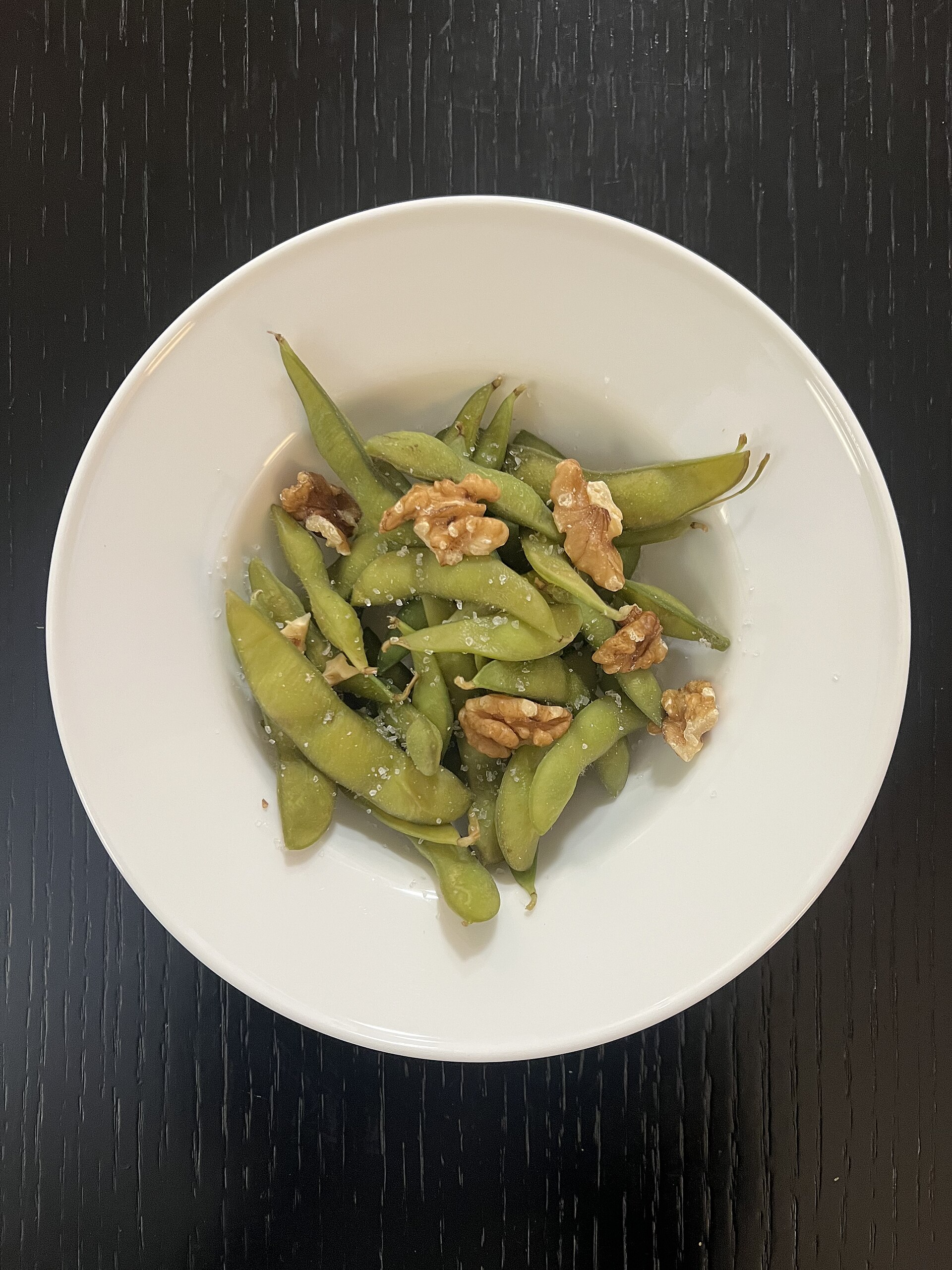
The four o’clock decision is usually made on speed rather than on nutrition. Whatever can be in a hand within a minute wins, and a bag of something crunchy is always faster than anything that involves a pan.
Frozen edamame breaks that rule. A cup of pods, a splash of water, a plate on top, ninety seconds in the microwave, and it is done before a stubborn snack packet has finished being opened. It arrives hot, it takes ten minutes to eat because each pod has to be worked, and a cup of the shelled beans carries roughly eighteen grams of protein.
The only steps that matter are salting the water rather than the finished beans, and not overcooking them into something soft. Everything else is seasoning.
- Time: 90 seconds in the microwave, 4 minutes in boiling water
- Per cup, shelled: about 18 grams of protein and 8 of fiber
- The step people skip: salt in the cooking water, not on the pods after
- What to buy: frozen, in the pod, unsalted
- Doneness: tender with a slight bite, never soft
- Not for: children under four, whole beans are a choking risk
Ninety seconds, measured against a snack packet
The clock starts at the freezer door. Cup of frozen pods into a bowl, two tablespoons of water, a plate laid over the top, ninety seconds at full power in a standard domestic microwave. Out, drain, season, eat.
Two cups of pods takes closer to two and a half minutes, and shelled beans take slightly less than pods because there is no shell absorbing energy. Beyond that the timings barely change with the seasoning, since all three of the blends below go on after cooking.
The comparison that matters is not against another hot snack, it is against the packet. Anything that can be delivered in the same window as tearing open a bag has a real chance of being eaten instead of it, which is the only test a snack has to pass on a weekday afternoon.
Pods or shelled: which bag to buy

| Form | Cook time from frozen | Best for | Notes |
|---|---|---|---|
| In the pod, unsalted | 90 seconds microwave, 4 minutes boiled | Snacking at a table | The default. Slow to eat, which helps |
| In the pod, pre-salted | Same | Convenience | Sodium already added, do not salt again |
| Shelled, sometimes sold as mukimame | 60 to 90 seconds microwave | Salads, bowls, lunchboxes | Faster to eat, no shells to deal with |
| Dry roasted, shelf stable | None | Desks and bags | Crunchy, higher calorie density, often salty |
| Fresh in the pod, in season | 5 minutes boiled | Late summer | Sweeter, rarely available |
Frozen in the pod is the one to keep in the house. The pod does two useful things: it protects the beans from the freezer and it slows the eating down, which turns a handful into a proper snack that occupies ten minutes rather than ninety seconds.
Shelled bags are for cooking rather than snacking. They go into grain bowls, salads and fried rice straight from frozen, and they are the version to pack in a lunchbox where nobody wants a pile of empty pods.
The salt-in-the-water step
Salt applied to the outside of a cooked pod tastes like salt on a hand. Salt in the cooking water penetrates the pod and seasons the beans inside, which is a completely different result and the reason restaurant edamame tastes seasoned all the way through while the home version tastes bare.
For boiling, use water salted as heavily as pasta water, about a tablespoon per quart. Four minutes at a rolling boil is enough for frozen pods. Drain and toss with a pinch more salt while still wet, so it clings.
For the microwave method there is a shortcut that does the same job. Add half a teaspoon of salt to the two tablespoons of water in the bowl before it goes in. The water turns to steam around the pods and carries the salt with it, and it works nearly as well as boiling.
The traditional preparation adds a step worth knowing: rub the frozen pods with a teaspoon of coarse salt before cooking, which scuffs the fuzz off the outside and helps salt find its way in. It takes twenty seconds and makes a noticeable difference to how seasoned the finished pods taste.
Edamame snack, from freezer to bowl
- Take a heaped cup of frozen pods straight from the bag. No thawing, ever.
- If there is time, rub them with a teaspoon of coarse salt in the bowl for twenty seconds.
- Add two tablespoons of water and half a teaspoon of fine salt.
- Cover with a plate, not plastic wrap, and microwave 90 seconds at full power.
- Check one pod. The bean should be tender with a slight bite. Give it another 20 seconds if it is still firm at the center.
- Drain in a sieve and shake dry. Do not rinse, which washes off the seasoning that just went in.
- Tip into a serving bowl while hot and toss with one of the three blends below.
- Put a second, empty bowl next to it for the shells. Nobody does this and everybody needs it.
Step five is where a good bowl becomes a mediocre one. Edamame goes from tender to soft in about thirty seconds of extra cooking, and a soft bean has a mealy texture that no seasoning covers. Undercooking by a fraction is the safer error.
Microwave, boil, or steam
| Method | Time from frozen | Seasoning depth | Best when |
|---|---|---|---|
| Microwave, covered, with salted water | 90 seconds for one cup | Good | One or two portions, fastest |
| Boiled in salted water | 4 minutes | Best | A crowd, or when a pot is already on |
| Steamed in a basket | 5 to 6 minutes | Weakest, salt after | When the texture matters most |
| Dry skillet, blistered | 6 to 7 minutes | Good with a splash of water | A charred, smoky version |
| Air fryer, 390 degrees | 8 to 10 minutes | Season after with oil | Crisp pods, a different snack entirely |
The blistered skillet version deserves more attention than it gets. Frozen pods into a dry hot pan, left alone until they char in patches, then a splash of water and a lid for ninety seconds to finish. It takes seven minutes and tastes like it took considerably longer.
Boiling is still the best method for seasoning depth, and it is worth the extra three minutes whenever the pot is out anyway. The microwave is the method that gets used on a Tuesday, which makes it the one that counts.
Three seasonings with the spoon measures
All three are sized for one cup of cooked pods and all three go on while the pods are still hot and slightly wet, which is what makes them stick.
The first is chili and lime. Half a teaspoon of chili flakes or a Japanese seven-spice blend, the zest of a quarter lime, a squeeze of the juice, and a quarter teaspoon of flaky salt. Bright, hot, and the one most likely to get made twice.
The second is garlic sesame. Half a teaspoon of toasted sesame oil, half a teaspoon of soy sauce, a small clove of garlic grated on a rasp, and a teaspoon of toasted sesame seeds. The garlic must be raw and finely grated or it tastes harsh; a clove pressed through a garlic press works equally well.
The third is lemon and black pepper. The zest of half a lemon, a generous grinding of coarse black pepper, and a quarter teaspoon of flaky salt. It is the plainest of the three and the one that goes with anything else being eaten at the same time.
All three cost under a minute. What none of them should include is more salt if the bag was pre-salted, which is worth checking, because pre-salted pods plus a seasoning blend plus a finishing pinch stacks up quickly. Anyone tracking sodium will find the same arithmetic across most packable weekday food.
What a cup is actually worth
A cup of cooked shelled edamame runs to roughly 190 calories, about 18 grams of protein and around 8 grams of fiber. That protein figure is what separates it from almost every other vegetable snack, and it is a complete protein, which is unusual for a plant source.
A cup of pods yields somewhere near half a cup of beans, since the shell is discarded. In practice a generous bowl of pods delivers eight to ten grams of protein and takes ten minutes to work through, which is a better afternoon proposition than the same protein swallowed in thirty seconds.
It also brings iron, folate and a reasonable amount of potassium, and it does that without any added oil. The dry roasted version sold on shelves is a different calculation: the water has been removed, the calorie density roughly triples, and most brands add a significant amount of salt.
The practical way to use it is as the protein anchor of a snack rather than the whole thing. A bowl of pods next to a piece of fruit covers the gap to dinner far more reliably than either one alone, which is the same three-part logic that works for most plant-based eating.
Eating the pods is the part people get wrong
The pod is not eaten. It is fibrous and tough and it exists as packaging. Put the whole pod in the mouth, draw it between the teeth to strip the beans out, and drop the empty shell in the second bowl.
That method is also where the seasoning does its work, since everything on the outside of the pod passes across the tongue on the way. Shelling the beans by hand and eating them separately wastes the entire surface seasoning, which is why the pods are worth buying over the shelled bag for snacking.
Set out the empty bowl before serving rather than after. A plate of pods with nowhere to put the shells ends with shells on the table, and it is the single most common complaint about serving these to a group.
Cooking is not optional
Soybeans in their raw state contain compounds that interfere with digestion and cause stomach upset, which is why every form of soy in a kitchen has been heated at some point. Commercially frozen edamame has been blanched before freezing, but the packet instructions still call for cooking, and those instructions should be followed rather than treated as a suggestion.
Do not eat them straight from the bag, and do not thaw them and serve them cold without heating. If a cold preparation is wanted, cook them first, cool them quickly and refrigerate, which takes four extra minutes and removes the question entirely.
Two other cautions belong here. Soy is one of the most common food allergens, so this is not a snack to put out at a gathering without saying what it is. And whole beans are the right size and shape to be a choking hazard for young children, so the usual advice is to keep them away from anyone under four, or to mash them thoroughly for a toddler who is already eating soft foods.
Cooked edamame keeps three to four days in the refrigerator in a covered container, and it should get there within two hours of coming off the heat. It does not reheat especially well, so cook what will be eaten and freeze the rest of the bag, which is where it was doing fine in the first place.
Packing it cold and the desk version
Cooked shelled edamame is one of the better things to put in a lunchbox, because it is good cold, it does not go soggy, and it does not need a fork. Half a cup with a squeeze of lemon and a pinch of salt travels for hours.
Add a cold pack for anything going past midday, which is the general rule for a packed lunch rather than anything specific to soybeans. Frozen shelled edamame packed straight from the freezer thaws by lunchtime and acts as its own cold pack, though it needs to have been cooked first and refrozen, or bought as a pre-cooked product.
For a desk drawer, the dry roasted version is the only shelf-stable option and it is a genuinely useful one. Read the sodium figure before buying, since it varies enormously between brands, and treat a quarter cup as a portion rather than the whole bag.
Cost, and what else the bag does
A pound bag of frozen pods yields five or six generous snack bowls, which puts the cost per serving well below almost anything sold as a protein snack. Nothing goes off, nothing needs planning, and the bag sits in the freezer for months.
The shelled version earns its space differently. It goes into fried rice in the last two minutes, into a grain bowl straight from frozen, into a salad, or blended with lemon, garlic and olive oil into a dip that behaves like hummus and carries more protein. That last one takes three minutes in a processor.
Both versions turn up constantly as a side in Japanese cooking, which is where most people first meet them and where the salted-pod preparation comes from. Anyone already cooking in that direction will have most of the seasonings on hand, alongside the rest of the pantry that home sushi requires.
Frequently Asked Questions
Do I need to thaw them first?
No, and thawing makes the result worse. Frozen pods go straight into boiling water, a hot pan or a microwave bowl. Thawed pods release water, cook unevenly and end up soft. This is one of the few frozen vegetables where the instruction is genuinely never to thaw.
Why do mine taste bland compared to a restaurant?
The salt went on afterward instead of into the cooking water. Salt the water heavily, or add salt to the water in the microwave bowl, and rub the pods with coarse salt beforehand if there is time. Seasoning applied to a dry cooked pod stays on the outside.
Can I cook them from a fresh bunch?
Yes, when they are in season, and they are sweeter than frozen. Boil in well-salted water for about five minutes, then cool briefly under cold water to stop the cooking. Fresh pods deteriorate quickly and should be cooked within a day or two of buying.
Is the pre-salted frozen bag worth buying?
It saves nothing on time and it takes away control of the sodium, which is the main thing worth controlling here. Unsalted bags cost the same and let the salt go into the cooking water, which seasons better anyway.
What can I do with the ones nobody finished?
Shell them, refrigerate them, and use them within three days in a grain bowl, a salad or a quick dip. Cooked beans that have been sitting out through an evening go in the bin rather than the refrigerator, on the same two-hour rule that applies to any cooked food.
Are they the same thing as regular soybeans?
Same plant, picked earlier. Edamame is the immature green bean, harvested before it hardens, which is why it is tender and sweet and cooks in minutes. Mature soybeans are dried, take hours to cook and taste nothing like it.
Put a bag in the freezer this week and cook one cup on the first afternoon that a packet would otherwise have been opened. The ninety seconds is the entire argument.