
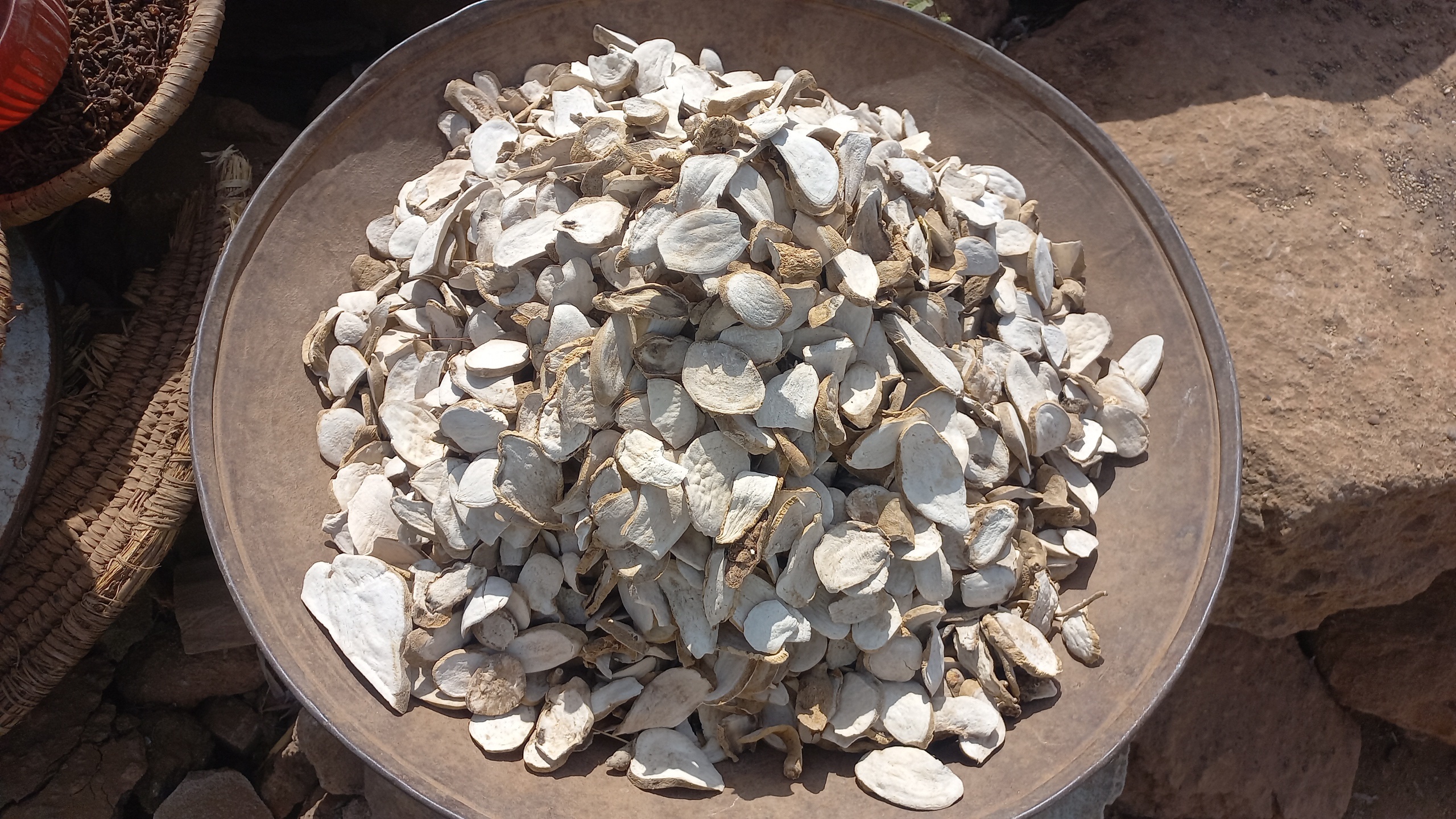
Stand in front of the bin marked yams in an ordinary American supermarket and look at what is in it. Smooth tapered roots with copper or rose skin and orange flesh, sold loose at a dollar or so a pound. Every one of them is a sweet potato.
This is not a small labelling quirk. The two plants are not related, they do not belong to the same botanical family, they do not cook the same way and they do not taste remotely alike. A genuine yam has rough, bark-like skin, starchy pale flesh, and it is sold in markets that serve West African, Caribbean and Latin American communities, usually cut into sections because a whole one can weigh more than a bag of flour.
Since the label is not going to tell you anything useful, the practical knowledge is in the varieties. Four of them cover almost everything a home kitchen does with a sweet potato, and choosing between them by moisture rather than by skin color is what makes the difference between a good mash and a watery one.
- What is in the bin: sweet potatoes, whatever the sign says
- Moist-fleshed: Beauregard, Garnet, Jewel. Sweet, soft, orange
- Dry-fleshed: Japanese and other pale types. Firm, chestnut-like
- For mashing: Garnet or Beauregard
- For roasting in cubes: Jewel
- Never: store raw sweet potatoes in the refrigerator
What the label actually means
The word stuck for commercial reasons rather than botanical ones. When soft, orange, moist-fleshed varieties were introduced to American growers in the middle of the last century, sellers needed a way to distinguish them from the firmer, paler sweet potatoes already on the market, and they borrowed a word already in circulation.
Federal labelling rules recognize the confusion and require that anything sold as a yam also carry the words sweet potato somewhere on the package or the sign. Look for that second line on the shelf tag, and it will be there, in smaller letters.
Which means the two bins in the produce section, one marked sweet potatoes and one marked yams, are almost always two varieties of the same species with different flesh characteristics. That distinction is real and worth understanding; the name attached to it is not.
Sweet potato vs yam: two plants that are not related
| Sweet potato | True yam | |
|---|---|---|
| Family | Morning glory family | A separate family entirely |
| Skin | Thin, smooth, copper to rose to purple | Rough, scaly, bark-like, dark brown |
| Flesh | Orange, white, cream or purple | White, cream or purple, starchy |
| Taste | Sweet | Starchy and neutral, closer to a potato |
| Size | Half a pound to a pound | Often several pounds, sold in cut sections |
| Moisture | Moderate to high | Low, dry, floury |
| Where to buy | Any supermarket | African, Caribbean and Latin markets |
The sweet potato is a storage root of a vine in the morning glory family, and it is not related to the ordinary potato either, despite the name. A true yam is a tuber from a completely different group of plants, cultivated across West Africa, the Caribbean and parts of Asia, where it is a staple rather than a side dish.
They are not interchangeable in a recipe. Substituting a yam into a sweet potato casserole produces something starchy and bland that no amount of brown sugar rescues, and putting a sweet potato into a dish built for yam gives a sweetness that fights everything else in the pot.
What a real yam looks like, and where to find one
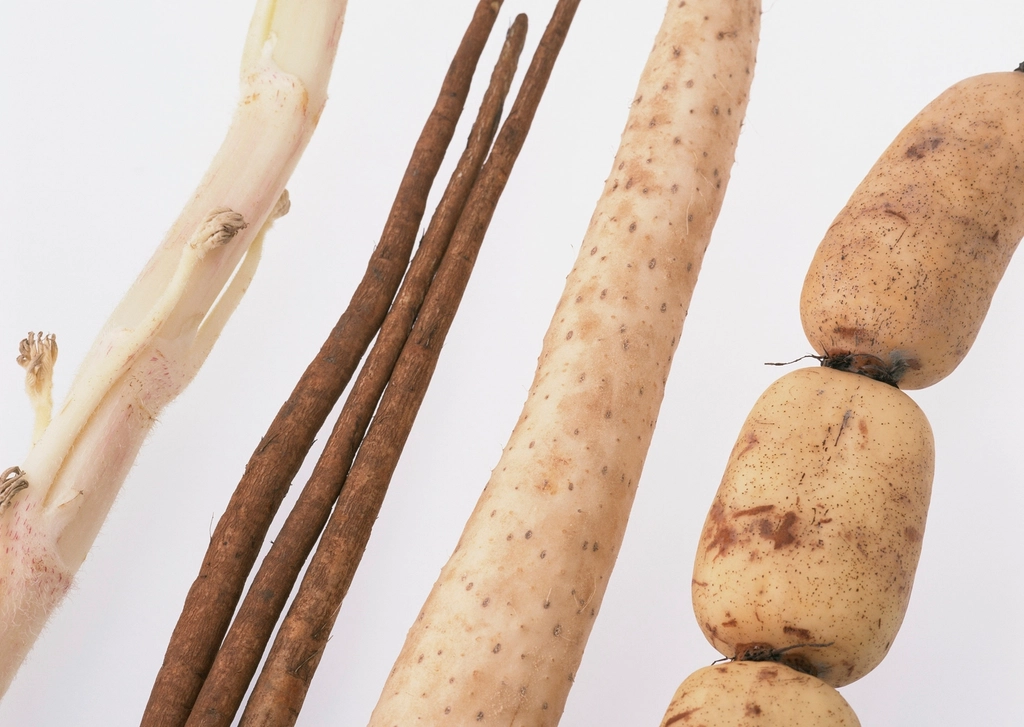
Rough dark skin like tree bark, often with hairy roots still attached, and a shape closer to a log than to a tapered root. They are heavy and dense, and shops usually sell them cut into pieces with the exposed flesh wrapped, because a whole one is more than most households need.
The flesh is white, cream or occasionally purple, and it is dry and floury when cooked, closer to a russet potato than to anything sweet. That is the point of it: it is a starch staple that goes into pounded dishes, into stews, boiled and mashed, or fried.
Look in markets that serve West African, Caribbean or Latin American communities, where they will be labelled ñame, igname or simply yam. Purple ube, which turns up in ice cream and cakes, is a genuine yam. Japanese mountain yam, which is mucilaginous and often grated raw in its home cuisine, is another.
Moist-fleshed and dry-fleshed, the distinction that matters
Sweet potato varieties fall into two groups by how they behave when cooked, and this is the split that a cook should actually pay attention to.
Moist-fleshed varieties are the orange ones. They contain a high level of an enzyme that converts starch into maltose as the root heats, which is why they taste progressively sweeter as they bake and why they go soft and slightly wet. They collapse readily, which is exactly what a mash or a pie filling wants.
Dry-fleshed varieties are usually pale or purple inside, with a firmer, mealier texture and a flavor closer to chestnut than to candy. They hold their shape, they take on browning well, and they do not go watery. For roasting in cubes, for a gratin, or for anything that has to keep a defined edge, they are the better tool.
Skin color is a weak guide to which group a root belongs to. Flesh color is a strong one: deep orange means moist and sweet, pale cream or white means firmer and drier, and purple flesh is firmer still.
Four varieties, side by side
| Variety | Skin | Flesh | Moisture | Best use |
|---|---|---|---|---|
| Beauregard | Light copper | Deep orange | High | Mashing, pies, soup |
| Garnet | Dark red to purple | Bright orange | Highest | Mashing, baking whole |
| Jewel | Copper, slightly rough | Orange | Moderate | Roasting in cubes, fries |
| Japanese, sold as Murasaki | Purple, dry looking | Cream white | Low | Baking whole, gratins, wedges |
| Hannah | Tan | Pale cream | Low | Anything that must hold shape |
| Okinawan | Cream | Deep purple | Low | Baking, striking color on a plate |
Beauregard is the one most likely to be in a supermarket bin without a name on it, and it is a reasonable default for anything. Garnet is the darkest-skinned of the common four and the wettest inside, which makes it the best for a whole baked potato and the worst for cubes.
The pale and purple types are a genuinely different eating experience and worth buying once. They are drier, less sweet and more savory, they take salt and fat well, and anyone who finds orange sweet potatoes cloying next to a main course usually prefers them. They also cost more and appear less reliably, which is the tradeoff.
Garnet and Beauregard: the ones for mashing
Both collapse into a smooth puree with almost no effort, and both bring enough natural sugar that a mash needs little more than butter, salt and something acidic to keep it from being sweet all the way through.
Roast them whole rather than boiling them, which is the single change that improves a sweet potato mash the most. Boiling adds water to a root that already has plenty and dilutes the flavor; roasting drives water off and concentrates the sugar. Forty-five to sixty minutes at 400 degrees for a medium root, until the skin puckers and syrup leaks onto the pan.
Scoop the flesh out and mash it with butter and salt. A splash of buttermilk, a squeeze of lime or a spoonful of yogurt cuts the sweetness and is what separates a side dish from a dessert. Anything more than that, and particularly anything involving brown sugar and marshmallow, is a different dish with different intentions.
Jewel: the one for roasting in cubes
Cubes need a variety that will brown at the edges before the middle turns to paste, and Jewel sits at the right point on the moisture scale for that. Beauregard and Garnet cubes tend to steam in their own liquid and come out soft rather than caramelized.
Three quarter inch cubes, tossed with a tablespoon of oil per pound and a good amount of salt, spread in a single layer with space between them, at 425 degrees for 25 to 30 minutes with one turn. Crowding is the usual failure, and two pans is the fix.
Preheat the pan itself. Cubes dropped onto metal that is already at oven temperature start browning immediately rather than after eight minutes of warming up, which is the difference between crisp edges and uniformly soft cubes. That trick works for almost every roasted vegetable and it is the reason some of the plainest side dishes come out so much better in some kitchens than others.
Japanese and the pale-fleshed types: baking whole
A Murasaki or Hannah sweet potato baked whole is a completely different food from an orange one. The flesh is fluffy rather than wet, faintly nutty, and it holds together well enough to be split, forked up and dressed like a baked potato.
They need longer than orange varieties, usually an hour or more at 400 degrees, because the flesh is denser. Test with a skewer that should go in without resistance, and expect very little of the syrupy leakage that an orange variety produces.
Butter, salt and black pepper is the correct dressing. So is olive oil and flaky salt, and so is a spoonful of yogurt with herbs. They take savory treatment in a way orange varieties resist, which makes them the more useful root next to a plain roast or a piece of fish.
Why a slow oven makes a sweeter potato
The enzyme that converts starch into maltose works within a temperature band and is destroyed once the flesh gets hot enough. The longer a sweet potato spends in that band on the way up, the more sugar is produced, which is why the same root tastes different depending on how it was cooked.
A slow bake, starting in a cold oven set to about 300 degrees and running for an hour and a half, produces a markedly sweeter result than an hour at 425. Microwaving does the opposite, racing past the enzyme’s working range in a couple of minutes and giving a bland, starchy result that people often blame on the potato.
Boiling gives a middle result and adds water. Steaming is better than boiling. Roasting at moderate heat is the best compromise between time and sweetness, and starting the oven cold with the potatoes already in it is a free improvement that costs nothing but planning.
Buying, and what to reject
Firm all over, with no soft spots, and heavy for its size. Press gently at both ends, which is where softness starts. Skin should be unbroken and dry; damp patches or a sticky feel mean the root has started to break down under the surface.
Choose roots of similar thickness rather than similar length, because thickness is what determines cooking time. Two potatoes of the same weight where one is long and thin and the other is short and fat will not finish together.
Reject anything with dark sunken patches, mold at the ends, sprouting shoots, or a wrinkled, dehydrated skin. A shriveled sweet potato has lost water and will be stringy. Small cracks that have healed over are cosmetic and fine.
Storing them, and the refrigerator mistake
Raw sweet potatoes should never go in the refrigerator. Below about 55 degrees they suffer chilling injury, which produces a hard core that will not soften no matter how long it is cooked, along with off flavors and faster internal breakdown once they come back out.
The right place is a cool, dark, ventilated spot between roughly 55 and 60 degrees: a pantry, a cellar, a basket in an unheated hallway. In those conditions they keep for a month or more. In a warm kitchen they will sprout and soften within a couple of weeks, which is still perfectly usable if it is planned for.
Keep them away from onions, which give off gases that accelerate sprouting, and out of sealed plastic bags, which trap moisture and encourage rot. A paper bag or an open basket is right. This is one of the few staples where the storage conditions genuinely change the eating quality, and it fits with the general case for buying local roots in season and keeping them properly.
Once cooked, they go into the refrigerator within two hours and keep three to five days. One specific caution applies to any root baked in foil: unwrap it before it goes into the refrigerator, and do not leave a foil-wrapped baked potato or sweet potato sitting at room temperature for hours, because the wrapping creates exactly the oxygen-poor, warm conditions that certain bacteria need. Cooked flesh also freezes well as a mash for several months.
Cooking a true yam, and why it is never eaten raw
If a genuine yam does come home from a market, treat it as a starchy staple. Peel it thickly, since the skin is tough and not eaten, cut it into chunks and boil in salted water until tender, usually twenty to thirty minutes. From there it is mashed, pounded, fried or added to a stew.
It is not eaten raw. Yams in their uncooked state contain compounds that cause stomach upset, and some wild species are genuinely toxic until they have been processed. Cultivated yams sold for food are safe once properly cooked, and cooking is the operative word rather than a preference.
Peeling one is also a practical matter worth a warning: the cut surface of some varieties is slippery and can irritate skin, so gloves are a reasonable precaution for anyone who finds their hands itching. Cut pieces oxidize quickly and should be held in cold water until they go in the pot, in the same way one would hold cut other raw roots that brown on contact with air.
Frequently Asked Questions
So is there any real yam in an American supermarket?
Occasionally, in stores with a large international section, and it will look nothing like the orange roots in the main bin. If it is smooth, tapered and orange inside, it is a sweet potato regardless of the sign above it.
Which one should I buy for a holiday casserole?
Garnet or Beauregard. Both are moist and sweet, both collapse into a smooth puree, and both need less added sugar than most recipes call for. Roast them whole rather than boiling, and taste before adding anything sweet.
Do I need to peel sweet potatoes?
Not for roasting or baking, where the skin crisps and is good to eat, and it holds a useful amount of fiber. Scrub well first, since they grow underground. Peel for mash, pie or soup, where a strip of skin in the puree is unwelcome.
Why did my sweet potato have a hard woody center?
Almost certainly chilling injury from being stored too cold, usually in a refrigerator. Once that has happened there is no cooking method that will soften the core. Cut it out and use the rest.
Can I eat sweet potato raw?
Small amounts thinly sliced or grated are eaten raw in some preparations and it is not dangerous, though it is starchy and hard to digest in quantity. This is one of the clear differences from a true yam, which does need cooking.
Are the purple ones just for color?
No. Okinawan and other purple-fleshed varieties are drier and less sweet than orange ones, with a distinctly different flavor, and they hold their shape better. The color is dramatic and it is not the reason to buy them.
Buy one Garnet and one pale-fleshed root on the same trip, bake both at 400 degrees, and split them side by side. Two vegetables sold under the same sign will turn out to have very little in common.