
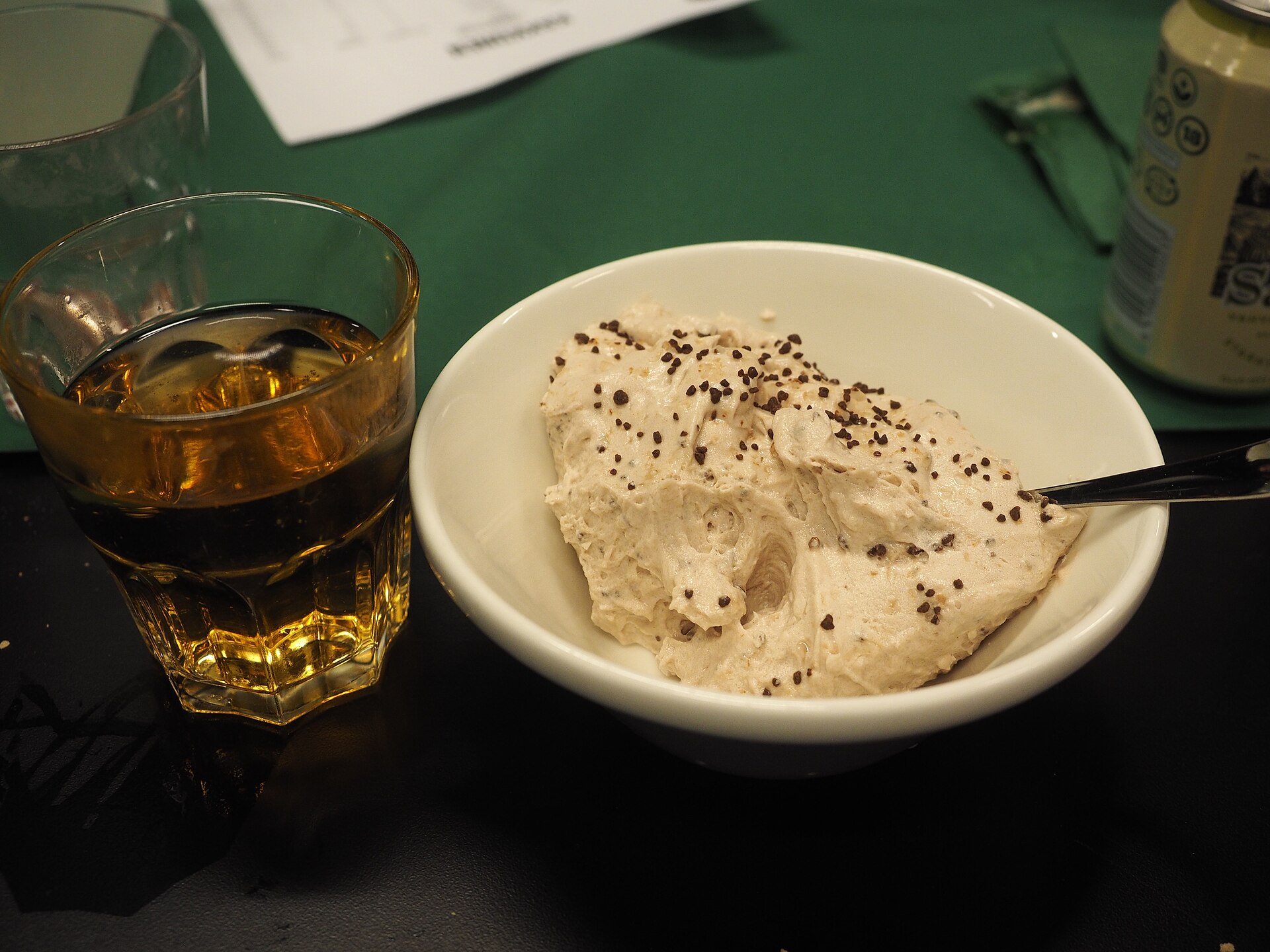
Two ingredients, a bowl of ice, and a whisk. No eggs, no cream, no gelatin, no folding, and no forty minutes of waiting for something to set in the refrigerator. A dark, glossy mousse comes together in about four minutes and tastes more intensely of chocolate than any version made with dairy, for the simple reason that there is nothing else in it.
The trick is that melted chocolate and water, whipped cold, behave like cream. Chocolate is roughly a third fat by weight, and fat plus liquid plus air plus cold is the same set of conditions that turns heavy cream into whipped cream. Swap the milk fat for cocoa butter and the mechanism does not care.
It is also the most forgiving dessert on this site, because a failed batch is not a failed batch. Melt it down, adjust, whip it again. Nothing is wasted and nothing is irreversible.
- Ingredients: chocolate and water, and optionally a pinch of salt
- Ratio for 70 percent dark: 100 grams chocolate to 80 grams water
- Whipping time: 3 to 5 minutes by hand over ice
- Equipment: two bowls, a whisk, ice, a scale
- Yield: four small servings from 200 grams of chocolate
- Keeps: three days covered in the refrigerator
Why chocolate and water make a foam at all
A bar of chocolate is cocoa solids and sugar suspended in cocoa butter, and it is a solid at room temperature because the cocoa butter is a solid at room temperature. Melt it and you have a fat with particles floating in it. Add water and whisk, and the fat breaks into droplets dispersed through the water instead.
That mixture is an emulsion, and an emulsion with enough fat in it will hold air the way cream does. Whipping over ice does two jobs at once: it beats air bubbles into the liquid and it cools the cocoa butter back through its setting point, so the foam locks in place instead of collapsing.
The whole technique came out of food-science kitchens rather than pastry tradition, which is why it is usually filed under molecular gastronomy despite requiring nothing more exotic than a bowl of ice. The name that stuck is chocolate chantilly, borrowed from the French term for sweetened whipped cream.
The fat percentage of the final mixture is the whole game. Too much water and there is not enough fat per unit of liquid to build a stable foam, so it whips up and falls flat. Too little water and there is nowhere for the fat to disperse, so it stays thick and greasy.
No eggs, which removes the usual worry
A classic mousse leans on raw or barely cooked egg. Whipped whites give it lift, yolks give it richness, and in most home recipes neither is heated to a temperature that would make them safe for everyone at the table. That is the standard caution around traditional mousse, tiramisu and homemade eggnog, and it is a real one: eggs can carry salmonella, and the people most at risk are pregnant, very young, elderly or immunocompromised.
There is no egg here at all, which removes that question completely. It also removes the dairy, so the base version is suitable for a lactose-free table as long as the chocolate itself contains no milk solids, which most dark bars above 70 percent do not. Read the label rather than the percentage, since some dark chocolate includes milk fat and nearly all of it is made on shared equipment, which matters for a genuine milk allergy.
The only heat involved is melting chocolate and warming water, and neither needs to go anywhere near boiling. That is worth knowing if children are helping, because the most likely injury in this recipe is a splash from an over-hot kettle rather than anything to do with the chocolate.
The ratio, by cocoa percentage
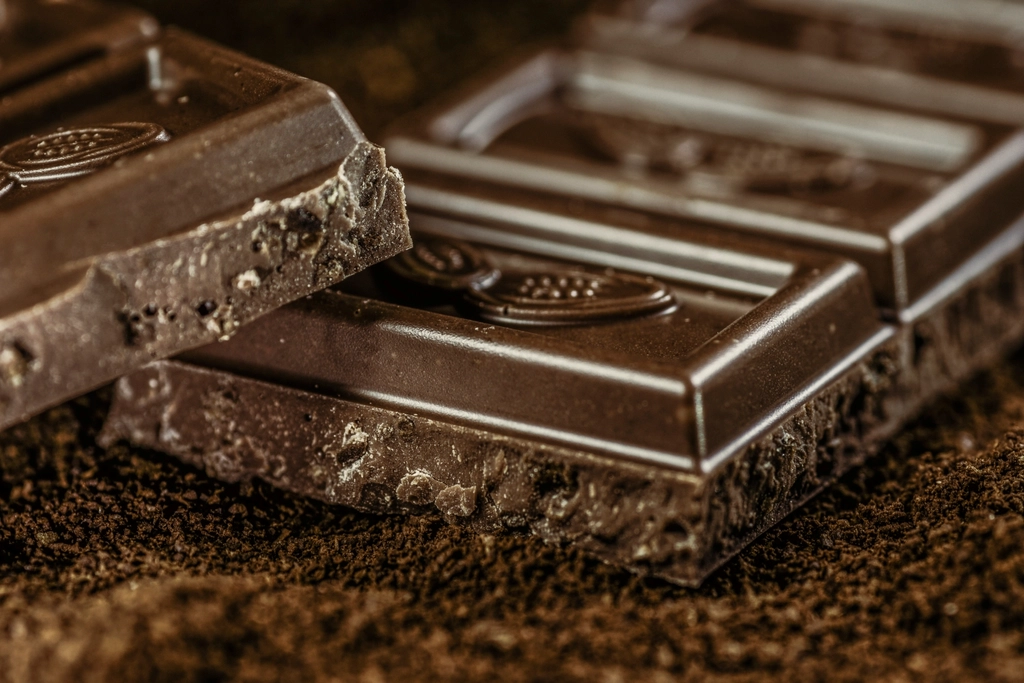
Chocolate is not one ingredient. A 70 percent bar and a milk chocolate bar hold very different amounts of cocoa butter, and the water has to be adjusted to land in the range where a foam is possible.
| Chocolate | Water per 100 g | Texture | Notes |
|---|---|---|---|
| 85 percent dark | 90 grams | Dense, almost bitter | Wants a pinch of sugar in the water |
| 70 percent dark | 80 grams | The reference version | Start here the first time |
| 60 percent dark | 70 grams | Softer, sweeter | Whips fastest of the four |
| Milk chocolate | 60 grams | Very sweet, light | Less cocoa butter, so less water |
| White chocolate | 55 grams | Loose, needs longer | The least reliable of the group |
Weigh the chocolate rather than guessing from the wrapper. Bars are sold at 90, 100 and 113 grams depending on the brand, and a 20 gram error at this scale moves the ratio enough to matter.
Chocolate chips are the one ingredient to avoid. Most are formulated with stabilizers and less cocoa butter so that they hold their shape in a cookie, and that is exactly the opposite of what this needs. Use a bar, broken up, or couverture if the store has it.
Chocolate chantilly mousse, four minutes over ice
- Fill a large bowl with ice and enough cold water to reach halfway up. Set a second, smaller metal bowl inside it and check that it sits without floating or tipping.
- Take the smaller bowl back out and dry it. Chop 200 grams of chocolate into rough pieces, no larger than a thumbnail.
- Heat 160 grams of water in a small pan until it steams, well short of boiling, and add a pinch of fine salt.
- Pour the hot water over the chocolate in the dry bowl and leave it alone for one minute, then whisk until it is completely smooth and glossy. No lumps, no grainy patches.
- Set that bowl into the ice bath and start whisking straight away, moving fast, keeping the whisk against the bottom and sides where the mixture cools first.
- Watch for the change. It thins slightly, then thickens over about thirty seconds, then holds the marks of the whisk. That is roughly three to five minutes in by hand.
- Stop the moment it holds a soft peak. Lift it out of the ice immediately, because the bowl keeps cooling whatever is in it.
- Spoon into serving glasses and refrigerate for at least fifteen minutes, or eat it straight away while it is still light and barely set.
The whisking is genuinely quick work. An electric hand mixer does it in about ninety seconds and overshoots easily, so if you use one, drop to the lowest speed as soon as the mixture starts to thicken.
Building the ice bath so the bowl does its job
Ice alone is not an ice bath. A bowl of cubes touches the metal in a handful of places and cools slowly. Ice with cold water poured over it makes full contact around the whole curve of the inner bowl and cools it several times faster, which is the difference between a mousse in four minutes and a puddle in nine.
Metal is the right material for the inner bowl. Stainless steel moves heat quickly, while glass and ceramic insulate, and a mousse whipped in a glass bowl over ice tends to thicken only at the very bottom. If a metal bowl is not available, expect to whisk twice as long.
Size the inner bowl generously. The mixture roughly doubles in volume as air goes into it, and a bowl filled more than a third of the way makes the whisk fight the sides instead of moving through the middle.
The whipping window, and what over-whipped looks like
There is a point, usually seconds after the mixture starts holding whisk marks, where it goes from a smooth soft foam to something grainy and stiff. It looks like curdled chocolate and it feels sandy on the tongue. Cocoa butter has crystallized too far and the emulsion has broken.
The signals that you are close: the mixture climbs the whisk, the surface loses its shine slightly, and the sound changes from a liquid slosh to a thicker, quieter sound. Stop there. It firms up more in the glass than it does in the bowl.
Under-whipped is the easier mistake to correct and the one to make on purpose the first time. If it never thickens after five minutes of hard work, the mixture is either too warm, in which case add more ice, or too wet, in which case it needs remelting with a little more chocolate.
Where it seizes, and the exact fix
Seizing looks like this: the chocolate goes from liquid to a stiff dull paste as the water hits it, and it will not smooth out no matter how hard you whisk. It happens when the water goes in slowly, a splash at a time, rather than all at once.
A small amount of water in melted chocolate wets the sugar and the cocoa particles and glues them into clumps. Enough water, all at once, gets past that and disperses everything properly. This is the same behavior that makes a stray drop of water ruin a bowl of chocolate you are melting for coating, and here it is solved by pouring with confidence.
If it has already seized, keep adding warm water a tablespoon at a time and whisking hard. It looks worse and then suddenly comes back together into a smooth liquid. Note how much extra water went in, because that batch will need slightly longer over the ice, and if the total climbs more than about 20 grams past the ratio, melt in another 20 grams of chocolate to compensate.
None of this is a lost cause. The relationship between fat and liquid here is the same one that governs a ganache and its ratios, and both can be corrected by moving one side of the equation.
Water is not the only option
Any liquid that is mostly water works, which is where this gets interesting. Strong brewed coffee is the best substitution and makes the chocolate read darker and less sweet. Orange juice gives a bright, slightly jammy version that works well with an 85 percent bar.
Milk and cream both work and change the character. They add fat, so pull the quantity back by about a tenth, and the result is rounder and less intense, closer to a conventional mousse. Coconut milk does the same and brings its own flavor.
Alcohol needs care. A tablespoon of rum, whisky or orange liqueur folded into the melted base is fine, and replacing more than about a fifth of the liquid destabilizes the foam because alcohol interferes with the fat crystals setting. Anything with alcohol in it is also a poor choice for a table with children at it, since none of it cooks off here.
| Liquid | Adjustment | What it tastes like |
|---|---|---|
| Water | None | Pure chocolate, nothing added |
| Strong coffee | None | Deeper, less sweet, slightly bitter |
| Orange juice | None | Bright and fruity, best with dark bars |
| Whole milk | 10 percent less | Rounder, milder, closer to classic mousse |
| Coconut milk | 15 percent less | Rich, tropical, sets firmer |
Sugar, salt, and how much this actually needs
A 70 percent bar carries roughly 30 percent sugar by weight, and once it is whipped into a foam that reads as sweet enough for most people. Adding sugar to the water is a decision for the 85 percent version, where a teaspoon or two per 100 grams takes the bitter edge off without making it a sweet dessert.
Salt is the addition worth making every time. A pinch of fine salt dissolved in the hot water before it meets the chocolate sharpens the cocoa flavor noticeably, and the difference between a salted and unsalted batch tasted side by side is not subtle.
Vanilla, a scrape of espresso powder, a pinch of chili or a strip of orange zest steeped in the hot water for a minute and then removed all work. Anything oily, including extracts with a lot of carrier oil, is better kept to a few drops, since extra fat that is not cocoa butter softens the set. The same restraint applies to most unexpected additions to a dessert.
Serving temperature and the three days it keeps
Straight out of the bowl it is airy and soft, closer to a warm foam. After fifteen minutes in the refrigerator it firms into something you can quenelle with a spoon. After two hours it is dense and truffle-like, which some people prefer and which is a different dessert.
Cover it and keep it refrigerated, and treat three days as the limit. There is no dairy and no egg in the base version, so this is a quality window rather than a hard safety one, but the foam gives up air steadily and by day three it has gone from mousse to soft ganache. If the mixture included milk or cream, treat it as any other dairy dessert and keep it cold, out no more than two hours at room temperature.
It does not freeze well as mousse. Frozen and thawed, the emulsion separates and the texture goes grainy. Frozen deliberately in small scoops, though, it is a decent chocolate sorbet, which is a reasonable use for a batch nobody finished.
Serve it in something small. This is intense, and a two-ounce glass is a satisfying portion where a full ramekin becomes a chore halfway down. Berries, flaked salt, toasted hazelnuts or a plain wafer alongside all give it something to work against.
Rescuing a batch that went wrong
Grainy, stiff and broken from over-whipping: scrape it back into a pan, warm gently while stirring until it is liquid again, and whip it over the ice a second time. It comes back completely. This can be repeated more times than seems reasonable.
Whipped for ten minutes and still liquid: too much water. Melt in another 20 grams of chocolate per 200 gram batch, then start over. Check the ice bath as well, since ice that has fully melted is just cool water and will not do the job.
Thick, greasy and refusing to whip at all: not enough water. Add warm water a tablespoon at a time off the ice, whisking until smooth, then return it. A dairy-free base like this one is unusually easy to correct, which makes it a useful thing to have in the file alongside other dairy-free options.
Frequently Asked Questions
Can I make this without a scale?
You can approximate it, and the results will be less consistent. A standard 100 gram bar with 80 grams of water, which is one third of a cup plus a teaspoon, is close enough to work. Anything involving broken pieces measured by eye is a gamble.
Why does the first bite taste warm and the last one taste cold?
Because cocoa butter melts just below body temperature, which is the reason chocolate behaves the way it does in the mouth. A mousse straight from the refrigerator releases its flavor more slowly, so let it stand five minutes before serving if it has been chilling for hours.
Is this suitable for a vegan table?
The base version is, provided the chocolate itself is dairy-free. Check for milk solids and milk fat in the ingredient list, since plenty of dark chocolate contains small amounts, and check the allergen statement if anyone at the table reacts rather than merely avoids.
Can I pipe it or use it as a cake filling?
Yes, once it has firmed for about half an hour. It pipes cleanly and holds its shape at room temperature better than whipped cream does, though a cake filled with it should still be refrigerated and eaten within a couple of days.
Does the type of water matter?
Not meaningfully. Tap water is fine. What matters is temperature, and hot rather than boiling: water at a rolling boil can scorch the cocoa solids and gives a faintly burnt edge to the finished mousse.
Buy one 100 gram bar and make a single portion before making it for anyone else. Four minutes with a whisk teaches you what the thickening moment feels like, and that moment is the only part of this that cannot be written down.