
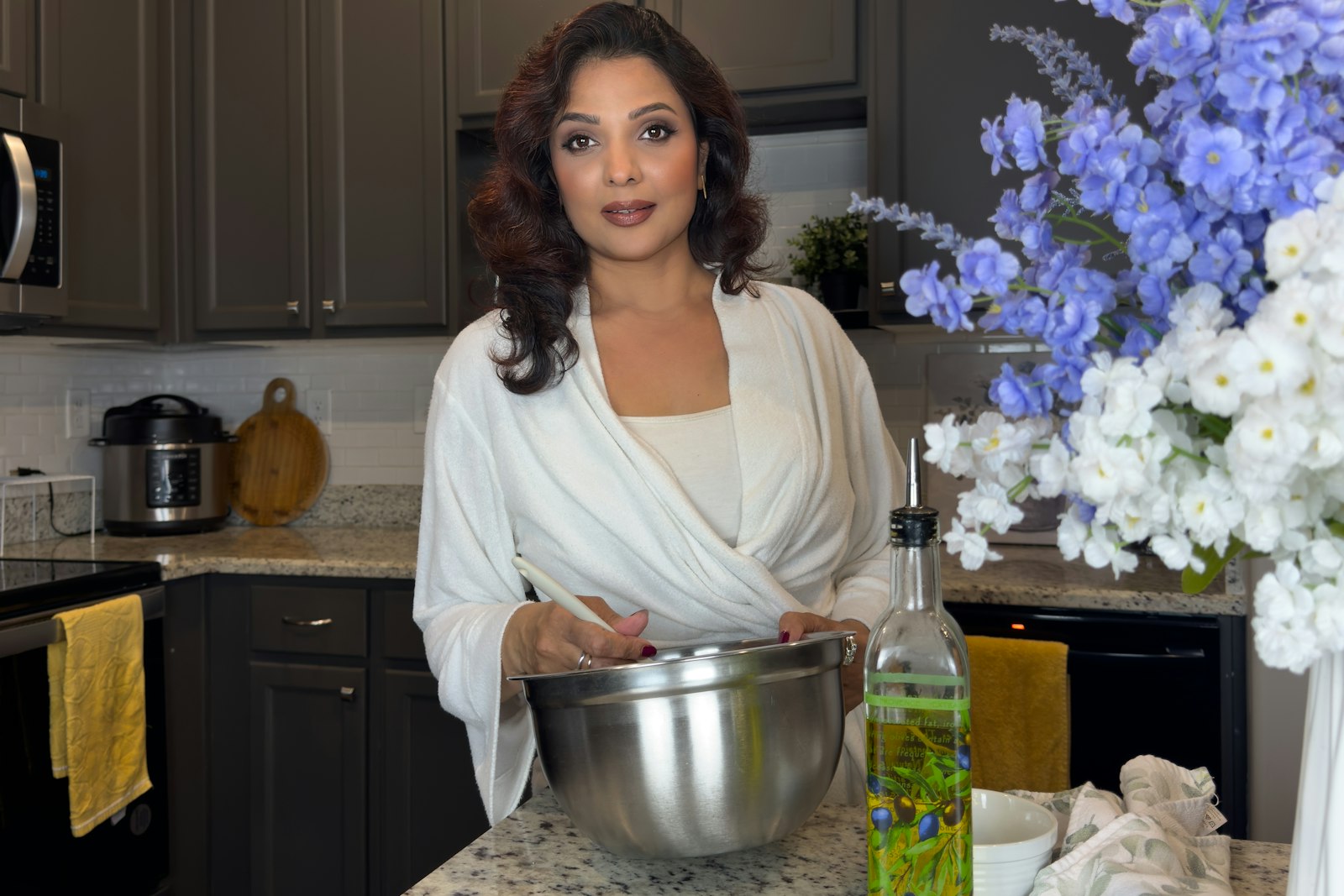
The path from home cook to professional chef used to run through culinary school and years in restaurant kitchens. Most of the well-known chefs of the 20th century learned to cook in someone else’s kitchen — a family restaurant, an apprenticeship, a formal program. That path still exists, but it is no longer the only one, and increasingly it is not the most interesting one. A generation of cooks has built careers that started at their own kitchen counter, often with no plan to become “chefs” at all.
This piece profiles five cooks whose work began at home and who now run restaurants, food businesses, or influential kitchens. Their stories share very little on the surface — different cuisines, different countries, different scales — but they share the pattern of turning private practice into public work. Their trajectories are worth knowing because they offer a template that used to be considered unlikely.
Time: most spent 4–8 years cooking seriously at home before going professional
Practice: all developed a distinct, repeatable style before scaling
Business shape: pop-ups and supper clubs are the common bridge
Common trait: obsessive documentation — recipes, sourcing notes, iteration logs
Samin Nosrat: from private cook to writer
Samin Nosrat’s path is well-documented but worth revisiting because it defined the modern template. She learned to cook seriously at Chez Panisse in Berkeley in her twenties, spent years cooking in Italy, and then built a small private-catering and cooking-class business out of her own home in Berkeley. That practice — teaching individuals in a domestic kitchen — is where “Salt, Fat, Acid, Heat” came from, and where her voice as a writer developed.
The insight from her trajectory is that formal restaurant experience mattered, but the shape of her actual career came from the years of teaching and thinking about cooking in a home setting. The framework of the book is designed for home cooks who want to understand cooking, not for restaurant cooks who need to reproduce a dish. That book has now sold well over a million copies and has arguably done more to shape modern home cooking than most restaurant-based careers.
Nik Sharma: from research scientist to cookbook author
Nik Sharma spent years as a molecular biologist before food became his primary work. He started a food blog, A Brown Table, in 2011 as a personal project — cooking Indian food at home in California, photographing it carefully, and writing about the specific science behind why techniques worked. The scientific framing was distinctive, the photography was serious, and the practice built an audience slowly.
He now writes columns for the San Francisco Chronicle and has published multiple influential cookbooks, including “Season” and “The Flavor Equation.” He continues to cook primarily in his home kitchen — his work is documenting and explaining what a serious home cook can achieve, not what a restaurant kitchen produces. The trajectory illustrates one of the more interesting patterns of this era: careers built on the sustained public practice of home cooking, without any formal industry training.
Andy Baraghani: from personal Instagram to cookbook and restaurant kitchens
Andy Baraghani spent years as a senior editor at Bon Appétit before publishing his first cookbook, “The Cook You Want to Be.” His social presence — cooking in his own kitchen, sharing meals with friends, developing recipes for personal use — was distinctive from his editorial voice. Readers followed his personal cooking, not his job title. The book that resulted is very much a home cook’s book by a professional food person: recipes designed for actual weeknight execution, with acknowledgment of the constraints of a real home kitchen.
Baraghani’s trajectory shows how the boundary between “food professional” and “home cook” has softened. His restaurant work exists, but the more visible and arguably more influential part of his career is what he cooks at home and shares publicly. That is a very modern shape for a food career.
Sohla El-Waylly: from bakery to home kitchen to television
Sohla El-Waylly worked in restaurants for years — including opening her own — before becoming widely known through video work on YouTube and eventually her own cooking show. Her television work is set almost entirely in home kitchens, both her own and staged versions. Her cookbook “Start Here: Instructions for Becoming a Better Cook” is explicitly aimed at home cooks who want to develop skill, drawing on her professional background but framing everything in home-kitchen terms.
The interesting move here is going from restaurant work back into home-cooking-facing work at scale. Her audience wants what she can offer as a serious cook explaining how to think about cooking in a home context. The restaurant experience is background, not foreground.
Priya Krishna: from family cookbook to national food writer
Priya Krishna started her cooking career, in a sense, when she wrote a cookbook with her mother, “Indian-ish,” documenting the home cooking of an Indian-American family. The book was a critical and commercial success, and she went on to become a New York Times food reporter and produce further cookbooks and video work. Her voice is grounded in home cooking specifically because that is where her expertise developed — not in professional kitchens but in her family’s home and now her own.
Her trajectory suggests that a specific, well-documented home cooking tradition can be the entire foundation of a food career, without requiring the culinary school + restaurant kitchen pathway that used to be assumed.
What these stories share
The five profiles above are different in almost every particular, but the pattern beneath them is consistent. Each involved several years of sustained, thoughtful home cooking that was documented — through blog posts, Instagram, personal notes, or family manuscripts — before it became a public career. None of them decided to become “a chef” and then took steps toward that goal. They cooked because they wanted to, refined a specific voice or style, and then built work around what they had already developed.
The other common thread is that the audience for their work is largely other home cooks. This is a market that has grown substantially — home cooking as a serious practice, not just as a household necessity — and it has room for many kinds of expertise. Restaurant credentials are one path to authority in that market; a decade of thoughtful home cooking is another.
What this means for home cooks now
These stories are worth studying not because most home cooks want to become food writers, but because they demonstrate that serious home cooking is now a legitimate practice in its own right. Documenting your own cooking — even privately, even in a notebook — turns cooking from an ephemeral daily activity into a body of work. That is what enabled each of the trajectories above, even before any of them thought about audience or career.
Whether or not that leads anywhere professionally is beside the point. Treating home cooking as a practice worth developing changes the experience of cooking itself. The recipes get better, the intuition sharpens, and the meals become more interesting to eat. Which is the entire reason home cooking is worth taking seriously in the first place.
Frequently asked questions
Do you need to go to culinary school to be a serious cook?
No. Culinary school is one useful path for people who want to work in restaurants, but it is not required for serious cooking or even for a food career. Many of the most influential food writers, cookbook authors, and public cooks today have no formal culinary training.
How long did these chefs cook at home before going professional?
Typically four to eight years of serious, sustained home cooking before any public work. Each developed a specific voice or style during that time.
What is the most common bridge between home cooking and professional food work?
Documenting the work. Blogs, Instagram, personal notes, family cookbooks. Public documentation over time is what turned each of these people’s home practice into something that could scale into a career.
Is a pop-up or supper club a good way to start?
Yes, and it appears frequently in trajectories of this kind. It offers a low-commitment way to test whether cooking for others at scale is enjoyable, without the capital requirements of a restaurant.
How much does formal training matter for a food writing career specifically?
Less than it used to. What matters more is a distinct voice, real cooking chops (however developed), and enough documented work to build an audience. Publishers and outlets increasingly value writers with distinctive perspectives over conventional credentials.
What if I just want to be a better home cook, not a public one?
The same practices that led these cooks to public careers — documenting your cooking, iterating on recipes, developing a style — will make you a much better home cook regardless of whether you ever share the work. The public dimension is optional. The practice is what matters.
The short version
The traditional path to being a “real” cook — culinary school and restaurant apprenticeship — is no longer the only path or even the most common one for the food world’s most influential voices. A generation of cooks has built careers on years of sustained, documented home cooking, often without ever intending to become professionals. The pattern is worth studying not because most home cooks want to become writers, but because it demonstrates that serious home cooking is a legitimate practice in its own right — and treating it that way makes the cooking itself better.