
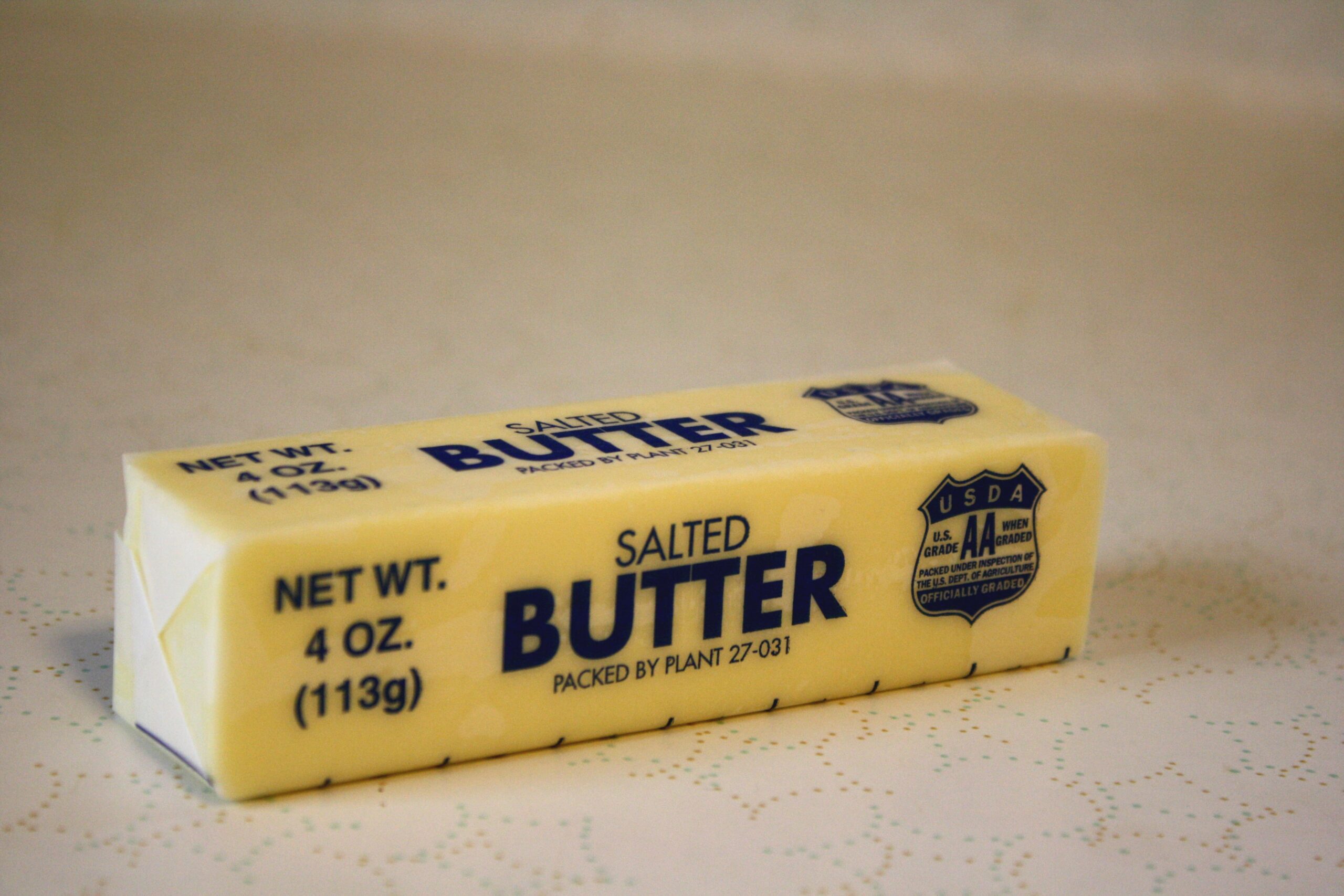
Every cookie recipe says softened butter and none of them say what that means. The number is 65 degrees, give or take a couple, and the gap between 65 and 75 is the difference between a cookie that holds its shape and one that spreads into a single sheet on the tray.
Six common methods, one probe thermometer, and the same brand of unsalted butter straight from a 38 degree refrigerator in a 70 degree kitchen. Each stick was measured at the center and at the surface, because the two numbers are rarely the same and the average is what recipes are actually asking for.
Two of the six landed on target every time. Two got close with attention. Two overshot in ways that were invisible until the batter was already ruined, which is the frustrating part, because both of those are the methods people reach for when they are in a hurry.
- The target: 65 degrees, measured at the center
- Where it fails: above about 70, the structure is gone
- Fastest reliable method: grating, 8 to 10 minutes
- Second reliable method: rolled flat, 5 to 7 minutes
- Riskiest: microwave, which melts from the inside
- Test tool: any instant-read probe, pushed into the center
Why 65 degrees and not room temperature
Room temperature is not a number. A kitchen in January is 63 degrees and the same kitchen in August with an oven running is 82, and butter left on the counter in each of those reaches a completely different state in the same hour.
Sixty-five degrees is the point where butter is pliable enough to hold air but still firm enough to hold its own shape. A stick at that temperature dents under a fingertip with light pressure and leaves an indentation with clean edges. It does not sag, it does not look wet, and it does not stretch when pulled.
The finger test is genuinely useful once the number is known. Press the center of the stick: if the finger sinks a quarter inch with mild pressure and the surface stays matte, it is there. If the surface looks slightly glossy or the stick bends under its own weight when lifted from one end, it has gone past.
What happens to the crystals above 68
Butter is roughly 80 percent fat, 16 percent water and a little milk solid, and that fat is a mixture of triglycerides that melt across a wide temperature range rather than at a single point. The lowest-melting fractions are already liquid at 70 degrees while the rest is still solid.
The creaming step works by driving sugar crystals through that solid fat, where each crystal edge tears a pocket of air into the mixture. Those pockets are the leavening in a cookie or a pound cake, and baking powder only expands what creaming created.
Once enough of the fat has liquefied, the pockets collapse as fast as they form. The batter looks smooth and even slightly glossy, which reads as success and is the opposite, and the finished cookie spreads because there is nothing holding it up. That single mechanism accounts for a large share of the flat, greasy results people blame on their oven, and it runs through most of the structure questions in cake baking as well.
How the six methods were timed
Each method started with a four ounce stick at 38 degrees. The clock ran until the center of the mass read 65 degrees on a probe, and the surface was measured at the same moment. Anything with a surface above 75 while the center was still low counted as uneven, regardless of the average.
The kitchen sat at 70 degrees throughout, which is a fair middle. A colder kitchen adds time to every counter-based method proportionally, and a warmer one removes it, so the numbers below should be read as a ranking rather than as a timetable that will hold in every house.
One practical note before the results: a probe thermometer is not required to use any of this. The finger test tracks the numbers closely enough once the correspondence is learned, and the point of measuring was to find out which methods deserve trust rather than to require a gadget every time.
Leaving it on the counter, which is the baseline
A whole stick, unwrapped, on a plate at 70 degrees took between 50 and 70 minutes to reach 65 at the center. That is the honest number, and it is roughly double what most recipes imply when they say to take the butter out ahead of time.
The surface reached 65 in about twenty minutes and then kept climbing while the center caught up. By the time the middle was ready the outside was around 70, which is acceptable but not ideal, and in a warmer kitchen that gap widens fast.
Cut the wrapper away rather than leaving the stick half in it. Paper insulates one side and the stick warms unevenly, ending with a soft face and a cold back. It sounds trivial and it adds fifteen minutes.
The counter method is the correct one when there is time, because it is the only one that produces genuinely uniform butter with no intervention. It is simply not a solution to the problem of wanting cookies now.
Cubing: twenty minutes and no equipment
Cut the stick into half inch cubes and spread them out on a plate, not touching. Center temperature hit 65 at around 20 minutes, with the surface at about 68. That is a three-fold improvement over the whole stick for thirty seconds of knife work.
The mechanism is surface area. A half inch cube has a very short distance from surface to center, so heat reaches the middle before the outside has had time to run away. Quarter inch cubes are faster still, around 12 minutes, and are fiddly to cut and easy to smear.
Spreading them out matters. Cubes piled in a heap behave like a smaller stick, and the ones in the middle stay cold. A single layer with air between them is the whole point.
This is the method to use when there is twenty minutes to spare, which is more often than it sounds, since twenty minutes is roughly how long it takes to preheat an oven and measure out everything else.
Grating: the fastest method that does not risk melting
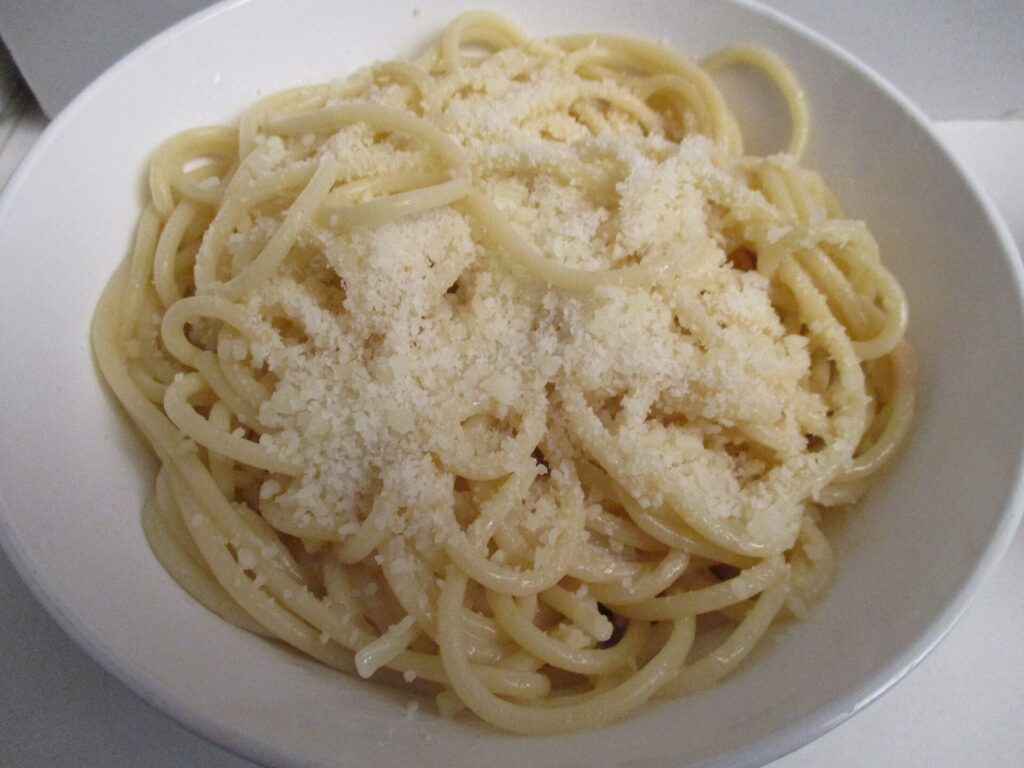
Take a frozen or refrigerator-cold stick, hold the wrapper as a handle, and run it down the large holes of a box grater onto a plate. Eight to ten minutes later the shreds were at 65 degrees throughout, with no measurable difference between surface and center, because a shred has no meaningful center.
Frozen butter grates better than refrigerated butter, which sounds backward and is not. Cold-firm butter shreds cleanly; slightly soft butter smears and clogs the grater. Ten minutes in the freezer before grating makes the job faster and cleaner.
The catch is texture. Grated butter is a pile of loose shreds rather than a mass, and it creams slightly differently, taking about thirty seconds longer to come together with the sugar. In every other respect it behaves identically, and for pastry work where cold pieces of fat are wanted it is better than a block.
This was the fastest method in the test that carried no risk of overshooting, and it is the one worth learning. The cleanup is a grater, which goes in soapy water immediately or becomes a problem.
The rolling pin sheet, which nobody expects to win
Put the cold stick between two sheets of parchment and hit it flat with a rolling pin, then roll it out to about a quarter inch thick. The sheet reached 65 degrees uniformly in five to seven minutes, faster than grating and with less mess.
It works for the same reason as grating, with the added benefit that the mechanical working of the butter warms it slightly on its own. The parchment keeps hands off it, which matters, since a palm at 90 degrees does real damage to a stick of butter in a few seconds.
The resulting sheet tears into pieces easily and creams well. For a recipe that wants butter cut into flour rather than creamed, the sheet can be folded and torn into flakes, which is a genuinely useful shape for biscuits and pastry and the reason this technique turns up in flaky doughs.
The one drawback is that a very cold stick straight from the freezer shatters rather than flattens. Refrigerator temperature is right; freezer temperature is not.
The warm glass, and why it looks better than it is
Fill a glass with hot water, let it stand a minute, pour it out, dry it, and invert it over the stick on a plate. This is the internet’s favorite trick and it took 8 to 12 minutes, which is genuinely fast.
The problem is the distribution. The surface of the stick facing the glass wall regularly measured 78 to 84 degrees while the center was still at 58, and by the time the center reached 65 the outer eighth of an inch had partly melted and re-solidified. Melted and re-set butter does not cream properly, because the crystal structure it depends on has been destroyed.
It also produces condensation. Water from the warm glass beads on the butter, which is not a disaster but is not helpful either, and in a rich dough that extra moisture is measurable.
The verdict is that it is fast and it is not reliable. If it is the only option, use a glass that has held warm water rather than hot, keep it off the butter by resting it on the plate rather than pressing down, and accept that the result is approximate.
The microwave at low power, done properly
Almost everyone does this and almost everyone does it wrong. Full power for fifteen seconds produces a stick that looks intact and has a molten core, because microwave energy penetrates and heats the interior at least as fast as the surface.
Done properly it works. Twenty percent power, or the defrost setting, in five second bursts, turning the stick a quarter turn between each. Four to six bursts is usually enough, and the whole thing takes under a minute of elapsed time. Center readings landed between 62 and 68 across repeated attempts, which is acceptable but not consistent.
Wattage is why it is not consistent. A 700 watt oven and a 1200 watt oven at the same nominal power setting deliver very different energy, and the burst length that works in one kitchen overshoots in another. The only way to use this method safely is to check by hand after every burst.
Two practical cautions. Butter can develop superheated pockets that spit when the plate is moved, and hot fat burns badly, so remove the plate carefully rather than grabbing it. And a stick that has visibly melted at any point should be treated as melted butter, not softened butter, which is a different ingredient with different behavior in a recipe.
Six methods, side by side
| Method | Time to 65 at the center | Surface at that moment | Evenness | Verdict |
|---|---|---|---|---|
| Whole stick on the counter | 50 to 70 minutes | About 70 | Good | Best result, no speed |
| Half inch cubes | About 20 minutes | About 68 | Very good | The everyday answer |
| Grated on a box grater | 8 to 10 minutes | Same as center | Excellent | Fastest safe method |
| Rolled flat in parchment | 5 to 7 minutes | Same as center | Excellent | Fastest overall |
| Warm glass over the stick | 8 to 12 minutes | 78 to 84 | Poor | Fast, partly melted |
| Microwave, 20 percent, 5 second bursts | Under 1 minute | Varies wildly | Fair with attention | Works, needs supervision |
The two that hit 65 reliably
Grating and rolling. Both work by removing the distance between the outside and the inside of the butter, which is the only variable that actually governs this problem. Neither adds heat, so neither can overshoot, and both produce butter at a genuinely uniform temperature rather than an average of hot and cold.
Between the two, rolling is faster and cleaner and grating is easier to do without thinking. Rolling needs parchment and a pin; grating needs a grater and a willingness to wash it. Both take under a minute of active work.
Cubing is the honorable third and the right choice when there is twenty minutes anyway. The counter is the right choice when there is an hour. The glass and the microwave are what to do when the alternative is not baking at all, and both should be checked by finger rather than trusted.
Butter left out, and what actually goes wrong
A covered dish of salted butter on the counter is a long-standing practice and it is reasonable within limits. Salt inhibits bacterial growth, the water content is low and dispersed in droplets, and a butter dish that gets emptied within a couple of days in a cool kitchen is not a problem.
The limits are real, though. Unsalted butter has none of that protection and should not be left out for more than a day. Above about 70 degrees any butter goes rancid noticeably faster, because oxidation of the fat accelerates with heat and light, and rancid butter smells like old crayons well before it tastes wrong.
Keep it covered and out of the light, buy small quantities, and put it back in the refrigerator in a warm kitchen or during a warm month. Anything that smells sour, cheesy or sharply metallic goes in the bin regardless of how recently it was bought.
For baking specifically, none of this arises, because the butter is out for twenty minutes rather than three days. The question only matters for the dish that lives on the counter for spreading, and there the answer is salted, covered, small, and used up.
How to soften butter quickly when there is no time at all
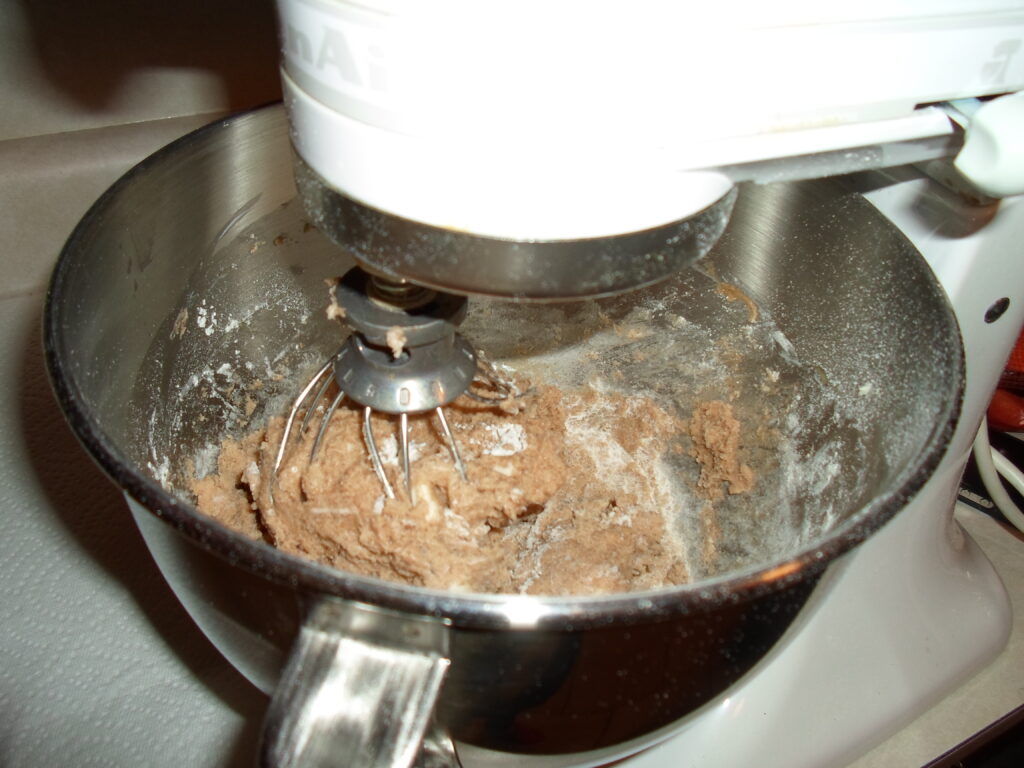
There is a fourth option that skips the problem entirely: use cold butter and let the mixer do the work. A stand mixer with a paddle will bring cold cubed butter to a workable state in about three minutes on medium speed, because mechanical shear generates heat exactly where it is needed.
This works well for buttercream and for cookie doughs made in a stand mixer, and it does not work with a hand mixer, which lacks the torque and will strain. Start on low, let the cubes break down, then raise the speed once the mass is coherent.
The other shortcut is to choose a recipe that wants melted butter instead. Plenty of good cookies, brownies and quick breads are built on melted butter and are better for it, and swapping between the two is not a free substitution: melted butter produces a denser, chewier result with less lift. Knowing which one a recipe needs is more useful than any softening trick, and it is the same distinction that decides the texture of a finished frosting.
Frequently Asked Questions
Can I fix butter that got too warm?
Put it back in the refrigerator for ten minutes and check again. That works if it merely reached 72 or so. If any part of it actually liquefied and re-set, the crystal structure is gone and it will not cream properly, and the honest answer is to use it for something that calls for melted butter.
Does the brand or fat percentage change the numbers?
European-style butters with a higher fat content soften slightly faster because there is less water to warm, and the difference is small enough to ignore in practice. Whipped butter and spreadable blends are different products entirely and should not be substituted in baking.
What temperature should butter be for pie crust?
Cold, around 40 degrees, and the opposite problem. Pastry depends on solid pieces of fat staying solid until they hit the oven, so grated frozen butter is ideal there. The 65 degree target applies only to creaming.
Is there a difference between salted and unsalted for softening?
No measurable difference in how fast it warms. The difference is in how long it can sit out safely afterward, where salted has a real advantage, and in recipe control, which is why most baking recipes call for unsalted.
My recipe says butter should be cool room temperature. What is that?
Usually around 60 degrees, a few degrees firmer than standard softened butter. It turns up in laminated doughs and in some European cake recipes, and the practical test is that a fingertip leaves a mark but does not sink in.
Can I soften butter in a bag in warm water?
It works and it is uneven in the same way the warm glass is, with the added risk of water getting in. If it is the only option, use water that is barely warm to the touch, keep the bag sealed, and dry it before opening.
Put a probe in the next stick that comes out of the refrigerator and check it against a fingertip once. After that the thermometer can go back in the drawer, because the finger will have been calibrated.