
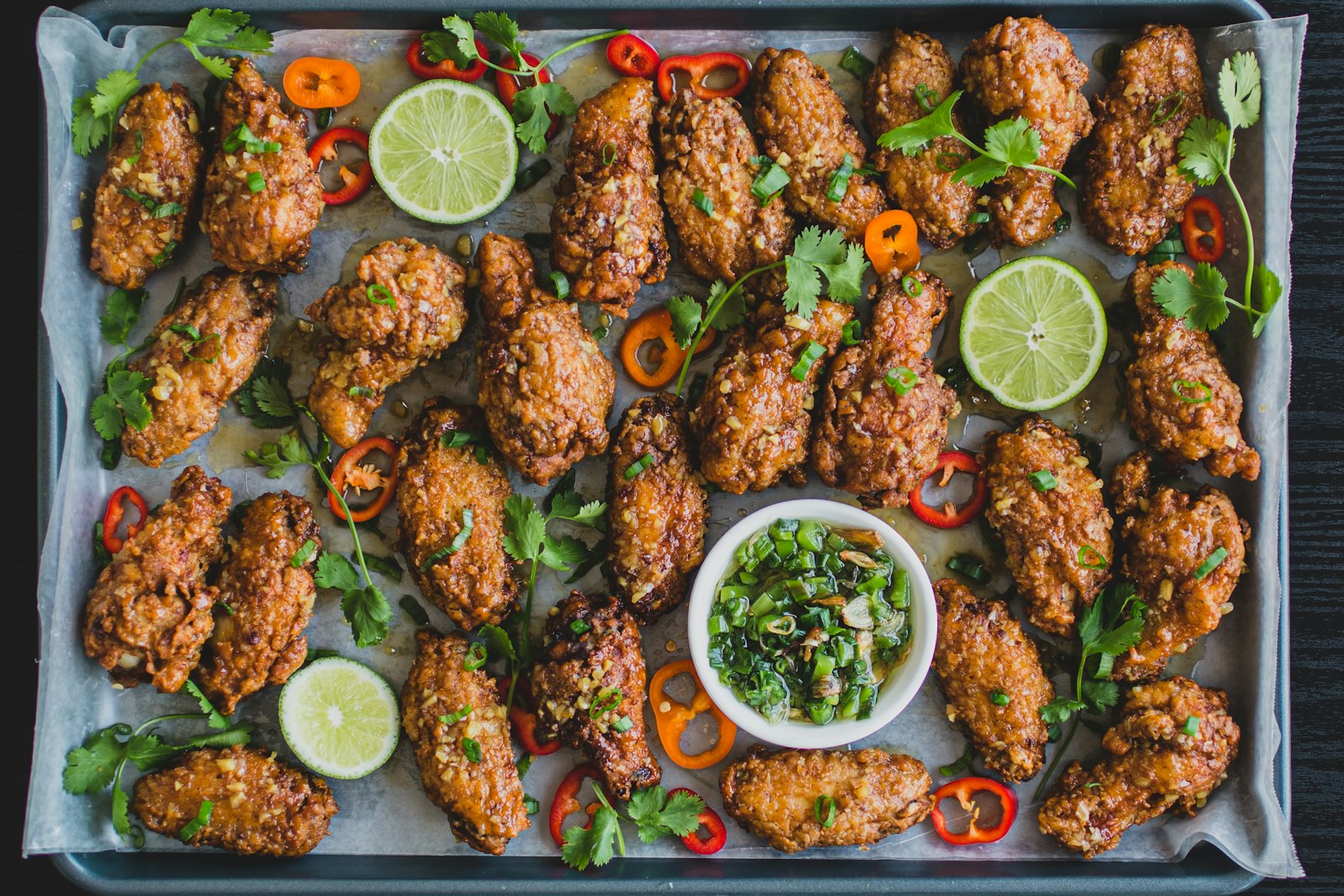
The sheet pan roast chicken is one of the most reliable weeknight dinners in the modern home cook’s arsenal. Twenty minutes of active work, one pan, a full meal that reheats well the next day. But like most simple things, it hides a few technical points that separate the version that just works from the version that produces crispy skin, tender meat, and vegetables that are properly caramelized rather than steamed and sad.
This guide walks through the base method — the one that works with almost any combination of chicken cut, vegetable, and seasoning — then covers the six rules that make it consistently good, plus common failure modes. Once you understand the method, the specific ingredients matter less than you would think. Chicken thighs one week, drumsticks the next, whatever vegetables need using up.
Total time: 45–55 minutes
Serves: 4
Cookware: One rimmed half-sheet pan (18×13 inches)
Oven: 425°F
Key rule: chicken skin-side up, vegetables around it — never on top
Best cuts: bone-in skin-on thighs or drumsticks
The six rules
Every good sheet pan chicken recipe respects these six variables. If yours does not work, one of these is usually the reason.
Rule 1: Dry the chicken thoroughly
Skin does not crisp when it is wet. Pat the chicken very dry with paper towels — really press to absorb the moisture — and then leave it uncovered on a plate in the refrigerator for at least 30 minutes if you can, or overnight for exceptional results. Dry skin browns and crisps; damp skin steams and stays flabby.
Rule 2: Use a hot enough oven
425°F is the sweet spot. Lower temperatures dry out the chicken without giving the skin time to crisp. Higher temperatures burn the vegetables before the chicken cooks through. If you want especially crisp skin, finish under the broiler for the last 2–3 minutes.
Rule 3: Do not crowd the pan
Everything on the pan needs airspace around it. Crowded ingredients release steam that reduces browning. If the chicken and vegetables cover the pan completely with no gaps, use two pans instead of one, or reduce the amount of vegetables.
Rule 4: Match cooking times
Different vegetables cook at different rates. Dense vegetables like potatoes, carrots, and squash go on the pan first (or get parboiled to speed them up). Faster vegetables like green beans, cherry tomatoes, and thin asparagus go in during the last 15 minutes. Getting this wrong means either mushy chicken with crunchy vegetables, or perfect chicken with burned vegetables.
Rule 5: Season aggressively
Cold chicken from the fridge tastes less salty than freshly cooked. Season more assertively than you think you need to — especially the skin. A generous sprinkle of kosher salt and cracked black pepper on both sides makes the difference between a chicken that tastes seasoned and one that tastes bland.
Rule 6: Let the chicken rest
Right out of the oven, chicken juices are still moving. Rest the pan for 5–7 minutes before serving. The juices redistribute, and the meat holds moisture much better when you cut into it.
The base recipe
Ingredients
- 2 pounds bone-in, skin-on chicken thighs (about 4–6 thighs)
- 1.5 pounds mixed vegetables — potatoes, carrots, onions, bell peppers, or others that hold up to roasting
- 3 tablespoons olive oil, divided
- Kosher salt and freshly ground black pepper
- 1 teaspoon dried herbs (thyme, rosemary, oregano, or Italian blend)
- 3 garlic cloves, smashed but left whole
- 1 lemon, cut in half
Instructions
- Preheat oven to 425°F. Line a rimmed half-sheet pan with parchment paper for easier cleanup, or leave bare for maximum crisp.
- Pat the chicken thighs dry with paper towels — press firmly on both sides. Season generously with kosher salt and black pepper on both sides, especially the skin. If you have time, let sit uncovered in the fridge 30 minutes to overnight.
- Cut vegetables into roughly uniform 1-inch pieces. Toss with 2 tablespoons olive oil, salt, pepper, and the dried herbs. Spread on the sheet pan in a single layer.
- Nestle the chicken thighs skin-side up among the vegetables, leaving airspace around each. Drizzle the remaining tablespoon of oil over the chicken. Tuck the smashed garlic cloves and lemon halves (cut side down) around the pan.
- Roast for 35–40 minutes, until the chicken thighs register 175°F at the thickest part (thighs are more forgiving than breasts and taste better slightly above 165°F) and the skin is deeply golden.
- If you want extra-crisp skin, broil for the final 2–3 minutes, watching carefully.
- Remove from oven and let rest 5–7 minutes before serving. Squeeze the roasted lemon over everything at the table.
Vegetable choices and timing
The vegetables you use determine when they go on the pan.
| Vegetable | Prep | When to add |
|---|---|---|
| Potatoes, sweet potatoes | 1-inch pieces | Start of cooking (parboil 8 min for faster) |
| Carrots, parsnips | 1-inch chunks | Start of cooking |
| Onions, shallots | Wedges | Start of cooking |
| Butternut squash | 1-inch cubes | Start of cooking |
| Cauliflower, broccoli | Large florets | Halfway through |
| Bell peppers | Thick strips | Halfway through |
| Zucchini, summer squash | Thick half-moons | Last 15 minutes |
| Green beans, asparagus | Trimmed | Last 15 minutes |
| Cherry tomatoes | Whole | Last 15 minutes |
| Leafy greens (kale, spinach) | Torn | Last 5 minutes, or off-pan |
Chicken cuts
Bone-in, skin-on thighs are the best default. They stay juicy through a longer cook, the skin renders fat that flavors the vegetables, and they are forgiving if slightly overcooked.
Drumsticks work the same way but cook slightly faster. Check at 30 minutes.
Bone-in, skin-on breasts are trickier — they dry out easily. If using them, reduce oven time to 30 minutes and check for doneness (165°F) at 25.
Boneless, skinless thighs or breasts are less ideal because there is no skin to crisp and less fat to keep the meat moist. They also cook much faster (20–25 minutes) than the vegetables, which is a coordination problem. Skip unless it is what you have.
Whole spatchcocked chicken is a great version if you want to feed 4–6 people from one pan. Cook 45–55 minutes at 425°F, until 165°F in the breast.
Five variations
Mediterranean
Vegetables: potatoes, red onion, cherry tomatoes, olives. Season with oregano, lemon zest, and garlic. Finish with fresh dill or parsley and a drizzle of good olive oil.
Sheet pan chicken shawarma
Vegetables: red onion wedges and bell pepper strips. Marinate chicken 30 minutes in yogurt, garlic, cumin, coriander, paprika, and lemon. Serve with warm pita, tahini sauce, and pickled onions.
Honey mustard with root vegetables
Vegetables: potatoes, carrots, parsnips. Brush chicken with a mixture of Dijon mustard, honey, and olive oil in the last 15 minutes of cooking.
Chile-lime with cauliflower and lime
Season chicken with cumin, smoked paprika, chile powder, and lime zest. Add cauliflower florets and red onion. Finish with fresh cilantro and lime wedges.
Miso-glazed with root vegetables
Whisk 2 tablespoons white miso, 1 tablespoon honey, 1 tablespoon mirin. Brush over chicken in last 15 minutes. Serve with rice.
Common problems and fixes
Chicken skin is soft, not crispy. Skin was wet, or oven was not hot enough, or crowding. Dry the skin longer next time. Try broiling the last 2–3 minutes.
Vegetables are burnt but chicken is still raw. Vegetables were cut too thin or oven was too hot. Use larger vegetable pieces, or reduce oven to 400°F.
Chicken cooked evenly but vegetables are steamed and mushy. Pan was crowded. Use two pans, or reduce vegetables.
Bottom of vegetables is burnt. Parchment paper helps a lot. If you skip parchment, use a heavy-gauge pan and reduce oven to 400°F.
Meal is bland even though seasoning looked right. Cold chicken tastes less salty than warm. Season more aggressively next time. Finish with flaky salt and a squeeze of lemon at the table.
Frequently asked questions
Can I use frozen chicken?
Thaw first. Frozen chicken releases too much water and never crisps properly. Thaw overnight in the refrigerator or in cold water (for faster thawing) before cooking.
Should I use parchment paper or leave the pan bare?
Parchment gives easier cleanup and slightly less browning. Bare pan gives better browning and crispier skin. Either works — depends on your priorities. Foil is a middle option.
What if my sheet pan is smaller than 18×13?
Use less chicken and fewer vegetables to avoid crowding, or use two smaller pans. A 13×9 pan works for 2 servings; anything smaller starts to overcrowd for family portions.
How long does sheet pan chicken keep?
Refrigerated in an airtight container for 3–4 days. The skin loses crispness but the meat and vegetables reheat well in a 350°F oven for 10–15 minutes, or in the microwave with a splash of water to keep from drying out.
Can I make this ahead?
Yes, but plan for skin softening. Cook fully, cool, refrigerate, and reheat. For entertaining, cook the day of and hold in a low oven (200°F) up to 30 minutes if needed.
Do I need to flip the chicken?
No. Skin-side up the whole time gives the best crisp. Flipping halfway soft-cooks the skin under the pan and works against everything you are trying to do.
The short version
Sheet pan chicken works when the skin is dry, the oven is hot enough, the pan is not crowded, and vegetables are matched to the chicken’s cook time. Get those four right and everything else is variation — herbs, spices, marinades, veggie combinations, glazes. Once the method is second nature, sheet pan chicken becomes the weeknight fallback you can pull off in 45 minutes without thinking about it.