
Three foods, four appliances, twelve attempts, one afternoon and a very unhappy kitchen. The premise was simple: take the leftovers people actually have in the refrigerator on a Sunday, reheat each one four different ways, and score the results on the only three things anyone cares about, which are how crisp it comes out, how long it takes, and what gets left in the sink.
The three foods were a thin-crust pepperoni pizza, a batch of oven fries, and bone-in fried chicken thighs, all cooked the day before and refrigerated overnight in shallow containers. The four appliances were a 1000 watt microwave, a conventional oven, a 10 inch cast iron skillet and a basket-style air fryer.
One appliance came last on all three foods, and it was not close. The interesting part was not that it lost, but that the winner changed depending on the food, which means there is no single answer to hang on the refrigerator door.
- Scored on: crispness out of 5, minutes to the table, cleanup out of 5
- Pizza winner: covered skillet, 6 minutes
- Fries winner: air fryer, 4 minutes
- Fried chicken winner: air fryer, 9 minutes
- Last place on all three: the microwave
- The rule none of them changes: 165 degrees in the middle
How the four rounds were scored
Everything started at refrigerator temperature, straight from a covered container, with no sitting on the counter first. Minutes to the table include preheating, because a ten minute oven preheat is ten real minutes of a person’s evening and pretending otherwise is how appliance comparisons get dishonest.
Crispness was judged by the sound and by the bend test: a slice held horizontally by the crust that sags more than about thirty degrees scores a 2 or lower. Cleanup counted what physically needed washing afterward, with 5 meaning a plate and 1 meaning a pan with baked-on grease.
Interior temperature was checked on every single attempt with an instant-read thermometer, and nothing was scored until it read at least 165 degrees in the thickest part. That is the reason a couple of the microwave times look longer than what the manual suggests.
None of this is laboratory work. It is one kitchen, one set of appliances and one person’s palate, which is the same equipment you have. The gaps were large enough that a second run changed the times by seconds and never changed the order.
What a microwave actually does to a crust
A microwave oven heats by agitating water molecules throughout the food at once. That is a genuine advantage for soup and a structural problem for anything with a crust, because the water inside the crumb turns to steam, migrates outward, and hits a surface that is cooler than the interior. It condenses there. The crust ends up wetter at the end of the cycle than it was at the start.
Then it gets worse on the plate. As a starchy food cools, its starch molecules recrystallize into a firmer structure, and heating quickly and then cooling quickly accelerates it. That is why microwaved pizza is floppy for ninety seconds and then turns oddly leathery and tough, which is a different failure from merely soft.
Every other appliance in this test heats from the outside in with dry air or hot metal, which drives water off the surface rather than into it. That single difference decides all three rounds before anything is plugged in.
The paper towel trick helps a little and the microwave crisper tray helps a little more, and neither one closes the gap. A towel underneath absorbs some of the condensation; it cannot stop steam from arriving.
The best way to reheat pizza, round by round
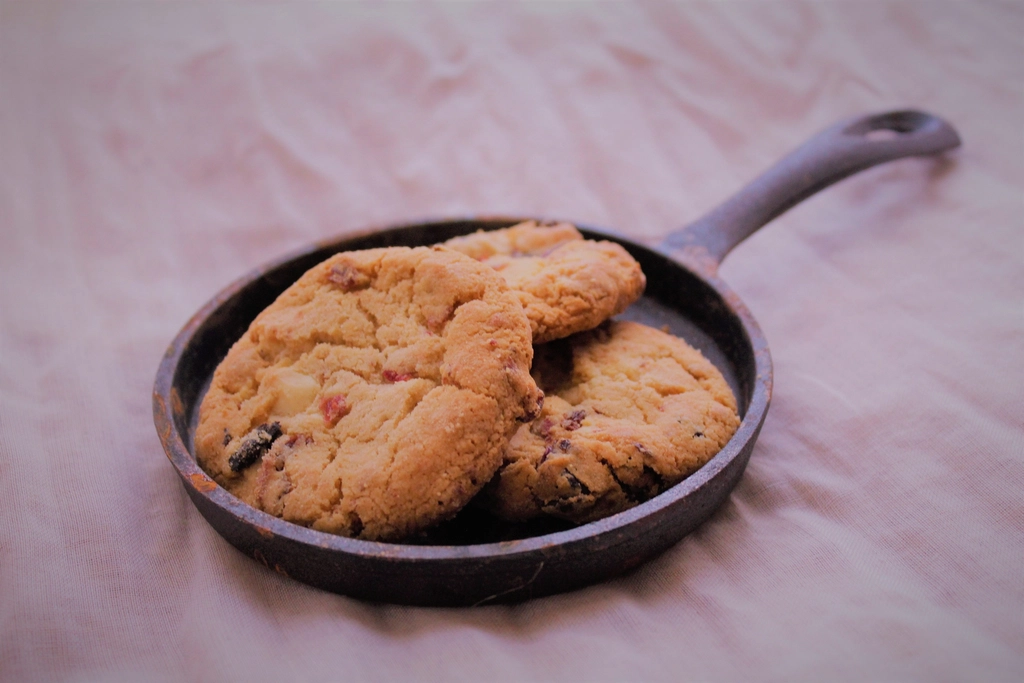
The best way to reheat pizza turned out to be a dry cast iron skillet over medium heat, covered for the last two minutes. The slice goes in cold with no oil, the bottom crisps against the metal for about four minutes, then a lid goes on for two more so the cheese melts through without the crust ever seeing steam directly.
A variation that gets recommended constantly, adding a few drops of water to the pan away from the slice before covering it, did work and did melt the cheese faster, at the cost of about a point of crispness on the underside. Worth it for a thick slice with a lot of toppings, unnecessary for thin crust.
| Method | Crispness | Minutes | Cleanup | Notes |
|---|---|---|---|---|
| Covered skillet, medium | 5 | 6 | 4 | Crisp base, fully melted top |
| Air fryer, 350 | 4 | 5 | 4 | Very good, edges dry out slightly |
| Oven, 400, on a hot sheet | 4 | 18 | 3 | Best for four slices at once |
| Microwave, 1000 watt | 1 | 2 | 5 | Soggy at first, leathery by minute three |
The oven number looks bad and is mostly preheat. If the oven is already on for something else, it becomes the obvious choice, and it is the only method here that handles a whole leftover pizza rather than two slices. Put the sheet pan in while the oven preheats so the crust meets hot metal instead of cold.
Fries, and the fat that already drained out
Fries are the hardest of the three because the thing that made them good in the first place has physically left. Frying drives water out of the potato and leaves a dry, brittle shell; overnight in the refrigerator, moisture from the interior migrates back into that shell and softens it. Reheating has to drive it out again, and there is much less fat left to help.
Which is why the fries that responded best got a small amount of fresh fat. Half a teaspoon of oil tossed through a portion before it went into the air fryer basket was the difference between a 4 and a 5, and it is a rounding error on the calorie count.
| Method | Crispness | Minutes | Cleanup | Notes |
|---|---|---|---|---|
| Air fryer, 400, shaken once | 5 | 4 | 4 | Better than they were on day one |
| Skillet, thin film of oil | 4 | 7 | 2 | Excellent, greasy pan afterward |
| Oven, 425, single layer | 3 | 19 | 3 | Fine, needs a preheated pan |
| Microwave, 1000 watt | 1 | 2 | 5 | Limp, steamy, uniformly disappointing |
Do not crowd the air fryer basket. A single layer with visible gaps crisps in four minutes; a basket packed two deep steams itself and takes nine, which is the same physics that governs any crisp potato side in a hot pan.
Fried chicken, where the coating is the whole point
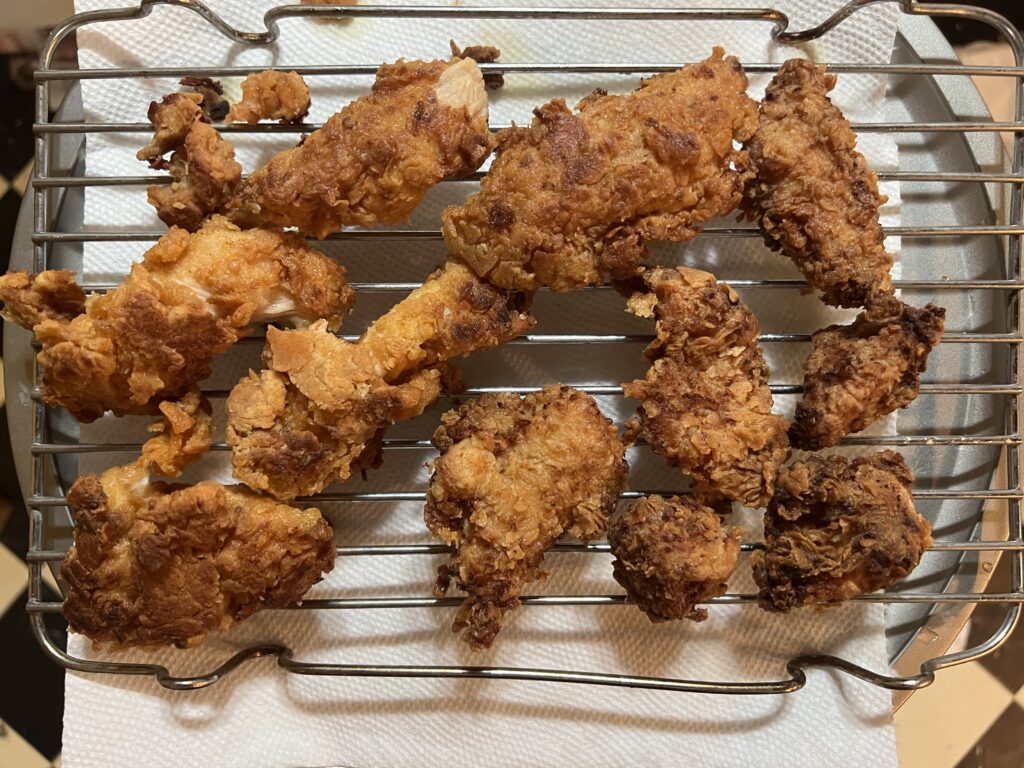
Fried chicken has two competing requirements. The coating needs dry heat to re-crisp, and the meat under it needs to come up to a safe temperature without drying into string. Bone-in pieces make this harder, since the bone slows heat transfer to the thickest part of the meat.
The air fryer won on the coating and the oven won on the meat, and the two results were close enough that either is a reasonable choice. The air fryer at 350 degrees for eight to ten minutes produced skin that genuinely crackled. The oven at 375 on a wire rack, giving air a path underneath, took closer to twenty minutes and produced juicier meat with slightly less shatter to the crust.
| Method | Crispness | Minutes | Cleanup | Notes |
|---|---|---|---|---|
| Air fryer, 350 | 5 | 9 | 3 | Best skin, check the bone with a thermometer |
| Oven, 375, on a rack | 4 | 24 | 2 | Juiciest meat, rack is a nuisance to wash |
| Skillet, covered then uncovered | 3 | 12 | 2 | Uneven on bone-in, good on boneless |
| Microwave, 1000 watt | 1 | 4 | 5 | Wet skin, hot edges, cool center |
Cold from the refrigerator is a legitimate fourth option for fried chicken and beats the microwave on every measure except temperature. It is also the only item in this test that a lot of people prefer that way.
Cleanup, counted honestly
The microwave wins this category outright, every time, and that is the entire reason it stays in the rotation. One plate. Nothing else.
The air fryer basket is the sleeper cost. It looks clean and it is not, because the perforated basket and the drawer underneath both collect rendered fat, and skipping that wash for a week produces a smoking machine and a kitchen that smells like last Tuesday. Lining the basket with a perforated liner cuts it, though it also cuts airflow and adds a minute.
Cast iron is the easiest of the three real cooking methods here, since a dry skillet used for pizza needs a wipe and nothing more. The oven’s cost is the wire rack, which has to be scrubbed by hand and is genuinely the worst dish in this article.
If time is the only thing you care about
Total minutes, cold food to plate, best case for each pairing:
| Food | Microwave | Air fryer | Skillet | Oven |
|---|---|---|---|---|
| Pizza, two slices | 2 | 5 | 6 | 18 |
| Fries, one portion | 2 | 4 | 7 | 19 |
| Fried chicken, two thighs | 4 | 9 | 12 | 24 |
The microwave saves three to five minutes against the air fryer and gives up four points of crispness to do it. That is the actual trade, stated plainly, and there are evenings where it is the right one.
The air fryer’s real advantage is that it has no meaningful preheat. Thirty seconds of running before the food goes in is enough, which is why it beats a skillet that needs two minutes and an oven that needs ten, and why it has quietly taken over reheating in a lot of kitchens the same way it took over wings and small batches of chicken.
The foods where the microwave is the correct tool
Nothing here should be read as an argument against owning one. An air fryer cannot reheat a bowl of soup without dirtying a pot, and an oven takes twenty minutes to do what a microwave does in ninety seconds for anything wet.
Rice, stew, chili, steamed vegetables, mashed potatoes, oatmeal, a mug of milk: all of these are mostly water and have no crust to ruin, and for all of them the microwave is faster, cleaner and better. Cold rice in particular reheats beautifully with a spoonful of water and a lid, and badly in a dry pan.
It is also the only appliance in the house that reheats a single portion without heating the kitchen in August. The rule that comes out of this test is narrow: if the food had a crisp surface when it was made, the microwave will take it away, and if it did not, the microwave is the correct tool.
165 degrees is not negotiable
Crispness is a preference. Internal temperature is not. Leftovers should be reheated until the thickest part reads 165 degrees on an instant-read thermometer, and for bone-in chicken that means probing next to the bone rather than into the outer meat, where it will read high and lie to you.
The microwave deserves one extra warning here, and it has nothing to do with texture. It heats unevenly by nature, leaving hot and cold pockets in the same piece of food, so anything reheated that way needs to be stirred or rotated partway through and then left to stand for a minute so the temperature can even out. A piece that reads 170 at the edge can easily be at 120 in the middle.
The clock before reheating matters more than the reheating itself. Cooked food that has been sitting at room temperature for more than two hours, or more than one hour if the room is above 90 degrees, should be thrown out rather than reheated, because no appliance removes the toxins some bacteria leave behind. Pizza that spent the night on the counter is not rescued by a hot pan.
Refrigerate leftovers in shallow containers within two hours of cooking, eat them within three to four days, and take out only the portion you plan to eat. Repeatedly reheating and re-cooling the same container walks the food through the risky temperature range again each time, which is one of the everyday kitchen mistakes that quietly matters.
Four moves that improve any of these
- Take it out of the container early. Fifteen minutes on the counter before reheating shortens every method by a minute or two and evens out the interior. Fifteen minutes, not two hours.
- Give it a rack or a gap. Anything sitting flat on a solid surface traps steam underneath. A wire rack in the oven, a shaken air fryer basket, a single layer in a skillet.
- Add fat back, sparingly. Half a teaspoon of oil on fries or a brushed film on chicken skin restores the conduction that frying provided and the refrigerator took away.
- Finish uncovered. If you covered something to get the middle hot, take the lid off for the last two minutes so the surface can dry out again.
Frequently Asked Questions
Does the paper towel trick actually work in the microwave?
Partially. A towel underneath absorbs condensation that would otherwise pool against the crust, which is worth about one point of crispness on a slice of pizza. It does nothing about the steam moving outward from inside the food, so the ceiling is low.
Can I reheat pizza in a toaster oven?
Yes, and it behaves like a small conventional oven with a shorter preheat, so figure eight to ten minutes at 400 degrees on the rack with a tray underneath to catch drips. It sits between the air fryer and the full-size oven on every measure.
Why did my air fryer smoke when I reheated chicken?
Rendered fat in the drawer under the basket hitting the element. Pour off the drawer between batches, wash it after anything fatty, and add a tablespoon of water to the drawer before starting if the food is greasy.
Is it safe to reheat the same leftovers twice?
Once is the sensible limit. Each round trip through the temperature range between the refrigerator and hot gives bacteria another window to multiply, so portion out what you plan to eat and leave the rest cold.
What about frozen leftovers, do the same times apply?
No. Thaw them in the refrigerator overnight first, then use these numbers. Reheating from frozen in a hot appliance browns the outside long before the middle is safe, and the microwave defrost setting followed by a skillet finish is a reasonable compromise.
Which appliance would you keep if you could only keep one?
The oven, because it is the only one that also cooks. If the question is which one earns its counter space fastest for leftovers alone, the air fryer wins on two of the three foods here and comes second on the third.
Run the pizza round yourself with two slices, one in the microwave and one in a dry skillet, side by side. Six minutes of your time settles the argument permanently.