
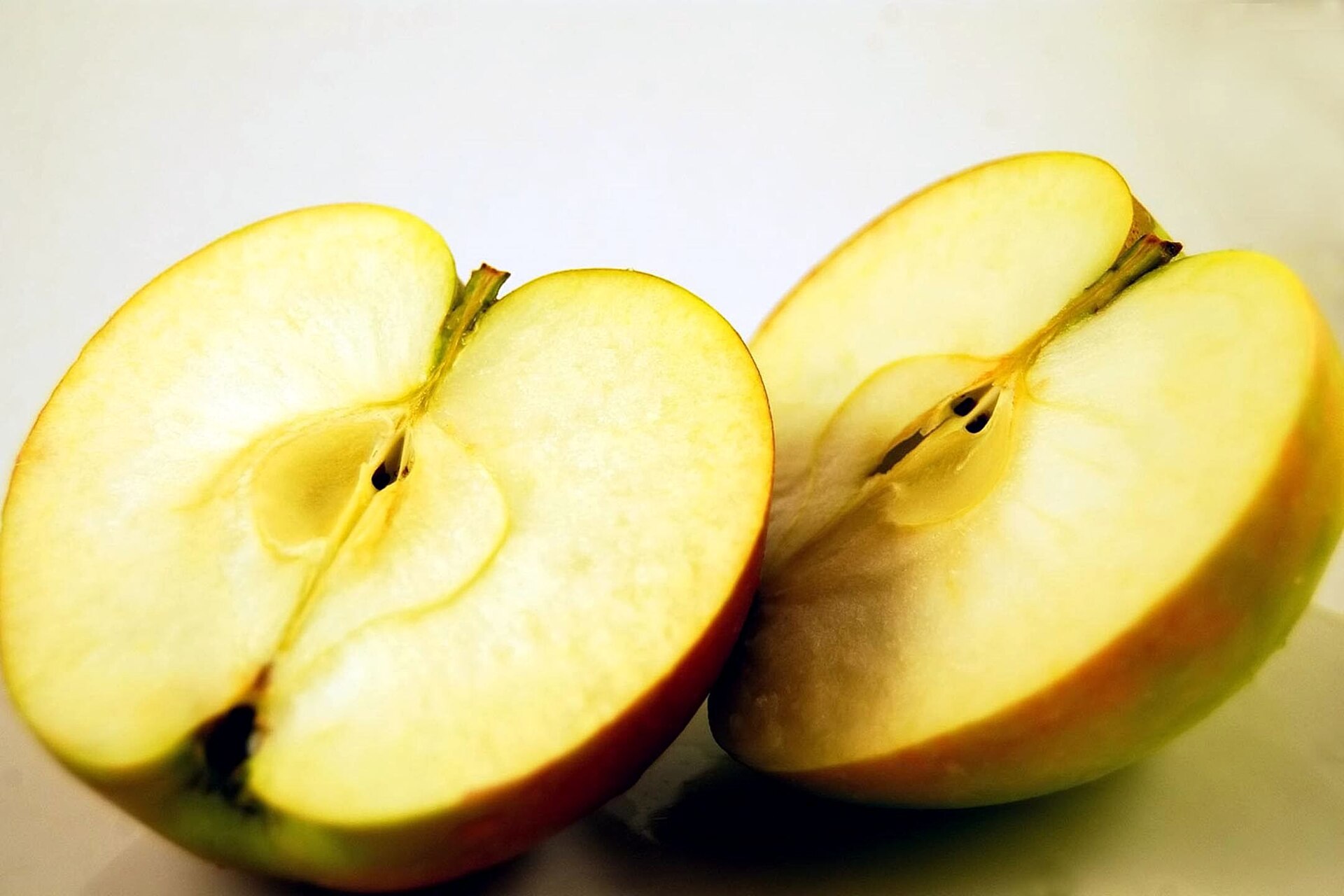
Four bowls, one variety of apple, one knife, and a timer. The question was narrow: after six hours in a closed container at room temperature, which of the standard lunchbox tricks still produces a slice a nine-year-old will actually eat?
Lemon water is the method on every list. It finished third. The one that held up best takes five minutes, costs almost nothing, leaves no flavor behind once it is rinsed, and most people rule it out immediately because it sounds wrong.
Below is the setup, what each treatment looked like at one hour, three hours and six, and the reason the chemistry lands the way it does.
- Tested: lemon water, salt water, honey water, pressed plastic wrap, and an untreated control
- Apples: Gala, eight wedges per treatment, same knife, wiped between cuts
- Conditions: lidded containers on a counter at about 70 degrees
- Checked: at 1, 3 and 6 hours, photographed each time
- Winner: salt water, by a clear margin
- Biggest surprise: plastic wrap barely beat doing nothing at all
The setup, and how the scoring worked
One large Gala per treatment, cut into eight wedges, core removed, with the knife wiped between apples so nothing carried over. Each set went into an identical lidded container and stayed on the same counter, out of direct sun, for six hours.
The solutions were mixed the way an ordinary kitchen would mix them. Lemon: one tablespoon of bottled juice per cup of cold water. Salt: half a teaspoon of table salt per cup of cold water, followed by a ten-second rinse under the tap. Honey: two tablespoons stirred into a cup of warm water and cooled before use. Every soak lasted five minutes, then the wedges drained on a rack for one minute.
The wrap treatment got no soak at all, just plastic pressed directly onto the cut faces, which is how most people actually do it. The control got nothing.
Scoring ran from 0, meaning indistinguishable from freshly cut, to 5, meaning uniformly tan across every cut surface. Scores were assigned against the photographs rather than from memory, because color judgments drift badly over six hours.
What is actually turning the apple brown
An intact apple cell keeps two things apart: an enzyme called polyphenol oxidase and the phenolic compounds it acts on. A knife destroys that separation. The enzyme meets the phenolics, oxygen from the air joins in, and the products link together into brown pigments within minutes.
That gives four ways to interfere. Remove the oxygen, which is what submersion and wrapping attempt. Lower the pH below the range the enzyme works in, which is what acid does. Block the enzyme directly, which is what chloride ions from salt do by interfering with the copper at its active site. Or reverse the reaction partway, which is what a reducing agent like ascorbic acid does.
The methods that block the enzyme outperformed the methods that only remove oxygen or lower pH, and that turned out to be the whole story of the test. Enzymatic browning is not spoilage, incidentally. It is cosmetic and the fruit is perfectly safe, which matters mainly because it means none of this is a food safety exercise.
Hour one: nothing much to see
At sixty minutes all four treated sets looked essentially untouched. The control had gone faintly yellow along the thin edge of each wedge, visible but not the kind of thing anyone would refuse.
The wrapped set looked as good as the soaked ones, which is exactly why the wrap method has the reputation it has. Anyone who checks their work at the one-hour mark concludes it works.
This is also the window most home tests stop at, and it is why the folklore around cut apples is so unreliable. Every method looks fine for an hour. The differences are all downstream of that.
Temperature is worth noting even here. The containers sat at about 70 degrees, which is roughly what a bag on a classroom shelf sees. A set held in the refrigerator as a side comparison was still at a 0 across the board at three hours with no treatment at all, which is a preview of a point that comes back later.
Hour three: the field splits
By three hours the results had separated into two groups. The control was clearly tan across every cut face. The wrapped wedges had browned wherever air could still reach them, and air always reaches somewhere: the wedges pressed tight against each other in the middle of the stack stayed pale, and every exposed face had gone.
Lemon was holding, but not perfectly. The cut surfaces had lost their bright white and taken on a dull, slightly translucent look, with the beginnings of tan at the edges. Salt and honey were still white, and at three hours the two were indistinguishable from each other.
The photographs from this checkpoint are the ones that make the case, because at three hours the ranking is already final and nothing after this reordered it.
Hour six: the scores
Six hours covers a bag packed at seven in the morning and opened at lunch, with margin. This is the checkpoint that decides which trick is worth doing.
| Method | Ratio | 1 hour | 3 hours | 6 hours | Taste left behind |
|---|---|---|---|---|---|
| Salt water, rinsed | 1/2 tsp per cup | 0 | 0 | 1 | None after the rinse |
| Honey water | 2 tbsp per cup | 0 | 0 | 1 | Faintly sweet |
| Lemon water | 1 tbsp per cup | 0 | 1 | 3 | Noticeably sour at the edge |
| Plastic wrap, pressed | none | 1 | 3 | 4 | None |
| Nothing | none | 2 | 4 | 5 | None |
Salt and honey both finished at a 1, meaning a faint dulling visible only next to a freshly cut wedge. Lemon at a 3 is the point where a child notices and starts negotiating. The wrapped set at a 4 was barely better than the control, and the wrap costs more than the salt does.
How to keep apples from browning: the method that won
Half a teaspoon of table salt dissolved in one cup of cold water. Drop the wedges in, push them under, and leave them five minutes. Drain, then rinse under cold running water for about ten seconds. Pack them.
The rinse is the step people skip, and then they report that the apples tasted salty and dismiss the method. Ten seconds under the tap removes essentially all of the surface salt while leaving the effect intact, because the ions that matter have already reached the enzyme in the cut surface.
One cup of solution handles two apples comfortably. Do not soak longer than about ten minutes; past that the wedges start to take on water and go slightly limp, which is a texture problem rather than a color one. In a sealed container in the refrigerator, salt-soaked wedges came through overnight in acceptable shape, which makes packing lunches the night before genuinely viable.
This is one of the few kitchen problems where the cheapest ingredient in the cabinet is also the correct one, and it is worth knowing what salt does beyond seasoning.
Why lemon water underperforms its reputation
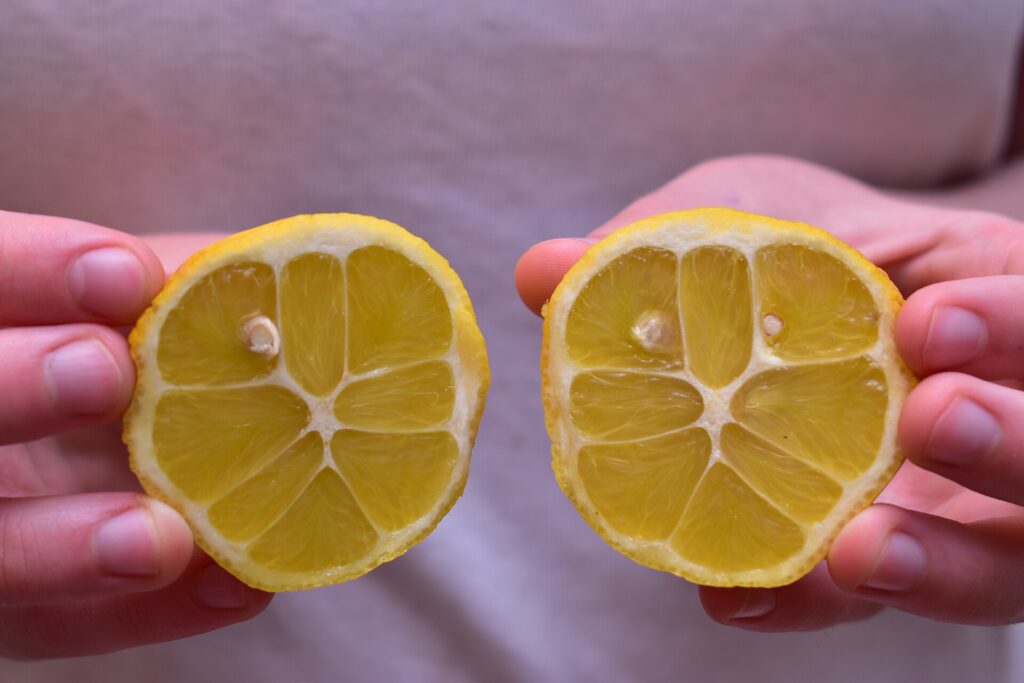
Lemon works by pH, and a tablespoon of juice in a cup of water is nowhere near acidic enough to do the job properly. The enzyme’s activity falls off sharply only well down the pH scale, and a dilute solution simply does not get there.
Straight lemon juice does hold apples very well, and it also makes them taste like lemon. That is fine on a fruit salad where the acid is welcome, and it is a deal-breaker in a lunchbox where a child expects an apple to taste like an apple. Bottled juice also varies in strength between brands.
There is a better version of the same idea. Vitamin C is a reducing agent that converts the browning intermediates back before they can link up, and commercial produce protector powders are essentially ascorbic acid with some citric acid added. A 500-milligram vitamin C tablet crushed into a cup of water outperformed the lemon solution and left no sour edge behind. If lemon is the only thing in the house, use it, since it is clearly better than nothing.
The honey soak, and who should not get it
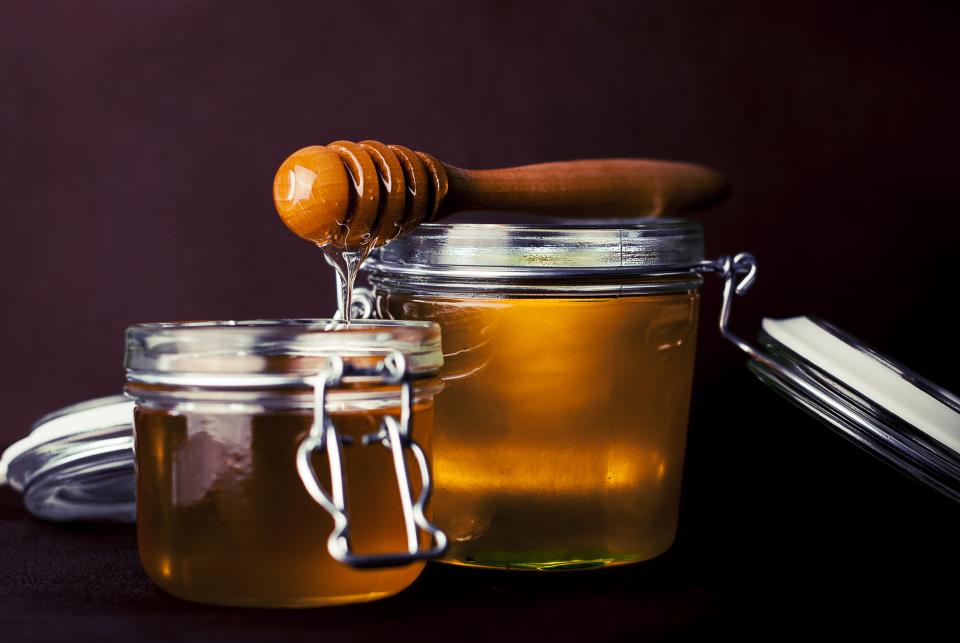
Honey finished tied with salt, which surprises people who assume it works because it is a syrup coating the surface. It does not. Honey contains a small peptide that inhibits the enzyme directly, which is why a dilute solution beats a far more acidic lemon one.
Two tablespoons stirred into a cup of warm water, cooled, five minutes, and no rinse needed. It leaves a faint sweetness that most children like and some adults find unnecessary on a fruit that is already sweet. It is the better choice when the apples are going into a fruit salad and a little sweetness is welcome anyway.
The caveat is not about browning. Honey should never be given to a child under twelve months because of the risk of infant botulism, and that applies to fruit soaked in honey water exactly as much as to a spoonful of it. For that household, salt water does the same job with no restriction.
Variety does more than any soak
The single largest variable in the whole exercise is not the treatment. It is which apple you bought.
Cortland is the classic slow-browning apple and is often sold specifically for salads and pies for that reason. Granny Smith holds well too, helped by its acidity. Honeycrisp and Fuji sit in the middle. Red Delicious browns fast and looks dreary within the hour. There are also non-browning cultivars sold under the Arctic name, developed by suppressing the genes that produce the enzyme, and they do exactly what they claim.
The reason is mostly how much of the enzyme a given cultivar carries and how much acid sits alongside it, and those are fixed by breeding rather than by anything a cook does afterward. It also explains why the same trick appears to work brilliantly for one person and poorly for another; they were not testing the same apple.
Buying a Cortland instead of a Red Delicious costs the same money and beats every trick in this article. Pair the right variety with the salt soak and a lunchbox apple stays presentable well past the point anyone will still be looking at it.
The rubber band, the cold pack, and the rest of the folklore
The rubber band. Cut the apple into wedges, reassemble it around the core, and hold it together with a band. It works better than expected, because it eliminates the air gap on the inner faces, and the skin protects the outside. Good for two or three hours, and it comes apart in a backpack.
Cold. Enzyme activity slows as temperature drops, so refrigerated wedges brown noticeably more slowly than counter-temperature ones no matter what else you did. A cold pack in the bag helps every method in the table and costs nothing extra if one is already going in.
Club soda. Mildly effective and mostly a pH effect. Not worth the trouble when salt is in the cabinet.
Pineapple juice. Genuinely effective, since it brings both acid and sulfur-containing compounds that interfere with the enzyme. It also makes the apple taste like pineapple, which is a fine outcome in a fruit cup and a strange one in a lunch bag.
Sugar sprinkled on the surface. Does very little on its own. A heavy sugar syrup can help by excluding oxygen, but at that point you have made a dessert. Those tricks belong with the way an ingredient gets handled in season, not with a Tuesday lunchbox.
Frequently Asked Questions
Will the apples taste salty?
Not after a ten-second rinse under cold running water. Every reported complaint about salty apples traces back to skipping that rinse. Taste one wedge from the first batch you make and the question settles itself.
How long do cut apples keep in the refrigerator?
Two to three days in a sealed container, and texture gives out before color does. By day three the wedges have gone slightly soft and mealy at the cut faces, which no soak prevents. Color is the easy problem; texture is the one with the shorter clock.
Can I cut them the night before?
Yes. Soak, rinse, seal, and refrigerate. Wedges treated with salt water came through sixteen hours in a closed container in usable shape, which is the practical difference between packing lunches at nine at night and packing them at seven in the morning.
Does browning mean the apple has gone bad?
No. It is an enzyme reaction with oxygen, not spoilage, and a brown wedge is safe to eat. The flavor shifts slightly and the appearance does the rest of the damage, which is why this is a presentation problem rather than a safety one.
Does any of this work on pears, bananas or avocado?
Pears yes, and they respond to the salt soak much like apples do. Bananas partly, since they brown through the same enzyme but also bruise easily. Avocado is a different case: the surface treatment helps, but the fat oxidizes on its own schedule, and pressing wrap directly onto the flesh does more than any soak.
Buy a Cortland, keep a box of table salt near the cutting board, and give it five minutes. That is the whole method, and it survives a school day with room to spare.