
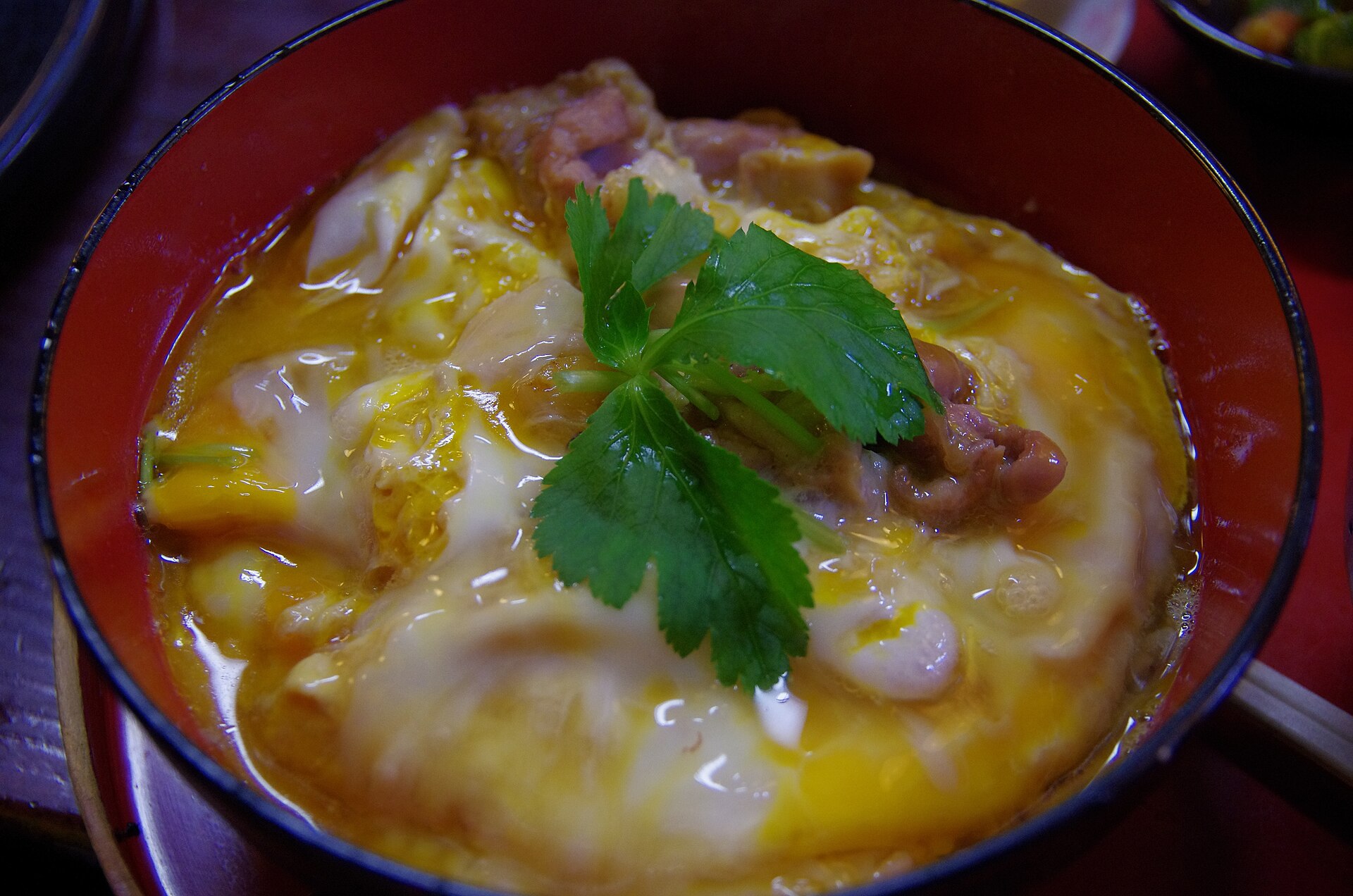
The bowl is four things: rice, chicken thighs, a jar of something acidic, and one green thing. That is the whole formula. Once it is in your head you stop needing a recipe on a Tuesday, because the refrigerator already holds a version of it.
What goes wrong is almost never the shopping. It is the order. Start the rice second and dinner arrives in shifts, with hot chicken, lukewarm rice, and a green thing that went into the pan eight minutes too early and came out the color of an army blanket. Everything below is arranged so all four slots land inside the same two minutes.
Twenty-eight minutes from the door with raw rice, timed. Sixteen if the rice is already cooked and sitting in the refrigerator, which is the version worth planning for on a Sunday.
- The four slots: a grain, a protein, an acid, a green
- Clock: 28 minutes from raw rice, 16 with cooked rice on hand
- Equipment: one small saucepan and one 12-inch skillet
- Chicken: boneless thighs, 165 degrees at the center, measured not guessed
- The slot people leave empty: the acid, and it is the one doing the most work
- Serves: four, with rice left over if the green slot is generous
Four slots, and the one everybody leaves empty
Grain, protein, acid, green. Three of those are obvious and get bought every week. The fourth is the reason a homemade bowl tastes like something a restaurant would charge for, and it is the one that never makes it onto a list.
Rice, browned chicken and oil are fat, salt and starch. That combination is heavy and slightly flat by the third bite, and the usual response is to add more salt, which makes it heavier without fixing anything. A spoonful of pickled onion, a splash of rice vinegar, a scoop of yogurt thinned with lemon: any of those resets the whole bowl.
The practical test for the acid slot is that it comes out of a jar and needs no cooking. Nothing in this slot should add a step. If it has to be simmered or reduced, it belongs to a different kind of dinner.
The green slot is looser. It can be raw, wilted, or a handful of herbs thrown on at the table. What it cannot be is cooked alongside the chicken, which is the single most common way this dinner goes gray.
The quick chicken rice bowl, start to finish
- Rice on first, before the coat comes off. One and a half cups of long-grain white rice, two and a quarter cups of water, a half teaspoon of salt, lid on, high heat until it steams hard, then the lowest setting on the burner.
- Pat six boneless, skinless chicken thighs dry with paper towels and salt both sides. Dry surface, brown crust. Wet surface, gray meat and a pan full of liquid.
- Set a 12-inch skillet over medium-high with a tablespoon of neutral oil. Give it two full minutes before anything goes in. The oil should shimmer and move like water when you tilt the pan.
- Lay the thighs in, smooth side down, and do not touch them for five minutes. Crowding drops the pan temperature, so use two batches if six thighs do not fit in one layer with a finger of space between them.
- Flip once. Three to four more minutes. Pull them at 165 degrees on an instant-read thermometer pushed into the thickest part, or run them to 175 for a softer, more forgiving texture.
- Rest the chicken on a board while the rice finishes. Ten minutes off the heat with the lid on is not optional; that is when the grains at the top and the bottom of the pot even out.
- Return the empty skillet to medium heat, add two tablespoons of water or broth, and scrape the brown film off the bottom with a wooden spoon. That is thirty seconds of work and it is the closest thing to a sauce in this recipe.
- Slice the chicken across the grain, fluff the rice with a fork, and build: rice, chicken, the pan scrapings poured over, the acid, the green thing, and salt at the end.
Order of operations, minute by minute
The whole point of the sequence is that nothing sits waiting. Below is what a twenty-eight minute run looks like from the moment the burner clicks.
| Minute | What happens | Why then |
|---|---|---|
| 0 | Rice and water into the pan, lid on, high heat | It needs 28 minutes total and nothing else does |
| 2 | Chicken out of the package, patted dry, salted | Salt needs a few minutes to stop beading on the surface |
| 3 | Rice comes to a boil, heat drops to low | A hard boil blows the starch out and gives you glue |
| 6 | Skillet on medium-high, empty | A cold pan costs three minutes and a gray crust |
| 8 | Thighs in, smooth side down | The long side goes first while the pan is hottest |
| 13 | Flip | Five minutes builds a crust that will not stick |
| 17 | Chicken out, resting; pan deglazed | Rice still has a minute of simmering left |
| 18 | Rice off the heat, lid stays on | Ten minutes of steam is part of the cook time |
| 25 | Green thing prepped, acid opened, chicken sliced | All the cold work fits in the rice rest |
| 28 | Bowls built | Everything is within two minutes of its peak |
Thighs, and the eight minutes that decide the texture
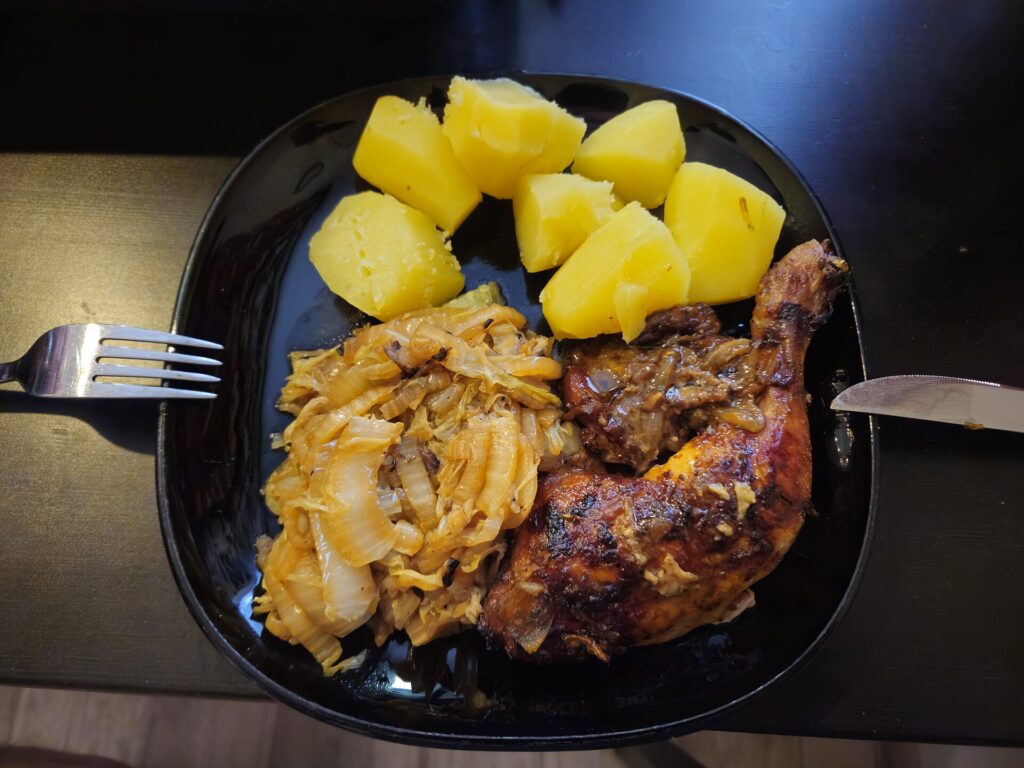
Boneless thighs run five to six minutes on the first side and three to four on the second in a properly preheated pan. Breasts do not work the same way here; they hit 165 degrees and then dry out within ninety seconds, which is a narrow window on a weeknight.
Thighs are forgiving because of connective tissue. At 165 degrees they are safe and slightly firm. At 175 to 180 the collagen has broken down further and the meat reads softer and juicier, which is the opposite of what happens to a breast. That is why a thigh survives an inattentive cook.
The thermometer is the part to actually buy. Color is a poor signal in a thigh, since the meat stays faintly pink near the bone and around the tendon even when it is fully cooked. An instant-read probe pushed into the thickest section, not touching the pan, settles it in three seconds.
The other habit worth building is the two-batch rule. Six thighs in a 12-inch skillet is one thigh too many. Packed edge to edge they release water faster than the pan can drive it off, the temperature collapses, and the meat steams in its own juice instead of browning.
Rice: three routes with different clocks
Stovetop, from raw. Long-grain white rice, one part rice to one and a half parts water, salt, tight lid. Fifteen to eighteen minutes on the lowest heat, then ten minutes off the burner with the lid still on. Rinsing first removes surface starch and gives separate grains; skipping the rinse gives a softer, stickier bowl. Both are legitimate.
Jasmine wants slightly less water, closer to one and a quarter parts, because the grain is softer to begin with. Basmati benefits from a twenty-minute soak and then cooks in about twelve. Brown rice is a different dinner entirely at forty-five minutes and does not fit this clock.
From the refrigerator. Cooked rice reheats best with a tablespoon of water per cup, covered, either in a microwave for ninety seconds or in the same skillet after the chicken comes out. Day-old rice is drier and actually fries better than fresh, which is why it is the base of every fried rice ever made.
From a pouch. Shelf-stable pouches take ninety seconds and cost several times what a bag of rice does. Keep one for the night the plan collapses.
The jar slot: what counts as acidic
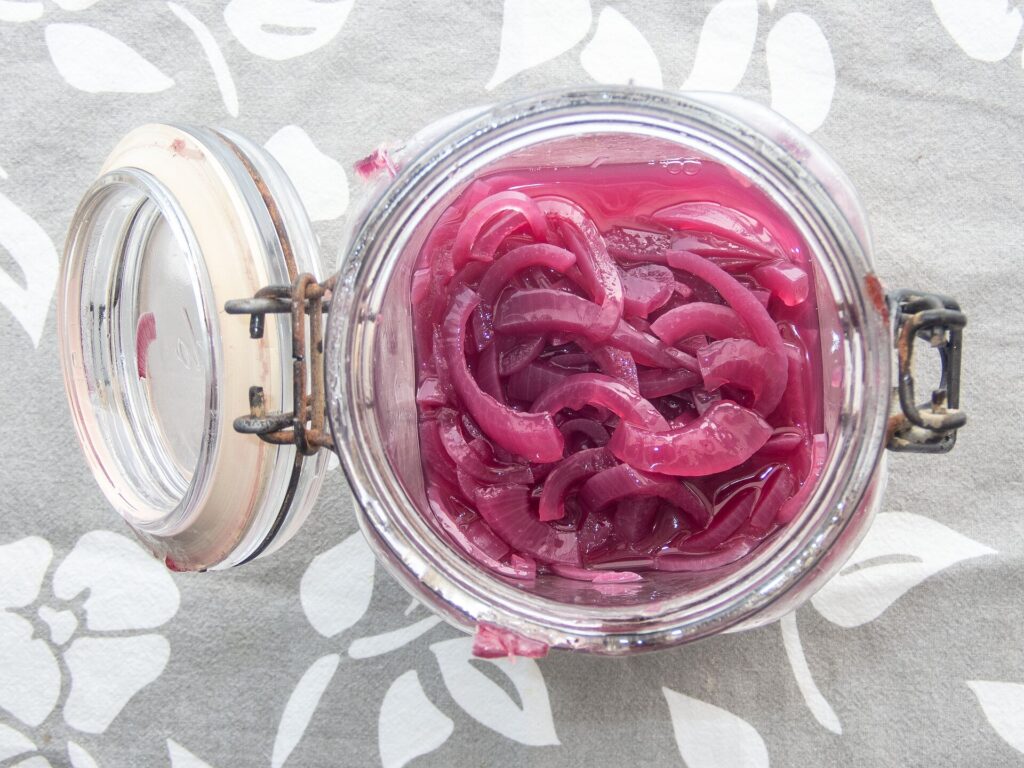
Anything sharp enough to make you notice it. Rice vinegar cut with a pinch of sugar. Quick-pickled red onion, which is nothing more than sliced onion covered in vinegar for twenty minutes. Capers. Pepperoncini and a spoonful of their brine. Kimchi. Preserved lemon. Plain yogurt loosened with lemon juice and salt.
Half of these are already in most refrigerators, sitting behind something else and expiring quietly. The jar slot is largely an argument for cooking from what is already on the shelf before it turns.
Quantity is small. One to two tablespoons per bowl, added at the table rather than stirred through the pan, so each person adjusts their own. Children usually want less and then want more once they have tried it next to the plain version.
Three swaps for every slot
Nothing in the formula is fixed. The swaps below hold the same timing, which is the only requirement.
| Slot | Default | Swap one | Swap two | Swap three |
|---|---|---|---|---|
| Grain | Long-grain white rice | Couscous, 5 minutes off the heat | Orzo, 9 minutes in broth | Farro, 25 minutes, chewier |
| Protein | Boneless chicken thighs | Pork tenderloin medallions, 4 minutes a side | Firm tofu in slabs, pressed and browned 6 minutes | Canned chickpeas crisped 5 minutes |
| Acid | Pickled red onion | Rice vinegar with a pinch of sugar | Lemon yogurt with salt | Kimchi, chopped |
| Green | Baby spinach, wilted off the heat | Sliced cucumber, raw | Cilantro and scallion, raw | Frozen peas, 60 seconds in the hot rice |
Tofu is the one swap that changes the sequence. It needs to be pressed for at least fifteen minutes before it browns properly, so it goes on a towel under a heavy pan the moment you walk in, before the rice.
The green thing goes in last, and last means off the heat
Spinach, arugula and any soft herb need residual heat and nothing more. Dump five ounces of spinach into the empty skillet after the deglaze, put the lid on, and count ninety seconds. It collapses to about a cup and stays green.
Broccoli and green beans do not belong in this slot on a weeknight, because they want six to eight minutes and there is nowhere to put them in the sequence. If they are what is in the house, blanch them in the rice water at minute two, lift them out, and treat them as a raw element from that point on.
Frozen peas are the underrated option. A cup poured over the hot rice with the lid on for sixty seconds is done, sweet, and costs almost nothing.
What breaks the timing
The pan was not hot. Chicken laid into a warm pan sticks, releases water, and never forms a crust. Diagnosis: the thighs slide around and the pan sounds quiet instead of sharp. Fix: two full minutes of preheat, and the drop-of-water test, where a bead should skitter rather than sit and boil.
The lid came off the rice. Every peek costs steam and about ninety seconds. Diagnosis: crunchy grains at the twenty-minute mark. Fix: two tablespoons of water, lid on, five more minutes on the lowest heat. Rice that went the other way and turned to mush is a harder repair, and it belongs with the rest of the mid-cook rescues.
Everything went into one pan. Rice cooked under chicken is a different recipe with a different clock, and the version where both are done at once takes closer to forty minutes. Two pans is faster here, which is not the usual answer.
The chicken was cut immediately. Slicing straight off the heat pushes juice onto the board. Five minutes of rest holds most of it in the meat, and the rice rest covers that time anyway.
Rice that sat out is the actual risk
Chicken gets all the attention, and the rule there is simple: 165 degrees at the center, a separate board for raw meat, and hands and knife washed before either touches the green thing. Cross-contamination on a cutting board is a far more common problem than undercooking.
Cooked rice is the quieter hazard. Uncooked grains carry Bacillus cereus spores that survive boiling. If the pot then sits on the counter for hours, those spores germinate and produce a toxin that reheating does not destroy. Get leftover rice into a shallow container and into the refrigerator within an hour, eat it inside three or four days, and do not leave a covered pot out overnight.
If a child is helping, the good jobs here are measuring the rice, whisking the acid, tearing herbs and setting the table. The skillet is not one of them: a 12-inch pan at medium-high with oil in it is the most dangerous object in this recipe, and the deglaze throws steam.
What one bowl is worth, roughly
Built as written and divided four ways, a bowl lands somewhere near 550 to 650 calories, with roughly 35 to 40 grams of protein, most of it from the thighs. Those are estimates and the range is wide, because thigh size, oil quantity and how much rice ends up in a bowl all move the number substantially.
The lever that matters most is the ratio of rice to everything else. A cup of cooked rice under the chicken is a normal portion; two cups is what people actually serve, and it roughly doubles the carbohydrate without adding anything to the protein column. Filling half the bowl with the green slot instead is the change that costs nothing and is noticed least.
Sodium is the other number worth watching, since the acid slot is frequently the salty one. Kimchi, capers and pepperoncini all bring salt with them, so salt the chicken lightly and adjust at the table instead. Read the panel on the jar in your door; brands differ widely.
Frequently Asked Questions
Can I use chicken breast instead?
Yes, with two changes. Slice it horizontally into cutlets no thicker than half an inch so it cooks in three minutes a side, and pull it at 165 degrees the moment the thermometer reads it. Whole breasts run eighteen minutes and come out dry at exactly the point they become safe.
How far ahead can the rice be made?
Three to four days refrigerated, in a shallow container that cools fast. Cook a double batch on Sunday and this dinner drops to sixteen minutes for the rest of the week, which is roughly how a working prep system pays for itself. Freeze it in flat one-cup portions if it will not get used by Wednesday.
What if I have no acid in the house at all?
Lemon or lime juice, and if there is none, a spoonful of yogurt or sour cream with salt stirred in. Failing that, mustard thinned with water. The slot is about brightness, not about a specific ingredient, and almost every refrigerator has something that qualifies.
Does this work in a rice cooker?
It works better, since the rice becomes unattended and the sequence collapses to one pan and one appliance. Start the cooker at minute zero and follow the same table. Most cookers hold on warm afterward, which removes the only genuinely time-sensitive step.
Is one skillet enough for six thighs?
Not in a 12-inch pan. Four fit properly, six do not, and the fix is two batches of three minutes and five minutes rather than one crowded batch. The first batch rests while the second cooks, and the total is about four minutes longer than the table above.
Build it once exactly as written, then start substituting. The formula is the part worth keeping, and by the third time the recipe stops being something you read and becomes something you glance at the refrigerator and decide.