
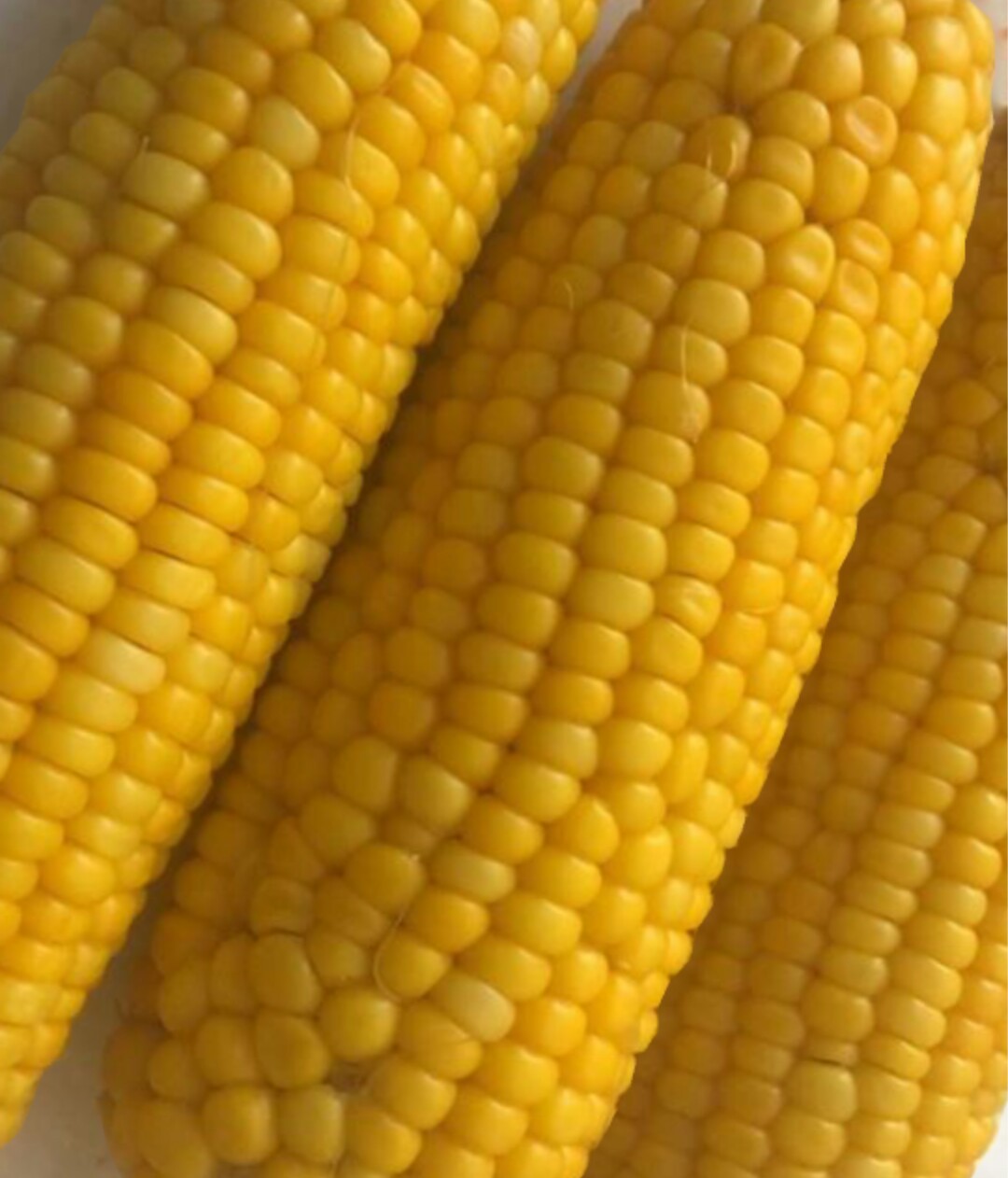
Sweet corn in September costs pocket change at a roadside stand. In February it costs several dollars a bag and tastes mostly like the freezer it came out of. The distance between those two facts is about twenty minutes of work, done now, in the two weeks when the stands are still piled high.
The work is not complicated. It is picking well, cutting without redecorating the kitchen, and a blanch that people either skip entirely or drag out far too long. Skipping it is the specific reason home-frozen corn goes flat and starchy by December, and there is a particular enzyme to blame for that.
What follows is the whole routine, from the pile at the stand to the flat bag in the drawer, with the times that actually matter.
- What to buy: heavy ears, tight damp husks, brown dry silk, kernels full to the tip
- Yield: one large ear gives roughly 3/4 cup of kernels; a dozen ears fill about a quart and a half
- Blanch: 4 minutes for ears you plan to cut, 7 to 11 minutes for corn on the cob
- Ice bath: the same number of minutes as the boil, no shortcuts
- Keeps: best inside six months, acceptable to a year at zero degrees
- Never skip: drying the kernels before they go into the bag
Reading an ear through the husk
Weight is the first signal and the most reliable one. Pick up two ears of the same size and one will feel noticeably denser. That density is water inside full kernels, and it is the single best predictor of a good ear.
The husk should be tight against the cob, bright green rather than yellowing, and slightly damp where it meets the stem. A dry, papery husk means the ear has been sitting. The silk at the tip should be brown and a little sticky. Black, crisp, or slimy silk all point the same direction, which is away.
Run a thumb from the base to the tip through the leaves and feel for kernels the entire way. A tapered last inch means it was picked early or pollinated poorly, and you are paying for cob. The stem end should be pale green and moist, not chalky white or brown.
Do not peel the husk back at the stand. It dries out the ear for whoever buys it next, and the husk already tells you what you need to know through your hands.
The clock starts the moment it leaves the stalk
Sweet corn converts its sugar to starch after picking, and the conversion runs fastest at room temperature. That is why an ear eaten the afternoon it was cut tastes like a different vegetable than the same ear four days later.
Modern supersweet varieties hold their sugar considerably longer than the older types, sometimes for several days, and most of what is sold at supermarkets now belongs to that group. Farm stands often grow the older, more delicate varieties on purpose because they taste better fresh, which also means they degrade faster.
Practically: refrigerate the ears the moment you get home, husks on, in a bag. If the plan is to freeze, freeze the same day. No step downstream rescues corn that spent two days on a warm counter, and blanching cannot put sugar back.
The bowl trick that keeps kernels off the floor
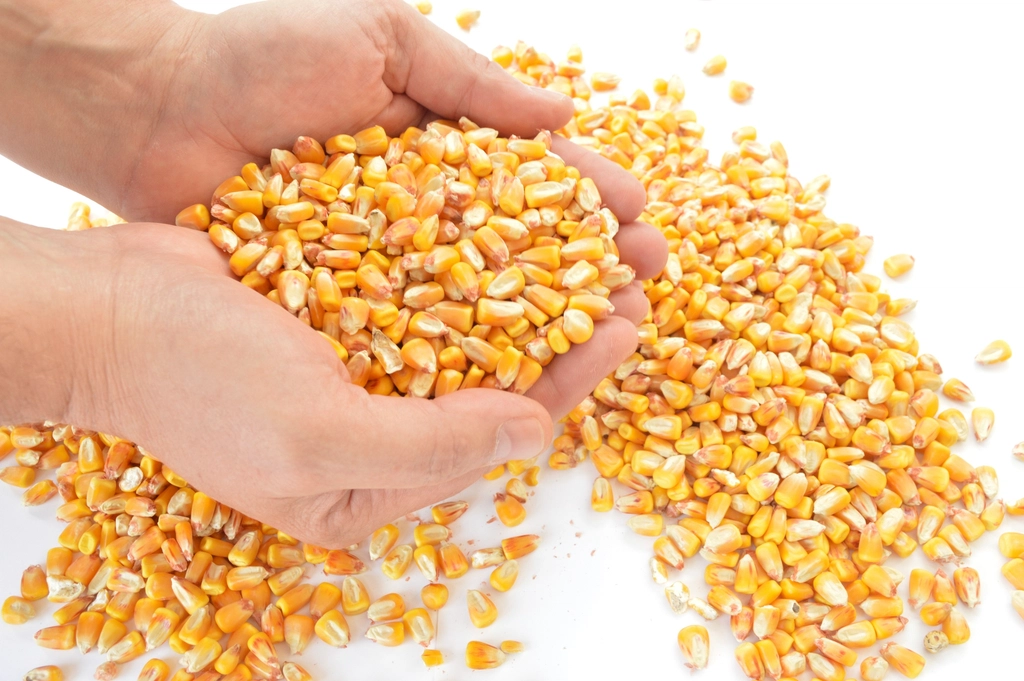
Cutting corn on a flat board sends kernels across the counter and onto the floor in roughly equal proportion. The fix takes one extra bowl.
Turn a small bowl upside down inside a large one. Stand a shucked ear on the upturned base, hold the tip, and cut straight down with a chef’s knife in four or five passes, rotating the ear as you go. The kernels drop into the outer bowl and stay there. A Bundt pan works on the same principle: the ear sits on the center tube.
Cut about two-thirds of the way into the kernel depth rather than shaving right against the cob. Cutting deep brings along tough kernel bases. Then reverse the knife and scrape down the bare cob with the spine to release the milky liquid still in it, which carries a lot of the sweetness and thickens anything you later add it to.
Shucking sheds silk everywhere. A dry kitchen towel pulls it off the ear far better than water does, and a vegetable brush handles whatever is left in the grooves.
How to freeze fresh corn without a vacuum sealer
The routine has five parts and none of them needs special equipment. Blanch, chill, cut, dry, freeze.
Bring a large pot to a hard rolling boil, at least a gallon of water for every four to six ears, and set an ice bath next to it: half ice, half water, refreshed between batches. Shuck the corn. Lower the ears into the water without crowding the pot, because six cold ears dropped into a gallon of boiling water stop the boil for a full minute and the timing goes out the window.
Start timing when the water returns to the boil, not when the corn goes in. Lift the ears straight into the ice bath for the same length of time as the boil. Then cut the kernels off using the bowl method above, dry them, spread them on a sheet pan, freeze them loose, and bag them.
The air is the only reason a vacuum sealer is ever recommended, and a freezer bag plus water displacement handles it. Zip the bag almost closed, lower it slowly into a bowl of water until the water line reaches the seal, and the pressure pushes the air out through the gap. Finish the zip while it is still submerged.
Blanching times, by what you are freezing
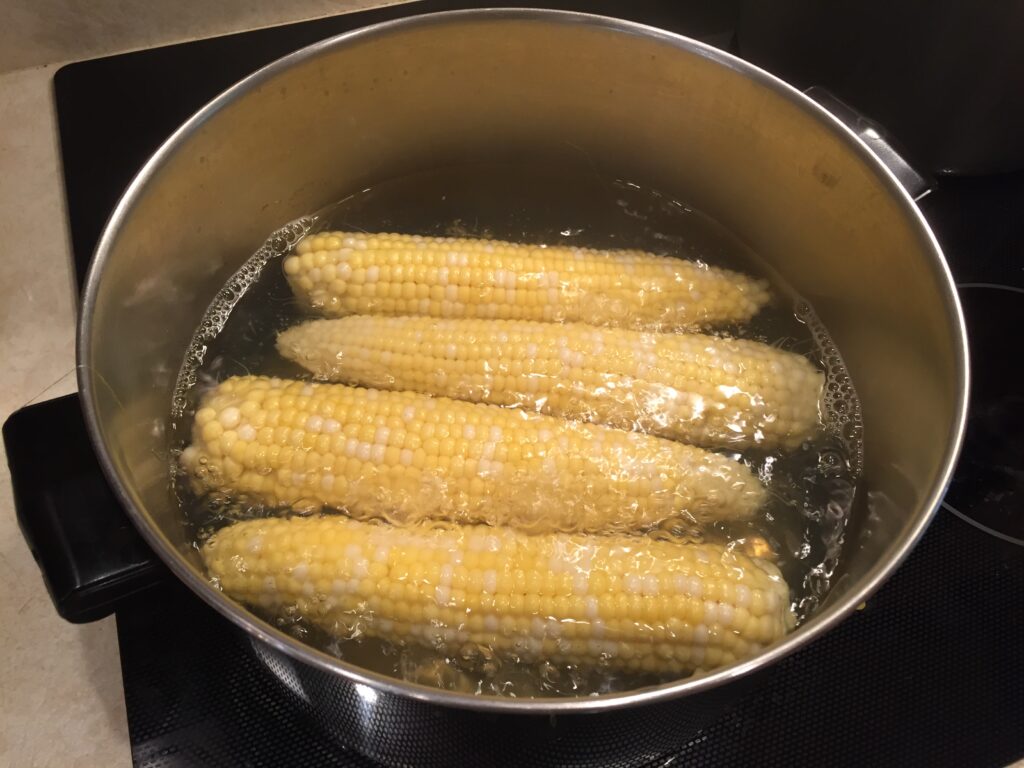
The times below are the standard home preservation figures and they are worth following closely, since both under-blanching and over-blanching cause specific, different problems.
| What you are freezing | Boil | Ice bath | Notes |
|---|---|---|---|
| Whole ears, to be cut afterward | 4 minutes | 4 minutes | The standard for loose whole-kernel packs |
| Corn on the cob, small ears under 1 1/4 inches across | 7 minutes | 7 minutes | Measure across the widest point |
| Corn on the cob, medium ears | 9 minutes | 9 minutes | Most supermarket ears land here |
| Corn on the cob, large ears | 11 minutes | 11 minutes | The cob itself has to reach temperature |
| Kernels already cut, in a mesh basket | 3 minutes | 3 minutes | Loses more sugar to the water than cutting after |
| Cream-style, cut and scraped | 4 minutes on the cob | 4 minutes | Scrape after chilling, freeze in flat packs |
Over-blanching costs texture and sweetness. Corn boiled for nine minutes when four would have done comes out of the freezer soft and washed out. Under-blanching leaves the enzymes partly active, which is the more expensive mistake because the damage keeps accumulating for months.
Why the no-blanch shortcut fails in month three
Freezing stops microbes but it does not stop enzymes. Peroxidase and lipoxygenase, both present in corn, keep working slowly at freezer temperatures. They break down flavor compounds and soften cell walls, and the result is corn that is perfectly safe and tastes like hay.
The blanch exists to deactivate them with heat. That is its entire job. Cooking the corn is a side effect, not the goal, which is why the times are short and precise rather than approximate.
Raw-packed corn is genuinely fine for six to eight weeks and noticeably worse by month three. If you are freezing corn in September to use in October, the shortcut is defensible and saves a pot of boiling water on a hot day. For February, blanch it. That is the entire decision.
Drying, and the hour on a sheet pan
Wet kernels freeze into one solid brick, and a brick has to be chiseled apart with a knife in January. Every complaint about home-frozen corn being impossible to portion traces back to skipping this step.
Tip the chilled kernels onto a clean kitchen towel, fold it over, and press and roll. A salad spinner does it faster and better if you own one. The kernels should look matte rather than glossy when you are finished.
Then spread them in a single layer on a parchment-lined sheet pan and freeze for one to two hours, until they are hard and separate. Only then do they go into bags. Loose frozen kernels pour like grain, and you can take a cup out in January without thawing the rest of the bag, which is the whole reason to bother.
Bags, air, and the eight-month window
Use bags labeled for the freezer rather than sandwich bags. The film is thicker and far less permeable to air and odor, and the difference shows up as freezer burn on the top layer of a bag within a couple of months.
Press the bags flat before they freeze. Flat bags stack, take less room, and thaw faster because the heat has less distance to travel. Label with the date and the number of ears, since the ear count is what tells you whether a bag is enough for a chowder six months from now.
Zero degrees Fahrenheit is the target. A freezer drawer under a refrigerator that opens twenty times a day cycles warmer, and every warm cycle grows ice crystals that rupture more cells. A chest freezer holds temperature far more steadily. Texture is best inside six months; a year is still safe but the corn tastes tired, and the difference is easy to taste side by side.
Do not throw out the cobs
The stripped cobs are the most undervalued thing in this whole process. Cover them with water, simmer for forty-five minutes, and strain: the result is a light, faintly sweet stock that is the correct base for a corn chowder that needs no cream at all.
If there is no time now, freeze the bare cobs in a bag and make the stock in January. They stack better if you snap them in half. Two cobs are enough for a quart of stock, and eight or ten make something concentrated enough to freeze flat and use a cup at a time.
A whole cob can also be dropped into a pot of beans or a summer soup and pulled out before serving, where it does the same job a parmesan rind does. This is the kind of thing that fits naturally alongside the rest of a preserving weekend, since the pot of water is already boiling.
What frozen corn is good at in February, and what it is not
Frozen corn is excellent in anything cooked. Chowder, cornbread, fritters, succotash, soups, and a hard sear in a dry cast iron pan until the kernels take on black spots. Heat is where it shines, because heat is not asking it to be crisp.
It is not good raw. Freezing ruptures cell walls and the specific snap of a fresh kernel does not come back, so a summer corn salad made with February corn tastes like a compromise. The workaround is to char it hard in a very hot dry pan first, which replaces crunch with something else worth having.
Do not thaw it before it goes into a hot pan. Frozen kernels dropped into a preheated skillet drive off their water and start browning; thawed kernels release that water into the pan and steam instead. Straight from the bag, in a single layer, and leave them alone for the first two minutes. A little of that habit carries into cooking with whatever is in season generally, which is that the ingredient decides the technique.
Frequently Asked Questions
Do I have to shuck the corn before blanching?
For whole-kernel packs, yes. The husk insulates the ear and the timing assumes bare corn in direct contact with the water. Some people freeze ears in the husk raw; it works for a couple of months, but the husk is a poor moisture barrier and the corn dries out from the tip inward.
Can I blanch in the microwave instead?
It is uneven, and unevenness is exactly what blanching cannot tolerate, because a partly heated ear has partly active enzymes. For one or two ears it is workable. For the dozen that makes this worth doing, a stockpot is faster anyway.
How can I tell whether the blanch actually worked?
You cannot, in a home kitchen. The laboratory test looks for residual peroxidase activity, and there is no reliable kitchen version of it. Follow the times, keep the water at a real boil, and do not crowd the pot.
How much corn should I put up per person?
Figure half to three-quarters of a cup per bowl of chowder and about a cup and a half for a pan of cornbread. Two dozen ears covers a family of four through the winter for occasional use, and four dozen covers it for weekly use.
Why does my frozen corn taste like the freezer?
Thin bags or a bag that was not sealed properly. Freezer film is permeable enough over months to pick up whatever else is in there, and corn is unusually good at absorbing odors. Double-bag anything staying past six months, and keep it away from onions and fish.
Two dozen ears takes about an hour and a half from stand to freezer, most of it waiting on water. It is the cheapest single thing you can do in September that pays off in a bowl of soup five months later.