
Every October somebody stands at a cutting board with a butternut, a dull peeler and a knife that is too small, and decides that winter squash is not worth the trouble. That is a fair conclusion about butternut. It is the wrong conclusion about the striped one sitting next to it.
Delicata does not get peeled. The skin is thin enough to eat, it goes tender in the oven along with the flesh, and removing it is not a shortcut you are skipping, it is a step that would make the dish worse. Which turns a twenty-minute prep into about four.
The trade is that it does not keep like the others, and that the difference between a good one and a watery one is decided in the store rather than in the kitchen. Both of those are solvable, and neither is obvious from looking at a bin of them.
- Skin: edible, no peeling, ever
- Prep: about 4 minutes from whole squash to sheet pan
- Roast: 425 degrees, 22 to 25 minutes for half-inch half-moons
- Pick: heavy for its size, dull skin, deep green stripes, dry stem
- Size: 1 to 1 1/2 pounds. The big ones are watery
- Keeps: about two months whole in a cool room, four days cut
The squash you do not have to fight
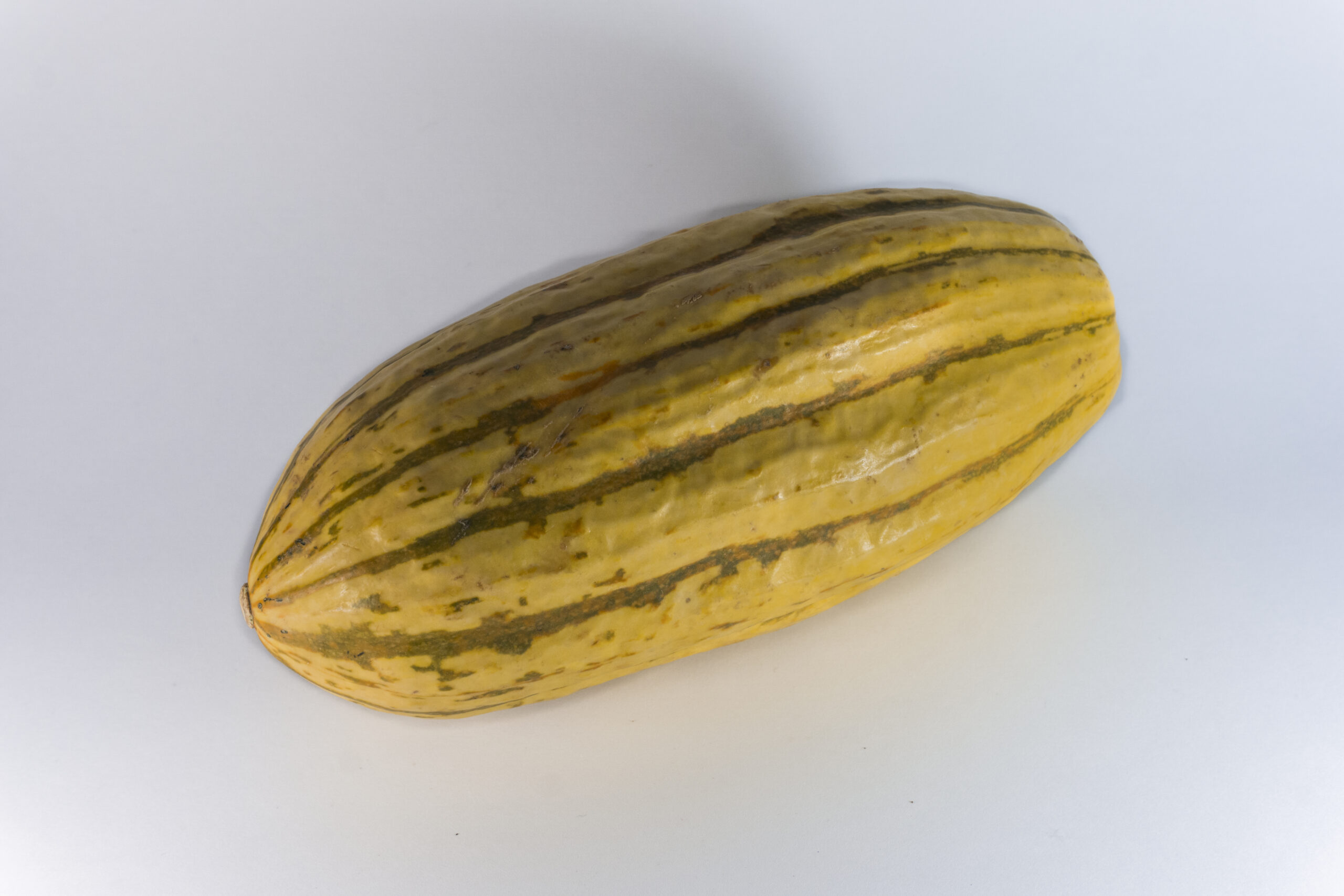
A delicata is a cylinder about seven inches long, cream-colored with dark green ribs, weighing a pound or so. It cuts with an ordinary chef’s knife and it does not roll away, which sounds trivial until you have wrestled a kabocha.
The flesh is a shade paler than butternut and sweeter, with less starch and a flavor closer to sweet potato and chestnut. That lower starch is why it roasts fast and browns readily, and also why it does not puree into a silky soup the way butternut does. It is a roasting squash, not a mashing one.
It nearly disappeared from American seed catalogs in the middle of the last century, because thin skin means poor shelf life and the variety was vulnerable to disease. Plant breeders brought it back, and it is now on almost every farm stand from September through November.
Why the skin on this one is thin and the others are not
Winter squash falls into a handful of species that are less related than the produce aisle suggests. Delicata belongs to Cucurbita pepo, the same species as zucchini, acorn squash and most carving pumpkins, and members of that group tend toward thinner rinds.
Butternut is a different species entirely, and kabocha and hubbard are a third. Those two groups developed the hard protective rinds that let them sit in a cellar until March, and that is the trade being made: a squash that stores for six months has a skin you cannot chew.
So the edible skin is not a quirk of one cultivar. It is the visible side of a plant that was never built for long storage, which is the same reason a delicata bought in January is usually a disappointment. Buy it in season and eat it within a few weeks, and the skin is the best part of the dish.
Acorn squash sits in an interesting middle position, since it is the same species and its skin is technically edible, just tougher and more fibrous. Most people eat around it. Nobody eats around delicata.
Picking one that is not watery
Weight first. Pick up two of the same length and buy the heavier one, every time. A light squash has lost water through that thin skin and the flesh inside is spongy rather than dense.
Then look at the finish. A ripe delicata is matte, almost chalky, with a cream or pale yellow background and dark green stripes. A glossy, bright, slick-looking one was picked before it was ready, and immature squash is the single most common reason a roasted tray comes out bland and wet.
Press a thumbnail into the skin near the stem end. It should resist. If it dents, the squash is either immature or on its way out, and neither is what you want. The stem itself should be dry, corky and still attached; a missing stem leaves an open wound where mold starts.
Size is the last filter, and it matters more than people expect. The one to one-and-a-half pound squash, roughly six to eight inches, has the best ratio of flesh to seed cavity and the most concentrated flavor. The oversized ones are mostly water and their flesh turns stringy.
A deep orange cast across the whole skin means it has been sitting a long time. Still edible, drier and more fibrous than it should be.
Wash it, because you are eating the outside
This is the step that gets skipped precisely because the skin stays on, and it is backwards. A squash that is going to be peeled can afford a dusty rind. A squash whose skin is going into the dish cannot.
Scrub it under cool running water with a vegetable brush or a rough cloth, paying attention to the grooves between the ribs, where field soil collects. No soap, which the porous surface holds onto.
There is a second reason, and it applies even to squash you intend to peel. A knife passing through an unwashed rind carries whatever is on the surface into the flesh, which is the same principle behind washing a melon before cutting it. Dry it before cutting, because a wet squash slides.
How to cook delicata squash in half-moons at 425
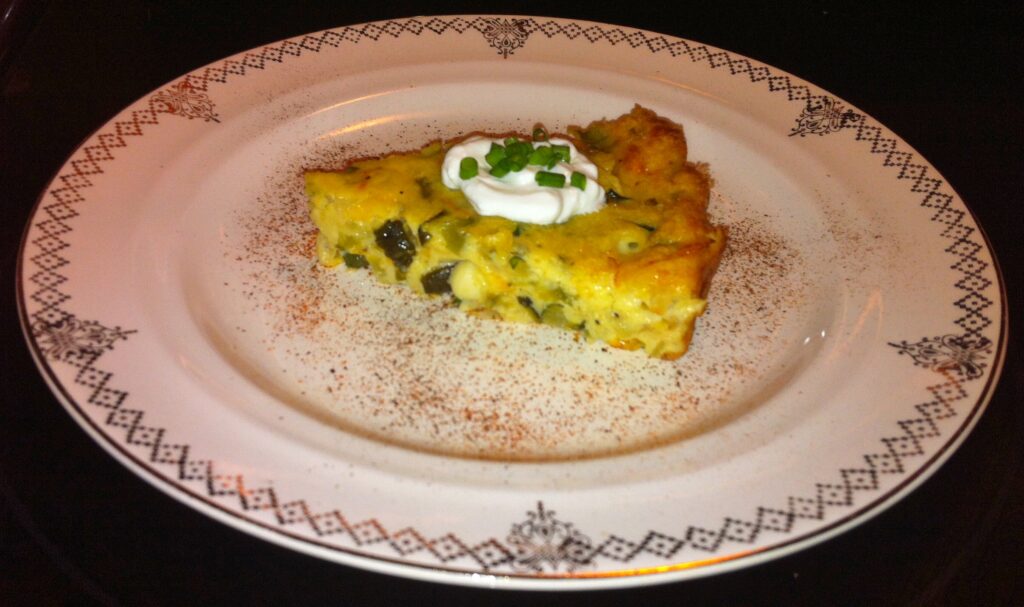
This is the default preparation and the one worth learning first. Everything else on this page is a variation on it.
- Heat the oven to 425 degrees with a rack in the upper third.
- Scrub and dry the squash. Trim about half an inch off each end.
- Halve it lengthwise. Scoop the seeds and stringy fiber out with a regular spoon, which takes about fifteen seconds per half. Set the seeds aside.
- Lay each half cut side down and slice crosswise into half-inch half-moons.
- Toss on the sheet pan with a tablespoon of oil per squash, half a teaspoon of salt and black pepper. Use your hands; a spoon leaves half the oil in the bowl.
- Spread in a single layer with space between the pieces. Two squash need two pans.
- Roast 22 to 25 minutes, flipping each piece at the 15-minute mark. They are done when the cut faces are deeply browned and a fork goes through the skin without resistance.
The two failure modes are a crowded pan and a low oven. Pieces that touch release steam into each other and come out pale and soft, and anything below about 400 degrees cooks the squash through before it browns. Browning is most of the flavor here.
Half an inch is the useful thickness. Thinner slices go leathery at the edges before the middle softens, and thicker ones need closer to 35 minutes and lose the contrast between a crisp face and a creamy interior.
Rings, and the sheet pan dinner they anchor
Cut crosswise instead of lengthwise, into three-quarter inch rounds, and push the seeds out of the center of each ring with a spoon or a small round cutter. You get open rings that look considerably better than half-moons and behave the same in the oven.
Rings are the version to build a full dinner on. They take about the same 25 minutes as chicken thighs or sausages at 425, which makes the timing on a single pan straightforward rather than a compromise.
Sausage and squash is the reliable one: four sausages cut into thirds, one squash in rings, half a red onion in wedges, all tossed with oil and a teaspoon of dried sage. Put the sausage on first for five minutes, add the rest, and finish in the oven together. Chicken thighs work the same way with a fifteen-minute head start.
Leave the pan alone for the first fifteen minutes. Stirring early is the most common reason a sheet pan dinner comes out steamed, since it breaks up the contact between the food and the hot metal that is doing the browning.
Raw and shaved, which almost nobody tries
The same thin skin and low starch that make it roast quickly also make it worth eating raw, which is not true of butternut or kabocha. Shaved thin, it is crisp and faintly sweet, somewhere between a raw sunchoke and a young turnip.
Halve, seed, and run the halves across a mandoline set to about a sixteenth of an inch, cut side down. A vegetable peeler works for wide ribbons if there is no mandoline, and a knife does not: hand-cut slices are never thin enough and the result is woody.
Dress it and then wait. Lemon juice, olive oil, salt and a little honey, tossed and left for ten minutes, softens the slices just enough to lose their raw edge while keeping the snap. Then add shaved hard cheese, toasted seeds and something green and bitter such as arugula or radicchio.
It belongs with the raw crisp vegetables most people only ever cook, and it is the fastest thing here: six minutes, no heat. Cut edges brown slowly, so dress it within a few minutes of shaving, and do not build it the night before. Eat it straight away, or fold it into a salad going to the table.
The seeds take twelve minutes
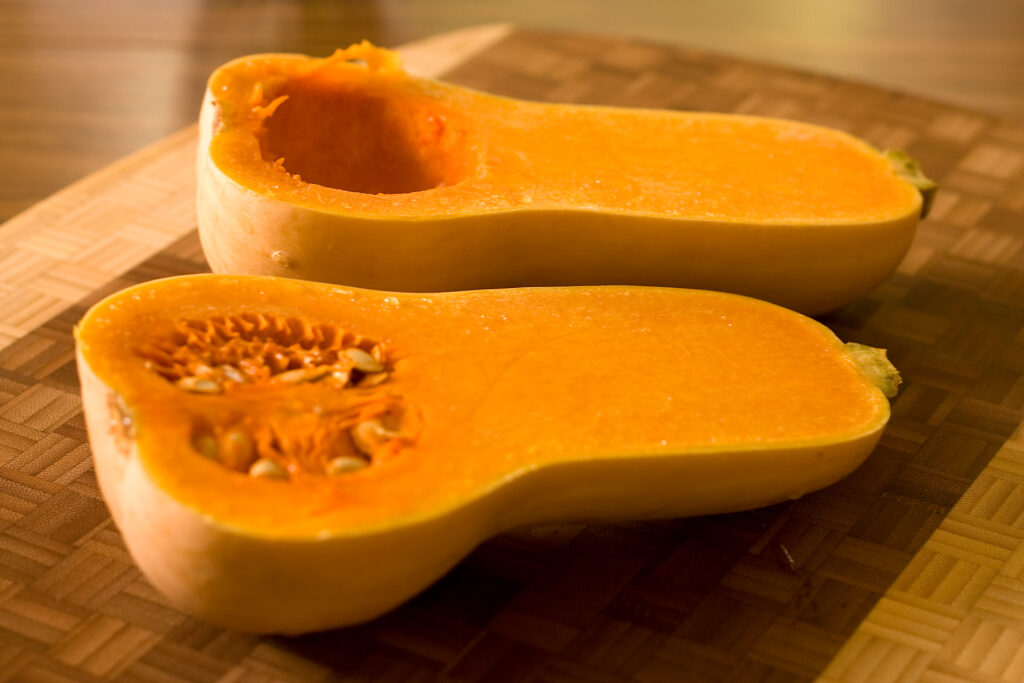
Delicata seeds are smaller and flatter than pumpkin seeds and they roast into something closer to a crisp chip than a nut. They are also already in your hand, having just come out of the squash, which is the entire argument for bothering.
Separate them from the strings under running water, which takes about a minute, then dry them properly on a towel. Wet seeds steam and go chewy.
Toss with a teaspoon of oil and a good pinch of salt, spread on a small pan, and roast at 325 degrees for 12 to 18 minutes, stirring once. They are done when they stop looking damp and start to color at the edges. At 425 alongside the squash they burn before they crisp, so this is a separate, cooler pan.
They go on the roasted squash, on the raw shaved version, or into a jar where they keep about a week. Anything longer and they go soft, at which point five minutes in a dry skillet brings them back.
Delicata against the other three
Most home kitchens see four winter squash, and they are not interchangeable in a recipe even though recipes often pretend they are.
| Delicata | Butternut | Acorn | Kabocha | |
|---|---|---|---|---|
| Skin | Thin, eat it | Thick, peel it | Edible but tough | Very hard, technically edible |
| Prep time | 4 minutes | 15 minutes | 8 minutes | 10 minutes and a heavy knife |
| Flesh | Sweet, low starch, moist | Sweet, dense, smooth | Mild, slightly fibrous | Very dry, very sweet, floury |
| Best at | Roasting, raw, stuffing | Soup, puree, cubes | Halved and baked | Roasting, tempura, braises |
| Poor at | Smooth soup | Anything fast | Anything needing sweetness | Anything needing moisture |
| Storage | About 2 months | 4 to 6 months | 1 to 2 months | 3 to 4 months |
Substituting delicata into a butternut soup recipe gives a thinner, less silky result that needs a potato to carry it. Going the other way, butternut in a delicata recipe means peeling, and the cubes take longer than the recipe says.
How long it keeps, whole and cut
Whole, it wants a cool dry room between 50 and 60 degrees, out of direct light, sitting on a shelf rather than stacked. Two months is realistic and three is optimistic, which is short for a winter squash and is entirely down to that thin skin.
Do not refrigerate a whole one. Cold storage below about 50 degrees causes chilling injury in these squash, which shows up as pitting on the surface and soft spots that turn into rot faster than the squash would have aged on a shelf.
Once cut, it goes the other way. Wrap the cut faces, refrigerate, and use it within three to four days. Cut squash dries at the exposed surface and picks up refrigerator odors quickly.
Roasted squash keeps four days in a covered container and reheats best in a hot oven or a dry skillet, not a microwave, which turns the browned faces soft. Raw cubes freeze for about ten months and come out of the freezer suited to soup rather than roasting, since ice crystals wreck the structure that makes a good roasted edge. It is a genuinely useful thing to have on hand in an autumn kitchen, where most of the produce arrives at once and leaves just as fast.
The bitter one to throw away
Squash and other members of the gourd family can produce compounds called cucurbitacins, which are intensely bitter and cause severe stomach upset. In commercially grown squash this is rare, because the bitterness has been bred out over generations of selection.
It turns up occasionally in home gardens, particularly when seed has been saved from a plant that cross-pollinated with an ornamental gourd. Stress during growing can also raise the levels.
The rule is simple and worth knowing because it is the one real hazard in a very safe vegetable. If a piece of raw or cooked squash tastes sharply, unmistakably bitter, spit it out and discard the whole squash. Cooking does not break the compounds down, and no amount of seasoning covers it. This is not the mild vegetal bitterness of a squash skin; it is the kind that makes you stop chewing.
Everything else about handling it is ordinary. Wash the outside, keep the cut pieces cold, and cook it until a fork passes through without resistance.
Frequently Asked Questions
Do I really never peel it?
For roasting, sauteing and raw preparations, no. The one case for peeling is a puree or a smooth soup, where the skin leaves dark flecks and a slightly fibrous texture. Even then, most people would rather use butternut than peel a delicata.
Can I microwave it?
You can soften it in a microwave in about six minutes, halved and cut side down with a splash of water. It will not brown, and the browning is where the flavor is. Use the microwave for a head start, then finish under a broiler.
Why did my roasted squash come out soggy?
Crowded pan, oven below 400, or a wet squash going into the oil. Give each piece space, use two pans if you have two squash, and dry the slices after washing.
Is the skin actually good, or just tolerable?
Good. Roasted at 425 it browns and crisps at the edges while the flesh underneath goes soft, and that contrast is most of what makes the dish. Steamed or boiled, the skin is merely present, which is why those methods are not recommended here.
What is a good size for one person?
Half a one-pound squash is a generous side for one, and a whole one feeds two as a side or one as a main over grains. For a sheet pan dinner for four, plan on two squash and two pans.
When is the season?
Late summer through late autumn in most of the country, with the best fruit in the first eight weeks. What appears in supermarkets after the new year has usually been in storage past the point where this variety holds up.
Buy one that is heavy and dull rather than bright and light, roast it at 425 in half-moons with nothing but oil and salt, and eat it off the pan. That single tray settles whether the rest of this is worth your time.