
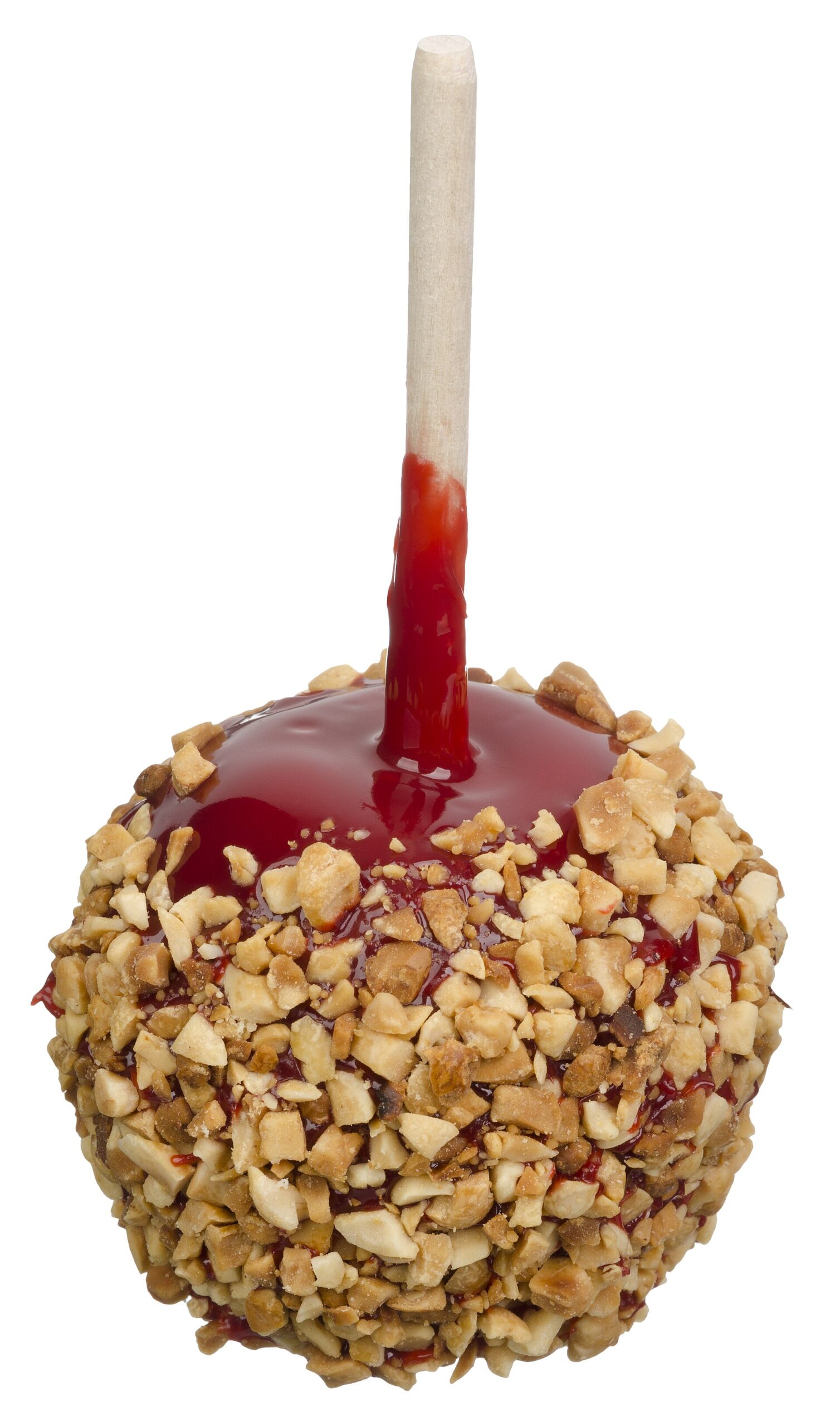
Six apples went into the caramel and came out looking right. Twenty minutes later there were six bald apples standing on a tray in six amber puddles, with a thin ring of caramel clinging near the stick and nothing anywhere else.
The caramel was not the problem. It hit temperature, it was the right thickness, it tasted correct. The problem was two millimeters of food-grade wax on the outside of every apple, applied at the packing house to slow water loss and make the fruit shine on the shelf. Sugar does not stick to wax. It sits on top of it and waits for gravity.
Thirty seconds of hot water per apple removes it. That single step, plus a caramel pulled at the right temperature and a tray cold enough to set the coating before it can run, is the whole difference between the tray that works and the tray that does not.
- The real cause: wax on the skin, not thin caramel
- The scrub: hot tap water, 30 seconds per apple, then dry hard
- Caramel window: 240 to 245 degrees for a coating that clings
- Apple temperature: room temperature, never straight from the refrigerator
- The set: a chilled parchment-lined sheet, 10 minutes
- Avoid: dipping over a burner that is still on
The puddle at the bottom of the tray
Caramel slides for one of three reasons, and they are easy to tell apart once you know what to look for. A coating that slid off in one clean sheet, leaving bare apple, was defeated by the surface. A coating that stayed on but ran into a thick foot at the base was too thin, meaning the sugar was pulled off the heat too early. A coating that turned cloudy and beaded was fighting condensation from a cold apple.
Only the first of those is about the apple itself, and it is by far the most common. Supermarket apples are washed, brushed, and coated at the packing house, usually with a thin food-grade wax made from shellac or carnauba. It is harmless to eat and it does its job well, which is exactly the problem.
Farm stand apples and pick-your-own fruit are usually uncoated, and they take caramel with no preparation at all. If the apple squeaks slightly when you rub it wet, it is probably bare. If it stays slick and beads water into round drops, there is wax on it.
The hot water scrub, thirty seconds per apple
Fill a bowl or a clean sink with the hottest water the tap runs. Hold each apple under it for about ten seconds, then scrub the whole surface firmly with a rough cloth or a clean vegetable brush for another twenty. The wax softens and comes away; you will feel the skin go from slippery to slightly grippy under your fingers.
Do not use soap. Apple skin is porous enough to hold onto detergent flavor, and it is not necessary. Hot water and friction do the work.
Then dry harder than feels reasonable. Every drop of water left on the skin turns to steam under hot caramel and lifts the coating off. A clean towel first, then five minutes standing on a rack, and a final wipe just before dipping. Pull the stems out at this stage too, since a stem left in place blocks the stick.
Cold apples, hot caramel, and condensation
An apple straight from the refrigerator collects a film of condensation the moment it meets warm kitchen air, and that film sits under the caramel doing exactly what the wax did. It is invisible, which makes it worse.
Take the apples out at least an hour before you start, or two if the kitchen is cool. Room temperature fruit is the goal, dry and unchilled. This is the opposite of what people assume, since the instinct is that a cold apple will set the caramel faster.
It does set the caramel faster, at the surface, while the moisture underneath is still there. The result looks good for ten minutes and separates within the hour, which is why some trays fail only after they have been photographed.
A caramel apples recipe that actually sticks
- Scrub and dry six to eight small apples. Remove the stems and push a sturdy wooden stick two thirds of the way into each from the stem end.
- Line a sheet pan with parchment, butter the parchment lightly, and put the pan in the refrigerator.
- In a heavy saucepan, combine one cup of heavy cream, one cup of packed brown sugar, three quarters of a cup of light corn syrup, six tablespoons of butter, and a half teaspoon of salt.
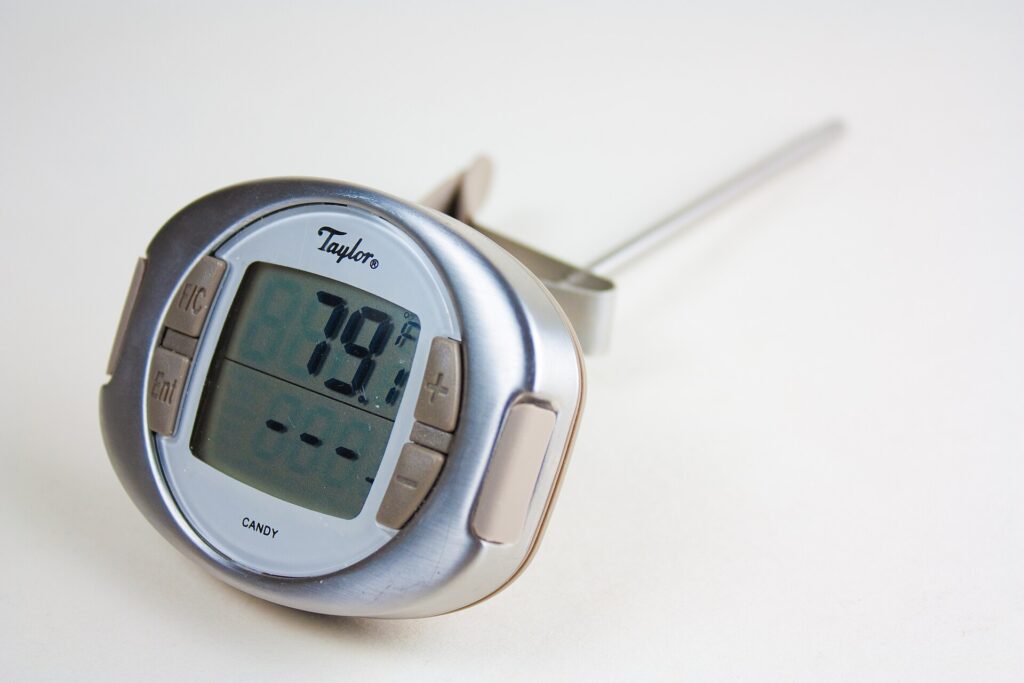
- Stir over medium heat until the sugar dissolves and the butter melts. Clip on a candy thermometer with the tip in the liquid and not touching the bottom.
- Cook without stirring, or with only occasional gentle movement, until the thermometer reads 240 to 245 degrees. Expect twelve to eighteen minutes.
- Take the pan off the heat and stir in a teaspoon of vanilla. Let it stand for three to four minutes, until the surface stops bubbling and it thickens slightly.
- Tilt the pan and dip each apple, turning to coat, then lift and hold it upside down for ten seconds so the excess runs back toward the stick.
- Scrape the base of the apple gently against the rim of the pan to remove the drip that would otherwise become a foot.
- Set it upright on the chilled tray. Repeat, working quickly.
- Refrigerate the whole tray for ten minutes to set, then move to a cool room. Serve within a day.
Step eight is the one that separates a clean apple from one standing in a pool. That last scrape takes two seconds and removes most of the caramel that would otherwise pool and then pull the rest of the coating downward with it.
The temperature window, and what each degree does
| Final temperature | Stage | What it does on an apple |
|---|---|---|
| 225 to 234 | Thread | Runs off completely, sticky syrup |
| 235 to 240 | Soft ball | Thin coating, pools at the base |
| 240 to 245 | Firm ball, low end | The working window, soft chew, clings |
| 246 to 250 | Firm ball, high end | Firmer coating, chewier, still good |
| 250 to 265 | Hard ball | Tough, sticks to teeth, hard to bite |
| 270 and up | Soft crack | Brittle shell, a different sweet entirely |
Push past 300 and you are no longer making this at all, you are making a candy apple, which is a hard red shell of cooked sugar rather than a chewy coating. Both are good; they are not interchangeable.
Five degrees is the whole margin, which is why this is one of the few home recipes where guessing does not work. Sugar concentration climbs as water boils off, and the temperature of the syrup is a direct readout of how much water is left in it. That relationship is the entire basis of caramel work and it does not care how carefully the ingredients were measured.
Altitude shifts the numbers, because water boils lower as elevation rises. The rough correction is to subtract about one degree for every 500 feet above sea level. At 5,000 feet, aim for 230 to 235 instead.
Why a thermometer beats the cold water test here
The old method of dropping syrup into cold water and judging the ball it forms works, and it is how this was done for a century. It is also imprecise by roughly five degrees in most hands, and five degrees is the entire target range.
Clip a candy or deep-fry thermometer to the side of the pan with the tip submerged and clear of the metal bottom, where it would read the pan rather than the syrup. An instant-read digital thermometer works too, held in the liquid without touching anything.
Check it against boiling water before you start. It should read 212 degrees at sea level, adjusted down for altitude. A thermometer that is off by four degrees is worse than no thermometer, because it produces confident errors.
Which apples hold a coating
| Apple | Skin | Texture under caramel | Verdict |
|---|---|---|---|
| Granny Smith | Thick, tart | Very firm, stays crisp | The standard, tartness balances sugar |
| Honeycrisp | Thin | Crisp but juicy | Good flavor, more prone to weeping |
| Braeburn | Medium | Firm, holds | Excellent and underused |
| Pink Lady | Medium | Firm, sweet-tart | Very good |
| Fuji | Thin | Firm but very sweet | Cloying with caramel |
| McIntosh | Thin, soft | Goes mealy | Avoid |
Size matters as much as variety. A small apple has a better ratio of fruit to caramel and it is far easier to eat, and the fist-sized ones sold for lunchboxes are the right target. A large apple gives you a mouthful of sugar and a wrestling match.
Buy them slightly underripe if there is a choice. A very ripe apple is softer and gives off more moisture, and the tartness that makes the whole thing work fades as the fruit sweetens on the shelf. This is the same reasoning that runs through most seasonal fruit cooking, where the fruit at its sweetest is often not the fruit you want.
The chilled tray that sets them in ten minutes
A parchment-lined sheet pan straight from the refrigerator pulls heat out of the base of each apple fast, which is where the caramel is thickest and most likely to run. Ten minutes on a cold tray does what forty minutes on a room-temperature counter does, and with less spread.
Butter the parchment or use a silicone mat. Caramel bonds to bare parchment enough to tear the coating when you lift the apple, and a thin film of butter prevents it entirely. Waxed paper is a poor choice, since the wax melts into the caramel.
Do not leave them in the refrigerator once they are set. Caramel absorbs moisture from cold humid air and turns tacky and dull within a few hours, and the apple starts weeping under the coating. Ten minutes to set, then a cool room.
Toppings: before the set or after
Anything that needs to embed goes on within about ninety seconds of dipping, while the caramel is still soft enough to accept it. Chopped nuts, sprinkles, crushed cookies, toffee bits, and flaky salt all belong in this group. Roll the bottom half of the apple in a shallow bowl of the topping rather than sprinkling from above, which wastes most of it.
Anything drizzled goes on after the caramel has set, usually melted chocolate in a zip bag with a corner snipped off. Drizzle chocolate onto soft caramel and the two blend into a muddy stripe. Onto set caramel it stays as a defined line and hardens in a few minutes.
Chopped nuts are the most common topping and also the one that needs a label if the tray is going anywhere public. Peanut and tree nut allergies are common enough that an unlabeled tray of assorted caramel apples at a party is a genuine problem, and keeping the nut-topped ones on a separate tray costs nothing.
Molten sugar burns, and the rule when children help
Caramel at 245 degrees is hotter than boiling water and it sticks to skin, which is a worse combination than either fact alone. A splash of hot oil rolls off; a splash of hot sugar keeps transferring heat until it is cooled. This is the single most dangerous thing most home kitchens do, and it deserves to be treated that way.
Keep a bowl of cold water next to the stove. Long sleeves rolled down, no loose fabric near the burner, and the pan handle turned inward. If sugar does land on skin, cool it under running cold water immediately and for several minutes, and do not try to pull the hardened sugar off. A burn that blisters is a burn that needs medical attention rather than a kitchen remedy.
Children can do everything except the pan. Scrubbing apples, pushing in sticks, setting out toppings, and rolling the finished apples are all real jobs. The dipping itself should be an adult holding the stick, with everyone else on the other side of the counter, and that is a good default for any cooking project with kids that involves hot sugar.
Storing them, and what day two looks like
Best eaten the day they are made. The coating is at its right texture within a few hours of setting, and after that the apple slowly gives up moisture into the caramel from underneath.
If they have to be kept, wrap each one individually in cellophane or a treat bag, twisted tight at the stick, and hold them in a cool room rather than the refrigerator. Two days is realistic. Refrigerated they last longer but turn sticky and weep, and the apple itself softens.
Cut apples are a different question. A caramel apple that has been sliced should be eaten within a couple of hours or refrigerated, because cut fruit at room temperature is on the ordinary two-hour clock like anything else. Slicing them into wedges and serving them on a plate is genuinely easier to eat than a whole one on a stick, and it is worth doing for a crowd.
Frequently Asked Questions
Can I use store-bought caramel squares instead?
Yes, melted with a couple of tablespoons of cream or water over low heat. The coating comes out softer and it slides more, because the water content is higher and the temperature is uncontrolled. The wax scrub matters even more with a wrapped caramel.
My caramel turned grainy in the pan. What happened?
Sugar crystals seeded the syrup, usually from a stray crystal on the side of the pan or from stirring after it came to a boil. Corn syrup in the recipe is there specifically to prevent this. Brush the pan sides down with a wet pastry brush and stir as little as possible once it boils.
Why is there a thick foot around the base of each apple?
Either the caramel was pulled below 240 degrees, or the excess was not scraped against the pan rim after dipping. Both are fixable. The scrape is quicker to learn than the thermometer habit and solves most of it.
Do I really have to scrub the apples if I buy organic?
Usually yes. Organic fruit is often coated too, with a wax approved for organic use, since the coating is about shelf life rather than pesticides. The water test settles it: if drops bead up and sit on the skin, scrub.
Can these be made a week ahead for a party?
No. The apple releases moisture into the caramel over days and the coating goes soft and cloudy. Two days is the outside limit and one is better. What can be done ahead is the scrubbing and drying, which holds fine overnight in the refrigerator.
What size stick, and where do I put it?
A sturdy wooden craft stick or a proper candy apple stick, pushed in from the stem end about two thirds of the way down. Thin lollipop sticks bend under the weight and split the fruit. Push it in before dipping, never after.
Do one apple as a test before committing the batch. Dip it, set it, and give it twenty minutes on the counter. If the caramel is still where you put it, the other seven will behave the same way.