
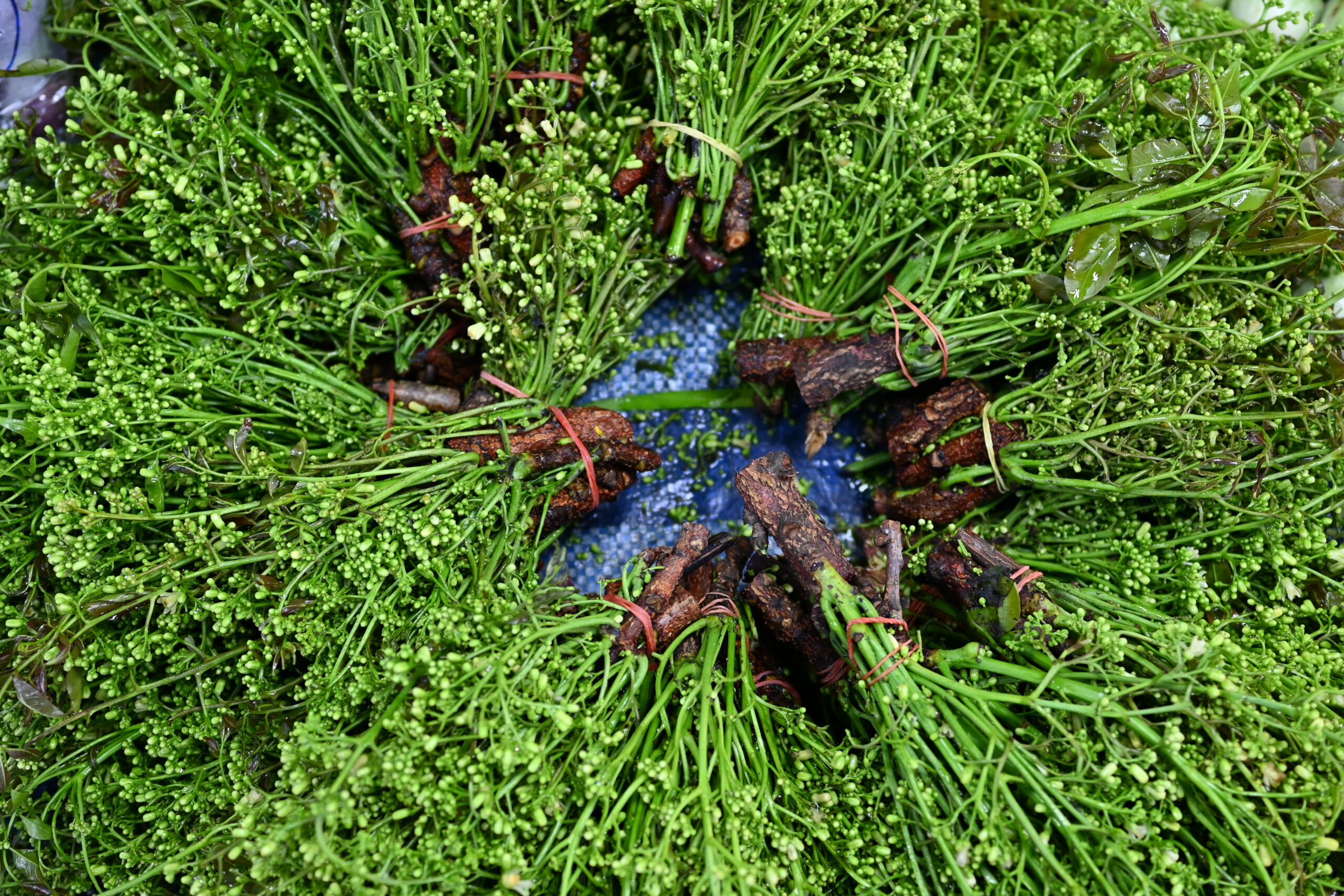
A bunch of parsley and a bunch of thyme cost about the same and arrive in the same plastic clamshell, and if they go into the refrigerator the same way, one of them will be fine in a week and the other will be a black slick in the bag. Which one fails depends entirely on which method was used.
Herbs sort into two groups that want opposite handling. Soft herbs have thin leaves and tender green stems, and they behave like cut flowers: they want their stems in water and their leaves in air. Hard herbs have woody stems and leathery leaves, and they want the exact opposite, wrapped snugly with just enough moisture to stop them drying out.
Treating both the same is the reason people throw away most of what they buy. The methods below take about ninety seconds each, they need a jar, a bag, and a paper towel, and they roughly triple how long a bunch stays usable.
- Soft herbs: parsley, cilantro, dill, mint, tarragon, chives
- Hard herbs: rosemary, thyme, sage, oregano, marjoram, bay
- Soft method: stems in a jar of water, loose bag over the top
- Hard method: damp towel, rolled, in a sealed bag
- The exception: basil never goes in the refrigerator
- Do not wash until the day you use them
Two groups, and the mistake is treating them as one
The split is not botanical, since the plants that get called an herb in a kitchen come from several unrelated families. It is structural. Soft herbs carry most of their aroma in volatile oils held in thin-walled leaf cells, which is why they smell strongest raw and lose almost everything after ten minutes of simmering. Hard herbs hold their oils in tougher tissue that releases slowly under heat, which is why they go in at the start of a braise.
That same structure decides how they fail in storage. A thin leaf loses water fast and wilts within hours of being cut off from a stem that can supply it. A leathery leaf loses water slowly but rots quickly if it sits against moisture with no airflow.
So the storage problem is different in each case. For soft herbs the problem is dehydration and the fix is a water supply. For hard herbs the problem is either drying out or sitting wet, and the fix is a controlled middle: damp, not wet, with the leaves not touching free water.
What actually kills a bunch of herbs
Four things, in roughly this order of frequency. Water loss, which shows as limp leaves that still smell fine. Cold damage, which shows as blackened patches and affects a small number of specific herbs. Rot, which shows as slime and a sour smell. And ethylene, the ripening gas given off by many fruits, which accelerates all of it.
The plastic clamshell the store sells them in does none of the four any favors. It traps the moisture the leaves give off, holds it against them, and has no way to let excess out. Herbs that arrive in a clamshell should come out of it within a day.
The bag of apples or the bowl of bananas on the same shelf matters more than most people think. Ethylene from ripening fruit pushes leafy things toward yellowing and breakdown, and the crisper drawer with the vent closed concentrates it. Herbs belong away from fruit, and the same logic applies to most of what happens on a low-waste kitchen shelf.
How to store fresh herbs: the two methods in one table
| Herb | Group | Method | Realistic life |
|---|---|---|---|
| Parsley | Soft | Jar of water, bagged, refrigerated | 2 to 3 weeks |
| Cilantro | Soft | Jar of water, bagged, refrigerated | 10 to 14 days |
| Dill | Soft | Jar of water, bagged, refrigerated | 7 to 10 days |
| Mint | Soft | Jar of water, bagged, refrigerated | 10 to 14 days |
| Basil | Soft | Jar of water, on the counter, no bag | 5 to 7 days |
| Chives | Soft | Damp towel, bagged, refrigerated | 7 to 10 days |
| Thyme | Hard | Damp towel, bagged, refrigerated | 2 to 3 weeks |
| Rosemary | Hard | Damp towel, bagged, refrigerated | 3 weeks or more |
| Sage | Hard | Damp towel, bagged, refrigerated | 2 weeks |
| Oregano | Hard | Damp towel, bagged, refrigerated | 2 weeks |
Chives are the odd one. They are structurally soft but they are hollow tubes rather than leaves on stems, so there is nothing to stand in a jar. They go in the towel with the hard herbs.
The numbers assume a refrigerator running at 40 degrees or below and a bunch that was in reasonable condition when it came home. A bunch that was already yellowing at the store will not be rescued by any method.
The jar method, for soft herbs

Trim half an inch off the bottom of the stems with a knife, at an angle, the way you would with cut flowers. This opens fresh tissue that can take up water; the old cut end has sealed over.
Pick off any leaves that would sit below the waterline. A leaf underwater rots within two days and turns the whole jar cloudy and sour, which then works its way up the stems.
Stand the bunch in a jar with an inch or two of cool water. Drape a produce bag loosely over the top, tucking it around the jar rather than sealing it. The bag holds humidity around the leaves; the looseness lets excess escape. Then into the refrigerator, and change the water when it looks cloudy, usually every four or five days.
The one that does not go in the refrigerator is basil. Below about 50 degrees it suffers chilling injury and the leaves blacken within a day or two. Basil goes in a jar of water on the counter, out of direct sun, with no bag at all, and it is worth buying in smaller quantities because it will not hold much past a week.
The damp towel method, for hard herbs
Lay a paper towel flat and dampen it under the tap, then wring it out hard. Damp means it feels cool and leaves no water on your palm. A wet towel rots the herbs faster than no towel at all.
Spread the sprigs in a single loose layer along the towel, roll it up without compressing, and put the roll in a zip bag or a container with the seal mostly closed. Refrigerate on a middle shelf rather than in the crisper, where humidity runs highest.
Check the towel every four or five days. If it has dried out, dampen it again; if it feels wet, replace it. That thirty-second check is the difference between two weeks and three.
Woody bunches of rosemary and thyme can also simply be left in a loose paper bag with no towel at all, since they hold their own moisture well and tolerate drying. In practice they slowly turn into dried herbs, which is not a failure.
Wash now or wash later?
Later. Washing introduces surface water, and surface water is what starts rot. Herbs that arrive visibly gritty are the exception, and they need the full treatment rather than a quick rinse.
To wash properly, swish the bunch head-down in a large bowl of cold water so the grit falls to the bottom, lift the herbs out rather than pouring the bowl through a strainer, and repeat with fresh water if the bottom of the bowl still shows sand. Cilantro and parsley grown in sandy soil often need two rounds.
Then dry them thoroughly, which is the step people skip. A salad spinner is the fastest tool. Failing that, spread the sprigs on a towel, roll gently, and leave for ten minutes. Store only once they are genuinely dry to the touch.
Freezing, when texture no longer matters
Frozen herbs come back limp. That rules them out as a garnish and rules them in for anything that gets cooked, which is most of what a household actually does with them.
Hard herbs freeze best. Strip thyme, rosemary, sage, and oregano leaves from their stems, spread on a small tray, freeze until firm, then transfer to a bag. They stay loose and you can pinch out what you need. Six months of good quality is a reasonable expectation.
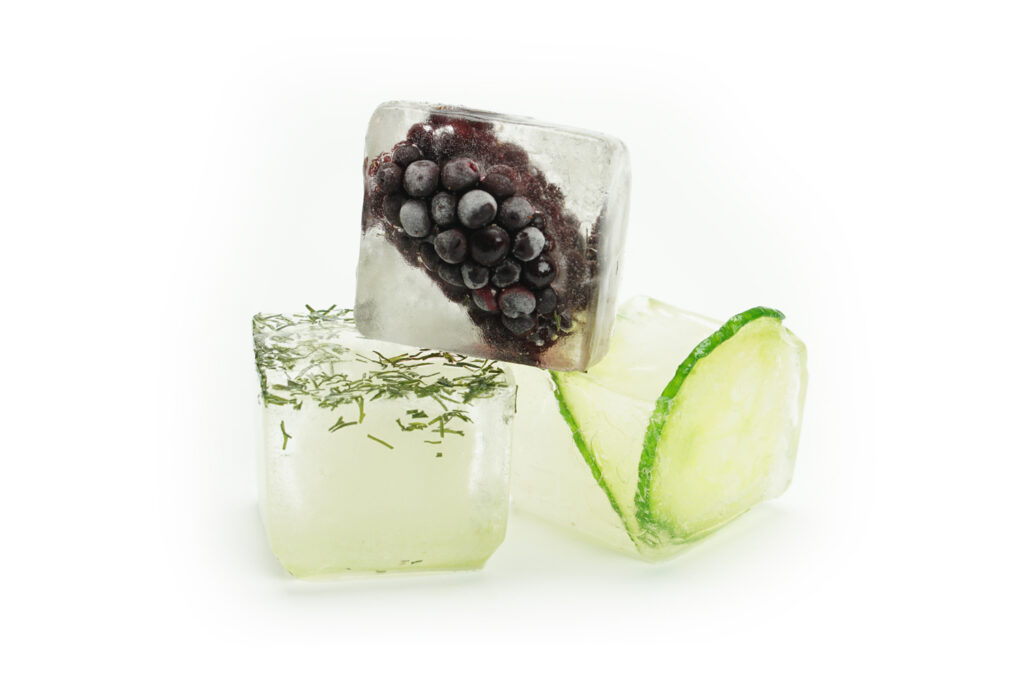
Soft herbs are better frozen in fat or liquid than dry, because their thin leaves get freezer burn quickly. Chop them, pack them into an ice cube tray, and top with olive oil or water. Once frozen solid the cubes go into a bag. One cube is roughly a tablespoon of chopped herb and it goes straight into a hot pan or a pot of soup.
Cilantro and basil both discolor when frozen raw, going olive rather than bright green. Blanching for five seconds in boiling water and shocking in ice water before freezing keeps more color, at the cost of an extra pot. Blended into a paste with oil, the color holds better than in whole leaves.
Herb butter, herb oil, and the line on garlic
Chopped soft herbs beaten into softened butter, rolled in parchment and frozen, gives you rounds you can cut off and drop onto a steak or a bowl of vegetables. It keeps several months in the freezer and it is the single most useful thing to do with the back half of a bunch of parsley.
Herb oils are more useful still, and they carry one real caution. Fresh herbs and fresh garlic are low-acid foods, and putting them in oil creates an oxygen-poor environment at room temperature, which is precisely the condition that Clostridium botulinum spores need to become active. Homemade garlic or herb oil is not a pantry item.
The safe versions are simple. Keep any homemade herb or garlic oil refrigerated and use it within about four days, or freeze it in cubes, where the temperature stops the problem entirely. Do not leave a bottle of garlic in oil on a warm counter, and do not give one as a gift unless it has been commercially acidified. The risk is small in frequency and severe in consequence, which is why the rule is stated flatly rather than as a preference. The organism behind botulism is one of the few in a home kitchen where the usual smell-and-look judgment is worthless, because the food gives no sign.
Drying, and the three worth the trouble
Most herbs lose the majority of their character when dried, which is why dried parsley tastes like green dust. Three hold up well enough to be worth doing at home: oregano, thyme, and bay.
Tie a small bunch, hang it upside down somewhere dry with air movement and out of sunlight, and give it one to two weeks. Strip the leaves when they crumble between your fingers and store them whole rather than crushed, in a jar away from the stove. Crushing releases the oils, so crush at the moment of use.
The conversion for cooking is roughly one part dried to three parts fresh, and dried goes in early where fresh goes in late. Dried herbs are also not immortal: after about a year in a warm cupboard they are mostly color. Smell the jar, and if there is nothing there, there is nothing there. Anyone building a spice shelf around a few dependable jars runs into the same rule that governs cooking with herbs day to day: quantity is worth less than freshness.
Reviving a wilted bunch
Limp does not mean finished. A bunch that has lost water but has not started to break down can be brought back most of the way with a fifteen-minute soak in ice water, stems and all.
The leaves take water back up through the cut stems and through the leaf surface, and they firm up visibly. Spin them dry afterward and use them the same day, because revived herbs do not store again. This works well on parsley, mint, and cilantro, moderately on dill, and not at all on basil.
What it cannot fix is rot. Slimy stems, blackened patches, or a sour smell mean the bunch is done, and no amount of soaking reverses it. Pick out the sound sprigs if there are any and discard the rest rather than trying to salvage the whole bunch.
Stems are not trash
Cilantro stems carry more flavor than the leaves and no unpleasant texture when chopped fine. They go into anything blended, and into a pan at the start where the leaves would go in at the end.
Parsley stems are firmer and slightly bitter but they are the backbone of a stock. Keep a bag in the freezer and add stems as they accumulate, alongside onion skins and carrot ends. Dill stems do the same job in a fish stock.
Woody rosemary and thyme stems are not eaten, but stripped stems can go into a braise tied in a bundle and be pulled out at the end. A rosemary stem also makes a functional skewer for anything going on a grill, and it perfumes the food from the inside.
Frequently Asked Questions
Can I store all my soft herbs in the same jar?
It works but it shortens the life of the shorter-lived ones, since dill and cilantro decline faster than parsley and the water goes cloudy sooner. Separate jars are better if there is room. If not, change the water every three days rather than every five.
Why does my cilantro go slimy in three days?
Usually because it was washed before storage, or because leaves are sitting below the waterline in the jar. Strip the lower leaves, use dry herbs, and keep the bag loose so trapped humidity can escape.
Is the crisper drawer the right place?
Not for the jar method, which needs height, and not for hard herbs either. The crisper runs at the highest humidity in the box, which suits whole vegetables and pushes wrapped herbs toward rot. A middle shelf is better.
Do I really need to keep basil out of the refrigerator?
Yes. It is a tropical plant and it suffers below about 50 degrees, which shows up as black patches within a day or two. Counter, jar of water, no bag, out of direct sun. Buy it in the amount you will use that week.
Can frozen herbs go straight into a hot pan?
Yes, and they should. Thawing first releases water and turns them to mush before they get anywhere near the food. Drop the cube or the frozen leaves directly into the pot and let the heat do the rest.
How long do herbs last once chopped?
A day, refrigerated in a closed container, and less for the delicate ones. Cutting damages cell walls and both flavor and appearance drop off fast. Chop at the last possible moment, which is also the reason herb pastes and butters exist.
Buy one bunch of parsley and one of thyme this week, store each by its own method, and check them both on day ten. The difference will settle the argument better than any table can.