
A marshmallow-topped sweet potato casserole sits on the table looking like dessert because it is dessert, and pretending otherwise is the reason half of it goes home in foil every year. The fix isn’t cutting the sugar out. It’s admitting what the dish actually is and building a topping that matches, which means pecan streusel instead of a bag of marshmallows torched under the broiler.
Streusel does two things marshmallows can’t. It adds crunch against the soft puree underneath, and it browns evenly in the oven’s regular heat rather than needing a last-minute broiler watch that burns half the pan while the other half stays pale. Nobody has ever ruined a streusel by looking away for thirty seconds.
The puree underneath matters just as much as the topping, and it’s the part more people get wrong. A stringy, fibrous mash means the potatoes were rushed or the wrong texture step got skipped, and no amount of streusel fixes a base that fights the fork.
- Puree base: roasted, not boiled, then pushed through a ricer or fine mesh
- Topping ratio: equal parts flour and brown sugar, half that in cold butter, plus chopped pecans
- Pan size: a 9×13 dish for 3 pounds of sweet potatoes, feeds 10 to 12
- Bake: 350 degrees, 30 to 35 minutes, until the topping is deep gold
- Make-ahead: puree base up to 2 days ahead, streusel up to a week
Sweet potato casserole without the candy-bar problem
A marshmallow top is essentially melted sugar sitting on top of an already-sweetened puree, and the combination reads more like a dessert bar than a dinner side, which is exactly why so many people quietly skip it at a table full of other dishes. Pecan streusel keeps the dish sweet without doubling down on sugar in the same soft, gooey texture twice in one bite.
The nuts also add a protein and fat component the marshmallow version has none of, which makes the dish feel more like an actual side and less like a stealth dessert wearing a casserole dish. Guests who normally take a small spoonful out of politeness tend to go back for a real second helping once the topping has some texture working for it.
The puree that comes out smooth, not stringy
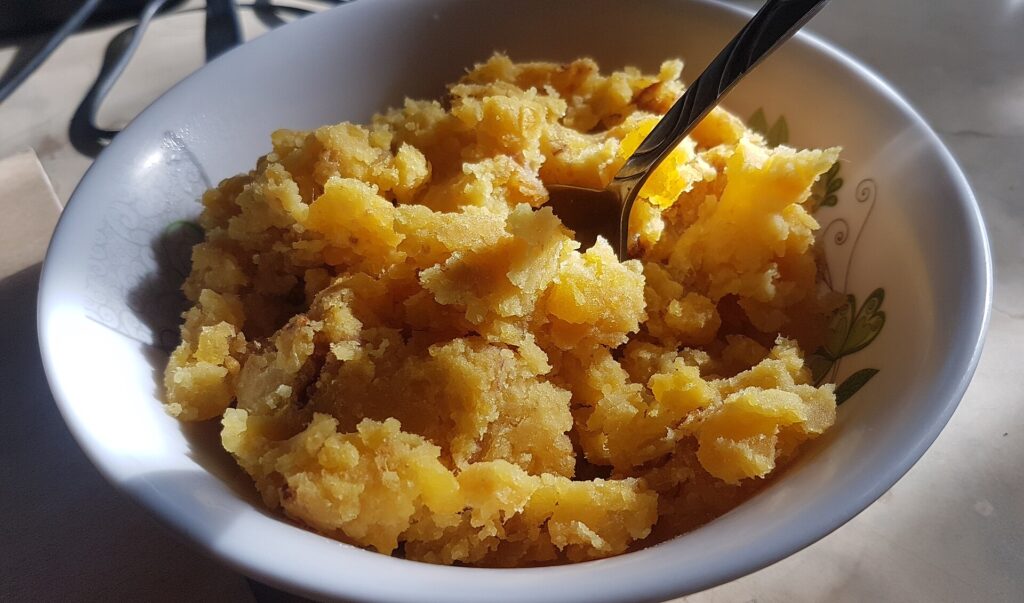
Sweet potatoes roasted whole in their skins at 400 degrees for about an hour lose water through steam rather than absorbing it the way boiled potatoes do, which concentrates the flavor and keeps the flesh from turning waterlogged and stringy. Boiling works in a pinch, but it pulls flavor out into the water and leaves a wetter puree that needs more flour or egg to hold together, both of which dilute the taste.
Once roasted and cooled enough to handle, scoop the flesh away from the skin and push it through a ricer or a fine mesh sieve rather than mashing it directly with a fork. This step is what actually removes the stringy fibers that run through sweet potato flesh, and skipping it is the single most common reason a casserole ends up with an unpleasant fibrous texture no amount of butter can mask.
The pecan streusel ratio that holds together
Equal parts all-purpose flour and packed brown sugar, cut with half that amount of cold butter until the mixture looks like coarse crumbs, is the base ratio that holds its shape in the oven rather than melting into a flat sheet. Stir in roughly the same volume of roughly chopped pecans as the flour, added last so the nuts stay whole rather than getting worked into paste by overmixing.
Cold butter, cut in with a pastry cutter or two knives rather than softened and stirred in, is what gives streusel its crumbly structure instead of a smooth, cookie-like dough. If the butter starts to soften while working, a few minutes in the freezer before it goes onto the casserole firms it back up without needing to start the batch over.
Getting the sweetness balance right
The puree itself needs far less added sugar than most recipes call for, since a well-roasted sweet potato is already naturally sweet and the streusel on top is doing real sweetening work of its own. A quarter cup of brown sugar per three pounds of potatoes in the puree, plus a pinch of salt to sharpen the flavor, is usually enough once the streusel is factored in.
Salt matters more here than in most dessert-adjacent dishes, since it’s the ingredient that keeps the whole casserole from tasting one-dimensionally sweet from puree straight through to topping. A half teaspoon in the puree and another pinch mixed into the streusel itself does noticeably more for the final flavor than most recipes account for.
The pan size that fits beside everything else
| Sweet potatoes | Pan size | Servings |
|---|---|---|
| 2 pounds | 8×8 dish | 6 to 8 |
| 3 pounds | 9×13 dish | 10 to 12 |
| 4.5 pounds | Two 9×13 dishes | 16 to 20 |
A 9×13 dish is the size most households already own and it’s the one that fits a middle-of-the-table spot beside stuffing, gravy, and a green vegetable without crowding an already full oven or table. Doubling into two separate dishes, rather than one oversized pan, also bakes more evenly, since a single very deep pan of puree can leave the center undercooked while the edges overbrown.
Baking it evenly without a burnt edge
350 degrees for 30 to 35 minutes is enough to warm the puree through and turn the streusel a deep golden brown without scorching the edges of the dish, which tend to run hotter than the center in most home ovens. Rotating the dish halfway through the bake evens this out further, particularly in an oven known to run hot on one side.
If the topping browns faster than the center heats through, a loose sheet of foil laid over the top for the last five to seven minutes protects the streusel while the middle catches up. Pulling the foil off for the final couple of minutes restores any crispness the foil softened.
Making the puree two days ahead
The roasted and riced puree, mixed with its sugar, salt, and butter, holds well in the refrigerator for up to two days in a sealed container, which is the piece of this dish most worth making ahead on a crowded holiday schedule. Bring it to room temperature for thirty minutes before assembling and topping, since a cold puree straight from the fridge takes longer to heat through and can leave the streusel overbaked by the time the center is hot.
The streusel itself keeps even longer, up to a week sealed in the refrigerator or a couple of months frozen, since the cold butter inside doesn’t need to be fresh, just cold, when it goes onto the casserole. Making both pieces ahead reduces the day-of task to assembly and a thirty-five-minute bake.
Why pecans work better here than walnuts
Pecans have a naturally sweeter, more buttery flavor than walnuts, which pairs more directly with brown sugar and roasted sweet potato than walnut’s slightly more bitter, tannic edge does. Toasting the pecans for five minutes in a dry skillet before chopping them into the streusel deepens that flavor further and adds a layer of crunch that raw nuts don’t quite match.
Walnuts aren’t wrong here, and a household with a walnut allergy-free pecan preference can swap freely, but the flavor profile shifts noticeably toward something more bitter and less rounded than the pecan version most people expect from this dish.
What to do with leftover casserole
Leftover casserole reheats well covered in a 325-degree oven for fifteen to twenty minutes, which restores some of the streusel’s crunch that a microwave flattens out completely. A microwave works for speed but leaves the topping soft rather than crisp, which is a real trade-off worth knowing before reheating a portion meant for a quick lunch.
The puree portion alone, scraped away from any remaining streusel, works surprisingly well stirred into a breakfast bowl with a spoonful of yogurt and a few fresh pecans, giving the leftovers a second life that doesn’t feel like a repeat of the same dinner side.
Choosing the right sweet potato at the store
The orange-fleshed variety most often labeled a yam in American grocery stores, though botanically a sweet potato, is the one this dish is built around, since its moisture content and sweetness roast down into exactly the texture a casserole wants. Firm, unblemished skin without soft spots or sprouting eyes is the main thing worth checking for at the store, regardless of size.
Uniform size across the batch matters more than it seems, since potatoes of very different sizes finish roasting at different times, and a recipe built around one large potato and two small ones ends up with some flesh overcooked and dried out while another piece is still firm in the center.
A dairy-free version that still tastes rich
Swapping the butter in both the puree and the streusel for a firm, unrefined coconut oil kept cold before cutting into the flour keeps the streusel’s crumbly texture intact, while a splash of full-fat coconut milk in the puree replaces the richness butter would otherwise add. The result carries a faint coconut note that most people read as simply rich rather than identifiably coconut-flavored, especially once the pecans and brown sugar are in the mix.
A neutral dairy-free butter substitute labeled for baking works as a more flavor-neutral option than coconut oil for anyone who wants to avoid any hint of coconut entirely, and it performs almost identically to real butter in the streusel step.
Scaling the recipe for a smaller table
Cutting the whole recipe in half works cleanly for a table of five or six, using an 8×8 dish instead of a 9×13 and roughly two pounds of sweet potatoes instead of three. The bake time stays close to the same, since the dish’s depth rather than its width is what determines how long the center takes to heat through.
For an even smaller gathering, individual ramekins with their own small portion of streusel on top turn the same dish into a plated dessert-style side, which also solves the problem of a large pan going home half-eaten after a smaller holiday meal. Each ramekin needs only about fifteen minutes at the same 350 degrees, since there’s far less mass to heat through.
Frequently Asked Questions
Can I use canned sweet potato puree instead of roasting my own?
Canned puree works in a pinch and saves significant time, though it tends to be wetter and less concentrated in flavor than a fresh roasted version, so reducing any added liquid in the recipe and tasting for sweetness before adding sugar helps compensate.
Is there a way to add crunch without nuts for an allergy-friendly version?
Toasted oats or crushed graham crackers mixed into the same flour, sugar, and butter streusel base give a similar crunchy contrast without any tree nuts, though the flavor leans slightly more toward a crumble than a classic pecan streusel.
Why did my streusel melt flat instead of staying crumbly?
This almost always means the butter was too soft when it went into the flour and sugar mixture. Chilling the assembled streusel for ten minutes before it goes on top of the casserole, and using butter straight from the refrigerator rather than softened, fixes it.
Can this casserole be assembled and baked entirely a day ahead?
It can be assembled unbaked and refrigerated overnight, then baked the next day with an extra five to ten minutes added to account for the cold start. Baking it fully a day ahead and reheating works too, though the streusel loses some crispness in the reheat.
How do I keep the top from over-browning before the center is hot?
Tent the dish loosely with foil for the first twenty minutes of baking, then remove it for the final ten to fifteen minutes so the streusel finishes browning once the center has had time to catch up.
Roast the sweet potatoes the day before, keep the streusel cold until the last minute, and this version earns a second helping instead of a polite first one.