
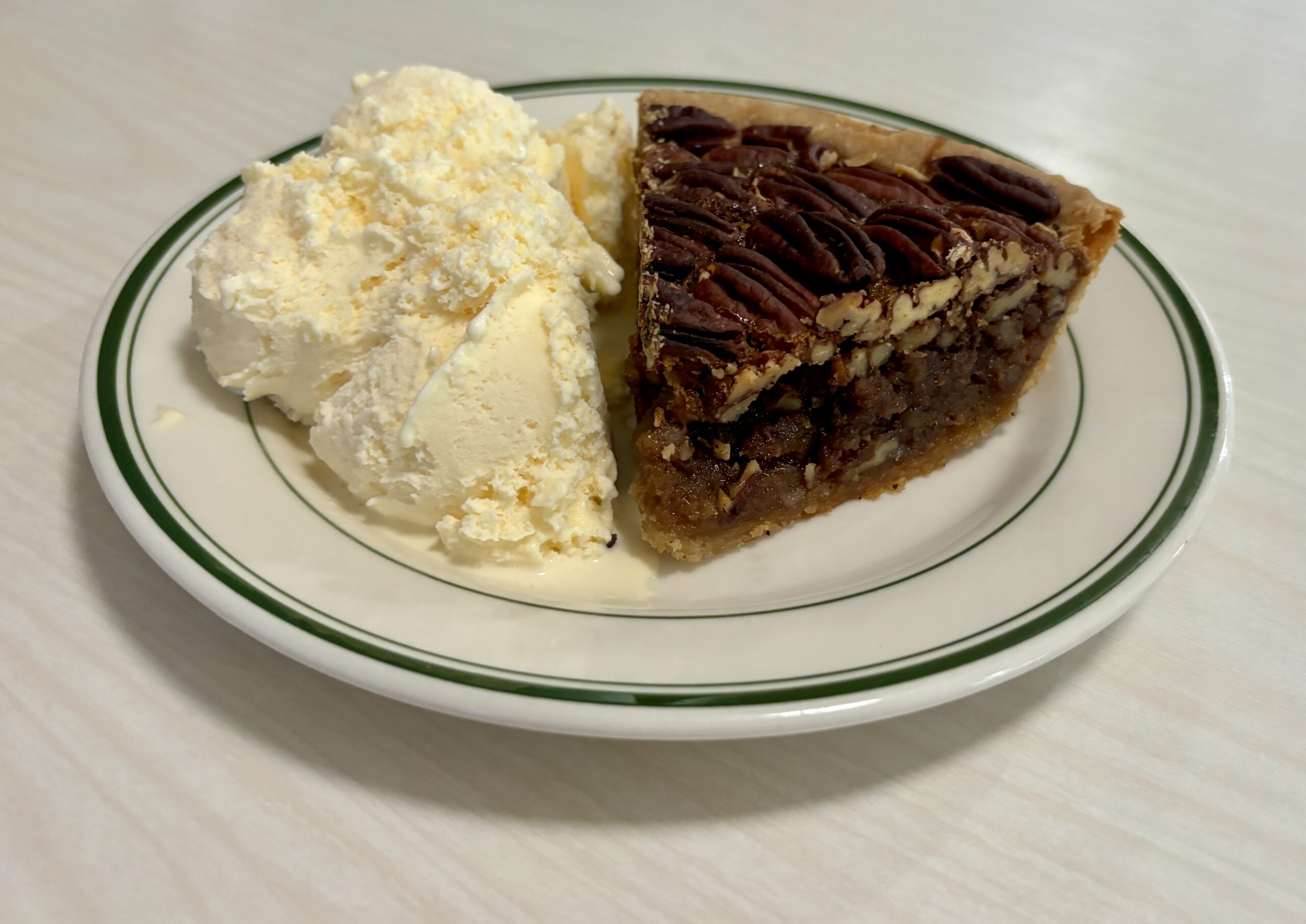
Twenty-four people and one pie plate is a math problem that a pie plate cannot solve. A 9-inch pecan pie cuts into eight reasonable slices, which means three pies, three fussy lattice-free crusts, and three separate bakes for a dessert that traditionally already asks a lot of a single oven on the busiest cooking day of the year.
Bars solve the volume problem without any of that repetition. One pan, one crust pressed rather than rolled, and one filling poured over the top scales the exact flavor of a pecan pie to a full sheet pan’s worth of servings in roughly the same total oven time as a single pie.
The crust here is shortbread, pressed into the pan rather than rolled and fitted, and the filling sets firm enough to cut into clean squares that travel and stack better than a wedge of pie ever does on a crowded dessert table.
- Crust: a press-in shortbread base, no rolling pin needed
- Pan for 24: a quarter sheet pan, or two 9×13 pans
- Bake time, crust: 15 minutes at 350 degrees
- Bake time, filling: 25 to 30 minutes more, until barely jiggly at the center
- Make ahead: up to 3 days ahead, or frozen for a month
- Serving yield: 24 to 32 bars depending on cut size
Why bars solve the twenty-four-person problem
A quarter sheet pan holds roughly the same area as one and a half standard 9-inch pies, but it needs only one crust to press in and one bake cycle to manage, rather than the multiplied effort of rolling, fitting, and baking several pie shells separately. For a host already managing a turkey and six side dishes, that reduction in separate steps matters more than it sounds like it would.
Bars also solve a serving problem that pie does not: a pie wedge needs a plate and a fork the moment it is cut, while a bar can be picked up, wrapped in a napkin, and eaten standing at a crowded gathering where table seating runs short. For a dessert spread with several other options on it, that flexibility gets bars taken more often than a pie sitting a few steps further from the crowd.
There is also a portioning advantage that only shows up once the tray is actually being served. A pie forces a decision about slice count before the first cut goes in, and an unevenly sized first slice throws off every slice after it. A pan of bars can be cut smaller or larger on the spot depending on how many people actually show up, without the same domino effect on portion consistency.
The press-in shortbread base
A shortbread crust skips the water, the chilling, and the rolling that a traditional pie crust needs, replacing all of it with butter, sugar, and flour worked together until it resembles wet sand, then pressed directly into the pan with the flat bottom of a measuring cup. It takes about five minutes and produces a crust that is more forgiving of an inexperienced hand than a rolled pastry crust is.
Baking this crust alone for about fifteen minutes before the filling goes on top, rather than pouring wet filling directly onto raw dough, is the step that keeps the finished bars from turning soggy on the bottom. A shortbread crust baked without this initial bake would not fully set before the filling’s own baking time is up.
A filling that sets firm enough to cut clean
A traditional pecan pie filling, built from eggs, corn syrup or a sugar syrup, butter, and pecans, sets through the same egg-based custard process whether it is baked in a round pie plate or a rectangular pan, and the same doneness cues apply either way. The filling is done when the center still has a slight jiggle but the edges have set and puffed slightly.
The shallower depth of a sheet pan compared to a pie plate means this filling actually sets a bit more reliably across its full area than a deep pie filling does, since there is less distance between the top surface and the crust below for heat to travel through evenly. This is part of why bars are more forgiving for anyone who has struggled with an underset pecan pie center in the past.
The ratio of pecans to liquid filling also matters more in a shallow pan than it does in a deep pie, since a filling too heavy on nuts and too light on syrup can leave dry patches once cut into squares. Sticking close to the ratio in the recipe below, roughly three cups of chopped pecans to just over a cup of syrup and sugar combined, keeps every square evenly moist rather than dry in the center and syrupy at the edges.
Pecan pie bars, from crust to filling
- Press a shortbread mixture of 2 1/2 cups flour, 1 cup softened butter, 3/4 cup sugar, and a pinch of salt into a parchment-lined quarter sheet pan.
- Bake the crust alone at 350 degrees for 15 minutes, until lightly golden at the edges.
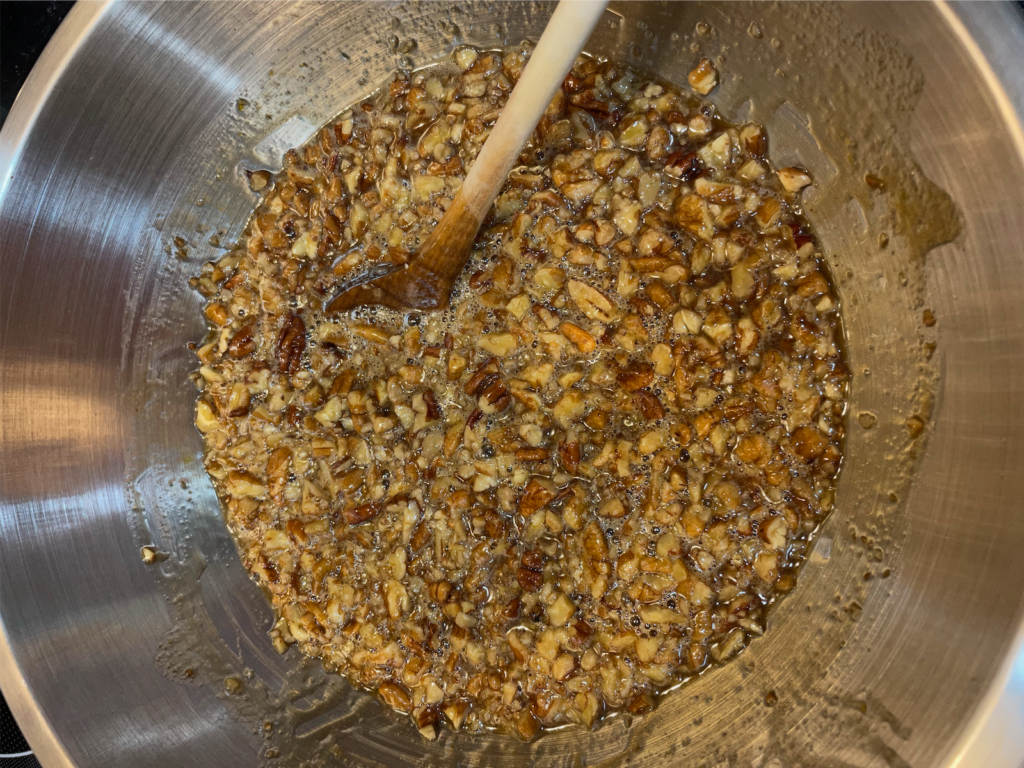
- While the crust bakes, whisk together 4 eggs, 1 1/4 cups corn syrup, 1 cup brown sugar, 1/3 cup melted butter, and 2 teaspoons vanilla.
- Stir in 3 cups chopped pecans, reserving a cup of halves for the top if a decorative finish is wanted.
- Pour the filling over the warm, par-baked crust and arrange the reserved pecan halves on top.
- Bake 25 to 30 minutes, until the edges are set and the center only jiggles slightly when the pan is nudged.
- Cool completely in the pan, at least 2 hours, before lifting out using the parchment overhang and cutting into squares.
Step 7’s full cooling time matters as much as the bake time itself. Cutting into warm bars, even ones that look fully set, produces a filling that oozes and slides rather than holding a clean square edge.
Quarter sheet versus 9×13, and the bake time difference
| Pan | Approximate servings | Crust bake | Filling bake |
|---|---|---|---|
| Quarter sheet pan (9×13) | 24 to 32 bars | 15 minutes | 25 to 30 minutes |
| Two 9×13 pans, doubled recipe | 48 to 64 bars | 15 minutes each | 25 to 30 minutes each |
| Half sheet pan, 1.5x recipe | 36 to 48 bars | 15 to 18 minutes | 28 to 32 minutes |
A quarter sheet pan and a standard 9×13 baking dish are close enough in size that the same recipe amount works in either without adjustment, which makes 9×13 the more accessible option for anyone without a dedicated sheet pan of that exact size.
The doneness test that beats a timer
Because oven behavior varies enough between households that a printed bake time is only ever an estimate, nudging the pan gently at the timer’s end and watching how the center moves is more reliable than trusting the clock alone. A finished filling ripples very slightly, like a set gelatin, rather than sloshing visibly like a liquid still cooking.
An underbaked filling, cut too soon, will not firm up further once out of the oven the way a slightly underbaked cake sometimes does with residual heat. If the center looks notably looser than the edges at the timer’s end, a few more minutes in the oven is worth it before pulling the pan.
Cutting clean squares without a mess
A sharp knife run under hot water and wiped dry between cuts slices through the sticky filling far more cleanly than a knife used cold and left uncleaned between slices. Cutting once the bars are fully cooled, ideally after a couple of hours at room temperature or a shorter chill in the refrigerator, also makes a meaningful difference to how cleanly the squares separate.
Lifting the entire cooled slab out of the pan using parchment paper left with an overhang on two sides, then cutting it on a cutting board rather than in the pan itself, protects the pan’s surface and makes the first few cuts easier to execute with a full range of motion.
How far ahead they can be made
Baked and left in an airtight container, these bars hold their texture well for up to three days at room temperature, and the flavor if anything improves slightly on the second day as the filling settles further into the crust. This makes them one of the more genuinely make-ahead-friendly desserts on a Thanksgiving table full of dishes that mostly want to be made same-day.
Refrigeration is not required for the first few days but does extend the window slightly further, useful if the kitchen is warm or the bars need to hold for closer to a week. A brief return to room temperature before serving restores the texture that refrigeration firms up.
Freezing baked bars
Fully cooled bars freeze well for up to a month, layered between sheets of parchment in an airtight container to prevent them from sticking together or picking up freezer odors. Thawing overnight in the refrigerator or for a few hours at room temperature restores them close to their fresh-baked texture.
Freezing the bars uncut, as a whole slab, and slicing only after thawing, keeps more moisture in each piece than freezing pre-cut squares does, since the increased surface area of individually cut pieces loses a bit more moisture to the freezer air over time. For a household that wants grab-and-go portions instead, pre-cutting and freezing individually is still a reasonable tradeoff, just with a slightly drier bite once thawed.
Swaps for a nut allergy or a lighter filling
Sunflower seeds, toasted and roughly chopped, substitute for pecans in the filling for a nut-free version, producing a similar textural crunch though with a milder, slightly different flavor profile than pecans provide. The rest of the recipe needs no other adjustment for this swap.
Reducing the corn syrup by a quarter and adding an equal amount of unsweetened applesauce lightens the filling’s sweetness somewhat without changing its ability to set, though the texture turns very slightly less glossy than the full corn syrup version. This adjustment suits a table already leaning toward less sweet desserts overall, and it holds up just as well through the same three-day room-temperature storage window as the original filling.
Frequently Asked Questions
Can I use a store-bought pie crust pressed into the pan instead of shortbread?
A rolled pie crust can be pressed into a rectangular pan in a pinch, though it will not hold together for handheld bars quite as sturdily as the shortbread base does, since pie crust is built to be flakier and more delicate than a pressed cookie-style base.
Why did my filling separate from the crust after baking?
This usually happens when the crust was not par-baked long enough before the filling went on, leaving too much moisture at the boundary between the two layers. Baking the crust fully golden at the edges, not just barely set, before adding filling prevents most separation.
Can I make these gluten-free?
A 1-to-1 gluten-free flour blend substitutes directly in the shortbread crust with no other changes needed, since the filling itself contains no flour at all and is naturally gluten-free as written.
How do I keep the pecans from burning on top?
Loosely tenting the pan with foil for the final ten minutes of baking, once the top pecans have taken on color, prevents them from going from toasted to burnt while the center of the filling finishes setting underneath.
Is corn syrup necessary, or can I use only brown sugar?
Corn syrup contributes to the glossy, gooey texture that defines this filling, and replacing it entirely with sugar changes both the texture and the way the filling sets, often producing a grainier result. A light corn syrup or golden syrup both work as the liquid sweetener, though a straight sugar substitute is not a clean swap here.
Cut the bars only once they are fully cool, and the same recipe that struggles as three separate pies becomes one pan, one bake, and a tray of clean squares ready for a crowd.