
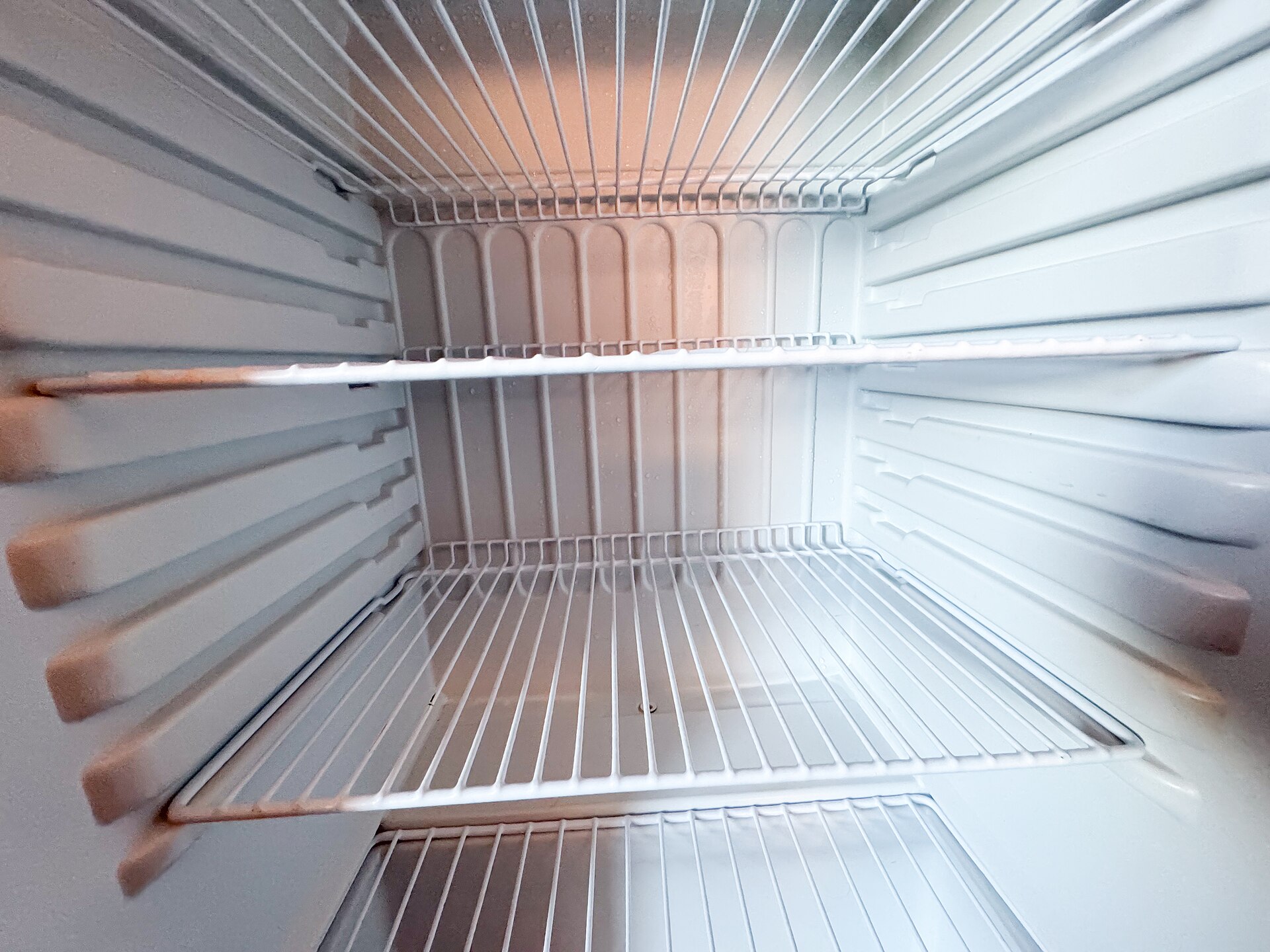
A standard refrigerator holds maybe twenty cubic feet, and a Thanksgiving thaw-and-cook cycle asks it to hold a fourteen-pound bird, six side dishes in various stages of prep, a pie or two, and whatever the household eats on a normal Tuesday, all at the same time. That math does not work without a plan made before the bird ever shows up.
The week before is the only time that plan actually helps. Once the turkey needs to start thawing, the fridge either has room waiting for it or it does not, and rearranging condiments while a fourteen-pound bird sits on the counter is not a real option.
A week-out purge, a rough shelf map, and a clear answer on what genuinely needs cold versus what can wait on a counter turns a chaotic scramble into a series of small, already-decided moves.
- Start the purge: seven days before the bird needs to thaw
- Dedicate a shelf: the bird gets its own tray, ideally the bottom shelf
- What leaves the fridge: condiments, unopened jars, anything shelf-stable
- Porch cooler threshold: reliably below 40 degrees Fahrenheit outdoors
- Freezer overflow: a real option for anything not needed until cooking day
- Morning-of reshuffle: plan a five-minute pass before the bird comes out to rest
The week-out purge that creates space
A week before the bird needs to go in the fridge to thaw is the right time to go shelf by shelf and remove anything expired, anything half-finished and unlikely to be used again, and anything shelf-stable that has ended up in the fridge out of habit rather than necessity. Most refrigerators, examined honestly, are holding several jars of condiments that do not actually need refrigeration until opened, or leftovers from two weeks ago that should have been tossed already.
This purge alone often creates more usable space than any amount of clever container stacking does later in the week. It also means the shelves that remain are genuinely available, rather than technically empty but crowded with things nobody plans to use before the holiday.
A dedicated bag or box for anything pulled during the purge, set aside for immediate disposal or composting rather than left on the counter to be dealt with later, keeps the process from generating its own new clutter. It takes roughly twenty minutes for an average household fridge and pays for itself many times over on the day the turkey actually needs its shelf.
A shelf map for a thawing bird plus six dishes
| Shelf or zone | What goes there | Why |
|---|---|---|
| Bottom shelf | The thawing turkey, on a rimmed tray | Coldest zone, contains any drips |
| Middle shelf | Raw prep: unbaked pies, uncooked casseroles | Consistent mid-range temperature |
| Top shelf | Ready-to-eat items: cooked sides, cranberry sauce | Warmest shelf, fine for items already cooked |
| Crisper drawers | Vegetables still needing prep | Higher humidity keeps produce fresher |
| Door shelves | Condiments and anything shelf-stable if room allows | Warmest zone in the whole fridge |
The general rule behind this map is that raw items, especially raw poultry, always sit below anything ready to eat, so that any drips or leaks fall onto a lower shelf rather than onto food that will not be cooked again before serving. This is a food safety rule as much as an organizational one.
Making thanksgiving fridge space, shelf by shelf
Working shelf by shelf rather than trying to reorganize the whole fridge at once makes the job less overwhelming and easier to fit into small pockets of time across the week-out purge. Clear and wipe down one shelf, decide what belongs there for the coming week, and move to the next rather than pulling everything out onto the counter simultaneously.
By the time the turkey needs its tray, this shelf-by-shelf pass should already have identified exactly where it goes, rather than leaving that decision for the moment the bird actually needs to go in. Knowing the plan in advance turns a stressful fifteen minutes into a five-minute task done on autopilot.
Why the bird needs its own dedicated shelf
A raw turkey thawing in the refrigerator can leak juices as it defrosts, and those juices carry bacteria that need to stay away from anything that will be eaten without further cooking. Placing it on the bottom shelf, on a rimmed tray or in a shallow pan to catch any drips, contains the risk to one contained spot rather than letting it spread to whatever happens to be underneath.
Giving the bird a shelf entirely to itself, rather than squeezing it in alongside other items, also matters for even thawing, since airflow around the package helps it defrost more consistently than a bird wedged tightly between other containers. A cramped fridge thaws unevenly, sometimes leaving the center of a large bird still partially frozen days after the outer layers are fully thawed.
What can leave the fridge entirely
Unopened condiments, most hot sauces, soy sauce, and many salad dressings are shelf-stable until opened despite habitually living in the refrigerator door, and moving them to a pantry shelf for the week frees up meaningful door space without any food safety tradeoff. Whole, uncut winter squash, potatoes, and onions also do not need refrigeration and can move to a countertop basket instead.
Bread, most baked goods, and unopened wine or beer likewise have no need for fridge space and are easy to overlook when the instinct during a big cooking week is to refrigerate everything defensively. A quick mental sort of what is actually perishable versus what has simply always lived in the fridge out of habit often frees up a full shelf on its own.
The cooler-on-the-porch question, and the temperature that makes it safe
A cooler packed with ice on a cold porch can genuinely substitute for missing fridge space, but only if the outdoor temperature is reliably at or below 40 degrees Fahrenheit for the full duration items sit there, matching the temperature a refrigerator is expected to maintain. Above that threshold, a cooler needs the same active ice management as it would in warmer weather, checked and replenished regularly rather than assumed to be holding steady.
This option works best for items that are less sensitive or already well-insulated, like a well-sealed casserole dish or a case of beverages, rather than for the raw turkey itself, which benefits more from a consistent, monitored cold source than from an outdoor cooler subject to a sudden warm afternoon. Checking a porch thermometer rather than guessing by feel is the difference between a genuinely safe backup and a risky one.
Staging dishes by when they actually need cold
Not every side dish needs to be in the refrigerator a full week ahead, even if it can be prepped that far in advance. Staging the fridge based on when each dish is actually assembled, rather than moving everything in as soon as any component is ready, spreads the space demand out across the week instead of concentrating it all in the final two days.
A casserole that will be assembled and baked the morning of does not need fridge space until the night before at the earliest, even if its individual ingredients, like chopped vegetables, have been prepped ahead. Separating “prepped” from “assembled and holding” in the planning stage keeps the fridge from filling up faster than it needs to.
Freezer overflow: what moves there temporarily
Rolls, most baked pie crusts, and dishes that reheat well from frozen can move to the freezer for the week rather than competing for fridge space that the turkey and fresh prep need more urgently. A chest freezer or a garage freezer, if the household has one, absorbs this overflow even more easily than the kitchen freezer compartment, which is often already full of its own holiday stock.
Anything moved to the freezer needs to come back out with enough lead time to thaw before it is needed, so this move works best planned a week ahead rather than improvised on the day itself when there is no time left for a slow, safe thaw.
Labeling anything that goes into freezer overflow with what it is and the date it needs to come back out prevents the common problem of a forgotten container surfacing weeks later, long past the point it was actually needed for the holiday meal it was meant to support.
The morning-of reshuffle
Once the turkey comes out of the fridge to come to room temperature briefly before roasting, or once it moves to the oven entirely, its dedicated shelf opens up for the day’s overflow of finished dishes waiting their turn to be reheated or served. Planning for this five-minute reshuffle in advance, rather than realizing mid-morning that there is nowhere to put a finished dish, keeps the day moving.
This is also the moment to move anything that has been sitting in a porch cooler back inside if the day has warmed up, since a cooler that was safely below 40 degrees overnight may not stay that way once the sun is up and the porch has warmed through the late morning.
A checklist for the week before
- Seven days out: purge expired items and move shelf-stable condiments to the pantry
- Six days out: confirm the bird’s thaw start date against its weight and the shelf it will occupy
- Four days out: stage which dishes need fridge space now versus closer to the day
- Two days out: check the porch or garage temperature if a cooler backup is part of the plan
- The day before: do a final shelf-by-shelf check and clear space for day-of overflow
- The morning of: plan the reshuffle moment before the bird goes into the oven
Frequently Asked Questions
Can I thaw the turkey in a cooler instead of the fridge?
A cold-water thaw in a cooler works, submerging the wrapped bird and changing the water every 30 minutes, at a rate of roughly 30 minutes per pound, faster than a refrigerator thaw. It needs constant attention throughout and should go straight to cooking once fully thawed, unlike a refrigerator thaw which can sit safely for a day or two before cooking.
Is it safe to keep the turkey in the garage instead of the fridge if it’s cold outside?
Only if the garage reliably stays at refrigerator temperature or below throughout the entire thaw period, which is difficult to guarantee since garage temperatures swing more than an insulated cooler or an actual refrigerator does. A monitored cooler with ice is a more reliable backup than an unmonitored garage.
How much fridge space does an average Thanksgiving actually need?
For a typical six-to-ten-person meal with a turkey, four to six sides, and a couple of desserts, planning for roughly half of a standard refrigerator’s usable space, cleared and dedicated for the week, is a reasonable target. Larger gatherings scale up proportionally and benefit more from freezer and cooler overflow options.
What if I don’t clear enough space and something needs to sit out?
Perishable food should not sit at room temperature for more than two hours, or one hour if the room is above 90 degrees, before it needs to go back into cold storage or get cooked. If space genuinely runs out, prioritizing the fridge for raw meat and anything with dairy or eggs, and finding cooler or freezer space for everything else, protects the highest-risk items first.
Should I clean the fridge before or after the purge?
After removing everything expired or unnecessary is the more efficient order, since it means wiping down empty shelves rather than cleaning around items that are about to be thrown out anyway. A quick wipe with warm water and a mild cleaner once the shelf is clear also removes any spills that have been building up unnoticed for weeks.
Do the purge a full week out, not two days out. The extra runway is what turns fridge space from a last-minute scramble into a solved problem before the bird ever arrives.