
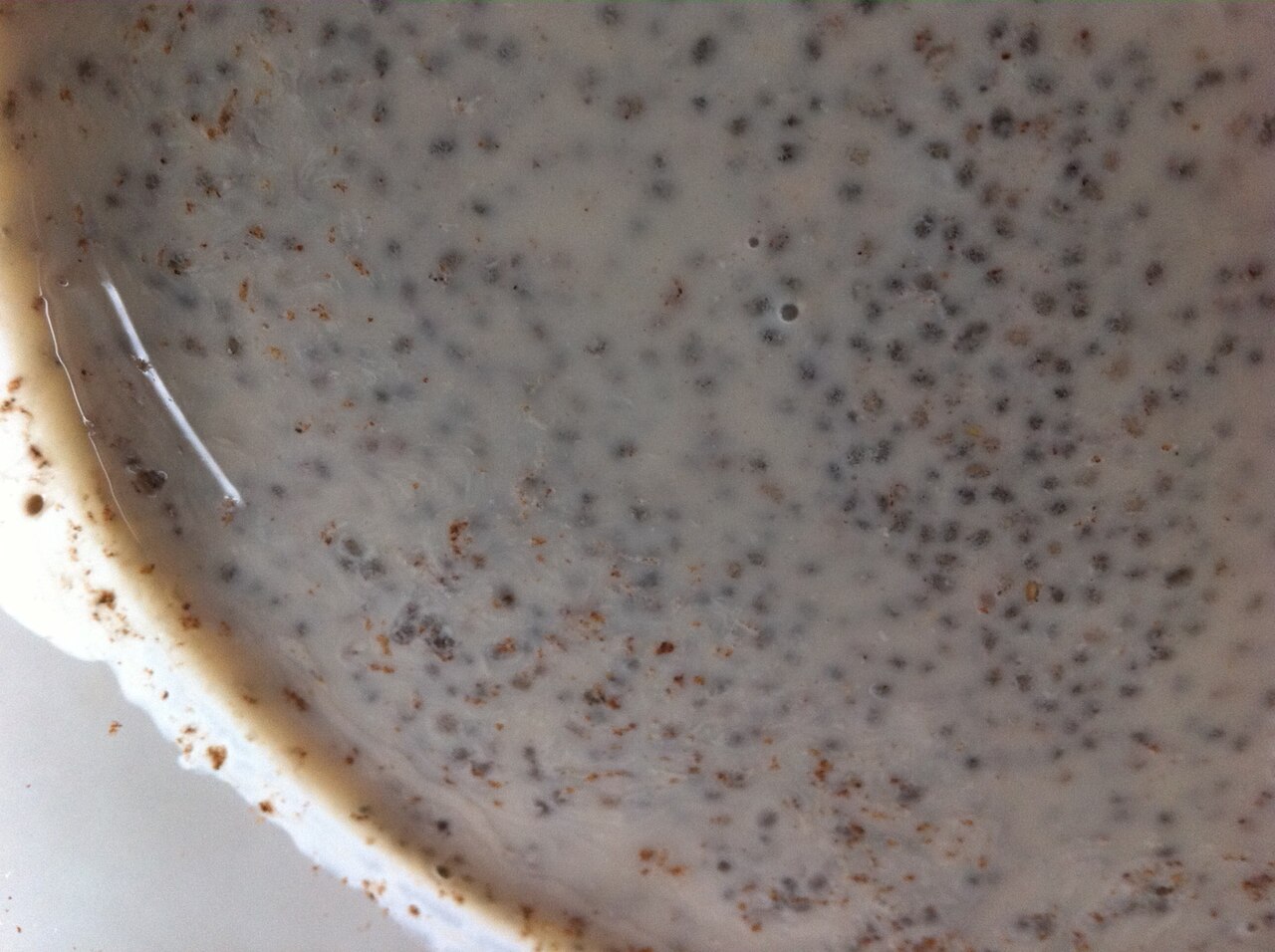
Open the jar in the morning and the top half is a smooth set gel while the bottom is a dense grey plug that the spoon has to chip at. Nothing was wrong with the seeds and nothing was wrong with the milk. The seeds went in, the jar got one stir, and then it sat for eight hours doing what gravity tells it to do.
Chia seeds absorb roughly ten times their weight in liquid and they do it slowly, over the first twenty to thirty minutes, forming a gel around each seed. During that window they are still heavy enough to sink. One stir at the start is not enough. A second stir at ten minutes, after the gel has started forming but before it has set, is what keeps them suspended.
The ratio is three tablespoons of seeds to one cup of liquid, and it moves in two directions depending on what you want. Everything else is flavor.
- The ratio: 3 tablespoons of chia to 1 cup of liquid
- Thicker: 4 tablespoons for a spoonable, pudding-firm texture
- Looser: 2 tablespoons for a drinkable consistency
- The second stir: at 10 minutes, non-negotiable
- Set time: 2 hours minimum, overnight is better
- Fridge life: 4 to 5 days in a sealed jar
Why the jar came out lumpy at one end
The seed of Salvia hispanica has a coating of soluble fiber that turns to gel on contact with water. That gel is what makes the pudding, and it is also what makes the seeds clump, because a seed that has started gelling is sticky and will bond to any neighbor it touches.
Stir once and walk away and you get two failures at once. The seeds settle before the gel forms, so the bottom of the jar has a high concentration of them, and the ones that were touching when they started gelling fuse into lumps that never separate.
The fix is mechanical rather than a change to the recipe. Stir at the start until no dry seeds are visible on the bottom, wait ten minutes, and stir again vigorously. By then each seed has enough gel around it to stay where you put it, and there is still enough liquid movement to break up anything that has clumped.
The chia pudding ratio, and the two directions it moves
| Chia per cup of liquid | Texture after 4 hours | Eat it with |
|---|---|---|
| 2 tablespoons | Loose, pourable, seeds suspended | A straw or a glass |
| 2.5 tablespoons | Thick drink, barely holds a spoon | Spoon, in a bowl |
| 3 tablespoons | Set pudding, holds a shape | Spoon, in a jar |
| 4 tablespoons | Firm, cuttable, dense | Spoon, or layered in a parfait |
| 5 tablespoons | Stiff, slightly dry, needs thinning | Not recommended |
Three tablespoons to one cup is the number to memorize, and it works out neatly for scaling: a cup and a half of liquid takes four and a half tablespoons, two cups take six, and so on. Weighing is more accurate still, at roughly 30 grams of seed to 240 millilitres of liquid.
The most common mistake in the other direction is adding more seeds to fix a jar that looks thin at the thirty-minute mark. It is not thin, it is unfinished. Give it the full two hours before adjusting anything, or you will end up with a jar you have to thin back down.
Which liquid changes the number
Water and thin plant milks behave as the base case. Anything with more body already in it thickens the finished result, so the seed quantity comes down.
Whole dairy milk and oat milk both set slightly firmer than almond milk at the same ratio, because they carry more fat and dissolved solids. Coconut milk from a can is thicker again and does well at two and a half tablespoons per cup. Fruit juice sets loosest of all and usually wants the full three or a little more.
Adding yogurt is a separate move. Half a cup of Greek yogurt stirred in at the end turns the whole thing creamier and adds real protein, and it does not need any adjustment to the seeds because it goes in after the gel has set. Do not blend it in at the start, where it makes the mixture too thick for the seeds to distribute.
Step by step, with the second stir
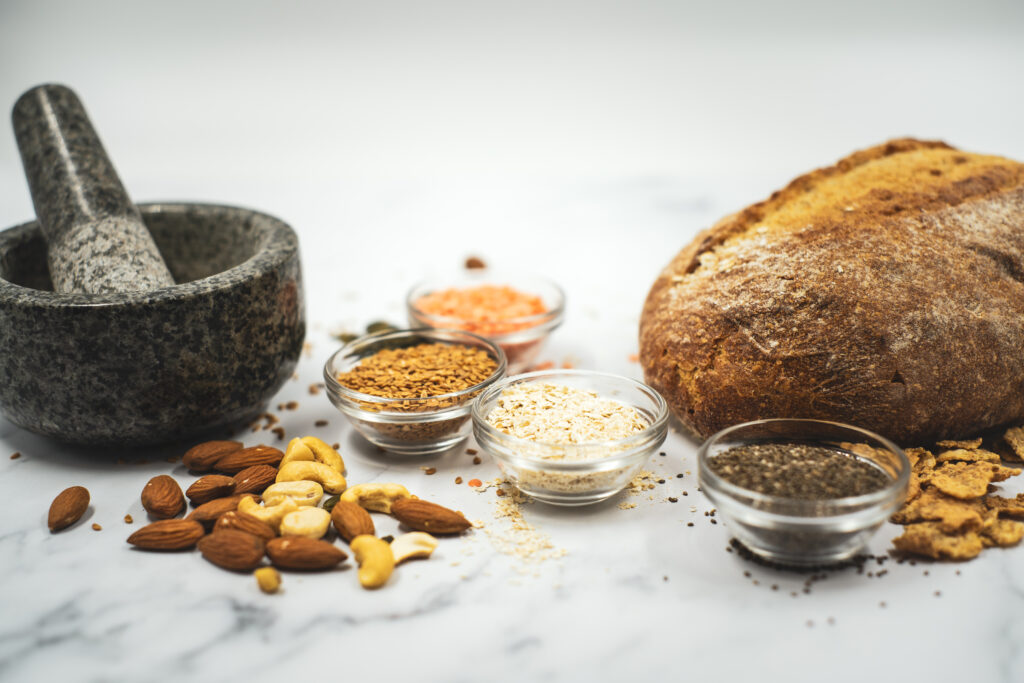
- Put one cup of liquid in a jar or a bowl. Add any sweetener and any powdered flavoring now, while it can still dissolve, and whisk until smooth.
- Add three tablespoons of chia seeds. A level tablespoon, not heaped, since heaped ones run close to four.
- Stir hard for thirty seconds. Scrape the bottom corners of the jar, where dry seeds hide and later become the plug.
- Set a timer for ten minutes and leave it on the counter.
- At ten minutes, stir again, vigorously, for another thirty seconds. Break up any clumps against the side with the back of the spoon.
- Seal the jar and refrigerate for at least two hours, ideally overnight.
- Stir once more before serving to loosen it, and thin with a splash of milk if it has set firmer than you want.
- Add toppings at the moment of eating, not before.
Steps four and five are the entire difference between this and a failed jar. Everything else is negotiable. The ten-minute window is not precise to the minute, and anywhere between eight and fifteen works, but skipping it does not.
Whole seeds, ground seeds, and what changes
Whole seeds give the familiar texture, small firm centers suspended in gel, which some people like and some people find unpleasant. They also stay visible, which matters if the pudding is going in a lunchbox for a child who will notice.
Ground chia makes something entirely different: a smooth, thick, almost custard-like mixture with no discrete seeds at all. Grind them in a spice grinder for ten seconds. Use about two tablespoons of ground seed per cup of liquid, since grinding increases the surface area and the same weight thickens more.
Ground seeds also set faster, in about thirty minutes rather than two hours, and they go rancid faster once ground because the oils inside are exposed to air. Grind what you need rather than a jar in advance, or keep ground seed in the freezer.
Four flavor bases, measured
| Base | Liquid | Add at the start | Add at serving |
|---|---|---|---|
| Vanilla | 1 cup milk of choice | 1 tsp vanilla, 1 tbsp maple syrup | Berries, toasted almonds |
| Chocolate | 1 cup milk of choice | 1.5 tbsp cocoa, 1 tbsp maple syrup, pinch salt | Banana slices, cacao nibs |
| Coffee | Three quarters cup milk, quarter cup cold brew | 1 tbsp maple syrup | A spoon of yogurt, cinnamon |
| Coconut mango | Half coconut milk, half water | 1 tsp lime zest | Diced mango, toasted coconut |
Cocoa powder is the one that needs care. Whisk it into a small amount of the liquid first to make a paste, then add the rest, or it forms dry pockets that survive both stirs. The pinch of salt in the chocolate version is doing more work than the sugar.
Fresh fruit goes in at serving rather than at the start. Berries and cut fruit release water as they sit and thin the pudding unevenly, and soft fruit turns to mush in a jar over four days. Frozen fruit stirred in at the start is the exception and it works well, since it thaws into the mixture.
Sweetening it without turning it into dessert
A tablespoon of maple syrup or honey per cup is the working amount and lands around twelve grams of added sugar per jar. That is roughly a third of what a flavored yogurt cup carries and it is enough to make the plain version taste like food rather than like a supplement.
Sweeten the liquid, not the finished pudding. Syrup stirred into set gel sits in streaks and never distributes, and you end up using more of it chasing an even taste.
Two tablespoons of mashed ripe banana per cup replaces the syrup entirely and adds body, at the cost of a banana flavor that dominates anything else. A pitted date blended into the liquid does the same job with a caramel note. Honey is not appropriate for children under one year old, and maple syrup or fruit is the straightforward substitute in that case.
What a jar is actually worth
Three tablespoons of chia seeds carry roughly five grams of protein and around ten grams of fiber, which is a meaningful share of a day’s fiber in one jar. The fat is mostly the omega-3 fatty acid found in plant sources, which the body converts to the long-chain forms less efficiently than fish does, so it is a contribution rather than a replacement.
The protein number is the weak point if this is breakfast. Five grams will not hold anyone until lunch. Half a cup of Greek yogurt stirred in at the end roughly triples it, and a tablespoon of nut butter or a scoop of protein powder in the liquid does something similar. Without one of those additions this is a snack rather than a meal, and it is worth being honest about that before wondering why it is not filling.
Cost works out low. A bag of chia seeds makes a lot of jars, and the liquid is the more expensive half of the recipe if you use anything other than water. It compares well against the equivalent shelf-stable snacks and it holds its own beside most no-bake snack projects for effort per serving.
How many days a jar holds in the refrigerator
Four to five days in a sealed jar at 40 degrees or below, for a plain pudding made with milk or a plant milk. That is the standard window for any prepared refrigerated food and there is no reason chia gets an exception.
Two things shorten it. Fresh fruit stirred in drops the jar to about two days, since cut fruit has its own clock and it releases juice that dilutes the gel. Yogurt stirred in follows the yogurt’s own expiry date if that is sooner.
Get the jars into the refrigerator promptly rather than letting them set on the counter for hours. The ten-minute stir happens at room temperature, and then the jar goes cold. A batch of five jars made on a Sunday should be sealed and chilled within the hour, and the last one should be eaten by Thursday or Friday. Making five at once and labeling the lids with the date is exactly the kind of thing that keeps a weekday breakfast rotation from breaking down by Wednesday.
Signs it has gone: a sour smell, any visible mold on the surface, or liquid separating out and looking cloudy. Smell it before eating something from the back of the shelf, and if the answer is not obvious, throw it out.
Dry chia and liquid: the one caution worth knowing
Chia seeds expand dramatically in liquid, and that property is the reason for one specific piece of advice. Do not eat dry chia seeds by the spoonful and then drink water. There is at least one well-documented clinical case of a dry tablespoon swelling in the esophagus and causing a blockage that required a hospital procedure to clear.
Fully hydrated seeds, which is what pudding is, do not carry that risk, because they have already absorbed everything they can. The rule is simply that chia should be soaked before it is swallowed in any quantity, and it takes only a few minutes.
Two smaller notes. Chia is high enough in fiber that going from none to a large daily serving can cause bloating for a few days, so it is worth increasing gradually. And anyone taking blood pressure or blood thinning medication should mention a new daily seed habit to a doctor, since the effects are small but real and a doctor is the right person to weigh them.
Toppings, and when they go on
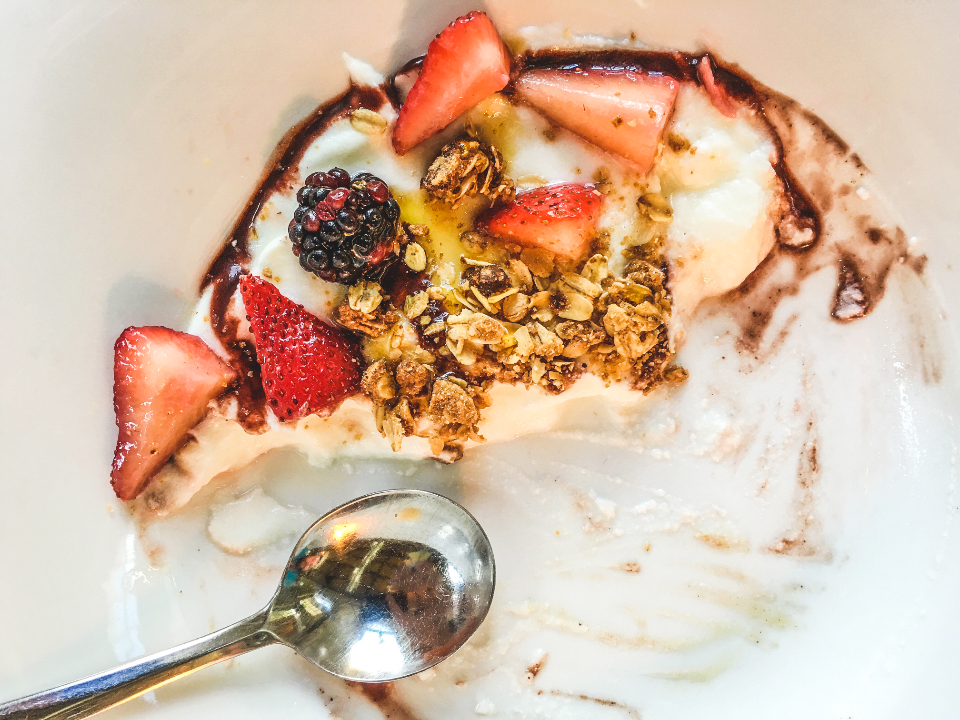
At the moment of eating, with two exceptions. Anything crunchy loses its crunch within an hour in a wet environment, and granola in particular turns to paste by the next morning.
The exceptions are frozen fruit, which can go in at the start and thaws into the jar, and a layer of jam or fruit compote at the bottom of the jar, which stays put and does not affect the gel above it. A spoon of compote, then the chia mixture on top, makes a layered jar that survives four days.
Practical toppings that carry well: toasted nuts and seeds in a small separate container, a spoon of nut butter added at the last minute, cacao nibs, shredded coconut, a dusting of cinnamon. Fresh berries added on top of a jar you are eating immediately. Anything that needs to stay crisp travels separately, which is a small annoyance and the only version that actually works.
Frequently Asked Questions
Can I make it with water instead of milk?
Yes, and it sets fine. It tastes thin and it carries no fat, so the flavorings have to work harder and the sweetener is more noticeable. A tablespoon of nut butter or a splash of coconut milk in an otherwise water base fixes most of that.
Why is my pudding still watery after four hours?
Either the ratio was short, most often from measuring heaped rather than level tablespoons in the other direction, or the seeds were old. Chia keeps for a long time but seeds stored warm for years lose absorbency. Add another half tablespoon, stir, and give it thirty more minutes.
Can I heat it up?
It works, in the sense that warm chia pudding is edible and has a porridge-like quality. Heat it gently and expect it to loosen. Most people find it better cold, and the seeds do not need cooking in any nutritional sense.
Do the seeds need to be soaked before mixing?
No. Making the pudding is the soaking. What matters is that they are fully hydrated before they are eaten, and two hours in liquid accomplishes that with room to spare.
Is there a difference between black and white chia?
Not in any way that affects cooking. Black and white seeds come from the same plant and their composition is close to identical. The choice is about how it looks in the jar, and mixed bags are the norm.
Can it be frozen?
Yes, and it comes back slightly grainier. Freeze in individual portions, thaw overnight in the refrigerator, and stir hard to bring it back together. Given that a jar keeps five days fresh, freezing is mostly worth it for a large batch made in one go.
Make two jars tonight with the same ratio, stir one twice and the other once, and look at them in the morning. The one that got the ten-minute stir will be uniform from the lid to the bottom of the jar, and that is the entire argument.