
Four people who each want something different is the standard weeknight problem, and the standard solution is to cook one thing and let two of them be disappointed. A skillet, a stack of tortillas and six small bowls solves it in about the same amount of time.
The trick is not the recipe, because there barely is one. It is the sequence. One pan running continuously, one quesadilla at a time, each taking roughly four minutes, means the fourth person is eating twelve minutes after the first one started. Nobody waits for a batch and nothing sits under foil going soft.
All of the actual work happens before the pan is hot. Once the fillings are in bowls on the counter, the cooking is repetitive enough that a ten-year-old can take over the assembly while an adult runs the skillet.
- Total time: 15 minutes for four, of which 8 are prep
- The pan: one 10 or 12 inch skillet, no lid
- The heat: medium, and it stays there
- Cheese: a scant half cup per quesadilla, shredded from a block
- Per quesadilla: 3 to 4 minutes, both sides
- The rule: cheese touches both tortilla faces, always
Why an assembly line beats making four at once
Two pans going at once sounds faster and is not. Each pan needs watching, the second one always runs hotter or cooler than the first, and both need flipping at the same moment. What actually happens is one burnt quesadilla and one pale one.
A single pan running without a break is more efficient because the pan never has to recover. It reaches temperature once and stays there, and each quesadilla goes in as the previous one comes out. The pan is doing continuous work while the assembly happens on the counter beside it.
It also fixes the eating problem. Quesadillas are at their best about ninety seconds after they leave the pan, when the cheese has set enough to hold and the tortilla is still crisp. Serving them one at a time as they come off means everyone gets one at that point instead of four arriving simultaneously and three going soft.
The prep that happens before the pan is hot
Eight minutes, and it is almost all chopping and opening. Shred the cheese, which is the only step that cannot be skipped or bought around, and put it in the largest bowl. Set out the fillings in small bowls in a line next to the stove, in the order they will be used.
Everything that goes inside a quesadilla should be cooked, at room temperature or warm, and dry. Three to four minutes in a pan is not enough to cook a raw filling through, and it is not enough to drive off moisture, which is why a wet filling produces a soggy quesadilla no matter how hot the skillet is.
Drain anything from a jar or a can and pat it dry. Squeeze thawed spinach in a cloth until nothing more comes out. Let sauteed mushrooms sit in a sieve for a minute. Those small steps are the difference between a quesadilla that holds together when cut and one that collapses.
Cheese first, cheese last: the layering that seals the edge
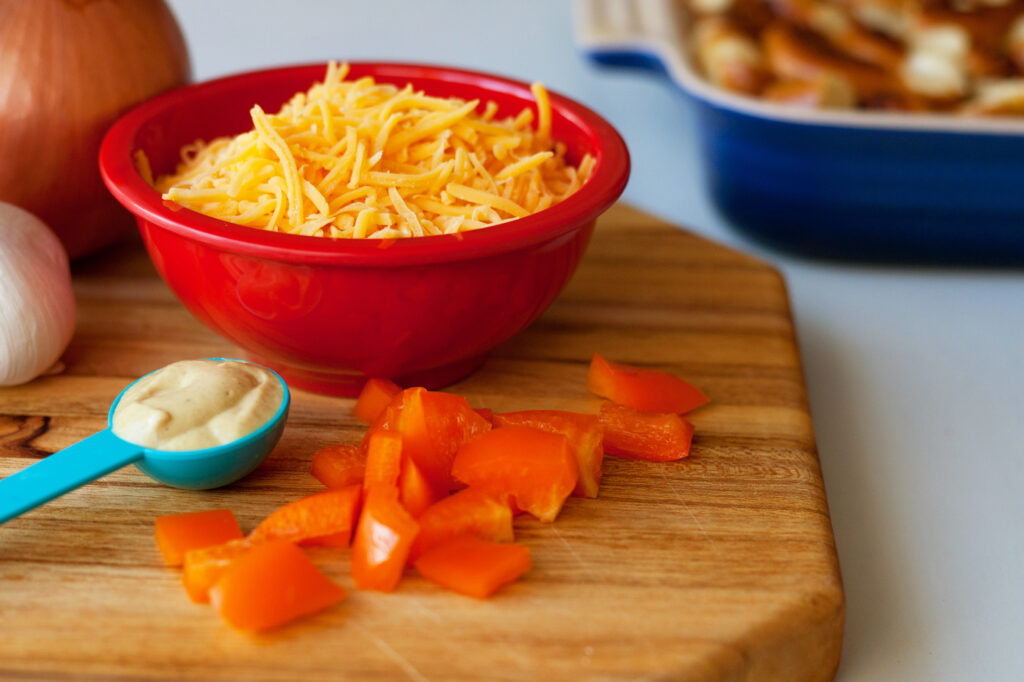
Cheese goes down on the tortilla first, then the filling, then more cheese on top of the filling. Both faces of the finished quesadilla need melted cheese against them, because the cheese is the glue that holds the whole thing shut when it is flipped and again when it is cut.
Leave a clear half inch border of bare tortilla all the way around. Cheese that reaches the edge melts out into the pan, where it burns and sticks and has to be scraped off before the next one goes in. The border also gives the two halves something to press together against.
Which cheese matters more than the quantity. Oaxaca, Monterey Jack, mild cheddar, mozzarella and asadero all melt into a smooth, stretchy layer. Aged hard cheeses and crumbling cheeses like cotija and feta do not melt in the same way and separate into oil and solids, so they belong scattered on top at the end rather than inside.
Shred from a block. Pre-shredded cheese is dusted with starch or cellulose to keep the pieces from clumping in the bag, and that coating interferes with a clean melt, producing a slightly grainy texture. Grating four ounces takes forty seconds.
Heat level, and the number on the dial
Medium, and it does not move for the whole session. High heat browns the tortilla in ninety seconds while the cheese in the middle is still cold, which is the single most common failure and the reason people end up microwaving a browned quesadilla to finish it.
Low heat is the other error. A tortilla in a barely warm pan dries out and turns leathery over six or seven minutes without ever browning, and the cheese weeps oil rather than melting cleanly. Medium heat gets both jobs done on the same clock, which is roughly two minutes per side.
Watch the first one and adjust once. If the underside is dark brown at ninety seconds, drop the heat slightly. If it is pale at three minutes, raise it. Every stove is different and the correct setting for a particular skillet on a particular burner is a number worth remembering.
Fat is optional and small. A dry pan gives a drier, more blistered surface; a light brush of oil gives a more even golden color and a richer result. Butter browns too fast at this temperature and is best avoided. What is not optional is wiping the pan between quesadillas, because escaped cheese burns and turns bitter.
Quesadilla bar ideas: six fillings that hold up
| Filling | Prep needed | Cheese pairing | Time to prep |
|---|---|---|---|
| Shredded chicken and charred corn | Cooked chicken, corn blistered in a dry pan | Monterey Jack | 6 minutes, or zero with leftovers |
| Black beans mashed with cumin | Drain, mash half, warm through | Mild cheddar | 3 minutes |
| Mushrooms and onion | Browned hard, drained in a sieve | Oaxaca or mozzarella | 8 minutes |
| Chorizo, crumbled | Cooked through, fat poured off | Monterey Jack | 7 minutes |
| Roasted sweet potato and scallion | Cubed and roasted, or leftover | Cheddar | Zero with leftovers |
| Cheese and scallion only | None | Anything | Zero |
The last one exists for a reason. Every table with children at it has someone who wants nothing in their quesadilla, and building the bar around that fact rather than fighting it is what makes the whole approach work. It is also the fastest one to make when somebody wants a second.
Two or three fillings is plenty for a weeknight. Six is a weekend proposition or the version for a group, and at that point the bowls go on the table and everyone builds their own while one person runs the pan. That format sits well alongside the rest of the meals that let everyone choose.
The tortilla decides more than the filling
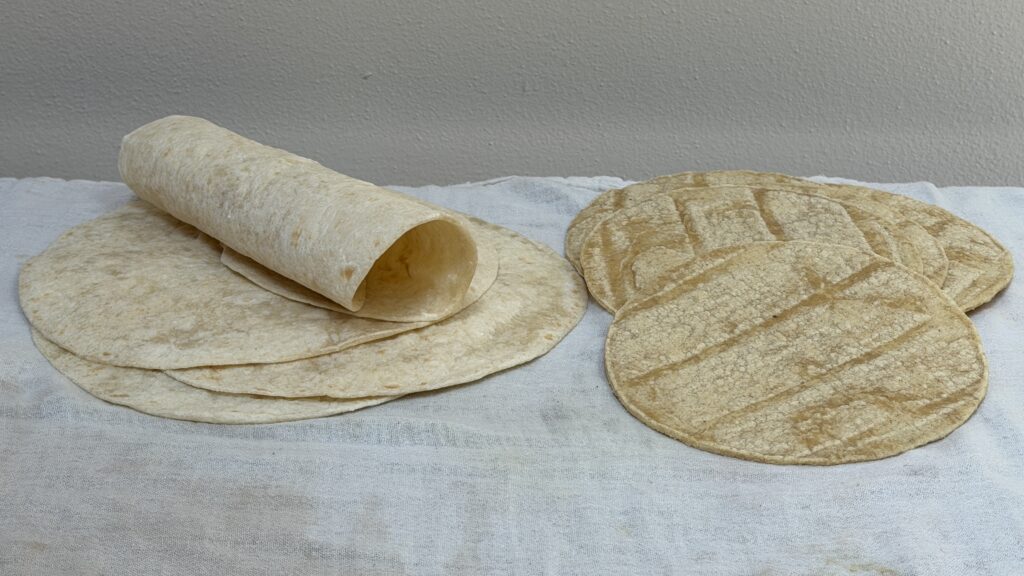
Flour tortillas are the default for this and they are the more forgiving choice. They fold without cracking, they brown into a blistered, layered surface, and eight inch is the size that fits a ten inch pan with room to turn.
Corn tortillas taste better to a lot of people and they crack when folded cold. Warm them first, thirty seconds a side in the dry pan or fifteen seconds wrapped in a damp towel in the microwave, and they become pliable. Corn quesadillas are usually made as two stacked tortillas rather than one folded, because a folded corn tortilla splits at the crease.
Size dictates method. A large twelve inch flour tortilla folded in half is unwieldy in a home skillet and takes longer to heat through. Two smaller tortillas stacked cook more evenly but need a wide spatula and a confident flip.
Keep the stack covered while working. Tortillas dry out on a counter within about ten minutes, and a dry tortilla cracks along the fold and lets the cheese out. The bag they came in is the correct storage container for the duration.
Folded half-moon or two tortillas stacked?
The half-moon is faster, easier to flip and uses half the tortillas. Fillings go on one half, the other half folds over, and the whole thing turns with one hand. For a weeknight with one pan running, this is the right choice.
The stacked round holds more filling and cuts into six neat wedges instead of three, which is better for sharing and for a table of adults. It also requires a genuinely careful flip, ideally with a plate: slide it out onto a plate, invert the plate over the pan, and return it. Attempting to flip a full round with a spatula ends badly about a third of the time.
Filling capacity is the practical difference. A half-moon holds about a third of a cup of filling plus cheese before it starts pushing out at the curve. A stacked round takes closer to two thirds of a cup spread thin. Overfilling either one is the second most common failure after heat.
The rotation, minute by minute
- Set the skillet over medium heat while the last of the prep is finishing. Give it three minutes to come up evenly.
- Build the first quesadilla on a board: cheese, filling, cheese, fold.
- Slide it into the pan. Press it flat once with a spatula, then leave it alone.
- Build the second one on the board while the first cooks.
- At two minutes, flip the first. Press once more.
- At four minutes, move it to a cutting board and slide the second one in immediately.
- Cut the first into wedges after about a minute of rest and hand it over. Build the third.
- Repeat. Wipe the pan with a paper towel held in tongs every second or third quesadilla.
Step seven is the one that gets rushed. A quesadilla cut straight out of the pan releases all its molten cheese onto the board. Sixty seconds of rest is enough for the cheese to set into something that stays inside when the knife goes through.
Keeping the finished ones warm without steaming them
Foil is the wrong answer. A quesadilla wrapped in foil steams in its own moisture and the crisp surface is gone in three minutes. So is a covered plate, and so is stacking them on top of each other.
The right answer is a wire rack in a 200 degree oven, in a single layer, uncovered. Air circulates underneath, the surface stays dry, and they will hold for twenty minutes without noticeable loss. A rack set over a sheet pan on the counter is the version for when the oven is busy.
For a household eating in shifts, that rack is what makes the whole thing work. It also happens to be the correct way to hold anything fried or griddled, and it is the same principle behind most griddle cooking: crisp things fail from trapped steam, not from cooling.
Cooked fillings, the two-hour clock, and 165 degrees
Every filling that contains meat goes into the bowl already fully cooked. Chicken needs to have reached 165 degrees, ground beef and pork 160, and a quesadilla will not take an undercooked filling the rest of the way in four minutes on medium heat.
Once the bowls are on the counter, the clock starts. Perishable fillings should not sit at room temperature for more than two hours in total, or one hour if the kitchen is above 90 degrees. For a fifteen minute dinner that is never an issue; for a weekend bar that stays out through a long afternoon, it is, and the fix is to keep the bowls in the refrigerator and bring out one at a time.
Leftover fillings go back into the refrigerator in shallow covered containers within that same two hours and get used within three to four days. Cooked chicken and chorizo both freeze well for a couple of months, which is what makes the leftover-driven version of this dinner possible in the first place. Anyone who already keeps cooked chicken in the refrigerator has most of a quesadilla bar already.
Finished quesadillas keep three to four days and reheat well in a dry skillet over medium heat, two minutes a side, which restores the crisp surface. The microwave heats them faster and turns the tortilla to cloth.
What it costs and what to put beside it
A block of cheese, a packet of tortillas and a can of beans feeds four for less than most takeaway single portions, and the marginal cost of the meat versions depends entirely on whether the meat was already cooked for something else. Built from leftovers, this is one of the cheapest dinners in the rotation.
What goes alongside matters because a quesadilla is rich and one-note on its own. Something acidic and raw is what it needs: a shredded cabbage salad with lime, pickled red onions, quick salsa, or sliced radish with salt. Sour cream and guacamole are pleasant and do not solve the same problem, because they add richness rather than cutting it.
A pot of black beans or a bowl of rice turns three quesadillas into a dinner for four rather than two. Corn or flour, the tortilla itself is the cheapest part of the plate, and buying the better one is usually money well spent.
Frequently Asked Questions
Can I make these in an oven instead?
Yes, on a sheet pan at 425 degrees for about ten minutes, flipping once. The result is drier and less blistered than a skillet gives, and the advantage is that six of them cook at once. For a crowd it is the better method; for four people the skillet is faster and better.
Why does the filling fall out when I cut it?
Either it was overfilled, or there was no cheese layer against the top tortilla, or it was cut immediately out of the pan. All three are common. The cheese on both faces is what holds the sandwich together, and a minute of rest is what lets it set.
Do they work with vegan cheese?
Some brands melt well and some never do, and the packaging rarely says which. Look for one that lists starch and coconut oil high in the ingredients, since those melt more readily. A mashed bean layer helps hold the fold together when the cheese will not.
Can I assemble them ahead and cook later?
For a few hours in the refrigerator, yes, separated by parchment and covered. Longer than that and the moisture from the filling softens the tortilla. Assembled and frozen flat on a tray, they cook from frozen in a skillet in about seven minutes over medium-low heat.
What is the best pan for this?
A well-seasoned cast iron skillet or a heavy nonstick pan, both of which hold steady heat. Cast iron browns better; nonstick is more forgiving about escaped cheese. A thin pan that swings in temperature between quesadillas is the one to avoid.
Prep three fillings tomorrow instead of six and run the pan without stopping. If the fourth person is eating before the first one has finished, the sequence is working.