
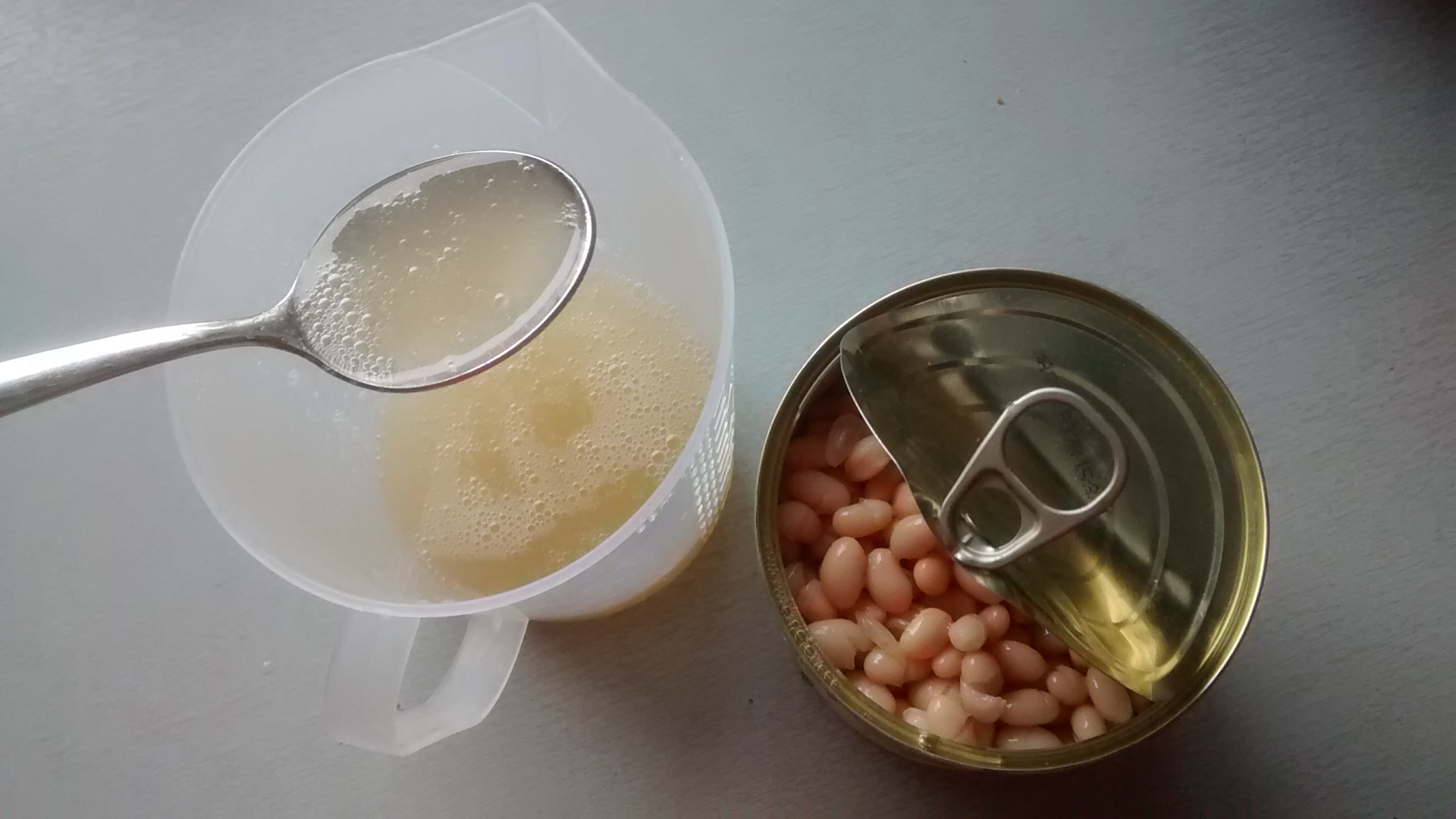
Almost every recipe that opens a can of beans tells you to drain and rinse them. For a salad that is correct. For a skillet dinner that is supposed to have a sauce and does not have twenty minutes to build one, it throws away the only thing in the kitchen that was going to do that job.
The cloudy liquid in the can is water, salt and dissolved bean starch. Poured into a hot pan with browned sausage in it, that starch thickens within about three minutes into something glossy that coats everything, with no stock, no cream and no flour involved.
The whole dinner is sausage, a can of white beans, a green vegetable and whatever aromatic is in the house. Fifteen minutes, one pan, and the green goes in with the burner already off.
- Total time: 15 minutes for two, 20 for four
- The pan: 12 inch skillet, and it does not need to be nonstick
- The can: 15 ounces of cannellini, liquid and all
- The sausage: 12 ounces, casings off, cooked to 160 degrees
- The green: a large handful of spinach, in off the heat
- The one rule: do not drain
What the liquid in the can is actually doing
Beans are canned raw with water and salt and then cooked inside the sealed can, which means the cooking liquid never gets poured off. Starch leaches out of the beans during that cook and stays suspended in the water, along with a small amount of dissolved protein.
That suspension behaves like a very thin cornstarch slurry. Bring it to a simmer in a pan and the starch granules swell and thicken the liquid, and if a few beans get crushed against the side of the pan on the way, it thickens further. The result reads as a sauce rather than as bean water.
Fat is the other half of it. The rendered fat from the sausage and the starchy liquid emulsify while the pan bubbles, which is what makes the sauce cling to a spoon instead of pooling under the beans. Skip the sausage fat and the same liquid stays thin and slightly chalky.
Sausage first, and what browned means here
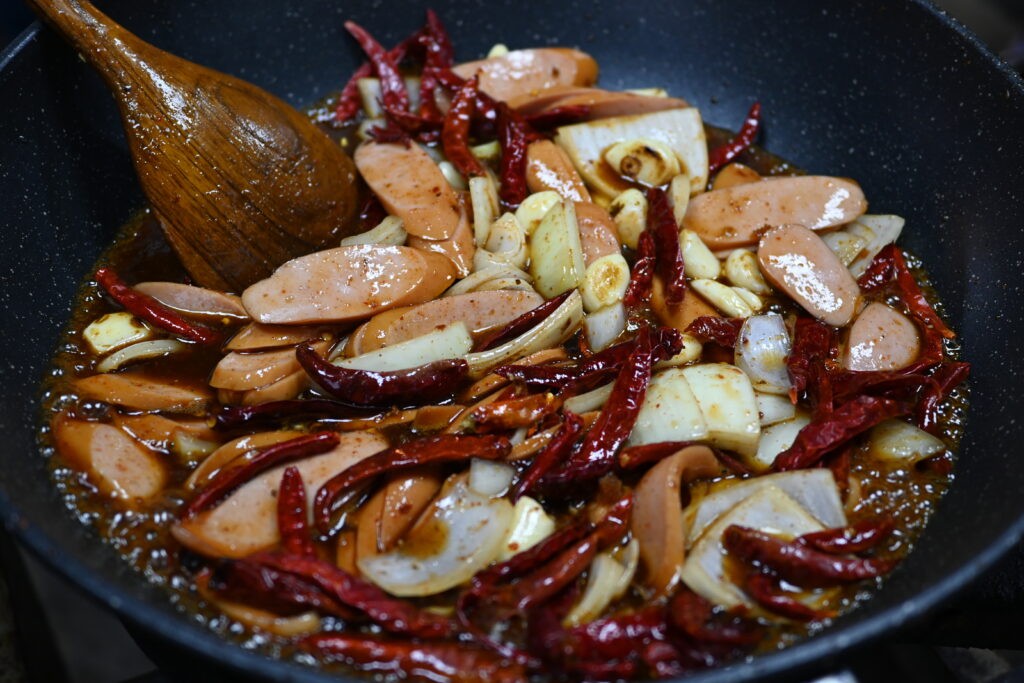
Squeeze the meat out of the casings and put it in a dry pan over medium-high heat, then break it up with a wooden spoon into pieces roughly the size of a hazelnut. No oil is needed; there is enough fat in the sausage to start the process.
Browned means actual color on the meat, not just cooked through. Leave the first side alone for two full minutes before stirring, then break it up and let it sit again. Constant stirring from the start steams the meat gray and gives you none of the roasted flavor that this dish leans on, since there is nothing else in the pan carrying it.
Six to eight minutes is the usual range. Italian sausage is the default here because it arrives already seasoned with fennel and garlic, which saves a spice step, but any fresh bulk sausage works. Precooked smoked sausage is a different product and only needs to be sliced and heated through.
Do not pour off the fat. Twelve ounces of sausage renders roughly two tablespoons, and every bit of it is going into the sauce.
The sausage and white beans skillet, start to finish
- Set a 12 inch skillet over medium-high heat for two minutes. Squeeze 12 ounces of sausage out of its casings straight into the dry pan.
- Break it into hazelnut-sized pieces and let it sit undisturbed for two minutes before the first stir. Cook 6 to 8 minutes total, until browned and cooked through to 160 degrees.
- Drop the heat to medium and add two sliced garlic cloves and a good pinch of chili flakes. Thirty seconds, stirring, no longer, or the garlic turns bitter.
- Open a 15 ounce can of cannellini beans and tip the whole thing in, liquid included. Scrape the bottom of the pan as it hits, which lifts the browned bits into the sauce.
- Simmer for three to four minutes. Press about a quarter of the beans against the side of the pan with the back of the spoon to release more starch.
- When it coats the spoon and a line drawn through the pan closes slowly, it is done. Add a splash of water if it went too far.
- Turn the burner off. Add a large handful of spinach and stir it through the residual heat until it collapses, about forty-five seconds.
- Finish with lemon juice, a slug of olive oil and black pepper. Taste for salt last, because the bean liquid brought its own.
Step seven is the one that gets rushed. Spinach added to a pan that is still bubbling overcooks in the time it takes to serve, and it turns the sauce watery as it releases its own liquid all at once.
Which beans, and what the can gives you
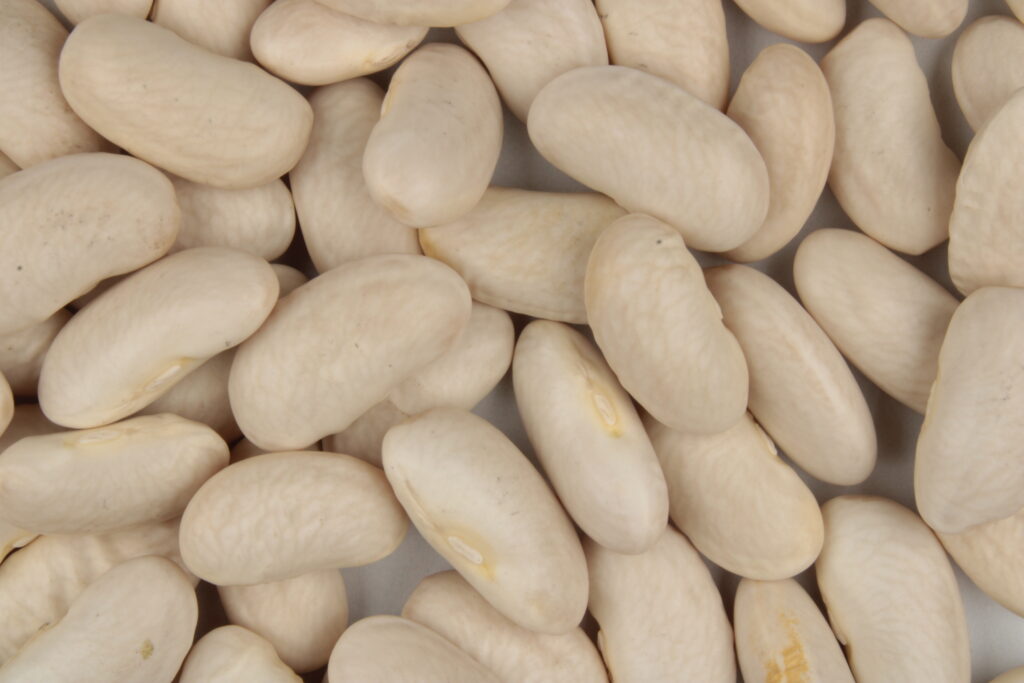
| Bean | Texture | Liquid thickness | Best for |
|---|---|---|---|
| Cannellini | Creamy, holds shape | Thick and starchy | The default here |
| Great Northern | Smaller, softer | Thick | A smoother sauce |
| Navy | Small, breaks down | Very thick | Almost a stew |
| Butter beans | Large, very soft | Moderate | Fewer, bigger bites |
| Chickpeas | Firm, distinct | Thin | Needs a splash of stock to help |
All of these are varieties of the same species, the common bean, apart from the chickpeas, which is why chickpeas are the outlier in the sauce column. Their liquid is thinner and the beans themselves stay firm, so the pan needs help from a few tablespoons of stock or a crushed handful of the chickpeas themselves.
One 15 ounce can feeds two as a main. For four, use two cans and a pound of sausage, and expect an extra two minutes of simmering, since twice the liquid takes longer to reduce.
Sodium, and the case for draining anyway
Canned beans are salted, and a good share of that salt sits in the liquid rather than in the beans. Draining and rinsing removes a substantial fraction of it, on the order of a third to a half, which is a meaningful difference for anyone managing blood pressure or cooking for someone who is.
If that applies at your table, there are two clean routes. Buy no-salt-added beans and use the liquid as written, which is the better option and increasingly easy to find. Or drain and rinse as usual and replace the liquid with two thirds of a cup of unsalted stock plus a teaspoon of cornstarch whisked into it, which reproduces the thickening without the sodium.
Either way, hold the salt until the very end. A pan built on regular canned bean liquid and seasoned early is almost always oversalted by the time it hits the plate, particularly with a well-seasoned sausage in it. The same restraint runs through most pantry legume cooking, where the seasoning arrives from several directions at once.
The green goes in with the burner off
Spinach is the easy one. A large handful, or about five ounces, collapses to almost nothing in the residual heat of a pan that has just come off the burner, and it stays green rather than turning the dull olive color of overcooked leaves.
Not every green works that way. The table below is the practical version.
| Green | When it goes in | How long |
|---|---|---|
| Baby spinach | Off the heat | 45 seconds |
| Arugula | Off the heat | 30 seconds |
| Escarole | With the beans | 3 minutes |
| Swiss chard leaves | With the beans | 3 to 4 minutes |
| Lacinato kale | Before the beans | 5 minutes, with a splash of water |
| Broccoli rabe | Blanched first | 2 minutes in the pan |
Wash bagged greens even when the bag says they are pre-washed, unless the label specifically says ready to eat, and wash loose bunches in a bowl of cold water where the grit can sink. Chard and kale in particular hold sand in the ribs, and there is no fixing that once it is in the sauce.
Aromatics that fit inside fifteen minutes
Sliced garlic and chili flakes are the baseline and they go in after the sausage, not before. Garlic dropped into an empty hot pan at the start is burnt by minute four, and burnt garlic is bitter in a way that nothing later in the recipe covers up.
Anything that needs real cooking time has to go in first instead. Half a diced onion or a sliced leek wants five minutes before the sausage, in which case start it in a spoonful of oil and add the meat on top. Fennel seed, rosemary and sage all go in with the garlic and bloom in the fat in under a minute.
Two additions punch above their weight. A tablespoon of tomato paste stirred into the fat for a minute before the beans deepens the color and the sauce noticeably. A parmesan rind dropped in with the beans and fished out at the end does something similar from a different direction, and it is a good reason to keep the ends of the block.
160 degrees, and why color is not the test
Fresh pork or beef sausage needs to reach 160 degrees measured at the center of the thickest piece, and poultry sausage needs 165. Those are the numbers, and an instant-read thermometer is the only way to know them.
Color is not a reliable indicator in ground meat. Sausage can look fully browned while the interior of a larger piece is still under temperature, and it can also stay slightly pink at a perfectly safe temperature depending on the cure and the seasoning. Breaking the meat into small pieces solves most of this by shortening the distance heat has to travel.
Handle it the way you would any raw meat. The board, the knife and your hands get washed with hot soapy water before they touch the greens or the lemon, and the spoon that stirred the raw sausage does not go back into the finished pan without a wash. Cross-contamination causes far more trouble in home kitchens than undercooking does.
Dried beans, if you have the time
Dried beans make a better version of this and they cannot be done in fifteen minutes. Soaked overnight and simmered for an hour to an hour and a half with a bay leaf and a halved onion, they produce a cooking liquid that is thicker and better tasting than anything from a can.
Save that liquid. Cook the beans ahead, keep them in their liquid in the refrigerator for up to four days or freeze them in portions, and the weeknight version becomes identical in effort to the canned one. About a cup and a half of cooked beans plus two thirds of a cup of their liquid replaces one can.
One safety note that applies to dried beans generally rather than to white beans specifically: raw kidney beans contain a compound that causes serious stomach upset unless they are boiled hard for at least ten minutes, and a slow cooker on low does not reach that temperature. Boil them on the stove first. White beans carry far less of it, and the same ten minutes at a rolling boil is a sensible habit regardless.
Four finishes, and the one to skip
Lemon juice is not optional. The pan is fat, starch and salt, and without acid the whole thing reads heavy after four bites. Half a lemon, squeezed in off the heat, changes the dish more than any other single addition.
Good olive oil poured over at the table is the second, and it does something different from the oil that cooked in the pan. Grated hard cheese is the third, and toasted breadcrumbs fried in a spoonful of oil are the fourth and the one that makes it feel finished.
Cream is the one to leave off. It flattens the bean starch into something bland and takes the dish somewhere generic, which is a shame when the sauce made itself. The instinct to enrich a rustic pan dish is worth resisting, and it is the most common way an upgraded comfort dish ends up worse than the original.
Leftovers, and how it eats the next day
Get it into a shallow container and into the refrigerator within two hours of coming off the heat, one hour if the kitchen is above ninety degrees, and eat it within three to four days. A shallow container is not a detail: a deep tub of hot beans holds warmth in the middle for a long time.
It thickens considerably overnight as the starch sets, to the point where day two is closer to a stew than a skillet dinner. A splash of water in the pan while reheating brings it back. Reheat to steaming hot rather than warm, and only once.
Day two is arguably better on toast than on its own. Thick sauce, a piece of grilled bread and a poached egg on top makes a lunch out of a third of a portion. It also freezes well for a month, though the spinach turns to nothing, so freeze it before the greens go in if you know it is heading that way.
For a meat-free version, brown eight ounces of sliced mushrooms hard in two tablespoons of oil until they squeak and color, then continue exactly as written with an extra pinch of fennel seed. It is not the same dish and it works on its own terms, alongside the rest of the plant-based skillet options.
Frequently Asked Questions
Is the liquid in the can safe to eat as it is?
Yes. The beans are cooked inside the sealed can at a temperature that sterilizes the contents, so the liquid is as cooked as the beans are. What it is not is neutral in flavor or sodium, which is why it goes into a pan with fat and acid rather than straight into a salad.
Why did my sauce stay thin?
Either it did not simmer long enough or the beans were a variety with little starch in the liquid. Give it two more minutes at a real simmer and crush more of the beans against the side of the pan. A teaspoon of cornstarch in a spoonful of cold water is the emergency fix.
Can I use a smoked sausage instead?
Yes, sliced into coins and browned on both sides. It is already cooked, so it only needs color and heating through, and it renders less fat, so add a tablespoon of oil at the start. The dish comes out smokier and saltier, so go easy on any added salt.
Does this work in a Dutch oven?
It does, and it is the better vessel for a double batch. The wider surface of a skillet reduces the sauce faster, so a Dutch oven needs an extra minute or two of simmering, and the browning stage takes slightly longer because the sides hold steam.
What can I serve it with that is not bread?
Polenta is the best answer, then a baked potato split open, then a bowl of orzo. It is dense enough on its own that a green salad with a sharp dressing is often all it needs, and the acid on the salad does the same job as the lemon.
Make it once exactly as written, with the liquid in, and then make it again the following week with the beans drained and a cup of stock instead. The difference in the pan at minute twelve is the whole argument.