
Ricotta out of the tub is grainy, a little watery, and about as appealing as wet chalk. Most people buy it for lasagna, use two thirds of the container, and then find the rest three weeks later behind the milk.
Two minutes in a food processor turns the same tub into something that spreads like soft cream cheese and tastes considerably better than it. The curds break down, the fat distributes, air goes in, and what comes out is glossy and thick enough to hold the mark of a spoon.
It is also one of the few snacks that arrives at roughly seven grams of protein per quarter cup without any effort at all. What follows is the method, the five directions worth taking it in, the fix for a batch that stays gritty, and how long each version actually holds.
- Time: 2 minutes in the processor, plus 5 for whatever goes on top
- Yield: one 15 ounce tub makes about two cups
- Best base: whole milk ricotta, drained if it looks wet
- Per quarter cup: roughly 100 calories and about 7 grams of protein
- The common failure: stopping the machine too early
- Holds: three days plain, less once anything fresh goes in
Why a tub of ricotta resists the spoon
The graininess is the whole nature of the product. Ricotta is made by heating whey, often left over from another cheese, until the remaining proteins coagulate into fine curds that are then drained. Those curds are discrete particles sitting in a little liquid, which is why a spoonful feels sandy rather than smooth.
A processor does not dissolve them. It shears them small enough that the tongue stops registering them as separate pieces, and at the same time it works the milk fat through the mixture so the whole thing reads as creamy. Below a certain particle size, grainy becomes smooth, and the gap between those two states is about ninety seconds of machine time.
Air is the second half. The blade whips a small amount of it into the mass, which lightens the texture and lifts the volume by roughly a fifth. That is the difference between something you scrape onto a cracker and something you scoop.
Which tub to buy, and the one that will not whip
Whole milk ricotta is the right choice and it is not close. Fat is what carries the texture here, and a part-skim tub whips into something noticeably drier and chalkier that needs olive oil stirred back in to compensate.
The other variable is how it was made. Tubs that list only milk, whey, vinegar or lemon juice, and salt behave predictably. Tubs with gums, starches or stabilizers in the ingredient list whip up glossier and then turn slightly gluey after a day in the refrigerator, which is a texture problem rather than a taste one.
Fresh ricotta from a deli counter or an Italian grocery is the best version by a distance and usually needs draining, since it is sold much wetter. It also carries a shorter date, often three or four days, and that date should be respected rather than negotiated.
One label check worth making: anything made from unpasteurized milk. Soft fresh cheeses made with raw milk have been linked to listeria, which is why the standard advice for pregnancy is to stick to pasteurized. Nearly every tub in a supermarket is pasteurized and says so, and imported artisan cheese from a counter is the case worth asking about.
Whipped ricotta dip in two minutes
- Tip a 15 ounce tub into a fine sieve set over a bowl if there is visible liquid pooling on the surface. Ten minutes of draining is plenty; overnight makes it too dry.
- Scrape it into the bowl of a food processor with half a teaspoon of fine salt.
- Run the machine for a full minute without stopping. It will look worse before it looks better, passing through a stage that resembles cottage cheese.
- Scrape the sides down with a spatula, including the bottom corners where curds hide, and run it another sixty to ninety seconds.
- With the machine going, pour in two tablespoons of good olive oil in a thin stream. This is the step that takes it from smooth to glossy.
- Taste and adjust the salt. Underseasoned ricotta tastes like nothing at all, and it needs more than seems right.
- Spread it into a shallow bowl with the back of a spoon, leaving a swirl on the surface, and build the topping into the grooves.
Two and a half minutes of total machine time is the number that matters. Almost every disappointing batch is a batch that ran for forty seconds and got called done.
The fix when it stays grainy
Some tubs are stubborn, usually the drier ones and the ones made with a coarser curd. Three additions solve it, in this order of preference.
Two tablespoons of heavy cream, poured in while the machine runs, is the most effective and the least intrusive. It adds fat, which is what the mixture is short of, and it thins nothing because the cream thickens as it is worked.
Two tablespoons of plain Greek yogurt or cream cheese does the same job and brings a tang that suits the savory directions and fights the sweet one. Olive oil alone works but takes more of it, and past about three tablespoons the dip starts to taste of oil rather than cheese.
A blender is the last resort and it works. Small blender jars and immersion blenders both shear harder than a processor, though they need the mixture loosened with a spoonful of liquid first or the blade just spins in a cavity.
Five directions, side by side
| Direction | What goes on top | Extra time | Holds for |
|---|---|---|---|
| Lemon and black pepper | Zest of one lemon, coarse pepper, olive oil | 2 minutes | 3 days |
| Honey and thyme | Honey, thyme leaves, flaky salt, toasted walnuts | 3 minutes | 2 days |
| Roasted garlic and chili | A whole roasted head, chili flakes, oil | 45 minutes, mostly unattended | 2 days |
| Herb and scallion | Dill, parsley, chives, scallion, lemon juice | 5 minutes | 2 days |
| Charred tomato and basil | Blistered cherry tomatoes, torn basil, oil | 10 minutes | 1 day |
The holding times drop as soon as anything fresh and wet goes in, which is the practical argument for whipping the base ahead and topping single portions as they are eaten. A plain whipped base in a sealed container is the flexible version.
The two savory ones worth an extra pan
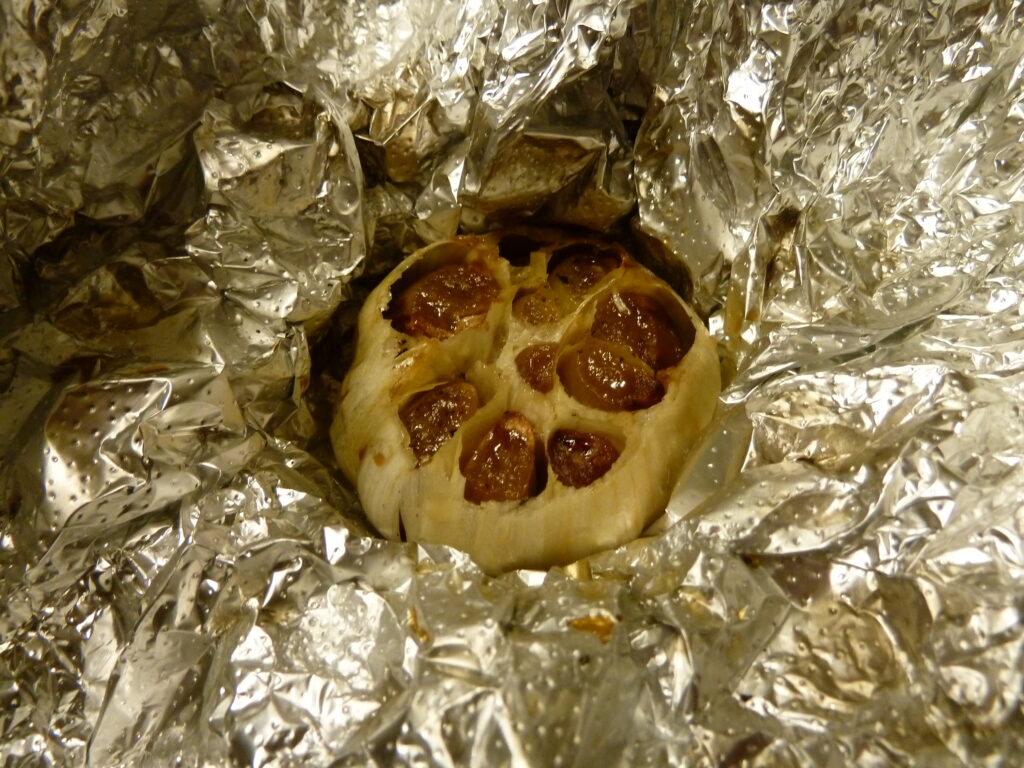
Roasted garlic is the direction people come back for. Slice the top off a whole head, sit it on a square of foil, pour over a teaspoon of oil, wrap it and roast at 400 degrees for forty minutes until the cloves are soft and browned. Squeeze the whole head into the processor with the ricotta and it disappears into a sweet, mellow background.
One storage note that catches people out: garlic sitting in oil at room temperature is one of the few genuine botulism risks in a home kitchen. Roasted garlic left over from this goes into the refrigerator, covered, and gets used within three or four days, and any oil it is sitting in goes cold with it.
Charred cherry tomatoes are the second. A pint in a dry hot skillet for five minutes until the skins blacken and split, then off the heat with a splash of oil and torn basil, spooned over the top while still warm. The heat loosens the surface of the dip slightly, which is the point.
Both of these turn a snack into something that can open a dinner, which is the most efficient thing in this article. A bowl of whipped ricotta with roasted garlic and warm bread does the work of a first course for about four dollars, and it sits comfortably alongside the rest of an unfussy dinner party menu.
The sweet direction, and how far to push it
Honey drizzled over whipped ricotta with a scatter of thyme and flaky salt is the most-photographed version of this dish and it deserves the attention. The cheese is mild and slightly sweet already, so it takes honey the way mascarpone does without turning into dessert.
Keep the honey to about a tablespoon over a full bowl and put it on at the table rather than stirring it through. Stirred in, it thins the texture and the sweetness flattens into the background instead of arriving in bright patches.
Toasted walnuts, pistachios or hazelnuts on top are what make it worth eating rather than merely looking at. Roasted stone fruit, sliced figs and pear all work in the same bowl. As a note for anyone serving a mixed group, honey is not appropriate for babies under one year, and nuts on a shared board need flagging.
What a quarter cup is actually worth
Whole milk ricotta lands somewhere near 100 calories per quarter cup, with roughly seven grams of protein and seven or eight grams of fat, before the olive oil goes in. That protein number is what separates it from most creamy dips, which are built on mayonnaise or sour cream and bring almost none.
The oil is not free. Two tablespoons across a whole tub adds about 240 calories spread over eight servings, so around 30 per portion, which is a reasonable trade for the texture it buys. The honey version adds a little sugar and the savory ones add essentially nothing.
Sodium depends on the tub and on your hand with the salt. Ricotta is naturally low in sodium compared with most cheese, which is why it needs seasoning, and it is also why this is a decent option for anyone watching salt as long as the crackers underneath it are not doing the damage instead.
What to serve it with beyond crackers
Raw vegetables are the obvious upgrade and the one that changes the nutrition of the whole plate. Endive leaves, cucumber rounds, radishes cut in half, snap peas, celery and strips of bell pepper all carry it without breaking. Wash everything under cold running water first, including the things that get peeled.
Bread is what it is for, though. Grilled sourdough rubbed with a cut garlic clove is the correct answer, and toasted pita or focaccia is close behind. A cracker with a strong flavor of its own fights the dip; a plain one disappears under it, which is what you want.
It also works as something other than a dip. A spoonful under a piece of roasted salmon, stirred through hot pasta with a ladle of the cooking water, spread on toast under a fried egg, or dropped onto a bowl of soup are all better uses of a leftover half tub than another round of crackers. The same logic drives most of the simple Mediterranean plates that treat a soft cheese as a component rather than a centerpiece.
How long each version holds, and the two-hour rule
Plain whipped ricotta, salted, in a sealed container in the refrigerator, is good for about three days and is best on the first two. It will weep a small amount of liquid, which is normal; pour it off and stir, and do not be tempted to whip it again, since a second run in the processor makes it thin.
Anything with fresh herbs, scallion, tomato or citrus juice in it drops to one or two days. The herbs go dark, the acid keeps working on the dairy, and the water from the vegetables separates out. This is a quality window and not a hazard, but the flavor loss is obvious.
The hard rule is temperature. This is a fresh dairy product and it does not belong on a table for an afternoon. Two hours at room temperature is the ceiling, one hour if the room is above ninety degrees, and a bowl that has sat out through a party goes in the bin rather than back in the refrigerator. Serve half and keep half cold if the gathering is long, the same way you would with any creamy dip on a table.
Throw it out on smell and sight, not on the date alone. Sour beyond the usual mild tang, any pink or yellow tint, any fuzz, or liquid that has gone cloudy and sharp are all finished. Mold on a soft high-moisture cheese means the whole container goes, since the threads run further than the visible spot.
Making it ahead and packing it
The base freezes badly. Ricotta separates when it thaws and no amount of whipping brings the texture back, so this is a refrigerator project rather than a freezer one.
For lunches, portion the plain base into small containers and carry the topping separately in a twist of foil or a second lid. Keep it with an ice pack, because a bag on a desk for four hours is exactly the situation the two-hour rule exists for.
Doubling is easy and limited only by the processor bowl. Two tubs is about the ceiling for a standard machine, and past that the blade struggles to reach the top of the mass and you get a smooth bottom half and a grainy top.
Frequently Asked Questions
Can I do this without a food processor?
A stand mixer with the whisk attachment gets about eighty percent of the way there in four minutes and leaves a slightly grainier result. A hand mixer works with an extra tablespoon of cream. By hand with a whisk it does not happen, no matter how long you go.
Does it work with cottage cheese instead?
Yes, and it comes out looser and tangier with more protein and less fat. Cottage cheese needs longer in the machine because the curds are larger, and it benefits from being drained first since it carries far more liquid.
Why did mine turn watery an hour after I made it?
The tub was wet to begin with. Draining in a sieve for ten to fifteen minutes before whipping solves it. Once it has happened, pour off the liquid and stir gently rather than reprocessing.
Can I make it dairy-free?
Not with this method. The texture depends on milk fat and casein, and almond or cashew versions behave differently enough to be a separate recipe. A blended silken tofu base is the closest analogue and it is a different flavor entirely.
Is this a good snack for kids?
It is one of the better ones, since it delivers protein and calcium in a form that goes onto anything. Skip the chili and the raw garlic for younger children, cut raw vegetables into strips rather than coins for anyone under four, and keep honey off the plate of any baby under a year old.
Buy one tub this week and whip half of it plain, with nothing but salt and oil, before choosing a direction. What comes out of the machine at two minutes is the thing worth learning; everything on top of it is a decision you can make later.