
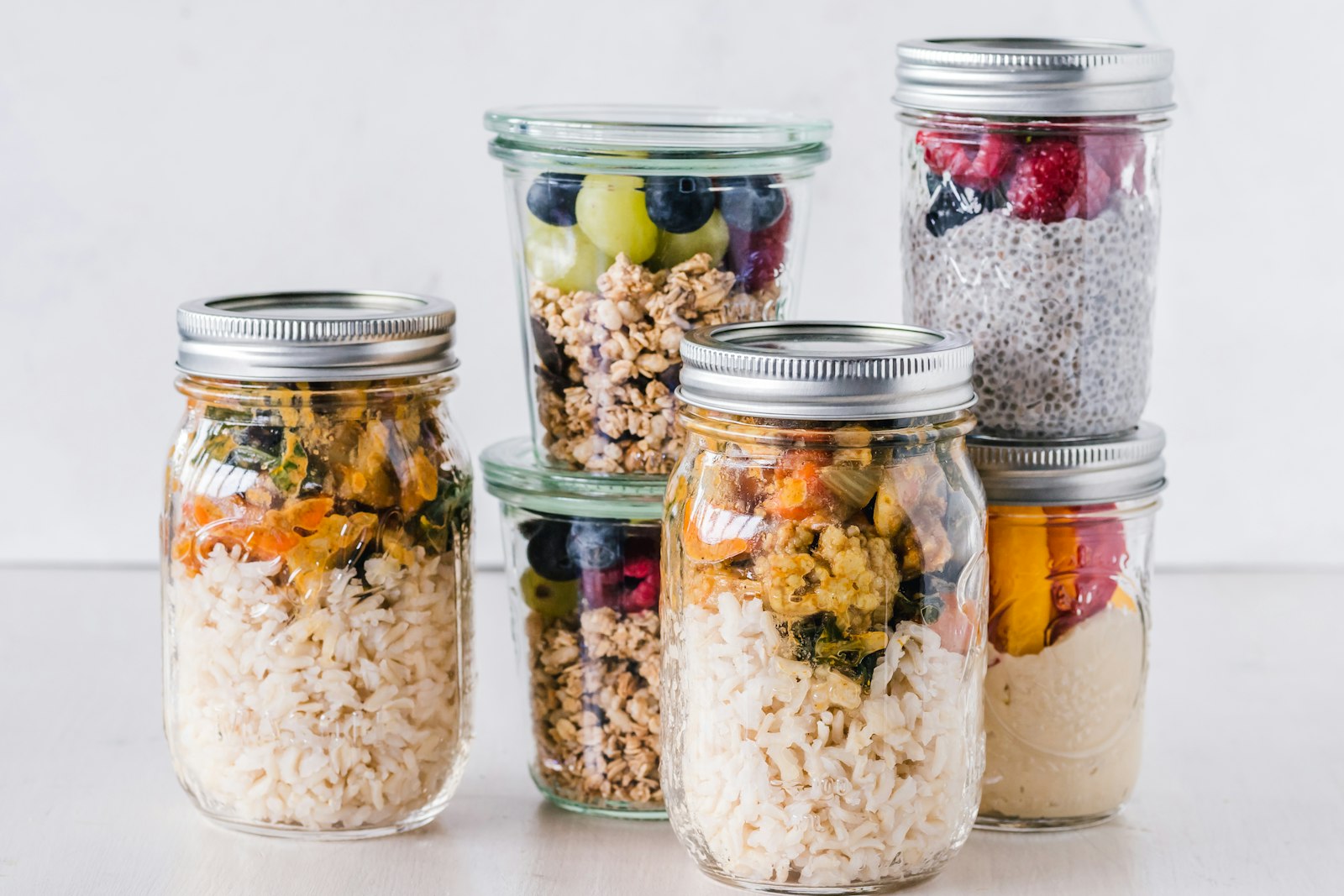
Meal prep is one of those cooking skills that everyone talks about differently. Some people mean cooking a full week of identical dinners on Sunday. Others mean stocking the fridge with individually portioned lunches. Some mean prepping just a few components that make the actual week’s cooking faster. The version that works long-term is almost never the fully-cooked-week version — it is the one that fits how you actually live.
This guide walks through three meal prep systems that reliably work, how to choose between them, what to prep versus what to cook fresh, and the practical mistakes that make most meal prep attempts collapse after two weeks. The goal is not to eat prepped food every day — it is to make cooking during the week noticeably faster and less decision-heavy, without turning weekends into a full kitchen shift.
Sunday time investment: 1.5–2 hours for meaningful weekday savings
Rule #1: prep components, not full meals — flexibility beats commitment
Rule #2: mix textures — some items reheat, some stay cold, some finish fresh
Rule #3: anything beyond 4 days in the fridge starts losing quality — plan freezer for the rest
Best containers: glass with clip-lock lids
Why most meal prep fails
The most common meal prep pattern — cook a full week of identical portioned meals on Sunday — fails for reasons that have nothing to do with willpower. By Wednesday, the food is three days old and starting to taste flat. By Thursday, you are tired of the same thing. By the next Sunday, the memory of eating the same lunch five days in a row makes you skip the prep session entirely. The cycle breaks after two or three weeks.
The other failure mode is under-prepping — cooking one big batch of a single dish (chili, curry, roasted vegetables) and calling it “meal prep.” Without complementary components, that one dish still needs to be turned into meals during the week, which is exactly what you were trying to avoid.
Systems that actually last are somewhere in the middle: enough prep to reduce weekday decisions and knife work, but flexible enough that you eat something different each day.
System 1: Component prep
The most flexible approach. You cook a handful of neutral, versatile components on Sunday — not meals — and combine them into different dishes during the week.
Typical Sunday prep (60–90 minutes):
- One grain: 3 cups of cooked rice, quinoa, farro, or barley
- One protein: 2 pounds of roasted chicken thighs, baked tofu, or hard-boiled eggs
- One roasted vegetable: a sheet pan of broccoli, cauliflower, sweet potatoes, or brussels sprouts
- One raw prep: washed greens, sliced cucumber, quartered cherry tomatoes
- One sauce or dressing: tahini-lemon, yogurt-herb, peanut-lime, or vinaigrette
Weekday assembly (5–10 minutes): Combine components into bowls, wraps, salads, or grain plates. The same five things become Mediterranean bowl one day, chicken taco another, grain salad another. Variety comes from the sauce and the vegetable choice, not from cooking new dishes.
This system works because it separates the slow tasks (cooking, roasting, dressing preparation) from the fast tasks (assembly, plating). It also handles when plans change — the components are useful in whatever meal you eventually eat.
System 2: Cook-once-eat-twice
Simpler than component prep. You cook a real dinner Sunday night that intentionally makes enough for two additional meals during the week. Not a full week of dinners — two extra dinners, freeing up Tuesday and Thursday from cooking.
Sunday dinner: a braise, roast, or one-pot dish that scales well. Beef stew, roast chicken, pulled pork, lentil dal, chili — anything that keeps and reheats.
Reheated meals: the same dish, plus one changed element (fresh garnish, different starch, extra vegetable). Roast chicken becomes chicken tacos with different toppings. Stew becomes stew over polenta instead of rice.
This system fits people who like cooking real dinners but want to eliminate two weeknight cooking sessions. It also works for households where preferences vary — cook the base dish once, adjust individual portions with add-ons and toppings.
System 3: Freezer-first
Best for people whose schedules make even the assembly step of component prep difficult. You cook 4–6 portions of a few substantial dishes over a weekend once a month, freeze them individually, and pull one out each morning to defrost by dinner.
Good freezer dishes: soups, stews, chili, curries, pasta sauces, cooked grains, casseroles, hearty vegetable dishes. Anything with sauce or moisture — dry roasted things do not freeze as well.
Skip freezing: raw salad ingredients, delicate proteins meant to stay crisp, dishes that rely on fresh herbs or dairy toppings.
Portion size: single-serving containers, labeled with the dish name and freezing date. This makes it easy to build a mixed dinner (frozen chili + a fresh salad + rice cooked that night).
What to prep versus what to cook fresh
Not everything belongs in Sunday prep. Some things stay great for 4–5 days; others lose their appeal within 24 hours.
| Prep well | Cook fresh |
|---|---|
| Grains (rice, quinoa, farro) | Delicate greens meant to stay crisp |
| Roasted vegetables | Anything with a soft or wilted texture as its selling point |
| Braised or stewed proteins | Fish (loses quality within 24 hours) |
| Hard-boiled eggs | Fresh omelets or fried eggs |
| Beans and legumes (cooked) | Toast, waffles, pancakes |
| Grain salads | Rice bowls that need a runny yolk |
| Sauces and dressings | Fresh herbs added at the end |
| Dips (hummus, tzatziki) | Anything with avocado (browns fast) |
Container strategy
The right containers matter more than the prep method. Good containers keep food fresh longer, make reheating easier, and let you see what you have without opening every lid.
Glass with clip-lock or silicone-sealed lids. The best all-around choice. Microwaves and ovens without transferring, does not stain or absorb flavors, lasts for years. Downside: heavy and breakable. Pyrex, OXO, and Anchor Hocking are reliable brands.
Compartment glass containers. Useful for lunches you want to eat directly from the container without mixing everything together (grain + protein + salad). Divides visually and by moisture.
Freezer-safe silicone bags or containers. Reusable, freeze flat for storage, defrost quickly. Better than plastic bags for repeat use.
Skip: thin plastic containers (warp in dishwasher and microwave), containers with weak seals (leak in transport), disposable takeout containers past one or two uses.
Sample week using component prep
Illustrates how one prep session becomes five different meals.
Sunday prep (90 minutes): 3 cups quinoa, sheet pan of roasted sweet potatoes and broccoli, 6 roasted chicken thighs (or baked tofu), lemon-tahini dressing, sriracha-mayo, chopped scallions and parsley, washed baby spinach.
- Monday lunch: quinoa + chicken + broccoli + tahini dressing = grain bowl
- Monday dinner: chicken + sweet potato + spinach salad + tahini = warm salad plate
- Tuesday lunch: chicken lettuce wraps with sriracha-mayo + scallions + broccoli on the side
- Wednesday lunch: quinoa + chicken + everything mixed with tahini and greens = fully-mixed grain salad
- Thursday lunch: chicken tacos with fresh corn tortillas (cook 2 minutes) + sriracha-mayo + broccoli slaw
- Friday: skip prep. Order in or cook fresh.
Everything above uses the same five prepped items reshuffled. Total weekday cooking time: maybe 25 minutes across the whole week.
Common failure points
Prepping food you do not actually want to eat. If you do not love kale, do not prep kale salads. Meal prep with foods you dislike lasts about one week.
Under-seasoning. Cold food from the fridge tastes less salty than freshly cooked food. Season slightly more aggressively during prep than you would when serving hot.
Ignoring reheat quality. Some dishes lose their appeal after reheating, no matter how well prepped. Test-reheat a batch of a new prep recipe before committing to a whole week of it.
Prepping everything for the whole week on one day. Prep for the first half of the week Sunday, then a small refresh Wednesday. Weekend meal prep for a full 7 days almost always results in Thursday and Friday food that tastes tired.
Frequently asked questions
How long does prepped food actually keep?
In the refrigerator: cooked grains 4–5 days, roasted vegetables 3–4 days, cooked proteins 3–4 days, sauces and dressings 5–7 days, hard-boiled eggs (in shell) about 7 days. In the freezer: most cooked dishes hold well for 2–3 months.
Can I meal prep breakfast too?
Yes. Overnight oats, chia pudding, hard-boiled eggs, breakfast burritos wrapped and frozen, and pre-portioned smoothie bags all prep well. Skip anything requiring fresh eggs or hot toast — those really need morning cooking.
Is meal prep worth it for one person?
Often more so. For one person, buying ingredients in useful quantities is harder without wasting food. Component prep uses partial ingredients efficiently across multiple meals, reducing both waste and cooking time.
How much time does full meal prep actually save?
For most people, 90 minutes of prep on Sunday saves 3–4 hours of weekday cooking. The bigger savings are decision fatigue — you skip the “what should I eat” question five nights a week.
What about fresh vegetables — do they really keep?
Washed greens keep 3–5 days in a container with a paper towel to absorb moisture. Sliced peppers and cucumbers hold 3–4 days. Tomatoes stay best on the counter. Delicate herbs like basil should be prepped only 1–2 days ahead.
Should I microwave from a glass container or transfer to a plate first?
Either works, but transferring to a plate reheats more evenly and lets you refresh with a squeeze of lemon or a drizzle of oil that makes reheated food taste less “microwaved.” An extra 30 seconds of assembly for meaningfully better food.
The short version
Meal prep works when you prep flexible components rather than complete meals, invest 60–90 minutes once (or twice) a week, and mix textures across the days you eat prepped food. It fails when the goal is “cook once, eat identically for a week” — variety and quality drop fast enough that the habit collapses. Pick a system that fits your schedule, prep foods you actually enjoy, and treat the containers as much of an investment as the ingredients.