
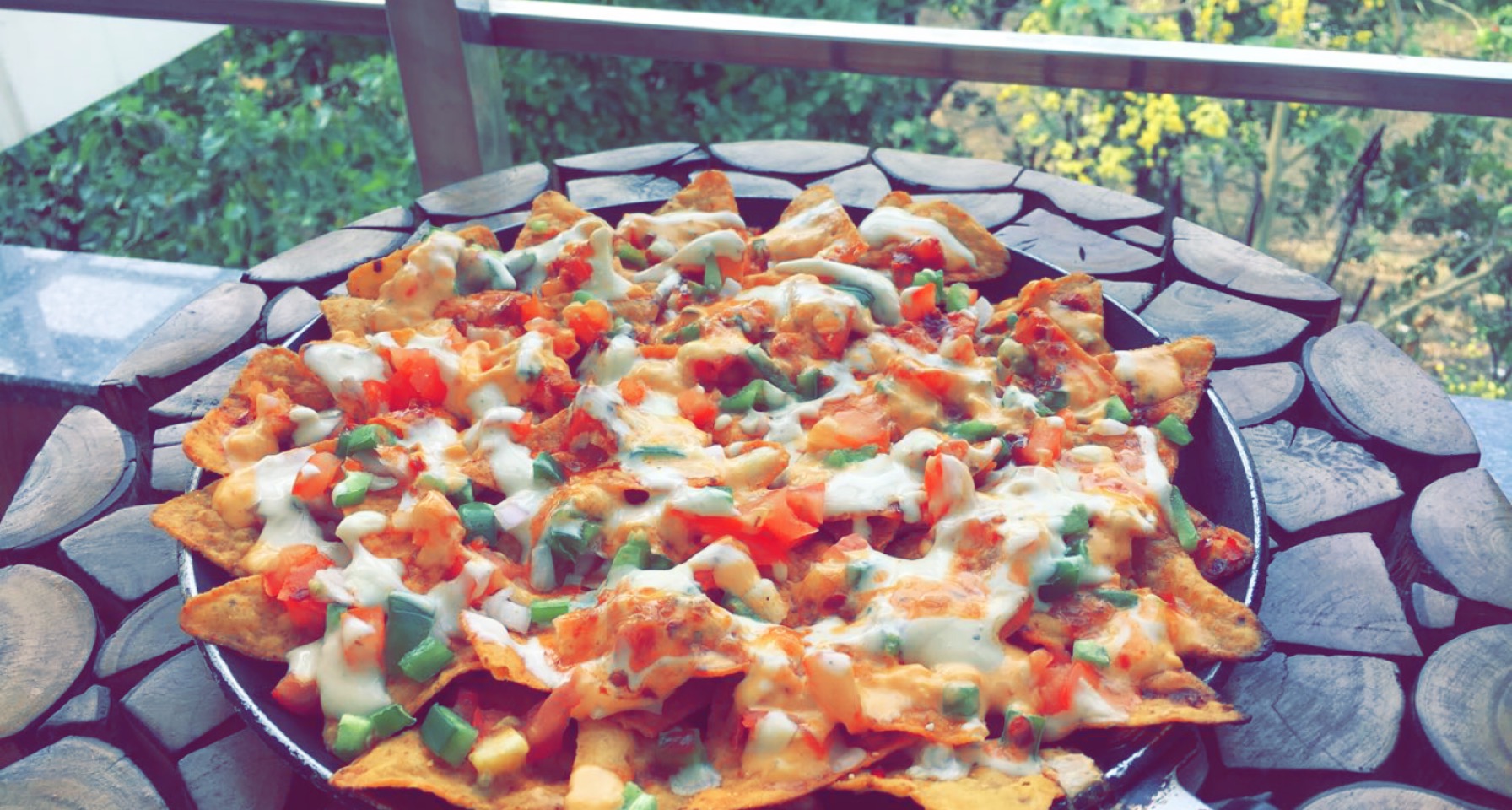
Four minutes after the tray comes out of the broiler, the bottom layer of chips is a soft, orange-tinted paste. The top layer is still crisp. The difference between the two is not the broiler. It is where the sour cream landed.
Nachos fail from the bottom up, and almost always for the same reason: something wet touched a dry chip before anything else was between them. Salsa, diced tomato, guacamole, even the liquid that leaks out of canned beans, all soak into a fried corn chip on contact, and a chip that has taken on water does not come back.
The fix is an order of operations, not a different recipe. Cheese goes down first, on every chip, before anything wet is anywhere near the pan. Everything after that is timing.
- Build: chips, cheese, broil, then wet toppings on top
- Cheese: block cheese, shredded by hand, not the bagged kind
- Broiler: middle rack, 2 to 3 minutes, watched the whole time
- Cold toppings: added after the pan comes out, never before
- Pan: chips spread edge to edge, never piled in the center
- Serving window: best in the first 10 minutes off the broiler
Why wet toppings ruin dry chips
A fried tortilla chip is close to dry inside, which is what gives it its snap. That dryness is also what makes it absorb liquid fast: put a wet ingredient directly on top of a chip and the chip pulls that moisture into itself within seconds rather than minutes.
Cheese does the opposite. Melted cheese is fat more than it is water, and a layer of melted cheese between the chip and anything wet acts as a barrier. The chip stays dry underneath it for much longer than it would with nothing there at all.
This is why restaurant nachos hold their crunch and a home tray built salsa-first goes limp before it reaches the table. The order the ingredients go on matters more than which ingredients you chose.
The two-layer build that fixes it
One layer of chips and cheese covers roughly half a bag of chips before the cheese starts pooling in the gaps instead of clinging to each piece. Trying to load an entire party’s worth of nachos into a single pass is the second most common mistake, right behind the wet-topping order.
Two shorter layers, each broiled separately, cover twice the chips with cheese that actually reaches every piece. Spread half the chips, cover with cheese, broil until melted, then repeat with the second half directly on top rather than starting over on a clean pan.
The result is a pan with cheese distributed through the whole pile instead of concentrated on the top layer and absent three chips down, which is the usual complaint about nachos built in one pass.
Sheet pan nachos, tray to table
- Heat the broiler and set a rack about 6 inches from the element.
- Spread half a large bag of sturdy tortilla chips across a parchment-lined sheet pan in a single layer, edge to edge.
- Cover evenly with about a cup of shredded cheese, reaching every visible chip rather than concentrating it in the middle.
- Broil 2 to 3 minutes, watching through the oven door, until the cheese is fully melted and just starting to color.
- Spread the second half of the chips directly over the melted layer, then cover with a second cup of cheese.
- Broil again, 2 to 3 minutes, until melted and lightly browned in spots.
- Scatter any heat-safe fillings, cooked meat, beans, corn, pickled jalapenos, over the top and give it 30 seconds more under the broiler if they need warming.
- Pull the pan and add every cold or wet topping immediately: salsa, sour cream, guacamole, diced tomato, cilantro.
- Serve within 10 minutes, straight from the pan.
Step 8 is the whole method in one line. Nothing wet touches the pan until the broiler is finished with it.
Which cheese melts without turning greasy
Bagged pre-shredded cheese is coated in starch and cellulose to keep the shreds from clumping in the bag, and that coating is exactly what keeps it from melting smoothly. It goes grainy and separates into a layer of oil sitting on top of stiff, unmelted strands.
A block of cheddar or Monterey Jack, shredded by hand right before it goes on the pan, melts into a smooth, stretchy layer with none of that separation. It takes an extra two minutes with a box grater and it is the single biggest quality difference in this whole process.
A blend works better than one cheese alone. Cheddar brings flavor and color; Monterey Jack or a mild Oaxaca-style cheese melts looser and covers gaps that cheddar alone leaves stringy. Half and half is a reliable starting ratio.
The broiler timing that browns without burning
Broilers run hotter and less evenly than an oven set to a number, and two minutes can be the difference between melted and scorched depending on the appliance. Watching through the door rather than setting a timer and walking away is not optional here.
Cheese is fully melted before it browns, so the safest read is to pull the pan the moment it looks glossy and uniform, before any dark spots appear. A few browned edges are fine and add flavor; a pan left thirty extra seconds too long can go from browned to bitter at the edges.
Rotate the pan halfway through if the broiler has an obvious hot spot, which most home broilers do. A tray that melts unevenly at the back and stays pale at the front usually just needs a turn rather than more time.
Cold elements go on after, never before
Guacamole, sour cream, and diced fresh tomato all lose something under heat. Guacamole browns and turns watery, sour cream thins and can break, and tomato releases its juice straight onto whatever it lands on. None of that improves the tray.
Add them after the pan is off the heat, while the cheese is still hot enough to keep the rest of the tray warm. This also keeps the flavors distinct instead of everything melting together into one warm, sour mass.
If the nachos are for a table that will graze over an hour rather than eat immediately, keep the sour cream and guacamole in separate bowls alongside the tray instead of piled on top, and add them to each plate as it is served. A dish sitting out with dairy toppings already applied is one more thing that shortens how long the tray stays good to eat, and for a party that runs longer than two hours, that bowl of sour cream belongs back in the refrigerator between rounds rather than parked on the counter the whole time.
Six fillings that hold up under a broiler
| Filling | Prep before the pan |
|---|---|
| Seasoned ground beef | Fully cooked to 160 degrees, drained |
| Black beans | Drained and rinsed, patted dry |
| Roasted corn | Charred in a dry skillet first |
| Pickled jalapenos | Drained well before scattering |
| Pulled rotisserie chicken | Shredded, warmed separately if cold |
| Queso, drizzled | Added after the broiler, not before |
The pattern across all six is dryness. Anything drained, patted, or pre-cooked survives the broiler and adds flavor without adding water. Anything straight from a can, undrained, undoes the whole point of the layering, which is the same lesson behind most cheap crowd food built from pantry staples.
Ground beef and any raw meat used in the filling needs to reach a full 160 degrees before it goes anywhere near the pan, checked with a thermometer rather than judged by color, and it should be cooked on a separate cutting board and pan from anything eaten raw, like the tomato or cilantro going on at the end.
Assembling for a crowd without a bare middle
Chips piled into a mountain in the center of the pan look generous and produce the worst version of this dish. The chips at the bottom of the pile get no direct cheese at all, and the ones on top get more than they need.
Spread the chips into a single layer that reaches every edge and corner of the pan first, then build up from there in the two-layer method above. A sheet pan that looks too sparsely covered with chips before the cheese goes on is usually about right; the cheese and toppings fill it out visually once they are added.
For a genuinely large group, two sheet pans built one after another beat one enormous pile every time, since a pile more than two chips deep starts hiding chips from the broiler entirely. It is the same crowd-math problem that shows up in other tex-mex spreads built for a table rather than a plate.
Make-ahead pieces, and the one that can’t wait
Almost everything here can be done ahead. Cook and season the meat, drain and dry the beans, char the corn, dice the tomato, and shred the cheese, then hold each in its own container in the refrigerator until it is time to build.
What cannot wait is the assembly and the broiler step. Chips go soft sitting in a bowl even before anything touches them, just from ambient humidity, so they should come out of the bag only when the pan is about to go under the broiler.
Guacamole is the other piece with a short window. Made more than an hour ahead it needs the surface pressed with plastic wrap directly against the avocado to slow browning, and even then it is better made close to serving than stored, the same logic behind most fresh quick dips built around raw produce.
Reheating leftover nachos, and why it rarely works
Leftover nachos are already a contradiction, since the chips have spent the night absorbing whatever moisture was on the pan when it went into the refrigerator. A microwave brings the cheese back to melted but leaves the chips soft throughout, which is the opposite of what nachos are supposed to be.
An oven at 350 degrees for about eight minutes on a fresh sheet of foil does better than a microwave, since dry heat has a chance to drive off some of the surface moisture before the cheese fully melts again. It will not restore true crispness, but it beats a rubbery microwave result by a wide margin.
The more reliable move is to portion the toppings separately from the start. Cooked meat, beans, and cheese reheat cleanly in a small pan, and spooning that warm mixture over a fresh batch of plain chips is closer to a new dish than a reheat, and it takes barely more time than microwaving the whole tray would.
This is also the reason nachos rarely appear on a genuine meal-prep list the way a braise or a soup does: the dish depends on a texture that exists for a narrow window right after assembly, and no storage method extends that window by more than an hour or two.
Frequently Asked Questions
Can I make sheet pan nachos without a broiler?
Yes, using the top rack of an oven at 425 degrees for about 5 minutes instead of a broiler. It takes longer and browns less, but the cheese-first order matters exactly the same way.
What chip holds up best under all this cheese?
A thicker, restaurant-style chip rather than a thin bagged one. Thin chips work fine for a single layer but buckle and crack under two rounds of cheese and toppings.
Why did my cheese come out greasy instead of stretchy?
Almost always pre-shredded bagged cheese, which contains anti-caking starch that prevents a smooth melt. Shred a block by hand and the same recipe comes out completely different.
Can leftovers be reheated?
Not well. The chips have already absorbed moisture from the toppings by the next day, and reheating brings back warm cheese on soft chips rather than crisp ones. Nachos are a same-day dish.
How far ahead can the toppings be prepped?
A day ahead for anything cooked, drained, or dry, stored separately in the refrigerator. Same day, close to serving, for anything cut raw like tomato, onion, or avocado.
Build one pan the cheese-first way and one the everything-at-once way, side by side, and the bottom layer tells the whole story without anyone needing to be convinced.