
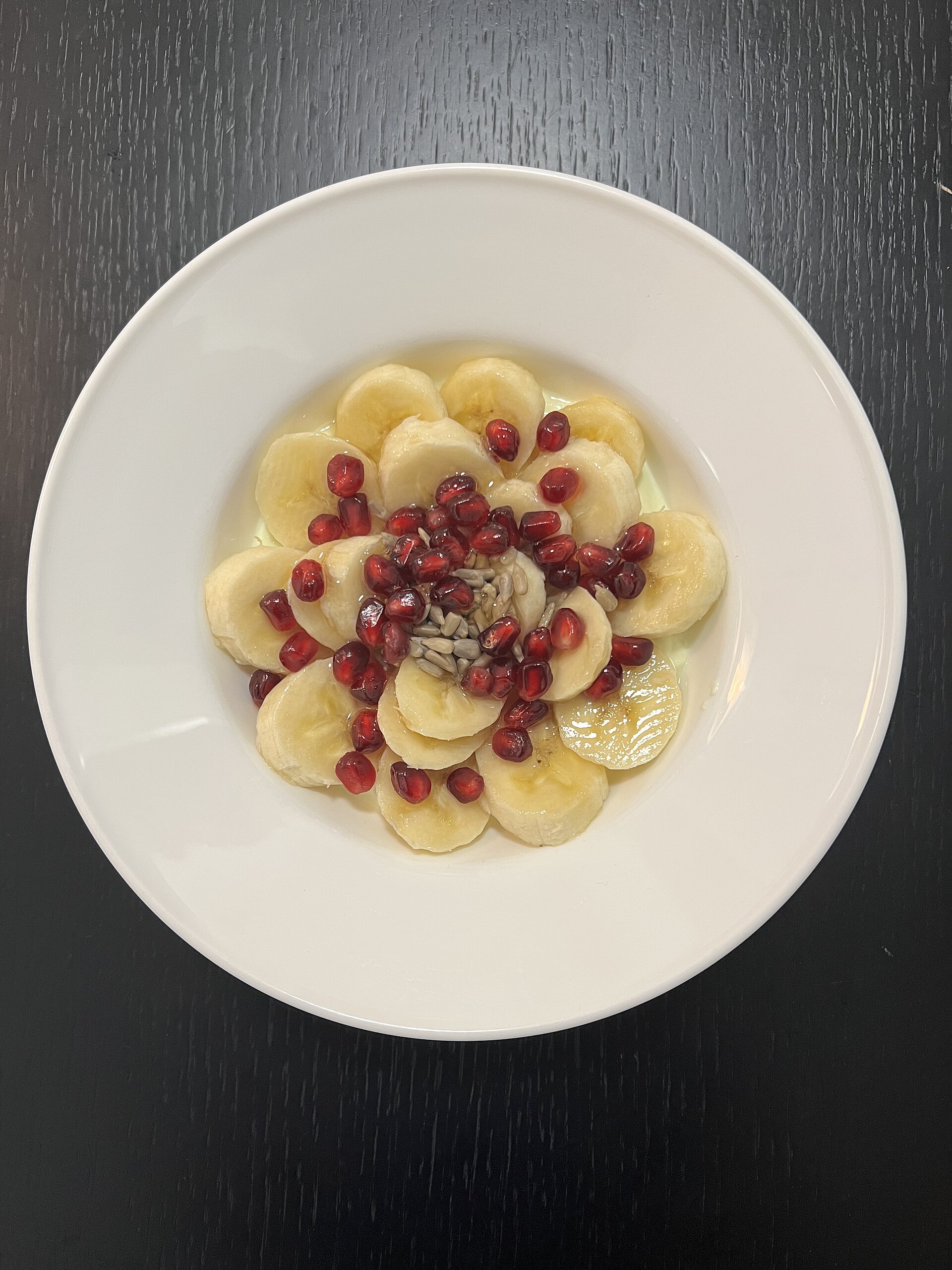
There is a stain on the wall behind the counter, about four feet up, from the last time somebody tried to hack a pomegranate open with a chef’s knife. The juice went in every direction, including onto a shirt that never recovered, and the yield was maybe half the fruit because the rest was crushed into the pith.
The fix is a bowl of cold water. Score the skin, break the fruit apart under the surface, and separate the seeds while everything is submerged. The juice has nowhere to spray, the bitter white membrane floats and the arils sink, and the entire mess sorts itself out with no effort from you.
Six minutes per fruit, no special tool, and roughly a cup and a half of clean arils from a medium pomegranate. The cuts matter, and they are not the ones most people make.
- Time: about 6 minutes per fruit
- Equipment: a large bowl, cold water, a paring knife
- Yield: 1.25 to 1.75 cups of arils from a medium fruit
- The cut: score the skin only, never through the middle
- Refrigerated: loose arils keep 5 to 7 days sealed
- Frozen: tray freeze first, then bag, about 6 months
The stain that does not come out
Pomegranate juice is one of the more persistent kitchen stains, and it is worth knowing that before the first cut rather than after. It sets quickly on fabric and it does not respond well to being ignored until laundry day.
The underwater method exists mainly to prevent that, and it does so completely. Nothing sprays because nothing is exposed to air under pressure. The counter stays clean, the wall stays clean, and the shirt survives.
If juice does land on fabric, rinse it under cold running water immediately from the back of the stain rather than the front, which pushes it out rather than through. Hot water sets it. An apron is not a bad idea either, and a dark one is better than a pale one.
Picking one that is actually full
Weight is the single best signal. Two fruits of the same size can differ noticeably in weight, and the heavy one has more juice in it. Pick up several and compare.
Shape is the second. A good pomegranate is slightly angular rather than perfectly round, because the arils inside have pressed the skin outward into flat planes. A smooth sphere usually means the inside has not filled out.
Skin should be firm, taut, and deeply colored, from red to a brownish red depending on variety. Scratches and scuffs are cosmetic and do not matter. Soft spots do, and so does a skin that gives under a thumb, which means the fruit is past it.
Season runs from roughly September into January in the northern hemisphere, with October and November as the middle of it. Outside that window the fruit on the shelf has come a long way or been in storage, and the weight test matters more. It is one of the few fruits where buying in its actual season changes the eating quality dramatically rather than marginally.
The score-and-submerge method, cut by cut
- Wash the outside of the fruit under running water and dry it. The knife passes through the skin and carries whatever is on it inward.
- Cut off the crown end, the small protruding calyx, taking about a quarter inch. Do not cut deep enough to hit the arils.
- Look at the exposed top. You will see pale ridges of membrane radiating outward, usually five or six of them. Those mark the chambers inside.
- Score the skin from top to bottom along each ridge, cutting through the peel only, about an eighth of an inch deep. Five or six cuts.
- Fill a large bowl with cold water. Hold the fruit under the surface and pull it apart along the scored lines with your thumbs. It will separate into sections.
- Still submerged, bend each section backward and rub the arils off the membrane with your thumbs. They fall to the bottom.
- Skim the floating white membrane and skin off the surface with your hand or a slotted spoon and discard it.
- Pour the water off through a strainer, or lift the arils out with your hand. Spread them on a towel and pat dry.
Step four is the whole method. Cutting the fruit in half through its middle, which is what almost everyone does, slices directly through two rows of arils and releases the juice that then goes everywhere. Scoring the peel along the natural divisions opens the fruit without cutting a single aril.
How to seed a pomegranate without a bowl of pink water everywhere
The water in the bowl will go faintly pink. That is a few arils bursting and it is normal. What it should not do is turn deep red, which means the fruit was cut rather than scored, or the sections were pulled apart roughly.
Work with your hands below the surface the whole time. The instinct is to lift a section out to see what you are doing, and that is where the drips start. Everything can be done by feel once the sections are apart.
Use a bowl big enough that your hands and the fruit both fit with room to spare. A small bowl means water sloshing over the rim, which is a different mess than spraying juice but still a mess.
Cold water rather than warm. Warm water softens the arils slightly and makes them more likely to burst under a thumb, and it does nothing useful.
Why the water does the separating for you
Arils are dense. Each one is a seed surrounded by juice-filled tissue, and it sinks in water immediately.
The white membrane, the pith, is full of air pockets, and it floats. So does the peel. That difference means the tedious part of the job, picking bits of bitter white membrane out of a bowl of arils, happens by itself: the pith rises, you skim it off, and what is left on the bottom is clean.
The membrane is not harmful, it is just unpleasant, astringent and bitter enough that a few fragments spoil a bowl. Doing this dry means removing them one at a time with your fingers, which is why the dry method takes three times as long even when it works.
The wooden spoon method, and where it fails
The other widely circulated technique is to halve the fruit, hold one half cut side down over a bowl, and whack the skin with a wooden spoon until the arils drop out. It works, sometimes.
It works best on a very fresh, very ripe fruit where the arils release easily. On a firmer fruit, or one that has been in storage a few weeks, half of them stay attached and you end up finishing by hand anyway, having already burst a good number of them.
It also sprays. The whacking forces juice out through the gaps between arils, and the standard advice to hold the fruit low over a deep bowl only partly contains it. Holding it inside a large paper bag helps and is an odd thing to do at a counter.
Where it genuinely wins is speed on a single fruit when you do not care about a few losses. For anything more than one, or for anything where the arils need to look good on a plate, the water method is better on every count.
What a whole fruit yields
| Fruit size | Weight | Arils | Juice if pressed |
|---|---|---|---|
| Small | About 8 ounces | Roughly 1 cup | About a third of a cup |
| Medium | 10 to 12 ounces | 1.25 to 1.75 cups | About half a cup |
| Large | 14 ounces or more | 2 cups or more | Two thirds of a cup |
Arils make up somewhere between half and two thirds of the weight of a whole pomegranate, and the rest is peel and membrane. That is worth knowing when comparing the price of a whole fruit against the small tubs of pre-seeded arils sold beside them, which are usually several times more expensive per ounce and have a much shorter refrigerator life.
One medium fruit is enough to scatter over a salad for six, or to finish four bowls of yogurt, or to make about half a cup of juice. Two is the right number for a dish where the arils are a main component rather than a garnish.
How long loose arils keep, cold and frozen
Five to seven days refrigerated in a sealed container. Pat them dry before storing, since surface water encourages them to break down at the edges, and line the container with a paper towel if they went in slightly damp.
A whole uncut fruit keeps far longer: two weeks on a counter, and up to two months in the refrigerator. The skin is doing real work, and there is no reason to seed a fruit before you need it.
Frozen, the arils hold about six months with very little loss. Spread them in a single layer on a lined sheet pan, freeze until firm, then transfer to a bag. Tray freezing matters here, unlike with some fruit, because arils are wet enough to fuse into a solid clump if bagged directly.
Frozen arils are excellent stirred into anything cold and mediocre thawed on their own, since they soften and lose their pop. Drop them frozen into yogurt or into a drink and they are close to fresh. The same reasoning applies to most fruit that goes into the freezer for later use, and it sits alongside the other ways of holding a short season past its window. Write the date on the bag.
Juicing without a press
Put the arils in a sealed zip bag and roll a rolling pin over them, or press them through a fine sieve with the back of a ladle. Either gives you juice with no bitterness, because the seeds stay whole and the pith was never involved.
A blender works but needs care. Pulse briefly, three or four short bursts, then strain. Running it long enough to break the seeds releases a woody bitterness that you cannot remove afterward.
Half a cup of juice from a medium fruit is the realistic yield. It is intensely tart and it does not need sweetening for cooking, where it goes into a pan sauce, a vinaigrette, or a marinade. Reduced slowly with a little sugar it becomes the thick syrup sold as pomegranate molasses, which is worth making once and worth buying the rest of the time.
Five uses that are not a salad garnish
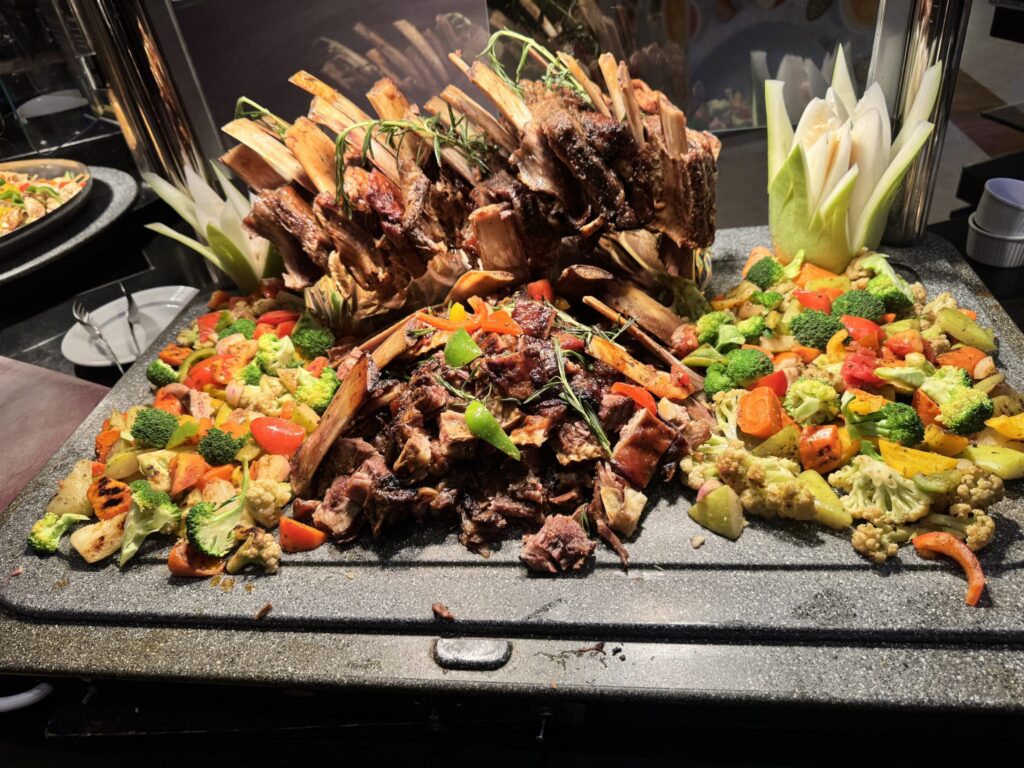
Scattered over roasted vegetables. Squash, carrots, cauliflower, anything sweet and browned, gains a lot from something sharp and cold on top. This is the one that changes a plain tray most.
In a grain salad with herbs. Bulgur, freekeh, or plain rice with a large quantity of parsley and mint, arils, and lemon. The arils replace the tomato in a dish that would otherwise be flat in winter, and it belongs alongside the rest of simple Mediterranean cooking.
Stirred into thick yogurt with honey and pistachios, which takes two minutes and is the best breakfast the fruit produces.
In a pan sauce for pork, duck, or chicken. A handful of arils and a splash of the juice into the pan after the meat comes out, with a spoon of mustard, reduced for two minutes.
Frozen into ice cubes, which sounds decorative and is actually useful. Arils frozen in a tray of water go into sparkling water or a cocktail and release as the ice melts.
Molasses, juice, and reading the label
Pomegranate molasses is reduced juice, sometimes with a little sugar and lemon. The good bottles list pomegranate juice first and little else. Cheaper bottles are often mostly glucose syrup with pomegranate concentrate somewhere down the list, and they taste sweet rather than sour, which defeats the purpose.
Bottled juice divides the same way. One hundred percent juice is what it says; anything labeled a cocktail, a blend, or a drink has been diluted and sweetened, frequently with apple or grape juice carrying most of the volume. For cooking, the unsweetened version is the one to buy.
Neither is a substitute for the fruit in a recipe that wants texture. Arils contribute a pop and a crunch from the seed inside, and no liquid form reproduces that.
What is edible, and what is not
The whole aril is eaten, including the seed at the center. The seed is crunchy and slightly fibrous and it is where most of the fiber in the fruit is. Some people spit them out, which is a preference rather than a rule, and doing so removes most of the nutritional argument for eating the fruit at all.
The peel and the white membrane are not eaten. They are intensely astringent and unpleasant rather than dangerous, and the membrane in particular will make a bowl of arils taste bitter if fragments are left in.
One thing worth stating plainly: preparations made from pomegranate root, bark, or peel are not food. They contain alkaloids and have historically been used medicinally in ways that caused poisoning at the wrong dose. Home remedies made by boiling the peel are not a good idea, whatever the internet says about them. The fruit itself, the arils and the juice, is simply fruit.
The one interaction worth flagging is that pomegranate juice, like grapefruit juice, has been reported to affect how the body processes certain medications. It is a smaller and less well characterized effect than grapefruit’s, but anyone drinking it daily while on prescription medication should mention it to a pharmacist. Eating pomegranate arils on a salad is not the scenario anyone is concerned about.
Frequently Asked Questions
Do I have to cut the crown off first?
It is the easiest way to see where the internal chambers are, which is what the scoring lines follow. You can skip it and score by eye, and the sections will be less clean. It takes five seconds.
Why are some of my arils white or pale pink?
Variety and sun exposure, mostly. Some cultivars produce pale arils naturally and they are perfectly ripe. Pale arils on a fruit whose others are deep red are usually from the side that faced away from the sun, and they are slightly less sweet.
Can I seed it a few days ahead for a party?
Yes, up to about three days, sealed and refrigerated and patted dry first. Beyond that they start to look dull and soften. If it needs to be more than three days out, keep the fruit whole and seed it the day before.
Is there a tool that does this faster?
There are gadgets and none of them beat a bowl of water by enough to justify the drawer space. The one genuinely useful item is a large bowl, which most kitchens already have.
Can the seeds be eaten or should I spit them out?
Eat them. They are the fiber, and the crunch is part of what the fruit is. Spitting them out is common and it is a texture preference rather than anything else.
What do I do with the leftover water in the bowl?
Pour it out. It is mostly water with a small amount of juice and it carries bits of pith, so it is not worth saving. If you want juice, press the arils separately.
Do one fruit over the sink with a bowl of water and one on a cutting board with a knife, and count the arils you lose to each. The bowl wins by enough that the knife version stops being a question.