
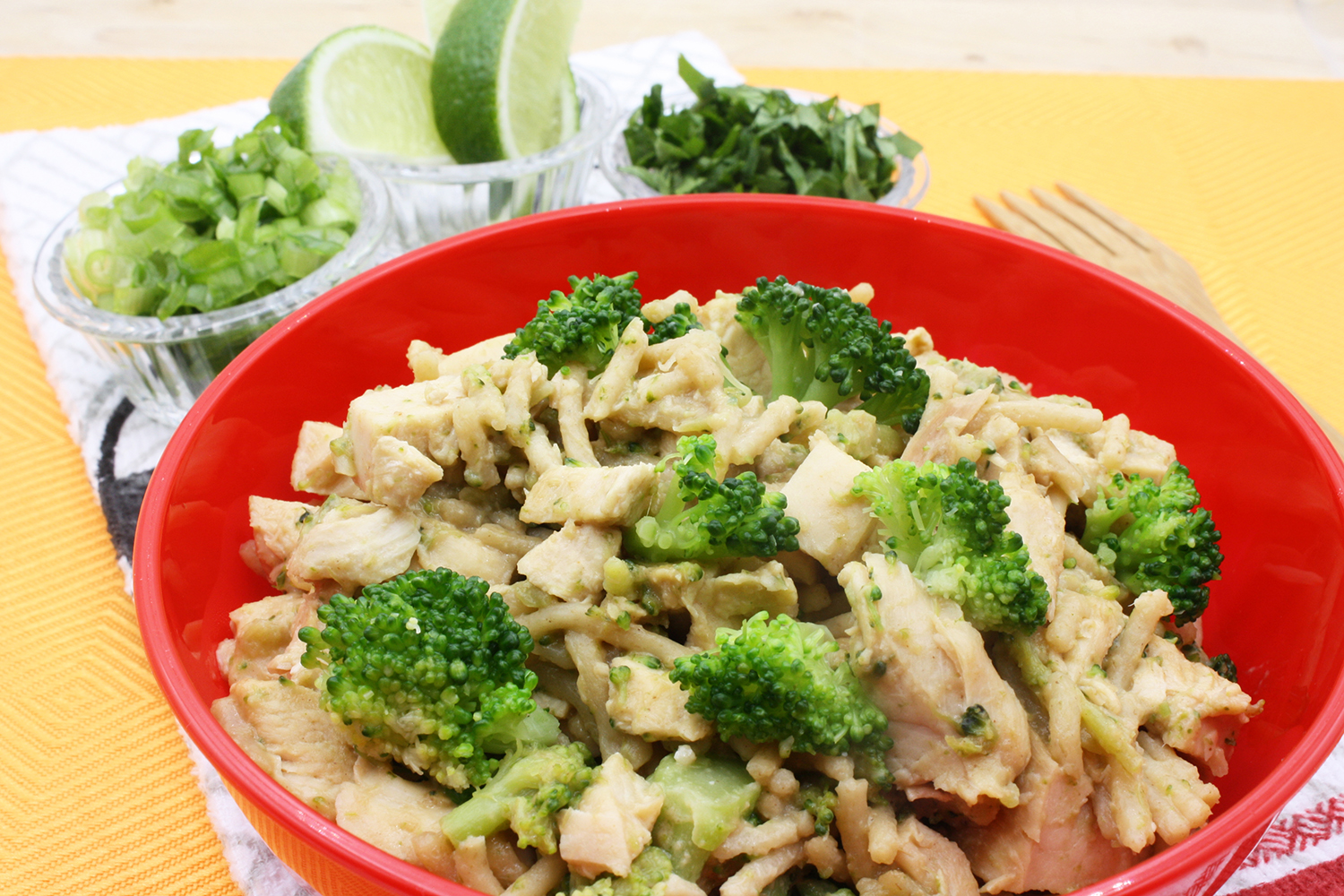
A spoonful of peanut butter dropped into a bowl of just-drained noodles does something that looks like a failed chemistry demonstration. It tightens into a ball, grabs four noodles and holds them hostage, and the rest of the bowl stays bare.
The usual response is more heat and harder stirring, and both make it worse. What you are watching is a paste that is mostly fat meeting a small amount of very hot liquid, and the fix happens earlier than the pan. The sauce has to be loose before it ever touches a noodle, and loose here means thinner than looks correct in the bowl.
Fifteen minutes, one pot, one bowl, and a whisk. The sauce takes four of those minutes and the noodles take most of the rest.
- Total time: 15 minutes for two, 18 for four
- Sauce ratio: 3 parts peanut butter, 1 soy, 1 acid, 1 sweet, 4 to 6 warm water
- Noodles: 8 ounces dried, any wheat noodle that is not shaped like a shell
- The rule: thin to the consistency of heavy cream before the noodles arrive
- Raw and ready: cucumber, carrot, scallion
- Keeps: sauce alone a week, dressed noodles three days
Why the sauce seizes the second it meets the noodles
Peanut butter is ground peanut solids suspended in peanut oil, which makes it a fat-continuous paste rather than a liquid. Drop a small amount of water into it and the water finds the protein and the fiber, binds tightly, and pulls the whole mass into a stiff clump. The technical version of this is a broken emulsion, and the visible version is a ball of peanut cement in a bowl of dry noodles.
The counterintuitive part is that more liquid fixes it. Past a certain point the mixture flips over: water becomes the continuous phase, the peanut solids disperse into it, and what was a clump turns into a pourable sauce. The seize is not a failure state, it is a stage you have to drive through.
Hot noodles make it harder because they add heat and starch at the same moment, and because the sauce has nowhere to go but onto the first thing it touches. Build the sauce in a separate bowl, thin it past the seize, and the noodles never get a chance to cause the problem.
The ratio, by tablespoon
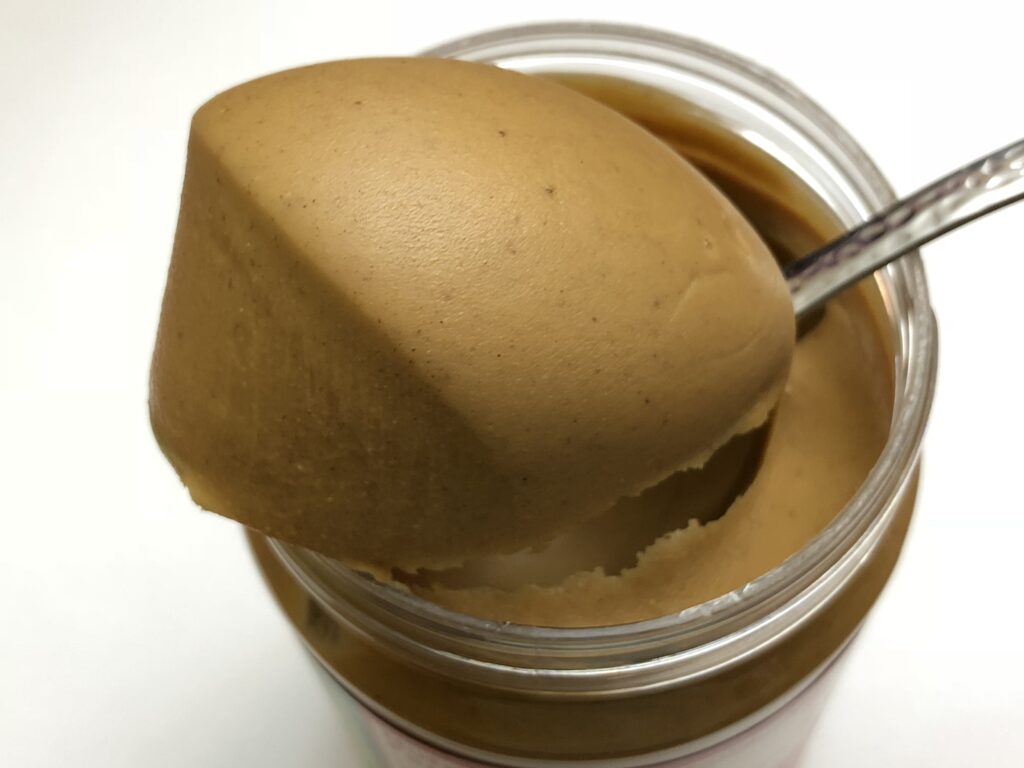
Everything here is measured in tablespoons because a recipe you can hold in your head is a recipe you will actually make on a Tuesday. This makes enough for eight ounces of dried noodles, which feeds two generously.
| Component | Amount | What it is doing |
|---|---|---|
| Peanut butter | 3 tablespoons | Body, fat, the flavor everyone came for |
| Soy sauce | 1 tablespoon | Salt and depth, and it is the first liquid in |
| Rice vinegar or lime juice | 1 tablespoon | Cuts the fat so the bowl does not feel heavy |
| Brown sugar, honey or maple | 1 tablespoon | Balance, and it helps the sauce cling |
| Grated garlic and ginger | 1 teaspoon each | The difference between this and a jar |
| Chili crisp or sriracha | 1 to 2 teaspoons | Optional, and better stirred in than served on top |
| Warm water or noodle water | 4 to 6 tablespoons | The thinning, added last and slowly |
The water range is wide on purpose. Which end you land on depends entirely on what jar you own, which is the next section, and on how long the noodles will sit before they get eaten.
Which jar you own decides how much water
Natural peanut butter, the kind with an inch of oil on top and two ingredients on the label, is looser once stirred and tastes more like peanuts. It also drinks more water, usually the full six tablespoons, and it separates again in the refrigerator, so a jar of leftover sauce needs a hard shake.
Conventional peanut butter is stabilized with a small amount of hydrogenated oil and sweetened, so it holds together better and needs closer to four tablespoons. Because it already contains sugar, cut the tablespoon of sweetener in half or the sauce goes cloying against the soy.
Crunchy works and changes the texture of the finished bowl more than the sauce. Powdered peanut butter is the one to avoid here: reconstituted it lacks the fat that makes the sauce coat, and the result tastes thin and slightly chalky no matter how you adjust it.
Quick peanut noodles, start to finish in fifteen minutes
- Put a pot of water on to boil first, before anything else. It is the only step with a fixed clock and everything else fits inside it.
- Salt the water lightly. The sauce brings its own salt from the soy, so this water should taste noticeably less salty than pasta water usually does.
- In a medium bowl, whisk the peanut butter with the soy sauce, the vinegar or lime, and the sweetener. It will tighten into a stiff paste within about ten seconds. That is correct.
- Grate in the garlic and ginger on a fine grater, straight into the bowl, and add the chili if you are using it.
- Add warm water one tablespoon at a time, whisking hard after each. The paste stays stubborn for the first two, then loosens suddenly around the third.
- Stop when the sauce falls off the whisk in a ribbon and coats the back of a spoon, roughly the consistency of heavy cream. It should look slightly too thin.
- Cook the noodles, checking a minute before the package says. Scoop out half a cup of the cooking water before draining and do not rinse them unless the bowl is going to be eaten cold.
- Tip the hot drained noodles straight into the bowl of sauce, not the other way round, and toss with tongs for about twenty seconds until every strand is coated.
- Loosen with the reserved noodle water, a tablespoon at a time, until it looks glossy rather than gluey. Add the raw vegetables and the sesame oil off the heat, then serve.
Step eight is the one people reverse. Pouring sauce over noodles that are sitting in a colander means the first strands take all of it and the sauce cools on contact with cold metal.
Thinning it correctly, in the right order
The order of the liquids is not decorative. Soy sauce and vinegar go in first because they are salty and acidic, and both of those help the peanut solids let go of each other before plain water arrives. A sauce built with water first takes more whisking to reach the same place.
Add the water warm, not boiling. Warm water blends in without shocking the fat, while water straight off a rolling boil can make natural peanut butter go grainy. Straight from the cold tap it takes noticeably longer to come together, though it gets there.
The consistency target is worth being specific about. Dip a spoon and hold it up: the sauce should coat the back and a finger drawn through should leave a line that closes slowly. If the line holds open and sharp, it is too thick and the noodles will clump.
Slightly too thin is the right side to err on. Hot noodles carry starch, and starch thickens a sauce the moment it lands, so a bowl that looks perfect in the mixing stage will be stiff on the plate.
Noodle water beats tap water for the last adjustment
The half cup you reserve before draining is cloudy with starch, and starch is what makes a sauce cling to a noodle instead of pooling under it. Use plain warm water to build the sauce and noodle water to make the final adjustment in the bowl.
Two tablespoons is usually enough. The tell that you need it is a bowl that looks matte and slightly dry after twenty seconds of tossing, which happens most often with fresh noodles or with anything thick like udon.
Which noodles hold this sauce and which fight it
| Noodle | Cook time | How it behaves |
|---|---|---|
| Dried ramen or chukamen | 3 minutes | Springy, holds sauce well, the default here |
| Spaghetti or linguine | 9 to 11 minutes | Works completely, and it is what most people have |
| Soba | 5 minutes | Excellent cold, needs a rinse, breaks if overtossed |
| Fresh udon | 2 minutes | Thick and thirsty, plan on extra noodle water |
| Rice noodles | Soak or 4 minutes | Good, but they clump fast, so toss immediately |
| Short shapes like penne | Varies | The sauce sits inside the tubes instead of coating |
Long strands are the point. A sauce this thick needs surface area running in one direction, and short shapes turn the bowl into something closer to a salad with dressing pooled at the bottom. Anyone who has spent time on simple noodle bowls already knows the difference a strand makes.
Three vegetables that go in raw, and three that need sixty seconds
Cucumber, carrot and scallion go in raw and need no cooking at all. Cucumber wants to be seeded and cut into matchsticks, because the seed core carries water that thins the sauce on the plate. Carrot works shredded on a box grater. Scallion goes in on the diagonal, greens and whites both.
Red cabbage, bell pepper and bean sprouts also belong in the raw column, and they add crunch that survives a lunchbox better than the cucumber does. Bean sprouts are the exception in one respect: they are grown warm and wet, they have been linked to outbreaks more than once, and anyone pregnant, elderly or immunocompromised should have them cooked rather than raw.
Wash everything under cold running water before it is cut, including anything you plan to peel. A knife drags whatever is on the skin straight into the flesh, so the peeling does not undo the problem.
Broccoli, green beans and snap peas want sixty seconds and no more, and the pot of noodle water is already there. Drop them in for the last minute of the noodles, pull everything out together, and nothing extra gets washed.
Hot tonight, cold tomorrow, and what changes
Eaten hot, this is a dinner. Eaten cold the next day it is a different and arguably better dish, closer to a noodle salad, and the sauce reads sharper because cold mutes sweetness more than it mutes acid.
Two adjustments make the cold version work. Rinse the noodles under cold water after draining if you know they are going in the refrigerator, which strips the surface starch that would otherwise glue them into a brick. Then toss them with a teaspoon of neutral oil before the sauce goes on.
Expect the sauce to thicken overnight regardless. Cooked starch firms up as it cools and it pulls moisture out of whatever is around it, so a container that looked glossy at nine in the evening looks pasty at noon. A tablespoon of water and thirty seconds of stirring fixes it completely.
Heat, acid, and the two things people leave out
Toasted sesame oil is the first omission and the most obvious once you notice it. Half a teaspoon stirred in off the heat, never in the pan, because it is a finishing oil and cooking it flattens the toasted flavor into something generic.
The second is enough acid. One tablespoon in the ratio is a floor, not a target, and a bowl that tastes rich but muddy almost always wants another squeeze of lime rather than more salt. Taste the sauce on a noodle rather than off a spoon, since fat coats the tongue differently in the two cases.
For heat, chili crisp stirred into the sauce distributes better than anything spooned on at the end, and it brings fried garlic and shallot along with it. Sriracha adds vinegar as well as heat, so cut the rice vinegar slightly if you use a lot. A pinch of ground white pepper does something none of them do and is worth trying once.
Peanut allergy, and the swaps that hold up
This is the sauce most likely to end up in a shared lunchroom, so the allergy question is not theoretical. Peanut is one of the major allergens, reactions can be severe, and traces matter, which means a bowl made in a kitchen where the jar was open is not a safe bowl for someone who reacts.
Sunflower seed butter is the closest swap for a nut-free household and behaves almost identically in the ratio, though it is slightly more bitter and wants the full tablespoon of sweetener. Tahini makes a looser, more savory sauce and needs about a third less water. Almond butter works and is still a tree nut, so it solves nothing for a school.
Whichever you use, check the label rather than the front of the jar. Cross-contact statements live in small print near the ingredients, and a seed butter produced on shared equipment is not a clearance.
Leftovers, and the two-hour clock
Cooked noodles are a food that should not sit out. Get dressed noodles into a shallow container and into the refrigerator within two hours of cooking, or within one hour if the kitchen is above ninety degrees, and eat them within three days. A shallow container matters more than it sounds: a deep tub of noodles cools from the outside in and the middle stays warm for a long time.
The reason for the clock is a spore-forming bacterium common in cooked starches, which survives boiling and multiplies in the pot as it cools on the counter. Reheating does not undo it, because what makes people ill is a toxin the bacteria leave behind rather than the bacteria themselves. A pot left out overnight goes in the bin regardless of how it smells, which is the same rule that applies to most cooked grain and noodle dishes.
The sauce on its own is the easier half. In a sealed jar in the refrigerator it holds a week, separates, and comes back with a shake and a splash of warm water. It is also good on roasted vegetables, on shredded chicken, and as a dressing for a raw cabbage salad, which makes a double batch worth the extra two minutes.
Reheat leftovers once, to steaming rather than merely warm, in a pan with a splash of water. Building a sauce like this ahead is one of the better returns in a pared-down weeknight routine.
Frequently Asked Questions
Can I make the sauce in a blender instead?
You can, and for a double batch it is faster. A blender emulsifies harder than a whisk, so start at the low end of the water range and add more through the top while it runs. For a single batch it is more equipment to wash than the job requires.
Why does my sauce taste flat even though I followed the ratio?
Almost always acid, occasionally salt. Add lime juice half a teaspoon at a time and taste after each. If it still reads dull after that, the peanut butter is probably old: the oils in an open jar go stale after a few months and take the flavor with them.
Is coconut milk worth adding?
It makes a richer, milder sauce and it changes the dish into something else. Swap two tablespoons of the water for full-fat coconut milk if you want that, and expect to add more lime, because coconut mutes acid noticeably.
Can this be packed for lunch?
Yes, and it is better packed dressed than undressed, since the noodles hold together instead of drying at the edges. Keep it cold with an ice pack until it is eaten, and pack the herbs and any cucumber separately so they do not go limp.
What protein fits without extra pans?
Anything already cooked, folded in at the end: shredded rotisserie chicken, edamame straight from the freezer bag into the noodle water for a minute, or firm tofu cut into cubes. Raw chicken or shrimp needs its own pan and its own board, and it needs to be fully cooked through before it meets the noodles.
Make the sauce once without the noodles and taste it from a spoon at three different water levels. Once you know what heavy cream feels like off a whisk, this stops being a recipe and becomes something you do without measuring.