
The stand had figs for four weekends and then it did not. That is roughly how the main crop works: a tree drops its fruit over a few weeks, the fruit does not travel well, and by the time most people notice figs are in season the window is half gone.
Which puts a lot of weight on picking correctly at the moment you are standing in front of the box. And the signal almost everyone uses, color, is the one that tells you the least. A Black Mission is nearly black weeks before it is ready, and a Kadota stays green after it is perfectly ripe.
What follows is what the fruit is actually telling you, how the two varieties in most American markets differ, and what to do with a box that arrived softer than you wanted.
- Season: a short early crop in summer, then the main crop over about four to six weeks in late summer and fall
- The test: weight in the hand, a soft give, a bent neck
- Ignore: color, except as a variety marker
- Critical fact: a picked fig does not get sweeter, ever
- Keeps: two days at room temperature, four to five refrigerated in a single layer
- Too soft: stovetop jam, the freezer, or a vinaigrette, in that order
Two crops, and why the second one is the short one
Many fig varieties produce twice. The first, smaller crop grows on the previous year’s wood and shows up in early summer; the fruit is larger, less concentrated, and often less sweet. The main crop grows on the current season’s growth and arrives from late summer into autumn.
The main crop is the one worth planning around, and it is short. A single tree ripens over a few weeks, and because ripe figs bruise easily and have essentially no shelf life, the supply that reaches a market is narrower still than the supply on the tree.
Pollination explains one of the odder facts about the fruit. The common fig varieties sold in most American markets set fruit without pollination at all, while certain other types depend on a specific wasp to reproduce. It has no bearing on how you shop, and it is why the fig is one of the strangest things in the produce aisle.
How to tell if figs are ripe without cutting one open
Pick one up. A ripe fig feels heavy for its size and gives under gentle pressure the way a ripe peach does, yielding without your thumb going through the skin. A fig that feels light and firm is not going to improve.
Then look at the neck, the narrow part where the fruit meets the stem. On a ripe fig it has softened enough that the fruit droops and hangs down rather than standing straight out. That bend is the most reliable single visual signal there is.
Two more confirmations. The ostiole, the small opening at the base of the fruit, opens slightly as the fig ripens, and a bead of clear syrup at that opening is a good sign rather than a defect. And a ripe fig smells sweet and faintly floral when you hold it near your face; an unripe one smells of nothing at all.
Small cracks in the skin are also fine, and often indicate a very sweet fruit that expanded faster than its skin. Long splits that are wet, weeping or attracting insects are a different matter and belong in the previous category of do not buy.
Why color is the least useful signal
Color is set by variety, not by ripeness, and this is where most shoppers go wrong. Black Mission figs develop their deep purple-black skin well before the flesh is ready, so a box that looks uniformly dark tells you nothing about what is inside.
The reverse trap also exists. Kadota and other green varieties stay yellow-green at full ripeness, and people leave them on the counter waiting for a color change that is never going to arrive, by which point the fruit has gone over.
What color does tell you is which fruit you are holding, and that is genuinely useful, because the varieties behave differently in a pan. Read the color as a name tag rather than as a clock.
Black Mission and Brown Turkey, side by side
These two account for most of what shows up in American markets, and they are not interchangeable.
| Black Mission | Brown Turkey | |
|---|---|---|
| Skin | Deep purple to nearly black | Brownish-purple, often lighter at the neck |
| Flesh | Deep pink to red, dense | Pale pink to amber, looser |
| Sweetness | High, jammy, almost syrupy | Moderate, milder, more watery |
| Skin thickness | Thinner, bruises fast | Thicker, travels better |
| Best raw | Yes, on its own or with cheese | Acceptable, better with salt and fat |
| Best cooked | Roasts and jams beautifully | Holds shape better in a pan |
| If you see both | Buy for eating out of hand | Buy for anything with heat |
Two others turn up regularly. Calimyrna is large, golden-green and distinctly nutty, and it is the one most often sold dried. Adriatic has green skin and shockingly red flesh, and it is the best-looking fig on any plate.
A picked fig does not get sweeter
This is the fact that changes how you shop. Figs are non-climacteric, which means they do not continue ripening after harvest the way bananas, avocados and pears do. There is no starch reserve left to convert, and the sugar the fruit has when it is cut is the sugar it will ever have.
A hard fig on the counter will soften slightly as it loses water, and people read that softening as ripening. It is not. It is dehydration, and the fruit tastes flat and slightly cottony when it finally yields.
So there is no rescue for a bad box, and no paper bag trick. Every other rule in this piece follows from that: taste before you commit if the seller allows it, buy the ones that are ready today, and buy fewer of them more often.
The four days you actually have
Room temperature is for figs being eaten the same day or the next. Keep them in a single layer, stem side up, uncovered, out of the sun. Stacked figs crush the ones on the bottom within hours.
For anything longer, refrigerate. Line a shallow container with a paper towel, arrange the fruit in one layer without touching, and leave the lid loose. Four to five days is realistic, and the fruit should come back to room temperature for about half an hour before eating, because cold mutes the flavor substantially.
Do not wash them until the moment of use. Surface water on a fig accelerates mold noticeably, and the skin is thin enough that a soaked fig turns mushy. A quick rinse and a gentle pat dry immediately before serving is all they need.
The freezer is a legitimate option and underused. Halve them, freeze on a tray until firm, then bag them. Texture does not survive, but frozen figs are excellent in a blender, a jam pot or a pan sauce, and they hold for months.
Three uses that need no oven
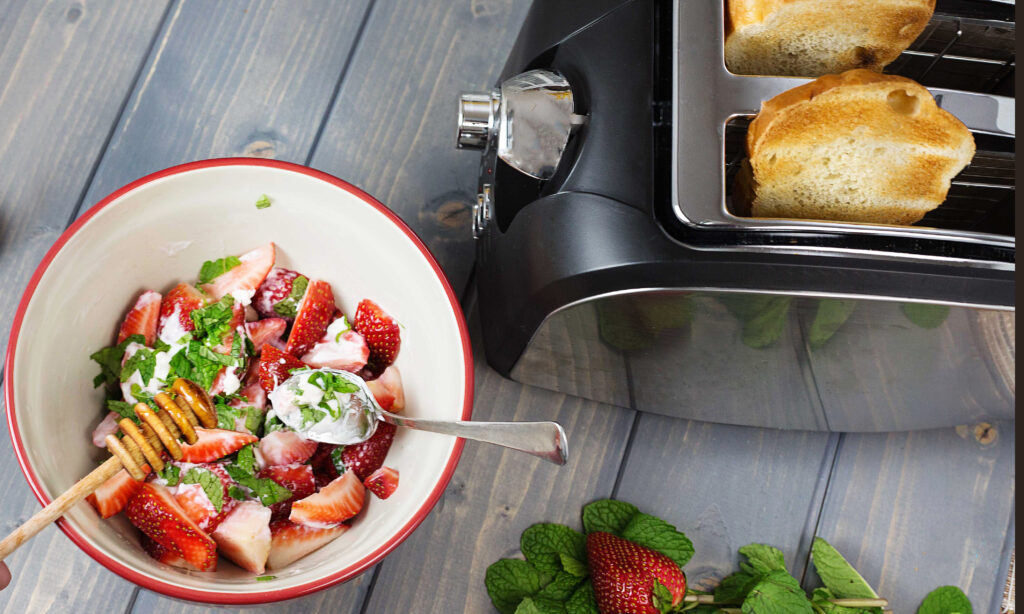
Torn onto ricotta. Spread whole-milk ricotta on toasted bread, tear figs over it rather than slicing so the ragged edges catch, then olive oil, flaky salt and black pepper. Honey optional and usually unnecessary with a ripe Black Mission.
A twelve-minute stovetop jam. A pound of figs quartered, a third of a cup of sugar, a strip of lemon peel and a tablespoon of lemon juice in a saucepan over medium heat. Twelve to fifteen minutes with occasional mashing, until it mounds on a spoon. It sets soft, keeps two weeks in the refrigerator, and is not shelf stable, which matters if you were planning to give it away. Spooned warm over ice cream it becomes one of the cold-weather desserts that takes fifteen minutes.
A vinaigrette. Three very ripe figs, two tablespoons of red wine vinegar, a teaspoon of mustard, a quarter cup of olive oil and salt, blended smooth. It is thick, faintly grainy from the seeds, and the best possible use for fruit that has gone too soft to serve whole.
A fourth, barely a recipe: a fig split open, a piece of sharp cheese pressed in, and a leaf of basil. That is the entire dish and it is better than most things that take an hour.
What to do with the ones that arrived too soft
Sort the box the moment it comes home, because one fig collapsing takes its neighbors with it. Anything still intact goes into the refrigerator in a single layer. Anything soft but sound goes into a bowl for today.
Very soft figs have three good destinations. The jam pot, where softness is an advantage and cooking time drops. The blender, for the vinaigrette above or for a smoothie. Or the freezer, halved and spread on a tray, for use in a pan sauce later.
A pan of soft figs with butter, a splash of balsamic and a pinch of salt over medium heat for four minutes turns into a sauce for pork or chicken, and that is probably the highest-value thing to do with fruit otherwise on its way out. It follows the same structure as any quick pan sauce: fat, something sweet, something acidic, salt.
The line between very ripe and finished
A ripe fig and a spoiled one are only a day or two apart, so the distinction is worth knowing precisely.
Signs it is still good: a bead of clear syrup at the ostiole, a very soft body, small skin cracks, a white bloom on the skin, which is natural and not mold. Signs it is finished: any fuzzy growth, a sour or alcoholic smell, brown liquid pooling underneath, or flesh that has gone slack and watery inside a wrinkled skin.
The alcohol smell is the practical cutoff. Once figs begin to ferment, the fruit is on its way out and there is no cooking step that fixes it. Mold on soft fruit should not be cut away the way it can be on a firm carrot or a hard cheese, because the moisture in the flesh lets it spread further than what is visible.
Fig latex, gelatin, and a note about hands
Fresh figs contain ficin, a protein-digesting enzyme concentrated in the milky latex of the plant. It has two practical consequences.
The first is that raw figs will keep gelatin from setting, exactly as fresh pineapple, kiwi and papaya do. A fig panna cotta or jelly made with raw fruit stays liquid. Cooking the figs for a few minutes first deactivates the enzyme and solves it entirely.
The second is skin. The latex from stems, leaves and unripe fruit irritates skin on contact, and it contains compounds that react with sunlight to produce a burn-like rash. It is a real issue for anyone picking from a tree and largely irrelevant to a box from a market, but it is worth knowing before sending a child up a ladder. Wear sleeves, and wash hands and forearms afterward.
What two figs are worth, roughly
Two medium fresh figs land somewhere near 70 to 80 calories, with two to three grams of fiber and the rest of it sugar. Those are estimates; size varies enormously between a small Brown Turkey and a large Calimyrna, and the number on a nutrition panel assumes a fruit weighing about fifty grams.
Dried figs are a different food entirely. The water is gone, so the sugar concentrates, and a quarter cup of dried figs carries roughly three times the calories of two fresh ones. Both are worth eating; they are simply not substitutes for one another in a bowl or in a recipe.
Fresh figs are a decent source of fiber and contribute potassium and calcium in modest amounts. That is a reasonable footnote rather than a reason to eat them, and the actual reason is that for about four weeks a year they are the best fruit at the market. Buying at the peak of a short season is most of what separates good produce from expensive produce.
Frequently Asked Questions
Do you eat the skin?
Yes, on every variety sold fresh. The skin is thin, edible and carries a lot of the flavor. Peeling is only worth doing for a very specific presentation, and it wastes both time and fruit. Trim the small hard stem if it bothers you.
Can I ripen figs at home?
No. They do not ripen after picking, so a hard fig stays a hard fig and then dehydrates. This is the one point worth remembering from the whole piece, because it changes what you buy rather than what you do at home.
Why did my figs mold in two days?
Almost always stacking or moisture. Figs piled in a bag crush each other, and broken skin plus humidity is where mold starts. Single layer, loose lid, unwashed until use, and sort the box on the day it arrives.
What cheese goes with fresh figs?
Salt and tang are what the fruit wants. Goat cheese, blue cheese, ricotta, feta and aged sheep’s milk cheeses all work. Very mild cheeses disappear underneath the sweetness, which is why a fig on plain mozzarella is disappointing.
Are the little crunchy bits seeds?
Technically they are the fruit. A fig is an inverted flower cluster, and what looks like seeds are the individual fruits formed inside it. They are entirely edible and are most of the texture that makes a fig interesting.
Can I substitute dried figs in a recipe calling for fresh?
Sometimes, with an adjustment. Soak them in warm water or wine for twenty minutes and reduce the sugar in the recipe, since dried fruit is far sweeter by weight. In anything raw, where texture is the point, the swap does not work.
Go on the first weekend they appear rather than the last, buy four, and eat one standing at the counter before deciding how many to go back for.