
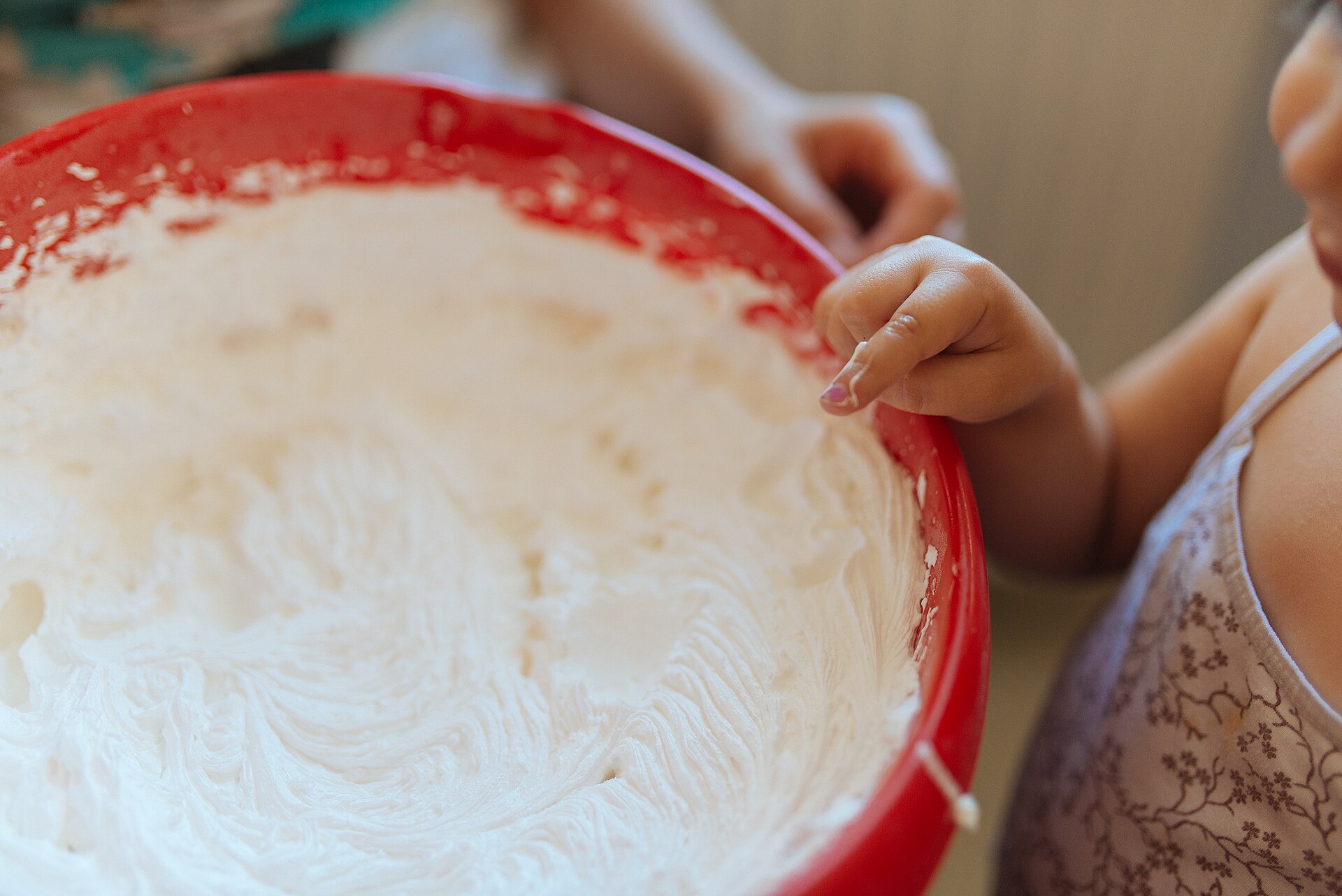
Plain whipped cream is stable for about an hour on a buffet table before it starts weeping into a thin pool at the base of whatever it’s topping. A pumpkin pie set out at two for a dinner at five, with a bowl of whipped cream sitting beside it the whole time, does not survive that gap looking the way it did when it left the mixer.
Four ingredients fix this, and none of them are exotic: cornstarch, cream cheese, powdered milk, and gelatin each stabilize whipped cream by a different mechanism, and each changes the taste and texture slightly differently in the process. Picking the right one depends on how long the cream actually needs to hold and how much the flavor is allowed to shift.
None of the four require special equipment beyond what’s already needed to whip cream in the first place. The only real skill is knowing the right amount per cup, since too little does nothing and too much turns whipped cream into something closer to frosting.
- Best for a light hold, up to 3 hours: cornstarch, 1 tablespoon per cup
- Best for 4 to 6 hours: cream cheese, 2 ounces softened per cup
- Best for flavor-neutral holding: powdered milk, 2 tablespoons per cup
- Best for the longest hold, 8+ hours: gelatin, half a teaspoon bloomed per cup
- What never works long-term: plain whipped cream with just sugar, no stabilizer
Why plain whipped cream collapses so fast
Whipping cream traps air bubbles inside a network of fat globules, and that structure is inherently unstable at room temperature, since the fat is constantly softening and the air bubbles are constantly trying to escape and merge into fewer, larger ones. Within about an hour outside the refrigerator, that structure starts visibly breaking down, releasing liquid and losing volume.
A stabilizer works by reinforcing that fragile fat-and-air structure with something else entirely, whether it’s a thickened starch network, additional milk proteins, or a set gelatin gel, so the whipped cream holds its shape even as the fat itself starts to soften in a warm room.
Cornstarch: the fastest, most neutral option
A tablespoon of cornstarch whisked into a quarter cup of the total cream and heated gently until it thickens into a loose paste, then cooled to room temperature before being folded into the remaining cream as it whips, adds enough structure to hold for about three hours without any noticeable change in taste or texture. This is the easiest stabilizer for anyone who’s never stabilized whipped cream before, since cornstarch is already in most pantries.
The cornstarch paste needs to cool fully before going anywhere near the cream, since a warm addition can partially melt the fat and prevent the cream from whipping properly afterward. Ten minutes on the counter is usually enough.
Cream cheese: the richest, longest-holding of the easy options
Two ounces of softened cream cheese per cup of cream, beaten smooth on its own before the cream and sugar are added gradually, produces a noticeably thicker, richer whipped cream that holds its shape for four to six hours without weeping. The tangy edge cream cheese carries through faintly, which pairs especially well with pumpkin or spiced desserts where a little tang complements the spice.
Beating the cream cheese completely smooth before anything else goes in matters more here than with any other stabilizer, since even small lumps of unbeaten cream cheese show up as visible flecks once the mixture is fully whipped.
Powdered milk: stable and completely flavor-neutral
Two tablespoons of powdered milk whisked directly into the cream before whipping adds extra milk proteins that reinforce the whipped structure without contributing any noticeable flavor of its own, which makes it the best choice for a dessert where the cream’s plain, clean taste matters. It holds reasonably well for about four hours, a middle ground between cornstarch’s shorter window and gelatin’s longer one.
Sifting the powdered milk before adding it prevents small clumps from ending up in the finished cream, since powdered milk tends to clump more than cornstarch does when exposed to any ambient humidity in an open container.
Gelatin: the longest hold, with the most technique required
Half a teaspoon of unflavored powdered gelatin bloomed in a tablespoon of cold water for five minutes, then gently melted and cooled to just above room temperature before being drizzled into the cream partway through whipping, produces a whipped cream stable enough to hold its shape for eight hours or more, including through a long buffet stretch or an overnight refrigerated hold. This is the option worth using for a dessert being transported to another location or set out for an entire afternoon.
The gelatin needs to be added at the right temperature and the right moment: too hot and it deflates the cream that’s already been whipped; too cold and it sets into stringy threads before it can distribute evenly. Adding it while the cream is still soft, before stiff peaks form, gives the most even result.
Stabilized whipped cream: four methods compared, cup for cup
| Stabilizer | Amount per cup of cream | Hold time | Flavor effect |
|---|---|---|---|
| Cornstarch | 1 tablespoon, cooked into a paste first | Up to 3 hours | None |
| Cream cheese | 2 ounces, softened and beaten smooth | 4 to 6 hours | Slight tang |
| Powdered milk | 2 tablespoons, sifted | About 4 hours | None |
| Gelatin | 1/2 teaspoon, bloomed and melted | 8+ hours | None once fully cooled |
Combining two methods, a small amount of cornstarch paste alongside a touch of gelatin, pushes the hold time even further for anyone piping elaborate decorations that need to survive an entire event without slumping.
Getting the cream itself right before adding anything
Heavy whipping cream, chilled along with the bowl and beaters for at least fifteen minutes beforehand, whips faster and holds a more stable structure from the start than cream or equipment left sitting at room temperature. Light or half-and-half style creams don’t have enough fat content to whip into stiff peaks at all, stabilized or not, so starting with the right product matters as much as any stabilizer added afterward.
Whipping to soft peaks before adding a stabilizer, rather than fully stiff peaks, gives the added ingredient room to incorporate evenly without deflating cream that’s already at its maximum volume.
How much sugar to add, and when
Two tablespoons of granulated or powdered sugar per cup of cream is a standard sweetness level, added gradually once soft peaks have formed rather than all at once at the start, which helps it dissolve fully rather than leaving a gritty texture in the finished cream. Powdered sugar, which already contains a small amount of cornstarch, offers a mild stabilizing boost on its own even before any additional stabilizer is added.
Vanilla extract or a scraped vanilla bean, added at the same point as the sugar, rounds out the flavor without interfering with any of the four stabilizing methods described above.
Piping stabilized cream versus spooning it
Stabilized whipped cream holds a piped shape, rosettes, borders, decorative swirls, far better than plain whipped cream, which tends to slump and lose definition within thirty minutes even refrigerated. Gelatin-stabilized cream in particular pipes almost like a soft frosting, holding crisp edges for hours rather than minutes.
For a simpler dollop spooned directly onto individual servings rather than a whole cake or pie, the lighter cornstarch or powdered milk methods are usually sufficient, since the cream isn’t being asked to hold a precise decorative shape, just its basic volume.
Sizing the batch for a buffet instead of a single pie
A single cup of cream, whipped, roughly doubles in volume, which covers a modest topping for one pie or a small cake. A buffet spread with multiple desserts, or a crowd expected to come back for seconds, generally needs closer to three or four cups of cream whipped at once, which means scaling every stabilizer amount up proportionally rather than guessing at a larger pinch.
Whipping a larger batch in stages, rather than all four cups in one bowl at once, gives more even results with a standard home mixer, since overcrowding the bowl with a full four cups of cream and stabilizer can leave the bottom under-whipped while the top over-whips before the machine can catch up.
What happens if you use too much stabilizer
Overdoing any of the four methods, extra gelatin especially, turns whipped cream from a light, airy topping into something closer to a set mousse or a stiff frosting that holds a knife mark rather than dissolving smoothly on the tongue. This isn’t unsafe, just an unpleasant texture shift that undercuts the point of serving whipped cream in the first place.
Sticking to the measured amounts per cup, rather than adding a little extra for insurance, avoids this. If a stronger hold is genuinely needed beyond what one stabilizer provides, combining a smaller amount of two different methods works better than doubling a single one.
Coloring or flavoring stabilized whipped cream
Cocoa powder, a fruit puree, or a few drops of gel food coloring can all be folded into stabilized whipped cream after it reaches soft peaks, following the same order as sugar and vanilla. Liquid additions like a thin fruit puree should be kept small, a tablespoon or two per cup, since too much extra liquid can undo some of the stabilizing work already done.
Gel-based food coloring is a better choice than liquid drops for this reason specifically, since it adds vivid color without meaningfully changing the cream’s water content or its ability to hold a stable structure over several hours.
Frequently Asked Questions
Can I use these stabilizers on cream that’s already been whipped?
It’s much harder to add a stabilizer after the cream is already whipped, since folding anything in at that point risks deflating the air already worked into it. Adding the stabilizer partway through the whipping process, once soft peaks have formed, gives the most reliable result.
Does stabilized whipped cream need to be refrigerated if it’s holding for six hours?
Yes, cream is a dairy product regardless of stabilizer and should not sit above 40 degrees for more than about two hours per standard food safety guidance. A stabilizer extends how well it holds its texture and shape, not how long it’s safe to leave unrefrigerated.
Will my whipped cream taste like gelatin if I use that method?
Properly bloomed, melted, and cooled unflavored gelatin has essentially no taste of its own once fully incorporated and chilled. Any noticeable gelatin flavor usually means it was added too warm or in too large a quantity relative to the amount of cream.
Can I stabilize a dairy-free whipped topping the same way?
Coconut cream whips and holds reasonably well on its own without needing much added stabilizer, since its higher saturated fat content already gives it more natural structure than dairy cream. A small amount of powdered sugar helps it hold slightly longer if extra stability is needed.
What’s the fastest fix if my whipped cream starts weeping on the buffet already?
A quick re-whip with a whisk for ten to fifteen seconds can bring back some volume and texture if it’s caught early, though this only works once or twice before the cream genuinely breaks down and needs to be replaced with a fresh batch. Keeping a small backup bowl chilled in the refrigerator, ready to swap in, is a reasonable safeguard for a longer event.
Does the type of bowl I whip in affect how well the cream holds afterward?
A chilled metal bowl whips cream faster and to a slightly more stable structure than a room-temperature glass or plastic bowl, since metal conducts cold more efficiently and keeps the cream’s fat firmer throughout the whipping process. This is a small effect compared to the stabilizer itself, but it helps on the margins, especially in a warm kitchen.
Pick the stabilizer that matches how long the dessert actually needs to sit out, not the longest option by default, and a bowl of whipped cream stops being the first thing that looks tired on the table.