
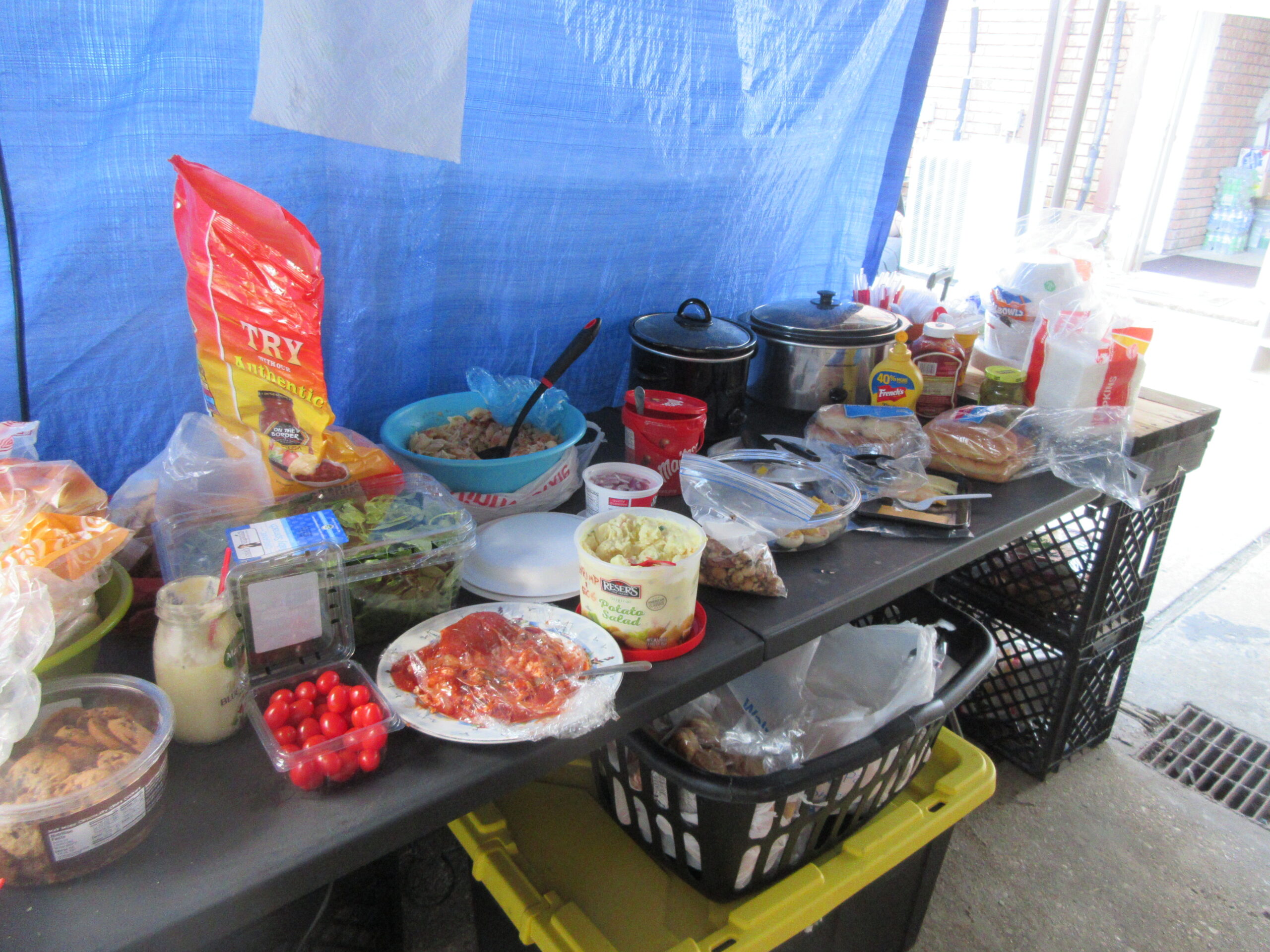
Six dishes, one oven, and a guest list arriving in ninety minutes is the moment most hosting plans fall apart, not because any single dish is hard, but because they were all scheduled for the same two hours by accident. The fix is not cooking faster. It is deciding, days in advance, which dishes actually need that morning and which ones have been done since Tuesday.
Twelve common party dishes sorted onto the day they should be made, based on what actually holds and what degrades, turns a chaotic final hour into a short list of reheating and plating. Three of them can be fully assembled ahead and simply pulled out. The rest need a specific last step reserved for the day itself, and knowing which step that is changes everything about how the morning goes.
None of this requires new recipes. It requires moving the parts of existing ones onto the days where they actually belong.
- Two days out: anything baked, braised, or made from a dip base
- One day out: anything roasted, marinated, or built from raw dairy
- That morning: anything fried, anything with fresh herbs on top, salad
- Fully assembled ahead: baked dips, braises, most desserts
- Never assembled early: anything with lettuce, anything fried
- The rule underneath all of it: the two-hour window once food is out
Why the same six dishes always collide
Most party menus lean heavily on the oven in the final hour: a casserole reheating, rolls warming, something roasting, and a dessert that needed to come out twenty minutes before guests arrive. That is four things wanting the same appliance at the same time, which is a scheduling problem disguised as a cooking problem.
The dishes that actually need last-minute attention are a small minority of any menu. Dips, braises, most desserts, and anything pickled or marinated are better after resting a day than they are fresh, which means the crowded final hour is usually self-inflicted rather than unavoidable.
Sorting the whole menu onto a calendar before shopping even happens is what prevents the collision, and it takes about ten minutes with the actual dish list in hand.
The schedule, dish by dish
| Dish | When to make it | Why |
|---|---|---|
| Baked cheese dip | Two days out | Reheats without losing texture |
| Braised short ribs or pulled pork | Two days out | Flavor improves resting a day or two |
| Most cakes and bar desserts | Two days out | Texture holds, some improve |
| Roasted vegetables | One day out | Reheat well, lose little texture |
| Marinated proteins, uncooked | One day out | Needs time in the marinade, cooks fresh |
| Deviled eggs, filling and whites separate | One day out | Assembled morning-of to stay neat |
| Fried anything | That morning | Loses crispness within hours |
| Green salad | That morning | Wilts once dressed |
| Fresh herb garnish | That morning | Wilts and discolors fast |
| Whipped cream, fresh | That morning | Deflates within a few hours |
| Guacamole | That morning | Browns quickly once cut |
| Anything fried and served cold, like shrimp | That morning | Texture and food safety both shorten the window |
The pattern across the two-days-out column is that heat, braising, and baking are all doing chemistry that finishes or even improves with rest. The pattern across the that-morning column is fragility: things that wilt, brown, deflate, or turn soggy from sitting.
Two days out: what actually improves with rest
Braises are the clearest case. A pot of short ribs, chili, or pulled pork tastes better on day two than the day it was made, since the fat redistributes and the flavors have time to settle into the meat rather than sitting mostly in the sauce. Cooking it two days ahead is not a compromise; it is often the better version of the dish.
Baked dips built on a cream cheese or sour cream base hold their texture through a full reheat, provided they are covered tightly and reheated slowly rather than blasted at high heat, which can cause the dairy to separate.
Most cakes, bar desserts, and cookies keep well for two days at room temperature or refrigerated, and several, particularly anything with a caramel or spiced element, taste rounder after a day than fresh out of the oven.
One day out: proteins, roasted vegetables, and the deviled egg exception
Raw proteins meant to be grilled or roasted fresh benefit from marinating a full day ahead, which is prep time rather than cooking time and shortens the actual cooking window on the day itself considerably.
Roasted vegetables reheat acceptably in a hot oven for ten minutes, regaining most of their texture, which makes them a reasonable one-day-out dish as long as the reheat happens in an oven rather than a microwave, where they turn soft rather than staying browned.
Deviled eggs are the specific exception worth calling out: boil and peel the eggs, and make the yolk filling, a full day ahead, storing the filling and the halved whites separately. Piping the filling into the whites the morning of keeps the whites from weeping and the whole dish from looking tired by the time guests arrive.
That morning: the short list that cannot move earlier
Fried food is the strongest case for morning-of cooking. Nothing fried holds its crispness more than a couple of hours, and reheating rarely brings it back; a fryer or a hot oven run close to serving time is the only real fix.
Anything with fresh herbs scattered on top for looks, or a salad tossed in dressing, needs to happen close to serving because both wilt visibly within an hour. Cutting the herbs and washing the greens can happen the day before; the actual assembly cannot.
Guacamole and any cut avocado belong on this list for the same reason cut fruit does elsewhere: browning starts within minutes of cutting, and even a thorough coating of lime juice only slows it rather than stopping it. Make it as close to serving as the schedule allows, and keep plastic wrap pressed directly against the surface for the gap in between.
Which three dishes can be fully assembled ahead
Baked cheese dips are the clearest example: fully assembled, baked, cooled, covered, and refrigerated two days out, then reheated covered in a low oven the day of. Nothing about the process changes for having been made early.
A braise served as a main dish, short ribs, a pot of chili, a pulled pork, is the second: fully cooked, cooled, refrigerated, and reheated gently on the stove or in the oven, arguably better for the rest.
Most bar-style desserts, a pan of brownies or blondies, a fruit crisp filling assembled and topped but baked fresh, or fully baked and reheated briefly, round out the third category. All three share the trait of being built from ingredients that hold their structure through a full cook-cool-reheat cycle, which is exactly what a good make-ahead system is built around in the first place.
The two-hour rule still applies once the food is on the table
Everything in this schedule assumes the food goes from the refrigerator to hot, or stays properly cold, right up until it is served. Once a dish is out on a buffet table, the same two-hour rule that governs leftovers applies to a party spread: perishable dishes should not sit at room temperature longer than two hours total, and less in a warm room.
For a longer party, that means refreshing dishes rather than leaving one tray out for the full evening. Keep half of a dip or a tray of deviled eggs in the refrigerator and swap it in partway through, rather than putting the whole batch out at six and clearing it at ten.
This matters most for anything with dairy, egg, or cooked meat in it, and less for things that are dry or acidic by nature, like most dips built on vinegar or citrus. A cheese board sitting out for three hours is a bigger risk than a bowl of chips sitting out for the same three hours.
Building a party food make ahead schedule from your own menu
- List every dish going on the table, including sides and dessert.
- Sort each one into two days out, one day out, or that morning, using the table above as a starting point.
- Check that no more than two or three dishes land in the that-morning column, since that is the realistic capacity of a single kitchen in a short window.
- Note the oven and stovetop needs for each dish and check for collisions on the day itself.
- Write the schedule down, dish and day together, rather than keeping it as a mental plan.
Step three is where most menus need adjusting. If four dishes all land in the morning-of column, look for one or two that could shift a day earlier with a small change, like roasting vegetables the day before instead of the morning of, even if it costs a little texture.
What happens when the schedule slips anyway
Even a well-built schedule runs into a day that gets away from the host, and knowing which dishes tolerate a slip is as useful as the schedule itself. A braise planned for two days out that only gets made the night before still turns out fine, since it has not lost the benefit of resting entirely, just most of it.
A dish planned for one day out that gets pushed to that morning is usually recoverable with a shortcut: roasted vegetables can go under a broiler instead of a slower oven roast to save fifteen minutes, and marinated protein can sit for a shorter window and still pick up meaningful flavor, just less than a full day would give it.
The dishes that do not tolerate a slip in the other direction, morning-of items made a day early instead, are the ones worth protecting most carefully in the schedule. A salad dressed the night before or fried food cooked too early cannot be un-wilted or re-crisped, so if something has to be sacrificed under time pressure, it should be one of the earlier, more forgiving categories rather than one of these.
Building in one buffer hour on the morning of the event, with nothing scheduled during it, gives the whole plan somewhere to absorb a slip without cascading into every other dish arriving late.
Frequently Asked Questions
Can I make a green salad the night before if I keep the dressing separate?
Yes, that is the standard workaround. Wash and dry the greens the night before, store them in a container lined with a paper towel, and toss with dressing only right before serving.
Is it safe to cook a braise two days ahead and just reheat it?
Yes, provided it cools properly before refrigeration, ideally in a shallow container rather than a deep pot, and is reheated to fully hot throughout rather than just warm before serving.
What about dishes for a potluck where I don’t control the timing?
Lean toward the two-days-out and one-day-out categories specifically because they tolerate an unpredictable window between your kitchen and the table better than anything fragile or fried does.
How do I keep fried food crisp if it has to travel to someone else’s house?
Reheat it in an oven at the destination rather than trying to keep it warm in a container during transport, which traps steam and softens it. A vented container helps but does not fully solve the problem.
Does this schedule change for a smaller, more casual gathering?
The categories stay the same; only the number of dishes shrinks. A dinner for six built the same way, two-days-out braise, one-day-out sides, morning-of salad, is the same logic behind any smaller dinner party menu that still needs to come together on time.
Write the schedule on the same page as the shopping list before either one is finalized, and the morning of the party becomes reheating and plating instead of cooking against the clock, which is most of what separates a relaxed host from a frazzled one.