
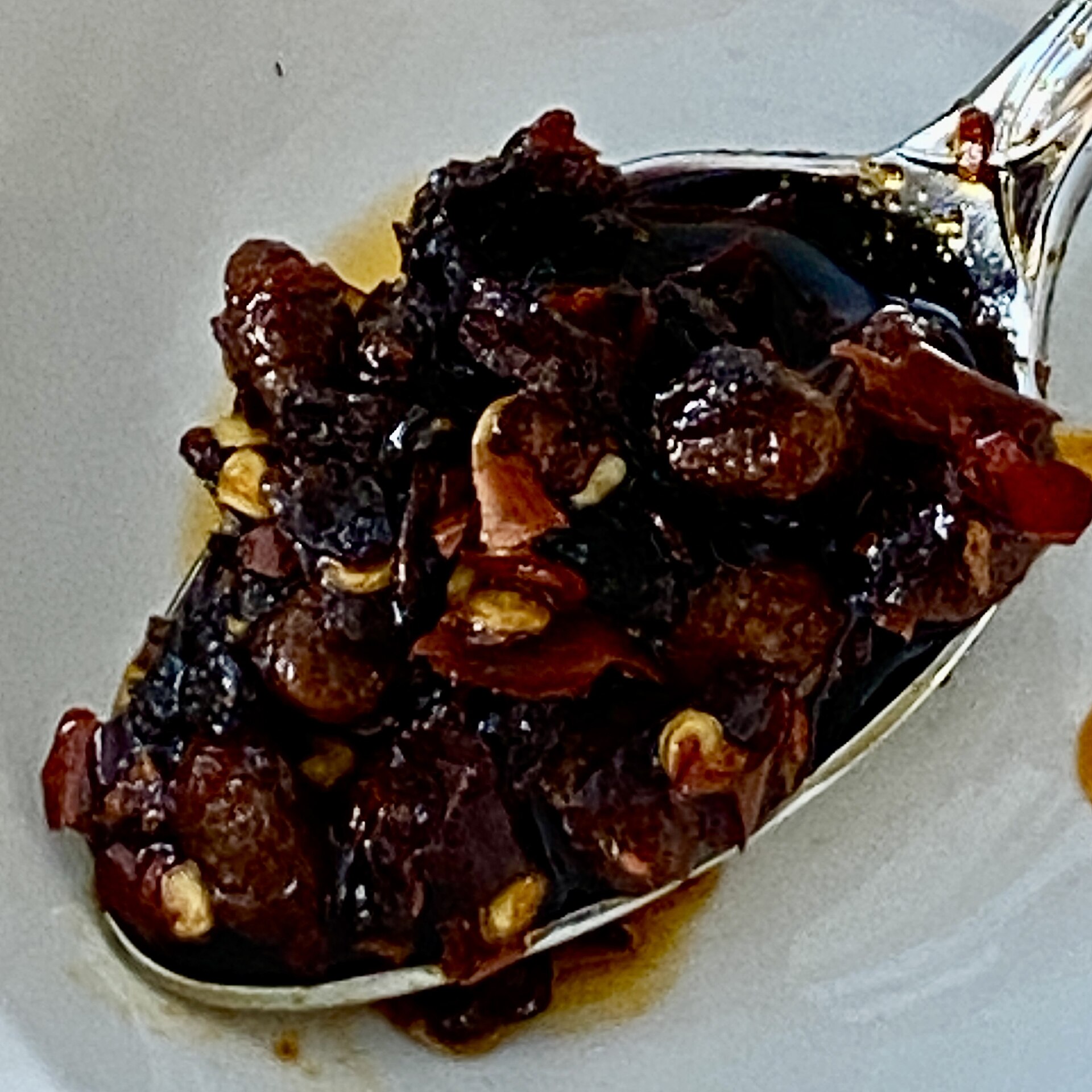
The jar has been in the refrigerator door for two months, mostly untouched since the first week it was bought, when it went on everything for four days straight and then quietly stopped being reached for. That pattern, an enthusiastic first week followed by a jar that sits, is common enough that it is worth asking what is actually in the jar and where else it belongs besides a bowl of noodles.
Chili crisp is not one recipe. It is a category, and the popular jars on a supermarket shelf differ enough in heat, crunch, and saltiness that swapping one brand for another in a recipe changes the dish more than swapping most other condiments would.
Knowing what is actually floating in the oil, and how the major brands differ, makes it easier to pick the right jar for a given use and to stop treating the one in the refrigerator as a noodle-only condiment.
- Base: neutral oil infused with aromatics and dried chili
- The crunch: fried garlic, shallot, and sometimes soybeans or peanuts
- The heat: varies enormously by brand, mild to genuinely sharp
- Storage: refrigerate after opening, most brands say so on the label
- Homemade risk: garlic in oil at room temperature is not safe to store
- Best beyond noodles: eggs, roasted vegetables, popcorn, dumpling sauce
What is actually inside the jar

A jar of chili crisp is built on three layers. The base is a neutral oil, usually soybean, canola, or a similar mild oil, infused with dried chili flakes or chili powder, giving the oil its red color and most of its heat. Sichuan peppercorn and star anise are common flavoring additions in the infusion stage, contributing a background numbness or a faint licorice note depending on the brand.
The crunch layer is fried aromatics, most often garlic and shallot cooked slowly in oil until deep golden and crisp, then left in the jar rather than strained out. Some brands add fried soybeans, peanuts, or sesame seeds for extra texture, which is part of what separates a thin chili oil from a genuine chili crisp.
Salt, sugar, and sometimes MSG round out the seasoning, and a good jar balances all three layers so no single element, the heat, the crunch, or the salt, dominates the spoonful. A jar that tastes only hot, or only salty, is usually one where that balance is off.
How the popular brands differ in heat and crunch
| Style | Heat level | Crunch | Best for |
|---|---|---|---|
| Mild, garlic-forward | Low | Heavy, mostly garlic and shallot | Eggs, popcorn, anyone heat-sensitive |
| Balanced, classic style | Medium | Moderate, garlic and chili flake | Noodles, dumplings, most general use |
| Numbing, Sichuan-forward | Medium, with tingling | Light, more oil than solids | Cold noodle dishes, dumpling dipping sauce |
| Sharp, chili-forward | High | Light, mostly chili flake | Anyone who wants heat over texture |
Heat is the axis that varies most between brands, and it is worth tasting a small amount straight off a spoon before adding a full tablespoon to a dish, since one popular brand’s medium can be another’s hot. Crunch varies almost as much: some jars are mostly oil with a thin layer of solids at the bottom, and others are packed dense enough that a spoonful is more garlic and shallot than oil.
Reading a label before buying a second jar
The ingredient list, read in order, tells you what the jar actually prioritizes. Oil listed first with chili and garlic close behind suggests a balanced jar; sugar or MSG listed unusually high suggests a jar leaning on seasoning to cover for a thinner chili and garlic base.
Anyone comparing jars specifically for texture should look for whether whole fried garlic or shallot pieces are visible through the glass, rather than a jar that looks like plain red oil with no visible solids settled at the bottom.
Price correlates loosely with the ratio of crunch to oil, since fried garlic and shallot cost more to produce than plain infused oil, though this is a rough pattern rather than a reliable rule across every brand on a shelf.
What to do with chili crisp beyond a bowl of noodles
Noodles are the obvious use and also the least interesting one, given how much else in a kitchen benefits from the same jar. A spoonful stirred into fried rice at the very end adds both heat and crunch in one move, doing a job that would otherwise take garlic, chili flake, and a finishing oil added separately.
Roasted vegetables, especially anything sweet like carrots or squash, take well to a drizzle right out of the oven, since the fat in the chili crisp carries the heat across the whole tray rather than sitting in one spot. The same logic works on a baked potato in place of butter and hot sauce both at once.
Popcorn tossed with a spoonful of the oil and a light scatter of the solids from the bottom of the jar makes a genuinely good savory snack with almost no effort, closer to a proper seasoning blend than most popcorn toppings manage.
Two breakfast uses worth trying
Fried or scrambled eggs finished with a spoonful of chili crisp, added at the very end off the heat, is one of the more common uses in households that keep a jar going, and it works because eggs are mild enough to carry the full flavor of the condiment rather than competing with it.
Avocado toast gets the same treatment well: mashed avocado, a squeeze of lime, and a spoonful of chili crisp instead of the usual chili flake and olive oil combination, which delivers the same idea with less assembly. Anyone who already keeps a rotation of breakfast ideas from other cuisines will recognize the pattern of a savory condiment doing double duty at the morning table.
Where it belongs in a dumpling dinner
Dumpling dipping sauce is one of the condiment’s original jobs, and a simple mix of soy sauce, black vinegar, and a spoonful of chili crisp beats a plain soy-vinegar dip by a wide margin for anyone who likes heat with their dumplings.
It also works stirred into the broth of a quick soup base, the same way a spoonful can lift a bowl of hot and sour soup that came out slightly flat, adding both heat and a savory depth the broth might be missing.
A thin layer over cold tofu with a splash of soy sauce is a five-minute dish that relies almost entirely on the jar doing the flavor work, which is the same principle behind most of the uses on this list: the condiment is concentrated enough that it rarely needs much help.
Making it at home, and the garlic-in-oil problem
A homemade version is genuinely achievable: dried chili flake, sliced garlic and shallot fried slowly in oil until deep gold, combined with salt and a little sugar, cooled, and jarred. The flavor can rival a good store-bought version, and it costs less per jar.
The real risk is storage. Garlic held in oil at room temperature can create the low-oxygen, low-acid conditions where the bacteria that cause botulism can grow, and that risk is not eliminated just because the garlic was fried first. Commercial jars manage this with acidity adjustments, preservatives, or processing steps that a home kitchen does not replicate simply by frying the garlic well.
The safe version of homemade chili crisp is refrigerated immediately after it cools, used within about two to three weeks, and never left on a counter the way a plain chili oil without garlic sometimes can be. Anyone unsure should treat a homemade jar the same way they would treat any preserved condiment built around a specific storage rule, which is to follow the more cautious guideline rather than the more convenient one.
Comparing it to other spicy condiments already in the fridge
Hot sauce is thinner, more acidic, and built for a splash rather than a spoonful, which makes it a poor substitute for chili crisp in most of the uses above, since the crunch and the body of the oil are doing as much work as the heat. Anyone reaching for hot sauce out of habit is missing the texture that makes chili crisp worth keeping around in the first place.
Sriracha and similar chili pastes bring sweetness and a smoother texture, closer to a condiment than a topping, and they layer well with chili crisp rather than replacing it, since the two solve different problems on the same plate. A dumpling dipping sauce built from soy sauce, a little sriracha, and a spoonful of chili crisp brings sweetness, tang, heat, and crunch together in one small bowl.
Plain chili flake, dry and untoasted, is the closest free substitute in a pinch, though it lacks both the aromatic depth of the infused oil and the textural payoff of the fried solids. It works as an emergency stand-in for the heat alone, not as a genuine replacement for the jar itself.
How long an opened jar actually lasts
Most commercial jars carry a refrigerate-after-opening instruction on the label, and that instruction is worth following even though the jar sits at room temperature on the store shelf before purchase, since the balance of preservatives and acidity in a sealed jar is different from the same jar exposed to air and repeated spoon dips.
Refrigerated, an opened jar commonly holds its quality for two to three months, with the oil slightly thickening in the cold, which is normal and reverses once it sits at room temperature for a few minutes before use.
A jar that smells off, shows any mold on the surface, or has developed gas bubbles that were not there before should be thrown out rather than tasted to check, the same rule that applies to any jarred condiment showing signs it has turned.
Building a small pantry around one good jar
A single jar of chili crisp earns a permanent spot in a pantry faster than most condiments, since it works across breakfast, lunch, and dinner without needing a specific cuisine to justify it. Anyone deciding whether it is worth the shelf space is better off thinking about how many separate bottles it replaces rather than what it costs on its own.
A jar reasonably stands in for a hot sauce, a portion of a finishing oil, and a garlic-and-shallot topping all at once, which is three items condensed into one. For a small kitchen with limited pantry space, that consolidation is a real argument in its favor beyond flavor alone.
Buying two different styles, one mild and garlic-forward, one sharp and chili-forward, covers most of the range described earlier in this article without needing to keep five jars in rotation. Between the two, almost every use case above is covered without much compromise.
Pairing a jar with a short list of other pantry staples, a bottle of soy sauce, a bottle of black vinegar, and a neutral oil, sets up the dumpling sauce, the fried rice, and the noodle dishes without a special shopping trip each time the craving shows up.
Frequently Asked Questions
Does chili crisp need to be refrigerated before opening?
Most brands are shelf-stable unopened and only require refrigeration after the seal is broken, though checking the specific label is worth doing since formulations vary between brands.
Why does the oil solidify in the refrigerator?
Cold temperatures thicken the oil, which is normal and not a sign of spoilage. Letting the jar sit at room temperature for ten minutes or running the closed jar under warm water restores its pourable texture.
Is chili crisp the same thing as chili oil?
Related but not identical. Chili oil is typically just infused oil with little or no solid content, while chili crisp is defined by the fried garlic, shallot, or other crunchy solids suspended in it.
Can I use the oil without the solids at the bottom?
Yes, and it works as a simpler finishing oil for anything that does not need the crunch, though most of a jar’s character comes from the solids, so skipping them regularly is a bit like buying the jar for half of what it offers.
What is the mildest way to try it for the first time?
Stirred into plain scrambled eggs or mixed into mayonnaise for a sandwich spread, both of which dilute the heat across a larger amount of food and make the first taste far more approachable than a spoonful eaten straight.
Open whatever jar is already in the refrigerator door and try it on eggs before the next bowl of noodles. It is usually the use that turns an occasional condiment into a regular one.