
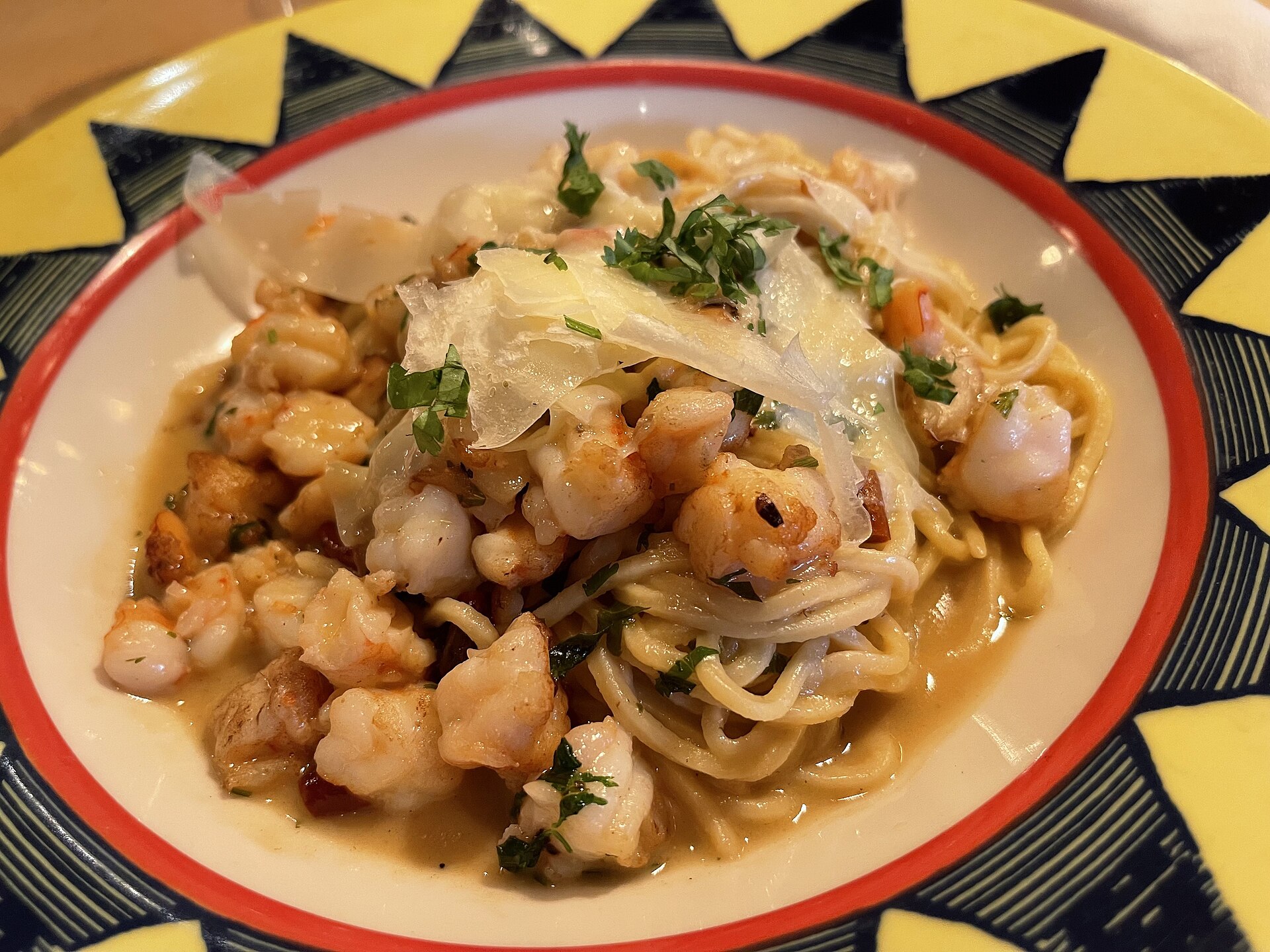
There is a version of this dish that is genuinely four ingredients, and there is a version that is a plate of buttered noodles sitting in a puddle. The difference is not the butter and it is not the brand of pasta. It is what happens in the thirty seconds after the noodles come out of the water.
Pasta water is not plain hot water. By the time half a pound of dried pasta has cooked in it, it carries dissolved starch and enough salt to season a sauce on its own. That starch is the thing that lets fat and water hold together instead of splitting on the plate. Swirled into melted butter off the heat, a ladle of it turns cloudy in about ten seconds and glossy in about thirty.
One pot, one pan, and a timeline tight enough that the garlic has to be sliced before the water boils. What follows is the working version, the cut of garlic that decides the flavor, and the three additions that move it from a side dish to dinner.
- Total time: 15 minutes, most of it waiting on water
- For two: 8 ounces of pasta, 4 tablespoons of butter, 3 cloves of garlic
- Reserve: a full cup of water, taken before the colander
- The swirl: 30 to 45 seconds with the burner off
- Cheese: grated fine, in last, never over direct heat
- The usual failure: draining without saving any water
What the starch in the water is actually for
Dried pasta sheds starch as it hydrates. Some of it stays on the surface of the noodles, which is why they feel slightly tacky coming out of the pot, and the rest dissolves into the water. By the end of a normal cook the pot holds a dilute starch solution, cloudy enough that you can see it against a white sink.
Starch granules in suspension do two jobs at once. They thicken, which is the obvious one, and they park themselves at the boundary between the melted fat and the water, which keeps the two from separating. That second job is the whole reason this works with nothing but butter in the pan.
The practical consequence is that the water gets more useful the longer the pasta cooks and the less water you use. A pot filled to the brim gives you weak, thin liquid. Cooking half a pound in about three quarts instead of six gives you water that thickens noticeably, and it costs nothing to do.
The four things on the counter before the water boils
Butter, garlic, pasta, and a hard cheese. Salt is assumed. Anything else on this list is an addition rather than a component, and the additions come later. The oil-and-garlic version of the same idea, aglio e olio, drops the butter and the cheese and runs on exactly the same mechanism.
Use unsalted butter if you have it, because the pasta water is already salty and there is no way to correct for both at once. Four tablespoons for eight ounces of pasta is the working amount for two people. Cutting it to three works and gives a thinner sauce; going to six makes something closer to a restaurant plate and is not a mistake.
The cheese can be whatever hard grating cheese is in the drawer. Parmesan is the default, pecorino is saltier and sharper, and an aged provolone or a dry jack will both do the job. What matters more than the variety is the grate: fine, on the smallest holes, so it disappears into the sauce instead of stringing.
Slice the garlic before the water boils. Not during. The window between draining and serving is under a minute, and there is no room in it for knife work.
Garlic butter noodles, start to finish
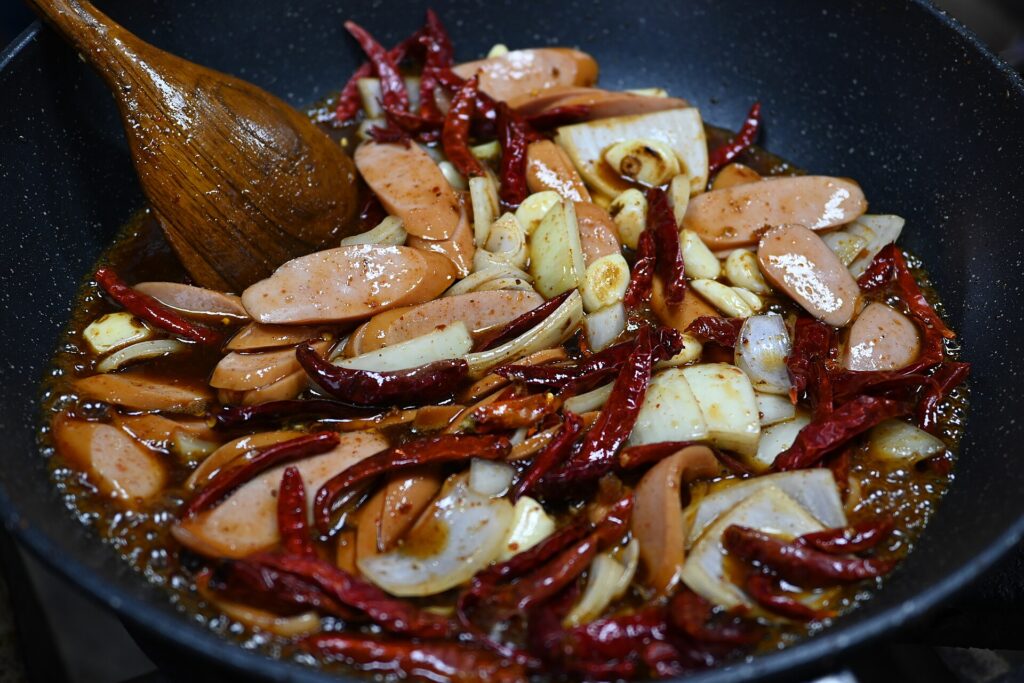
- Bring about three quarts of water to a boil in a large pot. Salt it until it tastes clearly seasoned, roughly a tablespoon of table salt or two of kosher.
- Slice three cloves of garlic thin. Set a wide skillet over low heat with four tablespoons of butter in it.
- Drop eight ounces of pasta into the boiling water and set a timer for two minutes less than the package says.
- When the butter has melted and stopped foaming, add the garlic. Keep the heat low. It should sizzle faintly and turn pale gold over four to five minutes, never brown.
- At the timer, dip a mug into the pot and pull out a full cup of water. Do this before you touch the colander.
- Drain the pasta. Do not rinse it, because rinsing washes off the surface starch that helps the sauce grip.
- Turn the burner off under the skillet. Add the pasta and a half cup of the reserved water.
- Swirl and toss constantly for 30 to 45 seconds. The liquid goes from watery to glossy and starts coating the noodles rather than pooling.
- Off the heat, add a generous handful of finely grated cheese and toss again. Add more water a splash at a time if it tightens.
- Black pepper, taste for salt, serve immediately in warmed bowls.
Step five is the one people forget, and it is unrecoverable. Once the water is down the drain the only options are tap water, which works badly, or starting again. Put the mug next to the stove at the beginning as a reminder.
Sliced, minced, or smashed: what the cut does
Garlic cells release an enzyme when they are damaged, and the more damage the more of the sharp sulfur compounds get made. That is why the same clove tastes different depending on what the knife did to it.
| Cut | Flavor | Behavior in butter |
|---|---|---|
| Whole clove, smashed | Mild, sweet, background | Infuses slowly, easy to fish out |
| Thin slices | Moderate, distinct pieces | Cooks evenly, the default here |
| Minced | Strong, everywhere at once | Burns fast, needs the lowest heat |
| Grated on a rasp | Sharpest, almost raw | Scorches in seconds, better added off the heat |
Slices are the right compromise for a butter sauce. They stay soft, they are pleasant to eat, and they have enough surface area to flavor the fat without turning acrid in the four minutes they spend in the pan.
Burnt garlic is bitter and there is no fix for it. If the slices go past gold, tip them out, wipe the pan, and start with fresh butter. It costs two minutes and saves the plate.
The thirty-second swirl, and why the pan comes off the heat
Butter is roughly four fifths fat and one fifth water and milk solids. Add pasta water to a hot pan and the mixture behaves like any other unstable emulsion: it holds while it is agitated and breaks as soon as it sits, and heat pushes it toward breaking faster.
Turning the burner off before the pasta goes in gives the starch time to do its work while the pan is still warm enough to keep everything fluid. The residual heat in a heavy skillet is plenty. What the sauce needs is motion, not temperature.
Swirl the pan and toss with tongs at the same time, continuously, for at least half a minute. It will look wrong for the first ten seconds, thin and separated. Then it turns cloudy, then it turns glossy, and the noodles stop sliding around loose. That change is visible and it is the signal to stop.
If it breaks anyway, add another splash of pasta water off the heat and keep tossing. Starch and agitation will usually pull it back together, which is more than can be said for most broken pan sauces and emulsions.
How much water to reserve, and when to take it
A full cup for eight ounces of pasta, even though you will probably use half of it. It costs nothing to have extra and everything to have none.
Take it late rather than early. Water pulled two minutes into the cook is barely cloudy; water pulled at the end has had the full cook to dissolve starch and is visibly thicker. The last minute is the best minute.
Keep the mug within reach while you plate, because pasta keeps absorbing liquid after it leaves the pan. A bowl that looked perfect in the skillet can be dry by the time it reaches the table, and a tablespoon of hot starchy water loosens it right back. Tap water does the same job badly, adding volume without any thickening and diluting the salt.
Cheese goes in off the heat or it strings
Hard aged cheeses are low in moisture and high in protein, and those proteins tighten and clump when they hit real heat. Dropped into a bubbling pan, the cheese pulls into rubbery strings and leaves an oily slick behind. Dropped into a warm pan with a thickened sauce already in it, it melts into the liquid.
Grate it fine, on the smallest holes of a box grater or a rasp. Pre-shredded cheese from a bag usually carries an anti-caking starch coating and does not melt cleanly, which is a real difference here rather than a purist objection.
Add it in two handfuls with tossing in between, not all at once. And keep in mind that most hard grating cheeses are salty enough to season the dish by themselves, which is the argument for holding back on salt until after the cheese is in.
Three additions that make it a real dinner
Eight ounces of pasta with butter and cheese is about 500 calories a serving with almost no protein. As a side dish next to something else that is fine. As dinner it needs one addition, and there are three that fit inside the same fifteen minutes.
| Addition | When it goes in | What it needs |
|---|---|---|
| Frozen peas, a cup | Into the pasta pot, last 90 seconds | Nothing, they drain with the noodles |
| Broccoli florets, small | Into the pasta pot, last 3 minutes | Cut to bite size first |
| Canned tuna or white beans | Into the skillet with the pasta | Drained, broken up with a fork |
| Two eggs, beaten | Off the heat, with the cheese | Constant tossing, or it scrambles |
| Anchovy fillets, three | Into the butter with the garlic | Mashed with the spoon until they dissolve |
The vegetables cooked in the pasta water are the cheapest addition in every sense, since they use a pot that is already boiling and add no pan to wash. The beans give the largest protein bump for the least effort.
The egg version is a different dish and worth knowing about, but it needs care. Beaten egg tossed into pasta off the heat cooks in the residual warmth, and the result should be creamy rather than set. If it looks curdled it went in over a hot burner. Anyone cooking for a young child, an older adult, or someone pregnant should use pasteurized eggs here, since the egg does not reach a temperature that would count as fully cooked.
Which noodle shape holds this sauce
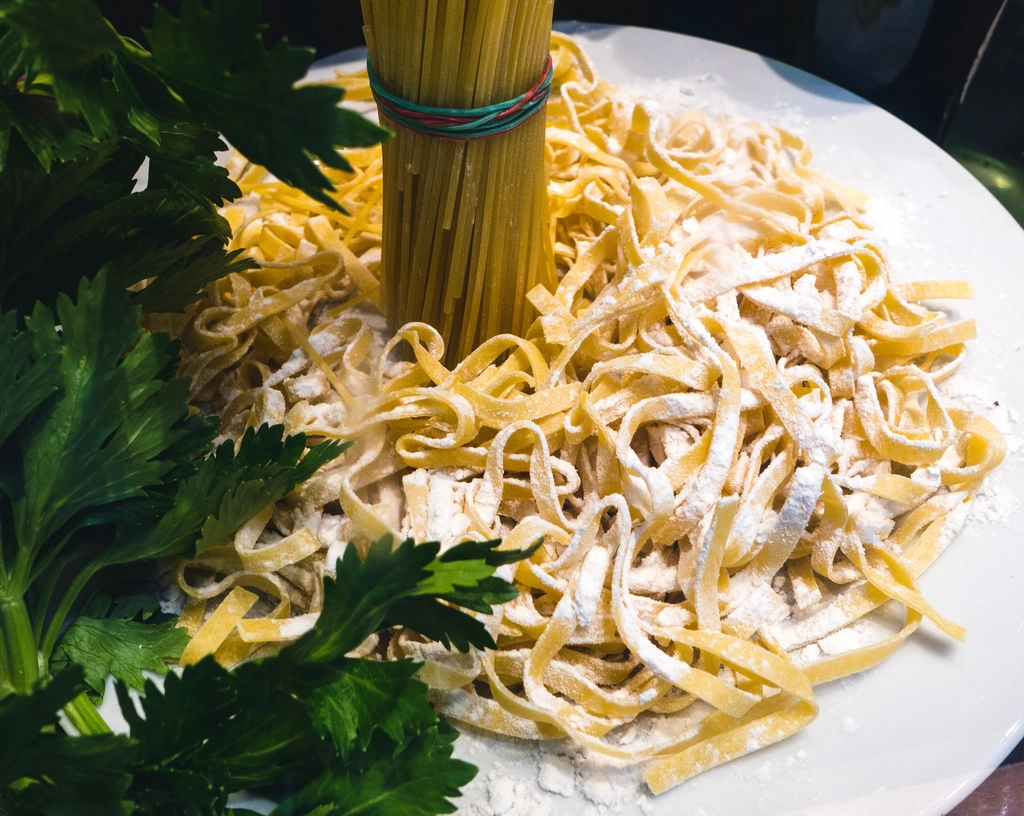
Long strands are the traditional pairing and they work because a thin sauce coats a long surface well. Spaghetti and linguine are both correct. Bucatini is better than either, since the hollow center traps liquid.
Short shapes with ridges or cups also work, and in some ways they work better for the additions. Rigatoni, shells, and orecchiette all hold peas and beans in a way that spaghetti does not. Smooth short shapes like penne lisce are the weakest option, since there is nothing for the sauce to catch on.
Fresh pasta is a poor fit. It cooks in two or three minutes and releases far less starch into the water, which removes the mechanism the sauce depends on. If fresh is what is in the refrigerator, add a quarter teaspoon of cornstarch dissolved in the reserved water to compensate. The same logic runs through most traditional pasta technique, where the shape and the sauce are chosen together rather than separately.
Where it breaks, by symptom
| What you see | What caused it | The fix |
|---|---|---|
| Watery pool in the bowl | Not enough tossing, or the pan was too hot | Back in the pan off the heat, toss 30 more seconds |
| Dry, sauce disappeared | Pasta absorbed it while plating | A splash of reserved water, tossed in |
| Greasy, butter separated | Sauce broke over direct heat | Off the heat, add water, keep tossing |
| Stringy clumps of cheese | Cheese added to a hot pan | Not reversible, add the next handful off the heat |
| Bitter aftertaste | Garlic browned past gold | Start the garlic over in fresh butter |
| Bland despite salt at the table | Pasta water was under-salted | Salt the water properly next time, cheese now |
Five of the six come down to heat and timing rather than ingredients, which is the general shape of the problem with fast skillet sauces. Nothing in this dish needs to be bought better.
Leftovers, and the clock that applies
This is one of the dishes that does not hold well, and it is worth saying plainly. The sauce is a temporary suspension, and once it cools the butter sets and the starch stiffens. Reheated, it goes greasy and the noodles turn soft.
If there is a portion left, get it into a shallow container and into the refrigerator within two hours of cooking, or within one hour if the kitchen is above about 90 degrees. Shallow matters more than people expect: a deep container of hot pasta can sit in the temperature range where bacteria multiply for a surprisingly long time while the middle cools.
It keeps three to four days refrigerated. To reheat, put it in a skillet over low heat with two tablespoons of water and toss until it loosens, rather than microwaving it dry. Any cooked leftover being reheated should come up to steaming hot throughout, 165 degrees on a thermometer, not merely warm in the middle.
What a bowl actually costs
Eight ounces of dried pasta, four tablespoons of butter, three cloves of garlic, and a couple of ounces of hard cheese feed two people for roughly the price of a single sandwich, and most of that cost is the cheese. Buying a wedge and grating it is meaningfully cheaper per ounce than buying it pre-grated, and it melts better.
The additions change the arithmetic modestly. A cup of frozen peas or a can of beans is small money. Canned tuna is the most expensive of the three and still lands well under what the same dinner costs assembled from a jar.
Frequently Asked Questions
Can I use olive oil instead of butter?
Yes, and it makes a leaner, sharper version. Olive oil does not carry the milk solids that give butter its body, so the sauce comes out thinner. Use a little more reserved water and toss for longer. A mix of half butter and half oil is a good middle.
Why did my sauce split as soon as I sat down?
Almost always because the pan was still on a live burner when the water went in. Heat drives the fat and water apart faster than the starch can hold them together. Turn the burner off before the pasta hits the pan.
Is there any substitute for reserved pasta water?
A cup of hot tap water with a quarter teaspoon of cornstarch whisked in and a good pinch of salt is a workable replacement. It is not as good, because the salt level is a guess and the starch is a different kind, but it saves a dinner.
Does the pasta need to be rinsed?
No, and it should not be. Rinsing removes the surface starch and cools the noodles, which are the two things this sauce relies on. Rinsing is for pasta going into a cold salad.
How do I scale this for four?
Double everything except the swirling time, which stays the same, and use a genuinely large skillet. Two batches in one crowded pan is worse than one batch in a wide one, because there has to be room to toss. Reserve a full pint of water.
Can I make the garlic butter ahead?
Melt the butter with the garlic, cool it, and refrigerate it for up to five days. Do not leave garlic sitting in fat at room temperature, which creates the low-oxygen conditions that certain bacteria favor. Keep it cold and it is a genuine head start on a weeknight.
Make it once with the timer running and once without, and the version with the timer will be better. The whole dish lives inside a window of about ninety seconds between the colander and the bowl, and everything that goes wrong goes wrong in there.