
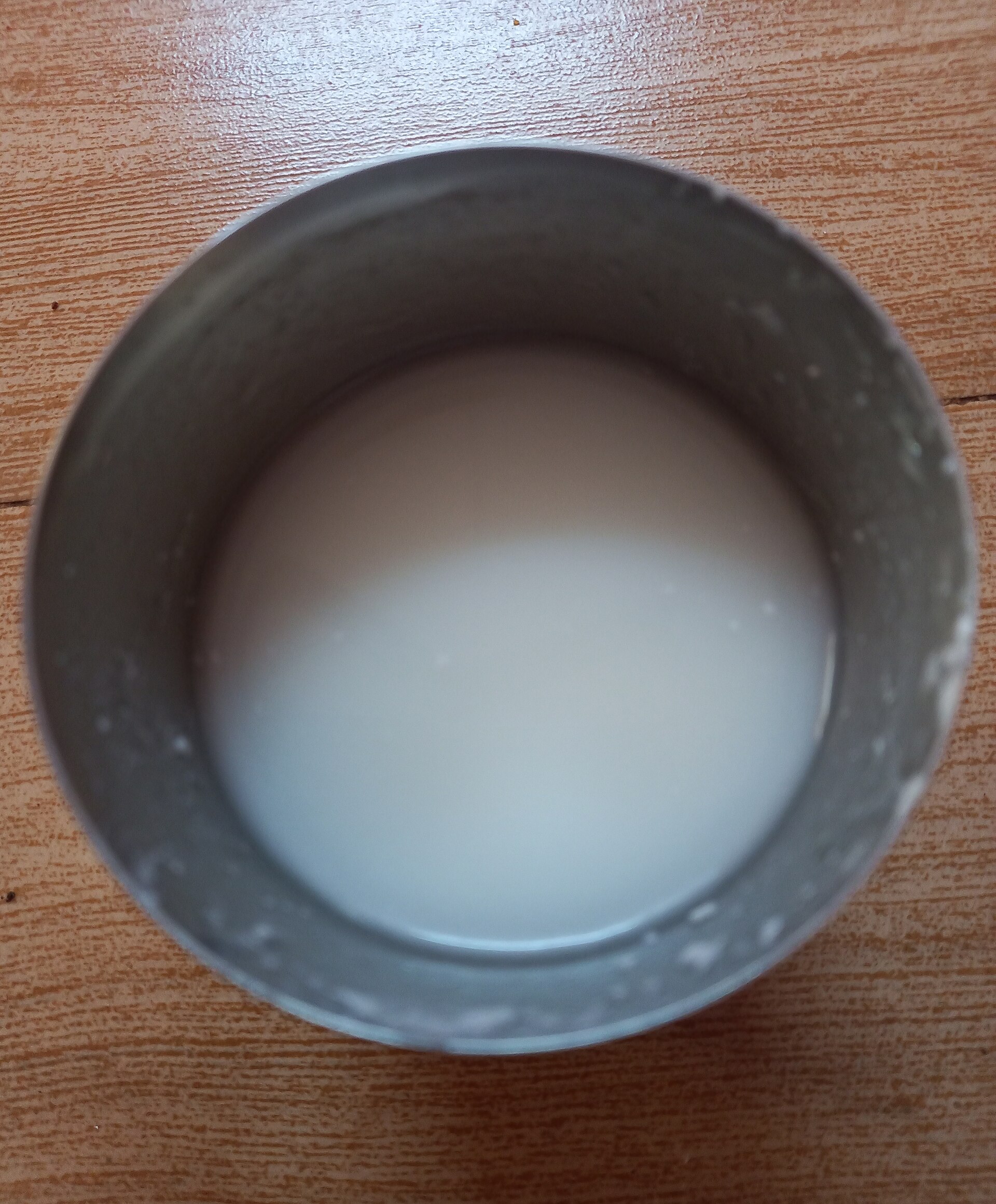
A recipe asks for three quarters of a cup. The store sells it in a quart. That arithmetic is the reason there is a carton in the back of your refrigerator right now with an inch of liquid in the bottom and a date on the side that has started to feel urgent.
It is also the reason buttermilk has a reputation as a single-purpose ingredient, which it does not deserve. The acidity that makes it useful in a biscuit makes it useful in about eight other places, and most of them take fifteen minutes.
What follows is the carton emptied in order, from the jobs that take four cups down to the ones that take two tablespoons, plus the freezer method that buys three months and the substitute for the evening you have none at all.
- Open carton, refrigerated: roughly ten days to two weeks at 40 degrees or below
- The big jobs: fried chicken marinade, pancakes, cornbread
- The small jobs: ranch, coleslaw, a brushed scone top
- Freezes: yes, in ice cube trays, two tablespoons per cube, three months
- Substitute: 1 cup milk plus 1 tablespoon lemon juice, rested 10 minutes
- Throw it out when: it smells yeasty, looks pink, or puffs the carton
How long does an open carton actually last?
Longer than most people assume, and the reason is the same thing that makes it taste sour. Cultured buttermilk sits at a pH somewhere around 4.5, which is acidic enough to slow down most of the organisms that spoil plain milk. Ten days past opening is realistic and two weeks is common.
The condition attached to that number is temperature. It has to live on a shelf in the body of the refrigerator, at 40 degrees or below, and not in the door, where the temperature swings every time someone reaches for the ketchup. A carton stored in the door is running a shorter clock than the one on the label.
What is in the carton is not, despite the name, the liquid left over from churning butter. Almost everything sold in American stores is pasteurized low-fat milk with a bacterial culture added, which produces lactic acid and thickens the milk in the process. Traditional churn buttermilk is a different, thinner product and is hard to find outside a farm.
What to do with leftover buttermilk, sorted by how much the carton has left
Deciding what to do with leftover buttermilk is mostly a question of measuring what is left before you start looking for a recipe. The list below runs from thirstiest to least.
| Use | Buttermilk needed | Active time | Keeps for |
|---|---|---|---|
| Fried chicken marinade | 2 to 4 cups | 5 minutes plus a soak | Cook within 24 hours |
| Pancakes or waffles | 2 cups | 20 minutes | Batter, same morning |
| Cornbread | 1 cup | 10 minutes | 2 days |
| Biscuits or soda bread | 1 cup | 15 minutes | Best the same day |
| Chilled cucumber soup | 1 cup | 10 minutes | 2 days |
| Ranch dressing | Half a cup | 5 minutes | 1 week |
| Mashed potatoes | Half a cup | Nothing extra | 3 days |
| Coleslaw dressing | A quarter cup | 5 minutes | 3 days |
| Brushing scones and biscuits | 2 tablespoons | 1 minute | Use immediately |
Nine uses, and between them they cover every quantity from a full quart down to the last splash. Nothing on the list needs an ingredient you would not already have.
Which jobs take a full cup or more?

Fried chicken is the biggest drain and the best argument for buying the quart in the first place. Two pounds of pieces submerged in two to three cups, with salt and a lot of black pepper, for four to twenty-four hours. The acid and the salt both work on the surface proteins, and the residue that clings to the skin is what makes dredged flour stick.
Pancakes and waffles take two cups for a family batch, and this is where the difference against regular milk is most obvious: the acid reacts with baking soda to inflate the batter, so a buttermilk pancake rises higher and tastes faintly tangy against the syrup. The same swap works in almost any batter, including a whole wheat pancake, where the tang offsets the bitterness of the bran.
Cornbread and biscuits each take a cup and are the fastest way to use one up on a weeknight. Irish soda bread takes a cup and a half, needs no yeast and no rising time, and goes from bowl to oven in twelve minutes, which makes it the emergency option when the date on the carton is tomorrow.
The chilled cucumber soup deserves more attention than it gets. A cup of buttermilk, a grated cucumber, a smashed garlic clove, dill, salt and a spoon of olive oil, blended and served cold. It takes ten minutes, it uses the ingredient raw where its flavor is most obvious, and it is the only entry here that requires no oven.
What can I do with half a cup?
Ranch dressing is the honest answer and it is better than it sounds when it is not coming out of a bottle. Half a cup of buttermilk, half a cup of mayonnaise or sour cream, a small grated garlic clove, chopped dill and chives, lemon juice, salt and pepper. It keeps about a week in the refrigerator and gets thicker as it sits.
Mashed potatoes are the quiet one. Substitute buttermilk for some of the milk or cream at the end, off the heat, and the potatoes get a background acidity that makes them taste seasoned before you have added more salt. Add it warm rather than cold and stop stirring early, since overworked potatoes go gluey regardless of the liquid.
Coleslaw takes about a quarter cup, mixed with mayonnaise, a spoon of cider vinegar, a pinch of sugar and celery seed. Buttermilk slaw is looser and lighter than the deli version and it does not survive overnight, so dress it within an hour of serving.
Two tablespoons left. Is that worth keeping?
Yes, for one specific job. Two tablespoons brushed across the top of scones, biscuits or a cobbler crust before they go into the oven gives a matte golden finish that egg wash does not, and it holds a sprinkle of coarse sugar in place.
The other small uses are loosening things. A stiff cream cheese frosting, a batter that seized up while the oven preheated, a pan sauce that needs a little acid and a little body. In every case it goes in off the heat, because buttermilk curdles when it boils.
That curdling, incidentally, is not spoilage and not dangerous. Heat makes the proteins in an already acidic liquid clump together, which is why buttermilk belongs in a batter that goes into an oven rather than in a sauce that sits at a simmer. Understanding when an acid helps and when it breaks something is one of the more useful things to carry between recipes, and it applies well beyond dairy in how flavor gets built in a dish.
Does buttermilk really tenderize chicken?
Less than the folklore claims, and it still improves the chicken. Acid at this strength works on the surface, not through the meat, so the tenderizing effect is real but shallow, and most of what people taste as juicier is the salt in the marinade doing what a brine does.
What it does unambiguously well is flavor and adhesion. The lactic acid and the mild dairy sweetness get into the outer layer, and the film that stays on the skin after draining grabs flour better than anything else in the refrigerator.
The handling rules are worth stating flatly, because raw poultry and a bowl of dairy together are unforgiving. Marinate in the refrigerator, never on the counter, in a covered container or a sealed bag. Four hours is enough and twenty-four is the ceiling; past that the surface goes soft and pasty. Throw the used marinade out rather than reusing it or turning it into a sauce, wash everything it touched, and cook the chicken to 165 degrees measured at the thickest part, next to the bone.
Can I freeze it, and does it come back the same?

It freezes well for cooking and badly for drinking. Pour it into an ice cube tray, freeze until solid, then transfer the cubes to a sealed bag. A standard tray gives cubes of about two tablespoons each, so a cup is eight cubes and the math stays simple months later.
Frozen and thawed buttermilk separates into a watery layer and a curdy one. Whisked or shaken hard it comes back together well enough for pancakes, biscuits, cornbread and marinades, which is most of this article. It does not come back for ranch dressing or a cold soup, where the texture is the whole point.
Three months in the freezer is the working limit before the flavor flattens. Thaw the cubes overnight in the refrigerator, or drop them straight into a batter’s wet ingredients and let them melt while you measure the dry ones. Label the bag with the date and the volume per cube, because a bag of pale frozen cubes looks like four other things in a freezer.
What do I use when there is none in the house?
One cup of milk plus one tablespoon of lemon juice or white vinegar, stirred and left alone for ten minutes. It will thicken slightly and look curdled at the edges, which is correct. This is an acid substitute rather than a cultured one, so it triggers the same reaction with baking soda but brings none of the flavor.
| Substitute for 1 cup | How to make it | Works best in |
|---|---|---|
| Milk and lemon juice | 1 cup milk, 1 tablespoon juice, rest 10 minutes | Pancakes, cornbread, quick breads |
| Milk and vinegar | 1 cup milk, 1 tablespoon white vinegar, rest 10 minutes | Anything with strong flavors around it |
| Thinned plain yogurt | Three quarters cup yogurt, quarter cup milk, whisked | Biscuits, marinades, dressings |
| Kefir | Straight, no adjustment | Everything, it is the closest match |
| Thinned sour cream | Half cup sour cream, half cup milk | Cakes and richer batters |
Kefir is the best substitute by a distance, since it is cultured, acidic and roughly the same consistency. Plain yogurt thinned with milk is second and is the one most people already have. The lemon juice version is fine for pancakes and noticeably thin for a tall, flaky biscuit, where the thickness of the liquid affects how the dough handles.
Why does the batter go flat if it sits?
Because the reaction has already happened. Acid meeting baking soda produces carbon dioxide immediately and vigorously, and those bubbles are what lift a pancake. A batter left on the counter for twenty minutes has released most of that gas into the kitchen instead of into the food.
The practical rule is to get anything containing buttermilk and baking soda into the pan or the oven within about ten minutes of mixing. If a recipe needs to rest, it should be leaning on baking powder, which is formulated to react twice, once when wet and again when heated.
The pairing ratio is worth knowing: roughly half a teaspoon of baking soda per cup of buttermilk neutralizes the acid. More soda than that leaves an unmistakable soapy, metallic taste and a yellowish crumb, which is the most common thing that goes wrong when somebody doubles a recipe by eye.
Is the liquid separating on top a problem?
Separation on its own is normal. Cultured buttermilk sits still and the whey rises, leaving a thin, slightly greenish clear layer over a thicker white one. Shake the carton hard and it goes back together with no loss of quality.
What is not normal is a smell that has moved from cleanly sour to yeasty, fizzy or sharply unpleasant, any pink or gray tint, any fuzz on the surface or under the cap, a carton that has puffed out, or a mass that will not re-blend no matter how hard you shake it. Any one of those and the carton goes in the bin. Sour dairy is not a taste test, so do not sample it to decide.
One more note for anyone who makes their own from raw milk or buys it from a farm. Raw dairy has not been pasteurized and can carry pathogens that a home culture does not eliminate, and the people most at risk are pregnant, very young, elderly or immunocompromised. Store-bought cultured buttermilk is pasteurized before it is cultured, which is why the ten-day window in this article applies to it and not automatically to a farm jar.
Is powdered buttermilk worth the shelf space?
For someone who bakes once a month, yes, and for someone who fries chicken, no. Powder reconstitutes into something that performs correctly in a batter, and a can lives in the pantry for a year unopened and several months in the refrigerator after that, which solves the entire problem this article exists to address.
Where it falls short is anywhere the buttermilk is tasted rather than baked. Reconstituted powder in a ranch dressing or a cold soup reads thin and slightly flat, and in a marinade it lacks the body that makes flour stick.
The other approach, if you use it often enough, is to keep a live culture going. A few tablespoons of store-bought cultured buttermilk stirred into a quart of whole milk and left at room temperature for about twelve hours will thicken and sour into a usable batch, which can be perpetuated. It requires clean jars and attention, and it stops being worth it the moment you forget about it for a week.
Frequently Asked Questions
Can I drink buttermilk straight?
Plenty of people do, cold and salted, and it is a standard summer drink in several cuisines. Low-fat cultured buttermilk is thinner and tangier than yogurt and takes some getting used to. A pinch of salt and a few crushed cumin seeds is the usual treatment.
Is buttermilk lower in fat than regular milk?
Usually, because most of what is sold is cultured from low-fat or skim milk despite how thick it looks. That thickness comes from the acid setting the proteins, not from cream. Check the carton if it matters, since full-fat versions exist.
Can lactose-intolerant people handle it?
Some can, some cannot. Culturing converts part of the lactose into lactic acid, so there is less of it than in plain milk, but there is still lactose present. That is an individual question rather than a general clearance.
Does it work in a slow cooker or a braise?
Not well. Sustained heat splits it into curds and liquid, and once split it does not recombine. Add cream or coconut milk to the pot instead and stir buttermilk in off the heat at the very end if you want the tang.
What is the fastest thing I can make with the last cup?
Soda bread. Flour, baking soda, salt and buttermilk, mixed with a fork, shaped into a round on a sheet pan and scored with a cross. It is in the oven in about twelve minutes and needs no rising time at all.
Can I substitute buttermilk where a recipe calls for regular milk?
Only with an adjustment. Swapping it in adds acid, which will react with any baking soda in the recipe and change the rise, and in a recipe using only baking powder it can leave the crumb dense. Add a quarter teaspoon of baking soda per cup and reduce the baking powder slightly.
Write the date you opened it on the carton with a marker before it goes back in the refrigerator. Most of the buttermilk that gets poured down the sink is poured by someone who could not remember whether it was still good.