
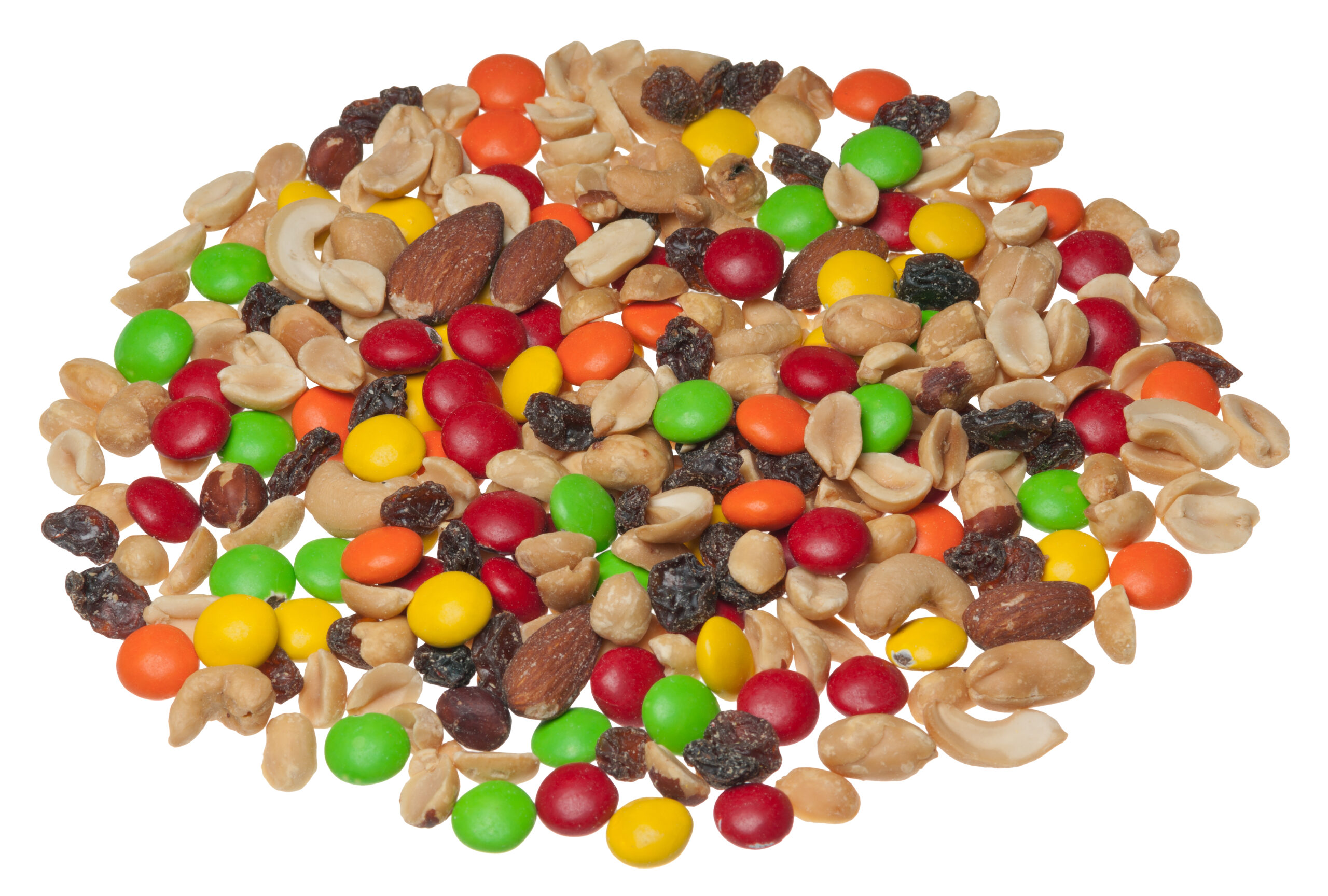
Turn a bag of trail mix over and read the ingredient list in order. Ingredients are listed by weight, heaviest first, so the first two entries tell you what you are actually buying. On plenty of the bags near the checkout, those two entries are candy-coated chocolate and sweetened dried cranberries.
That is not a scandal. It is a product designed to be eaten quickly and to survive a warehouse, and it does both well. It is just not the thing the word trail is doing on the front of the bag, and it is not what most people think they are handing a kid at three in the afternoon.
Mixing your own takes about six minutes, costs meaningfully less per ounce, and lets you set the candy ceiling yourself. What follows is a formula by weight rather than a recipe, because a formula survives whatever the bulk bins happen to have.
- The formula: half nuts, a quarter dried fruit, 15 percent seeds, 10 percent indulgent
- A working batch: 400 grams, which fills a quart jar
- Equipment: a digital scale and a jar, nothing else
- Portion: 1 ounce, about a small handful, roughly 150 calories
- Rough cost: around 40 cents an ounce against 50 to 80 for a bag
- Shelf life: weeks in the pantry, months in the freezer
Read the back of the bag you have been buying
Two numbers on the label do most of the work. The first is total sugars, which on a sweetened mix routinely lands in the teens per ounce, and the second is sodium, which on a heavily roasted and salted mix can run higher than a serving of potato chips.
Neither number is disqualifying on its own. Dried fruit is sugar by nature and salt is what makes nuts worth eating. The problem is that a commercial mix sets both of those levels for you, at the level that sells best, and the level that sells best is sweeter and saltier than most people would choose if they were pouring it themselves.
The other thing worth noticing is what is missing. Seeds are usually a garnish in a commercial bag because they are less popular than they are cheap, which is backwards from a nutrition standpoint.
The homemade trail mix formula, by weight

Four categories, four percentages, and no recipe to memorize. For a 400 gram batch that fills a quart jar:
| Category | Share by weight | In a 400 gram batch | Job it does |
|---|---|---|---|
| Nuts | 50 percent | 200 grams | Fat and protein, keeps you full |
| Dried fruit | 25 percent | 100 grams | Fast sugar, chew, acidity |
| Seeds | 15 percent | 60 grams | Minerals, protein, low cost |
| One indulgent element | 10 percent | 40 grams | The reason it gets eaten |
Within each category, use two items at most. A mix with nine components looks generous and eats badly, because people pick out what they like and leave a jar of rejected banana chips behind. Two nuts, one or two fruits, one seed and one treat is the shape that gets finished.
The 10 percent ceiling on the indulgent element is the whole point of the exercise. Forty grams of dark chocolate across a quart jar still shows up in most handfuls, which is all it has to do. The standard combination of nuts, fruit and something sweet is not the problem; the ratio is.
Why a scale beats a measuring cup here
These ingredients have wildly different densities. A cup of puffed rice cereal and a cup of cashews are not remotely the same amount of food, and a cup of chocolate chips weighs close to twice what a cup of raisins does. Measuring by volume makes the heavy, dense, calorie-dense items quietly larger than you intended.
A cheap digital scale set to grams solves it in one step. Put the jar on, hit tare, add 200 grams of nuts, tare again, add 100 grams of fruit, and so on. Nothing to wash, and the ratio comes out identical every time regardless of what you happened to buy.
The same logic is why the portion below is given in ounces rather than handfuls. Hands vary by a factor of two.
The nut half, and what each one brings
Nuts are half the weight and most of the calories, so this is the choice that decides what the mix is for. Roughly speaking an ounce of any nut lands somewhere near 160 to 200 calories, mostly from fat, with protein varying more than people expect.
Peanuts and almonds sit at the top for protein per ounce and at the bottom for price, which makes them the sensible base of a mix that gets eaten every day. Cashews are softer, sweeter, lower in protein and considerably more expensive, and they are what makes a mix feel like a treat. Walnuts and pecans bring the most distinctive flavor and go rancid the fastest.
Raw or roasted is mostly a flavor question, though roasted nuts have less water and keep slightly better. If you buy roasted and salted, that is your entire salt budget and nothing else in the jar should be salted. Buying raw and toasting them yourself at 325 degrees for eight to ten minutes costs nothing and tastes better than the bag.
Dried fruit is the sugar you did not count
An ounce of raisins carries around twenty grams of sugar, all of it from the grape. That is not added sugar and it comes with fiber and potassium, but it is still concentrated: drying removes the water and leaves the sugar in a much smaller package, which is why a quarter cup of raisins goes down in seconds and a bunch of grapes takes ten minutes.
Sweetened fruit is a different matter. Cranberries and blueberries are too tart to dry unsweetened, so nearly every bag has sugar or fruit juice concentrate added, often listed second. Cherries, mango and pineapple come both ways and the unsweetened versions are worth hunting for. Dates, figs, apricots and raisins never need it.
Cut large pieces down to raisin size. Whole apricot halves and big mango slabs get picked out or picked around, and they throw the ratio of any given handful completely off.
Seeds are the cheapest thing in the mix
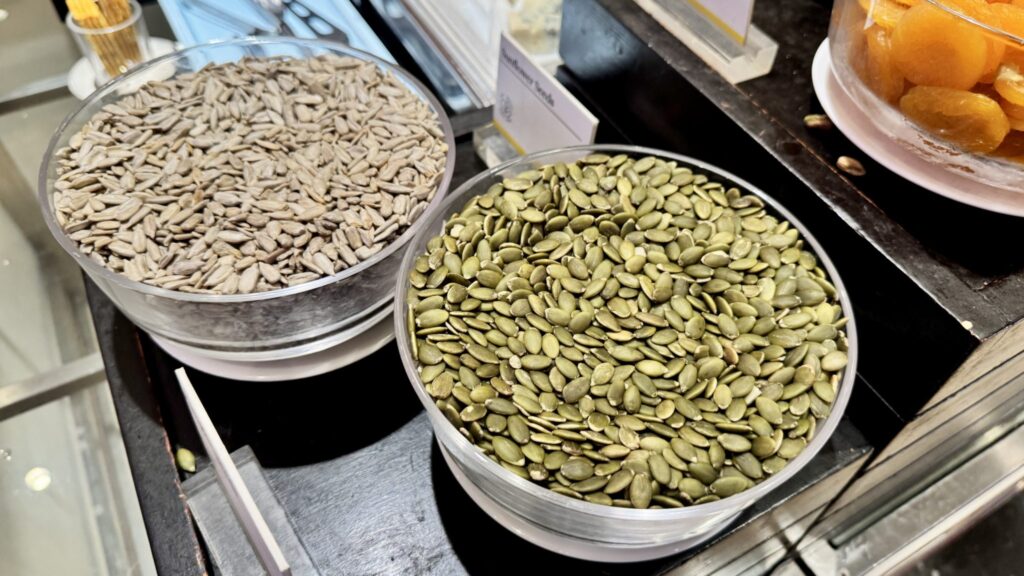
Pumpkin seeds and sunflower seeds cost roughly what peanuts cost, deliver protein in the same range as almonds, and bring magnesium and zinc in quantities the nuts do not. They are the most underused ingredient in this entire category.
They are also the answer to a school that has banned nuts. A mix built on pumpkin seeds, sunflower seeds, roasted chickpeas and toasted soy nuts hits the same texture and protein targets without a single tree nut in it, though sunflower and sesame allergies do exist and are worth asking about before sending a jar somewhere.
Hemp hearts and chia are popular additions and do not belong here. Both are so small that they fall to the bottom of the jar and end up as a layer of dust that nobody eats. Save them for oatmeal or a bowl of yogurt, where a spoonful of mix on top is one of the better ways to put a breakfast together.
One indulgent element, and where the ceiling sits
Ten percent by weight, one item, chosen on purpose. Dark chocolate chunks, chopped candied ginger, yogurt-coated raisins, a handful of pretzel pieces, coconut chips, or a small amount of the candy-coated chocolate that started this whole article.
Chocolate at 70 percent cocoa or above carries less sugar and more actual chocolate flavor per gram, so a smaller amount registers. It also survives a warm backpack better than milk chocolate, though nothing survives a car in July: melted and re-set chocolate turns pale and grainy and drags the fruit into a single clump.
The temptation is to go to 20 percent because it makes the jar more popular. It does, and it also doubles the sugar in the mix, at which point you have made a slightly better version of the bag you were trying to replace. Keeping the treat visible but capped is the same balancing act as keeping flavor in a lightened dish.
Four mixes, four places
| Mix | Nuts, 200 g | Fruit, 100 g | Seeds, 60 g | Treat, 40 g |
|---|---|---|---|---|
| Pacific Northwest | Hazelnuts, almonds | Dried cherries | Pumpkin seeds | Dark chocolate chunks |
| Southwest | Peanuts | Dried mango | Pepitas with chili and lime | Corn nuts |
| Eastern Mediterranean | Almonds, pistachios | Chopped dates, apricots | Sesame and sunflower | Candied orange peel |
| Upper Midwest | Pecans, walnuts | Dried cranberries | Sunflower seeds | Maple sugar clusters |
The Southwest mix is the outlier and the one people keep asking about. Toss the pumpkin seeds with a teaspoon of oil, chili powder, lime zest and salt, toast them for six minutes, and let them cool completely before they meet the fruit, or the residual steam turns the mango sticky.
None of these are traditional in any strict sense. They are built from what a market in each of those places stocks cheaply, which is the only regional logic a snack jar needs.
What an ounce costs against the store bag
| Ingredient | Rough price per pound | Cost per ounce |
|---|---|---|
| Peanuts | 3 to 4 dollars | About 22 cents |
| Almonds | 7 to 9 dollars | About 50 cents |
| Cashews | 9 to 12 dollars | About 65 cents |
| Pumpkin seeds | 6 to 8 dollars | About 44 cents |
| Raisins | 3 to 4 dollars | About 22 cents |
| Dark chocolate chunks | 6 to 8 dollars | About 44 cents |
Run the formula with almonds and peanuts as the nut half and the numbers land somewhere around 40 cents an ounce, against roughly 50 to 80 cents an ounce for a mid-range bag off the shelf. Prices move by region and by season, so treat those as the shape of the answer rather than the answer.
The savings are real but modest, and they are not the strongest argument for doing this. Control over the sugar and the salt is. The one place the economics change sharply is bulk bins, where buying exactly 200 grams of pistachios instead of a pound-sized bag makes an expensive nut affordable in a mix.
Portioning, because a bag is not a serving
An ounce is the standard serving and it is smaller than almost anyone pours. It is roughly a small cupped handful, about a quarter cup, and it lands near 150 calories depending on the mix. A quart jar holds around fourteen of them.
Eating from the jar defeats the whole exercise. Portioning the batch into small containers or bags on the day you make it takes four minutes and is the difference between a snack and an accident. Half-pint jars work, reusable snack bags work, and a muffin tin lined with paper cups works if you are packing a week at once.
For a lunch box, an ounce alongside something with water in it, a piece of fruit or a container of yogurt, eats far better than two ounces on its own. The same principle keeps a packed lunch from collapsing into dry components, which is worth reading about alongside building a lunch that travels.
Rancid oils, allergies, and children under four
Nuts and seeds are mostly unsaturated fat, and unsaturated fat oxidizes. Rancidity is what you are smelling when a bag of walnuts reads like old paint or crayons, and the taste is bitter and sharp at the back of the throat. Rancid nuts are not a food poisoning risk in the usual sense, but they taste bad and the oils have degraded, so throw them out rather than burying them in a mix.
Heat, light and air drive it. An airtight jar in a dark cupboard buys a few weeks for a mix containing walnuts or pecans and a couple of months for one built on almonds and peanuts. The refrigerator roughly doubles those windows and the freezer stretches shelled nuts to close to a year. Buy nuts in quantities you will finish, and smell them before they go into a jar you are giving away.
Whole nuts, seeds and hard candy pieces are a choking hazard for children under four, and no amount of supervision changes the shape of an almond. For that age, chop everything to the size of a raisin or skip the mix entirely. Nut and seed allergies are the other constraint worth taking seriously: anything sent to a school or handed to a household you do not cook for regularly should come with a written list of what is in it, and a nut-free version built on pumpkin and sunflower seeds covers most classroom rules.
One last label check. Bright orange dried apricots are usually treated with sulfites as a preservative, which a small number of people react to, particularly those with asthma. The untreated ones are brown, taste more intense, and are the ones to buy if that applies to anybody at your table.
Frequently Asked Questions
How long does a jar of homemade trail mix actually last?
Three to four weeks in a sealed jar in a cool cupboard is a safe assumption for a mix built on almonds and peanuts. Walnuts, pecans and anything with coconut in it shorten that to about two weeks. Refrigerate it if the kitchen runs warm.
Can I add cereal or pretzels to bulk it out?
You can, and they will go soft. Anything dry and porous pulls moisture out of the dried fruit within a few days and turns stale while the fruit turns hard. If you want them, add them to the portion you are about to eat rather than to the jar.
Is trail mix actually good for weight management?
Only if the portion is controlled, because it is dense in calories by design. A measured ounce between meals is a useful thing that keeps you from eating badly at four in the afternoon. Grazing from the jar for an hour is several hundred calories that nobody registers.
What about the chocolate melting in a bag?
Above about 85 degrees it will. Candy-coated chocolate holds up better than plain chunks because the shell does its job, and coconut chips or candied ginger avoid the problem completely. For summer hiking, use one of those instead.
Should I toast the nuts before mixing?
If they are raw, yes. Eight to ten minutes at 325 degrees, spread out on a sheet pan, then cooled completely on the pan before anything else touches them. Warm nuts released into a jar of dried fruit create condensation, and condensation makes the whole jar go soft.
Weigh one batch with the scale and taste it against whatever bag is in the cupboard. The ratio is the only thing here worth remembering, and after two batches you will not need the scale.