
The hard part of a Tuesday is not the cooking. It is the twenty minutes before it: bags on the counter, the refrigerator door hanging open, a slow audit of what is in there and what it could turn into. By the time that ends, a thirty-minute dinner has already taken fifty.
So the five dinners below are written backward from the front door. Each is one pan, six ingredients or fewer, and a stopwatch time measured from the moment the keys hit the counter rather than from the moment everything is chopped. The slowest runs thirty-two minutes. The fastest is seventeen.
They also share a single shopping list. Buy the fourteen fresh items at the end of this piece on a Sunday, keep the pantry lines stocked, and every one of these is already in the house on the night it is needed.
- The rule: six ingredients, not counting salt, pepper, cooking oil, or water
- The equipment: one 12-inch skillet and one half sheet pan cover all five nights
- The range: 17 to 32 minutes, timed from the door
- First move, every night: the oven or the burner goes on before the bags come off the counter
- Serves: four, and the sheet pan nights stretch to five
- Best leftovers: Friday, which is better on day two than on day one
The six-ingredient rule and what it does not count
Salt, black pepper, neutral cooking oil, and water are free. Everything else counts, including the lemon and the cheese on top. That ceiling is not a gimmick. Six items is roughly the number a person can wash, cut, and stage without losing the thread of the sequence, which is what keeps prep under ten minutes.
The second rule is one pan. A pot for the starch plus a pan for the protein is two pans, two things to watch, and two things to wash at nine o’clock. Every dinner here finishes in the vessel it started in, which is why the pasta on Tuesday cooks in its own liquid instead of going through a colander.
The third rule is the one people break. Heat goes on first, before the coat comes off, because a home oven takes twelve to eighteen minutes to reach 425 degrees and an oven still climbing is the single largest source of dead time in a weeknight kitchen. If you want one habit to take from a list of quick dinner ideas, it is that one.
Monday: sausage, potatoes and broccoli on one sheet pan
Six items: smoked sausage, baby potatoes, broccoli, whole-grain mustard, parmesan, one lemon. Thirty-two minutes, most of it hands-off.
Halve a pound and a half of baby potatoes, toss with oil and salt directly on the sheet pan, and roast them cut side down at 425 degrees for fifteen minutes alone. That head start is the whole recipe. Potatoes need roughly twice the oven time of everything else on the tray, and the standard failure is loading all three at once and pulling out scorched broccoli sitting next to raw potato.
At the fifteen-minute mark, add twelve ounces of smoked sausage cut into half-inch coins and two crowns of broccoli broken into florets no larger than a walnut. Toss, spread back into one layer, give it twelve more minutes, and stir once at six.
Off the heat, spoon a tablespoon of whole-grain mustard onto the hot pan and scrape it through the oil that has collected in the corners. It loosens instantly and coats everything without a bowl. Grate parmesan over the top, squeeze the lemon, serve from the pan.
One adjustment worth making: if the broccoli stems are thick, split the florets lengthwise so the stalk is no wider than the head. Uneven thickness on a sheet pan produces burnt tips and squeaky raw stems in the same bite.
Tuesday: orzo cooked in the pan it is served from
Six items: orzo, chicken broth, baby spinach, feta, lemon, garlic. Twenty-two minutes, and no colander.
Put a tablespoon of oil in a cold 12-inch skillet, add a cup and a half of dry orzo, and toast it over medium heat for two minutes, until it smells faintly like popcorn and turns the color of weak tea. Skipping that step is the difference between separate grains and one starchy mass.
Add two sliced cloves of garlic for thirty seconds, then three cups of hot broth. Simmer uncovered nine to eleven minutes, stirring every couple of minutes the way you would a risotto. It looks alarmingly soupy at minute seven and corrects itself by minute ten as the released starch thickens what is left.
Kill the heat, dump in a five-ounce box of baby spinach, and put a lid on for ninety seconds. Residual heat wilts it without turning it army green. Stir, crumble in four ounces of feta, finish with the lemon.
The ratio to remember is two parts liquid to one part orzo by volume, plus a splash if the pan is wide and shallow. A narrow pan evaporates less and can leave the dish loose.
Wednesday: salmon and green beans in nineteen minutes
Six items: salmon fillets, green beans, soy sauce, honey, sesame seeds, garlic. Nineteen minutes on the sheet pan.
Beans first, again for timing. A pound of trimmed green beans, oil, salt, single layer, 425 degrees, six minutes. Then push them to the edges of the pan and lay four six-ounce fillets skin side down in the cleared middle.
Whisk two tablespoons of soy sauce with one of honey and a grated clove of garlic, and do not put it on yet. Sugar at 425 degrees goes from glossy to black in about four minutes, so the glaze is brushed on for the last four minutes only.
Salmon runs nine to eleven minutes for an inch-thick fillet. The reliable test is a thin knife slid into the thickest part: it meets almost no resistance and the flakes separate when you twist it. Federal guidance puts finished fish at 145 degrees at the center. Pulled at 130 it stays dense and translucent in the middle, which some people prefer, and which is a choice rather than an accident.
Sesame seeds go on at the table. They turn bitter if they ride out the full roast.
Thursday: eggs poached in a jar of sauce
Six items: eggs, a jar of marinara, bell pepper, onion, feta, bread. Seventeen minutes, one skillet.
Slice a pepper and an onion thin and cook them in oil over medium-high for six minutes, long enough to soften and pick up brown edges. Pour in the whole jar of sauce, rinse the jar with a splash of water, and bring it to a bare simmer.
Make six shallow wells with the back of a spoon and crack an egg into each one. Lid on, heat down to low. Five minutes gives set whites and liquid yolks. Nine gives yolks firm all the way through. If anyone at the table is pregnant, very young, elderly, or immunocompromised, cook to the nine-minute mark, because a running yolk has not reached a temperature that deals with salmonella.
Crumble feta over the top, toast the bread while the eggs finish, and serve straight from the skillet with the bread doing the work of a utensil.
The failure here is heat. A hard simmer bounces the whites apart before they set and pushes sauce over the rim. If the surface is moving more than a lazy blip every few seconds, the burner is too high.
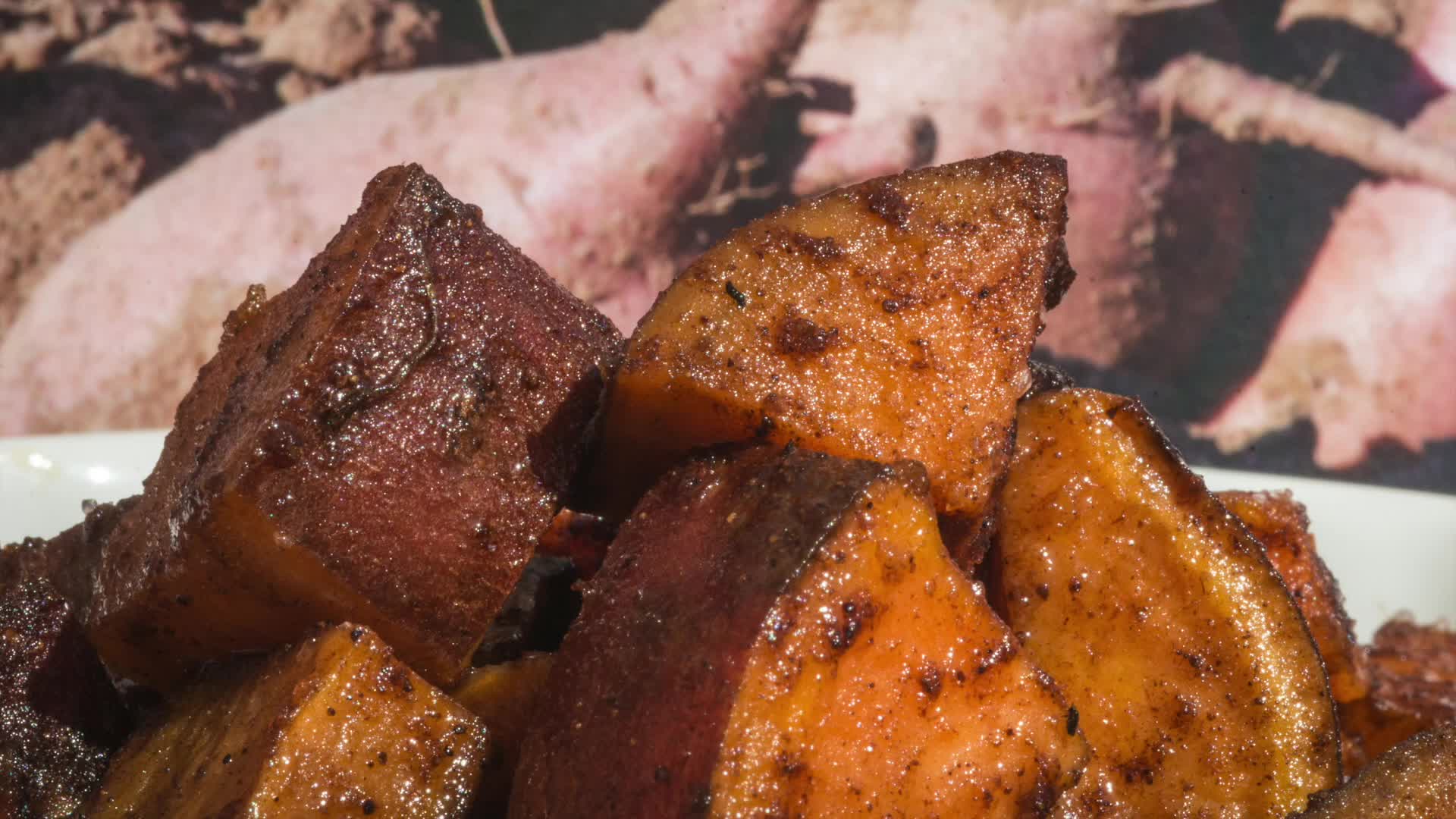
Friday: coconut chickpeas with sweet potato
Six items: chickpeas, coconut milk, sweet potato, red curry paste, baby spinach, lime. Twenty-eight minutes.
Everything here depends on the dice. Half-inch cubes of sweet potato cook through in fifteen minutes in simmering coconut milk. Three-quarter-inch cubes need twenty-five. Cutting small is not fussiness, it is ten minutes.
Fry two tablespoons of curry paste in oil for a full minute first, until it darkens and the kitchen smells like it. Paste dropped straight into liquid tastes flat and slightly raw; paste bloomed in fat tastes like a restaurant. Add a can of full-fat coconut milk, half a can of water, and the sweet potato, then cover and simmer fifteen minutes.
Drained chickpeas go in for the last five minutes, spinach for the last one, lime juice off the heat. Salt at the very end, because curry paste already carries a lot of it and brands vary widely.
This is the one on the list that improves overnight, so it is also the one to double. The starch from the sweet potato keeps thickening in the refrigerator and it reheats without breaking.
Why these easy weeknight dinners stay under 35 minutes
Three things account for nearly all of the gap between a thirty-minute dinner and a fifty-minute one, and none of them is knife speed.
The first is heating late. An oven that starts climbing after the vegetables are already cut has added twelve to eighteen minutes of standing around, and a cold skillet costs three or four more. Every recipe above assumes the heat went on before anything else happened.
The second is staging. Whatever takes longest goes in first and alone: potatoes before broccoli, beans before salmon, sweet potato before chickpeas. Ordering by cook time rather than by the order the recipe lists things is what lets one pan hold a whole dinner.
The third is the size of the cut. A half-inch dice and a one-inch dice are not variations on a theme, they are a ten-minute difference. Easy weeknight dinners fall apart mostly on this point, because the recipe says diced and the cook decides what that means at eight minutes past six.
Three habits that quietly add ten minutes
Crowding the pan. Food packed edge to edge gives off steam faster than the oven can carry it away, so the tray sits in its own humidity instead of browning. A half sheet pan holds about a pound and a half of vegetables in a real single layer. Past that you are steaming, the browning reactions never get going, and the tray needs an extra ten minutes and still comes out pale.
Cutting to different sizes. Two potatoes in thirds and one in quarters means the tray is never done at a single moment. Uniform beats small, every time.
Waiting instead of washing. The fifteen minutes the potatoes spend alone in the oven is exactly enough to wash the board, the knife, and the bowl. A kitchen that stays clean during the cook feels twice as fast at the end, and the sink at nine o’clock is the reason people stop making dinner on Wednesdays. The same principle drives most of the appeal of one-pot cooking.
One list that covers all five nights
Fourteen fresh items, plus a pantry side. Quantities assume four people at the table and nothing left over except Friday.
| Fresh item | Amount | Nights it covers |
|---|---|---|
| Smoked sausage | 12 ounces | Monday |
| Salmon fillets | four, about 6 ounces each | Wednesday |
| Eggs | one dozen | Thursday |
| Baby potatoes | 1 1/2 pounds | Monday |
| Broccoli | two crowns | Monday |
| Green beans | one pound | Wednesday |
| Bell peppers | two | Thursday |
| Yellow onions | two | Thursday |
| Sweet potato | one large | Friday |
| Baby spinach | two 5-ounce boxes | Tuesday, Friday |
| Feta | 8-ounce block | Tuesday, Thursday |
| Lemons and a lime | two lemons, one lime | Monday, Tuesday, Friday |
| Garlic | one head | Tuesday, Wednesday, Friday |
| Bread | one loaf or baguette | Thursday |
The pantry side is orzo, chicken broth, a can of chickpeas, a can of full-fat coconut milk, a jar of marinara, soy sauce, honey, sesame seeds, red curry paste, whole-grain mustard, and a wedge of parmesan. Almost all of it keeps for months, which is the point: only the fresh column has to be bought weekly, and a stocked pantry is most of what keeps a grocery bill down.
Swaps when the store is out
- Smoked sausage: chicken sausage roasts identically; halloumi in thick planks goes on for the last eight minutes only
- Orzo: ditalini or pearl couscous, both with three extra minutes and a half cup more broth
- Salmon: a thick cod loin bakes in twelve minutes; shrimp needs six and goes on after the beans are already finished
- Jarred marinara: a 28-ounce can of crushed tomatoes, a pinch of sugar, and four more minutes of simmering
- Full-fat coconut milk: the light version works but runs thin, so simmer three minutes longer with the lid off
- Feta: ricotta salata or cotija, both salty enough to do the same job
What does not swap cleanly is the sweet potato. A regular potato in coconut milk goes gluey, and butternut squash falls apart before the fifteen minutes are up. If sweet potato is not on the shelf, Friday becomes chickpeas and spinach in twelve minutes, which is a different dinner but still dinner.
Frequently Asked Questions
Does the six-ingredient count include salt and oil?
No. Salt, black pepper, cooking oil, and water are treated as equipment, the same way a pan is. Everything that carries a flavor of its own counts, including the lemon and the parmesan.
Can any of these be prepped the night before?
The potatoes and the sweet potato can be cut and held overnight; the halved potatoes can sit covered in water, and the sweet potato just needs a lid. Broccoli and green beans are better cut the same day, since dried cut surfaces brown unevenly. Do not crack eggs ahead.
What if I only own a nine-by-thirteen baking dish?
It works for Monday and Wednesday, but the tall sides trap steam, so add four to six minutes and expect softer edges instead of crisp ones. A rimmed half sheet pan is the cheapest useful upgrade on this list.
How well do they reheat?
Friday reheats best and is better on day two. Tuesday needs a splash of broth and a low burner, because orzo keeps absorbing overnight. Wednesday is the weak one: reheated salmon goes dry and chalky, so eat it cold over greens instead.
Is this enough food for teenagers?
For two adults and two teenagers, add half a pound to the sheet pan nights and half a cup of dry orzo with an extra cup of broth on Tuesday. The skillet dinners scale less cleanly, since a 12-inch pan loaded past capacity starts steaming rather than browning.
Pick two of the five for the first week rather than all of them. The list is built so any two nights share enough of the fresh column to justify the trip, and the pantry side only has to be bought once.