
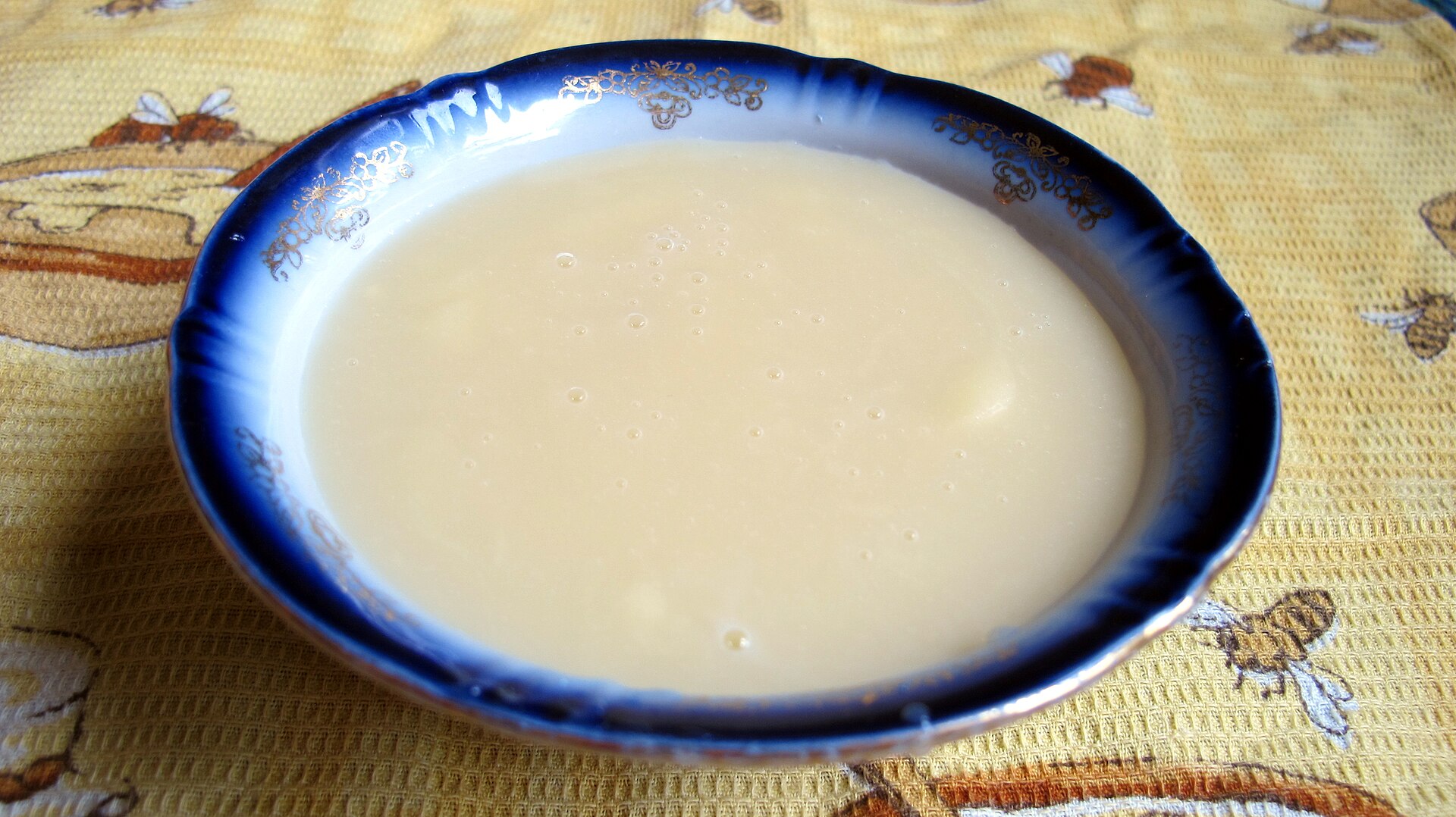
The pantry shelf has two cans that are nearly the same size, the same silver-and-blue color family, and names that differ by exactly one word each reads past quickly: evaporated and condensed. A pumpkin pie recipe calls for one, a hand reaches for the other, and the result bakes up wrong in a way that is not obvious until the first slice.
The difference is not subtle once it is understood, but it is genuinely easy to miss at a glance, especially grabbing a can from a pantry shelf stocked once a year for the holidays. One can contains added sugar and the other does not, and that single difference changes how a recipe sets, tastes, and behaves in the oven.
Reading the label for two extra seconds before the can opener comes out solves this permanently. Knowing what each one actually does structurally solves it even better, since it explains why the wrong can causes the specific problems it causes.
This mix-up tends to spike specifically around the same few weeks each year, when both cans show up on the same grocery store endcap for the first time since the previous holiday season, often stocked right next to each other for convenience. That proximity is exactly what makes the mistake so common, since a shopper moving quickly through a crowded store is reaching for a shape and color rather than reading two full words closely.
- Evaporated milk: unsweetened, about 60 percent of the water removed
- Condensed milk: sweetened, with roughly 40 to 45 percent sugar added
- Where the mistake shows up first: a pie that will not set, or one that is inedibly sweet
- Emergency sub for evaporated: whole milk simmered down by about half
- Emergency sub for condensed: evaporated milk plus sugar, cooked briefly
- Once opened: refrigerate, use within about a week
Two cans, one aisle, and a mistake that ruins a pie
Both products start the same way, milk with roughly 60 percent of its water content removed through gentle heating, which concentrates the milk solids and gives both a noticeably thicker, richer texture than fresh milk. From there they split into two very different ingredients: evaporated milk gets canned as-is, unsweetened, while condensed milk has a large amount of sugar added before canning, which also acts as a preservative.
A pumpkin pie recipe built around evaporated milk is calibrated for a custard that sets through egg proteins cooking in the oven, with the sugar measured separately and added at the amount the recipe wants. Swap in sweetened condensed milk without adjusting anything else, and the filling ends up dramatically oversweetened and often struggles to set properly, since the recipe’s sugar-to-liquid ratio is now thrown off by whatever sugar the condensed milk already carries.
Evaporated vs condensed milk, side by side
| Evaporated milk | Condensed milk | |
|---|---|---|
| Sugar added | None | Roughly 40 to 45 percent by weight |
| Texture | Thick, pourable, similar to light cream | Very thick, syrupy, almost spreadable |
| Shelf life unopened | 1 to 2 years | 1 to 2 years |
| Typical use | Custards, pies, savory sauces, coffee | Caramel-style desserts, key lime pie, fudge |
| Can it be substituted 1-to-1? | No, unless sugar is removed elsewhere in the recipe | No, unless sugar is added and liquid reduced |
The texture difference alone is usually enough to tell the two apart without even reading the label, since condensed milk is noticeably thicker, closer to a syrup than a liquid, while evaporated milk pours more like a light cream.
What each one does structurally in a recipe
Evaporated milk functions in a recipe much like a richer, more concentrated version of whole milk or light cream, adding body and a slight caramelized flavor from the heating process without contributing any sweetness of its own. This is exactly the role it plays in a savory dish or in a custard-style pie where the recipe’s sugar level needs to be controlled separately.
Condensed milk functions differently, acting as both a sweetener and a thickener simultaneously, since it already carries a heavy sugar load and a syrupy consistency. Recipes built around it, like a classic key lime pie or a caramel-style fudge, lean on that dual role rather than adding sugar and a dairy liquid as two separate ingredients the way an evaporated-milk recipe does.
Where the mistake shows up first
In a pie filling, the mistake surfaces almost immediately once the pie comes out of the oven. A pumpkin or custard pie made with condensed milk instead of evaporated, without any other adjustment, tends to be cloyingly sweet and can end up with a softer, less firm set, since the recipe’s careful balance of eggs, sugar, and liquid has been thrown off by the sugar hidden inside the condensed milk.
Reversed, using evaporated milk in a recipe built for condensed, like a fudge or a key lime pie filling, produces the opposite failure: a filling or candy that never sets properly because it is missing the sugar concentration that condensed milk was supplying as part of its structural role, not just its flavor.
The sugar difference, and why it matters more than texture
The texture difference between the two cans is noticeable, but the sugar difference is what actually breaks a recipe when the wrong one is used. A cup of sweetened condensed milk carries roughly a cup and a bit of sugar within it, which is a substantial, easy-to-miss addition when a recipe assumes the dairy component is contributing no sweetness at all.
This is why reading past just the word “milk” on the label matters more here than with almost any other pantry substitution. The word that comes before it, evaporated or condensed, is the entire difference between a recipe working as written and a recipe failing in a way that is hard to fix after the fact.
Emergency substitutions for both
A reasonable stand-in for evaporated milk, if only condensed is on the shelf, is simmering regular whole milk uncovered over low heat until it reduces by about half, which takes twenty to thirty minutes but produces a close approximation of the real thing with no added sugar. This works in a pinch for a savory dish or a custard where the sugar in a recipe is added separately anyway.
Going the other direction, condensed milk can be approximated by simmering a cup of evaporated milk with about three-quarters of a cup of sugar over low heat until it thickens slightly and the sugar fully dissolves, then cooling before use. Neither substitution is identical to the canned product, but both are close enough to salvage a recipe when a store run is not an option.
Reading the can before it goes in the cart
Beyond the printed name, checking the ingredient list is the most reliable way to tell the two apart at the store, since evaporated milk lists milk as essentially the only ingredient, while condensed milk lists sugar prominently, often as the second ingredient by volume. The nutrition label’s sugar content per serving also makes the difference obvious immediately: evaporated milk carries the natural sugar already present in milk, while condensed milk’s sugar count is several times higher.
Buying both at once during a holiday baking stock-up, and storing them in a way that keeps the labels clearly visible rather than stacked with only the tops showing, prevents the mix-up from happening later in the pantry when the shopping trip is a distant memory and only the can is left to go by.
A small piece of masking tape with the word written in marker across the top of each can, done the moment they come home from the store, is a low-effort habit that removes any ambiguity later, particularly for a pantry shared by more than one cook who may not have been the one standing in the aisle reading labels in the first place.
Recipes where the swap is genuinely interchangeable
There are a small number of applications, mostly savory ones like a creamy soup base or a pan sauce, where evaporated milk’s role is purely about richness and body rather than a precise structural balance, and a small amount of condensed milk with the recipe’s sugar reduced accordingly can work without disaster. This is the exception rather than the rule, and it requires actively compensating for the added sugar rather than a blind one-for-one swap.
In baked goods and set desserts specifically, pies, custards, fudge, the interchange essentially never works cleanly, since these recipes depend on a precise ratio of sugar, liquid, and protein to set correctly, and swapping the cans disrupts more than one of those variables at once.
What’s left in an open can, and how long it keeps
Once opened, both evaporated and condensed milk should be transferred out of the can into a sealed container and refrigerated, where they hold reasonably well for about a week to ten days. Leaving either in the original opened can, even refrigerated, is not recommended, since the can’s lining can react with the contents over time and affect flavor.
Leftover evaporated milk freezes acceptably for future cooking use, though the texture can separate slightly on thawing and needs a good whisk to recombine. Leftover condensed milk also freezes, and its high sugar content actually helps it thaw back to a smoother consistency than evaporated milk typically does.
Fixing a dessert that already went wrong
A pie filling made with the wrong can that has not yet gone into the oven can sometimes be rescued by roughly calculating the extra sugar the condensed milk introduced and adjusting the recipe’s other liquid or sugar downward before baking, though this is an approximation rather than a precise fix. Once baked, an oversweetened, underset pie is harder to correct and is often better served with an unsweetened topping like plain whipped cream to balance the excess sugar rather than trying to rebake it.
For a fudge or candy that failed to set because evaporated milk was used in place of condensed, returning the mixture to the stovetop with additional sugar, cooked until it thickens and passes a cold-water test, can sometimes recover a workable texture, though results vary depending on how far the original batch had already progressed.
Frequently Asked Questions
Is one of these healthier than the other?
Evaporated milk is the lower-sugar option by a wide margin, since it contains only the natural sugar present in milk rather than the substantial added sugar in condensed milk. Neither is a health food in the sense of being a primary nutrition source; both are concentrated dairy products used in relatively small amounts within a recipe.
Can I make my own evaporated milk from scratch easily?
Yes, simmering regular milk uncovered until it reduces by roughly half produces a reasonable homemade version, though it takes closer supervision than opening a can and needs to be stirred occasionally to prevent scorching on the bottom of the pot.
Does light or fat-free evaporated milk work the same way in recipes?
It generally does, with a slightly less rich result, since the difference is primarily in fat content rather than in the sugar and concentration properties that define evaporated milk’s role in a recipe. Custards and pies made with the reduced-fat version tend to be a touch less creamy but still set properly.
Why do some recipes call for both evaporated and condensed milk together?
Certain desserts, particularly some ice cream bases and specific custard pies, use both intentionally, relying on condensed milk for sweetness and a portion of the thickening while evaporated milk adds additional dairy richness without pushing the sweetness any higher. This is a deliberate recipe design, not an either-or substitution situation.
Is sweetened condensed milk the same thing as condensed milk?
Yes, nearly all condensed milk sold in stores is sweetened, and the terms are used interchangeably in most recipes. Unsweetened condensed milk exists but is uncommon on typical grocery shelves and is a different product from what most recipes calling simply for “condensed milk” mean.
Check the word before “milk” on the label before it goes in the cart, not after the pie is already in the oven. It is the only step this substitution actually needs.