
The can-shaped log on the table has a following for a reason, but it is not competing with fresh cranberry sauce so much as filling a gap that fresh sauce closes in exactly fifteen minutes for anyone willing to open one bag. Three ingredients, one saucepan, and a stretch of stovetop time shorter than it takes to set the table.
Nothing about this recipe is finicky. Cranberries are one of the few fruits that thicken a sauce almost entirely on their own, releasing natural pectin as they cook, which means there is no cornstarch, no gelatin, and no fussing over a set. Sugar and a citrus, either juice or zest, round it out.
The only real skill involved is knowing when to pull it off the heat, since a few extra minutes turn a sauce with texture into one that has cooked down to jam. That moment is easy to spot once it has been seen once.
It is also one of the very few Thanksgiving dishes that genuinely tastes better made ahead than made fresh the same day, which makes it a natural candidate for the first thing checked off a multi-day cooking list, done and out of the way while everything else is still just an idea on paper.
- Ingredients: one 12-ounce bag cranberries, 1 cup sugar, 1 cup orange juice or water
- Total time: about 15 minutes, mostly hands-off
- The moment to watch: most berries popped, a few still whole
- Texture: thickens further as it cools, more than it appears on the stove
- Make ahead: up to 5 days refrigerated, holds flavor well
- Freezes: yes, up to 2 months
A bag of cranberries and fifteen minutes
A standard 12-ounce bag of fresh cranberries, one cup of sugar, and one cup of liquid, water or orange juice, is the entire ingredient list for a sauce that easily outperforms the canned version most people grew up with. There is no soaking, no peeling, no advance prep beyond a quick rinse and a pick-through for any soft or shriveled berries.
The whole process fits into a single saucepan and takes roughly fifteen minutes from a cold stove to a finished sauce cooling on the counter, which makes it one of the few Thanksgiving dishes that can genuinely be started and finished during a spare quarter hour between other tasks.
Because it needs only one burner and no oven time at all, it also slots easily into a kitchen already crowded with a turkey and several side dishes competing for space and attention. There is rarely a moment on a busy cooking day when a single free burner and fifteen minutes cannot be found somewhere.
Easy cranberry sauce in fifteen minutes
- Combine the sugar and liquid in a saucepan and bring to a simmer over medium heat, stirring until the sugar dissolves.
- Add the cranberries and return to a simmer.
- Cook 8 to 10 minutes, stirring occasionally, until most of the berries have popped and the mixture has thickened slightly.
- Remove from heat once the sauce coats the back of a spoon, even though it will look thinner than the final result while still warm.
- Cool at room temperature for 20 minutes, then refrigerate at least 1 hour before serving to let it fully set.
Step 4’s warning about looking thinner than expected is the detail most first-time cooks miss. Cranberry sauce firms up substantially as it cools, so pulling it off the heat once it already looks thick on the stove produces an overly stiff, jammy result once fully chilled.
The three minutes where the berries pop
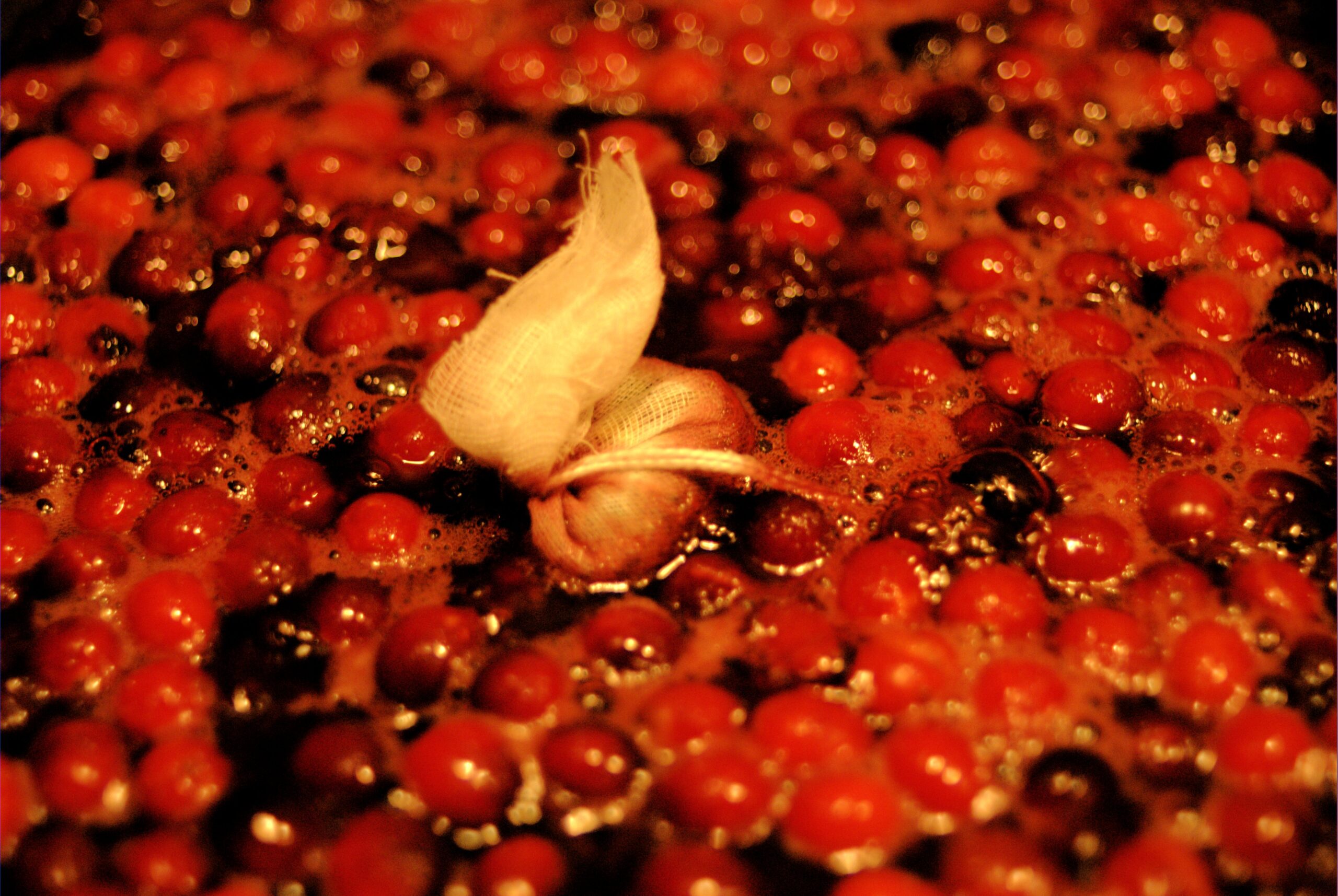
Once the cranberries hit the simmering liquid, there is a window of roughly three to five minutes where the majority of the berries burst open, releasing the pectin that naturally thickens the sauce, along with a distinctive light popping and crackling sound audible over the simmer. This is the visual and audible cue that the sauce is transforming from a pot of whole berries into an actual sauce.
Watching for this window rather than watching the clock alone is more reliable, since bag-to-bag variation in berry size and ripeness means the exact timing shifts slightly each time. Once the popping sound has mostly quieted down and the liquid has visibly thickened around the burst berries, the sauce is close to done.
A lid left slightly ajar during this stage, rather than fully on or fully off, controls splatter from the bursting berries without trapping so much steam that the sauce fails to reduce and thicken properly. A pot left completely uncovered risks small spatters landing on the surrounding stovetop as each berry pops.
The moment to pull it off the heat
The ideal stopping point is when most of the berries have burst but a portion, maybe a quarter of the batch, remain whole or nearly whole, giving the finished sauce a mix of smooth, jammy body and distinct whole-berry texture rather than a completely uniform puree. Cooking well past this point breaks down even the remaining whole berries and drives off more liquid, moving the texture toward a stiffer, more jam-like result.
A sauce cooked too long is not ruined, just different, closer to a spreadable cranberry jam than a traditional sauce. Thinning it back out with a splash of hot water or juice, stirred in while it is still warm, can partially correct an overcooked batch if the stiffer texture was not the intended result.
Sweetness ratio, and adjusting it to taste
A one-to-one ratio of sugar to liquid, paired with a standard 12-ounce bag of cranberries, produces a sauce with a balanced tartness that most people find neither cloying nor puckering. Cranberries are naturally quite tart on their own, so reducing the sugar by even a quarter cup shifts the final result noticeably toward the tart end, which some people specifically prefer alongside a rich, savory turkey plate.
Tasting partway through the simmer, once the sugar is fully dissolved and a few berries have burst, is the most reliable way to judge sweetness for a particular batch, since bag-to-bag tartness varies somewhat depending on the specific berries and how recently they were harvested.
Adding a small amount of extra sugar to a batch that tastes too tart works cleanly at almost any point during the simmer, since sugar dissolves quickly into the hot liquid. Correcting a batch that turned out too sweet is harder once the sugar is fully incorporated, so it is worth erring slightly lower and adjusting upward rather than the reverse.
Two optional additions and when to add them
Orange zest, added at the very start alongside the sugar and liquid, infuses its oils into the sauce throughout the full cooking time and provides a brighter citrus note than juice alone. A cinnamon stick or a few whole cloves, added at the same early stage and fished out before serving, contribute a warm, background spice without turning the sauce into something that reads as a dessert rather than a savory side.
Both additions work best introduced early rather than stirred in at the end, since they need the full simmer time to actually infuse their flavor into the sauce rather than sitting on the surface as a garnish.
Fresh, frozen, or already made: what changes
Frozen cranberries work identically to fresh in this recipe and do not need to be thawed first; they can go straight from the freezer into the simmering liquid, though the total cook time may run a minute or two longer since they start colder. This makes frozen berries, when fresh ones are out of season, a fully reasonable substitute with no adjustment to the ratios above.
A sauce made a day or more ahead, refrigerated and then brought back closer to room temperature or served cold directly from the fridge, tastes noticeably better than one made the same day, since the flavors have more time to settle and meld overnight.
Getting the texture from chunky to smooth
For a smoother, more uniformly textured sauce, a few pulses in a food processor once the sauce has cooled slightly breaks down the remaining whole berries without needing extra cooking time. For an even smoother, jelly-like result closer to the canned version, pressing the finished sauce through a fine mesh strainer removes the skins entirely, though this sacrifices some of the natural texture that makes homemade sauce distinct in the first place.
Most people find the naturally chunky texture, straight from the pot with no further processing, to be the more appealing version once they have tasted it, since it is the texture that most clearly signals the sauce is homemade rather than from a can.
Make-ahead timeline and how it keeps
Refrigerated in a sealed container, this sauce holds its flavor and texture well for about five days, which comfortably covers making it several days before Thanksgiving itself and having it ready to simply pull from the fridge on the day. The flavor, if anything, improves slightly over the first day or two as the spices and citrus fully settle into the berries.
Frozen in a sealed container, it keeps for up to two months, thawed overnight in the refrigerator before serving. A brief stir after thawing redistributes any liquid that separates slightly during the freeze-thaw cycle, restoring the sauce to close to its original consistency.
Uses beyond the Thanksgiving plate
Beyond the holiday table, this sauce works stirred into plain yogurt, spread on a morning biscuit or toast, spooned over a wedge of baked brie, or swirled into a glass of sparkling water for a quick, not-too-sweet drink. A double batch made specifically with these other uses in mind is a reasonable way to get more mileage out of a single bag of berries and a fifteen-minute pot of sauce.
It also works well stirred into a pan sauce for roasted pork or chicken later in the week, using its natural tartness to cut through a rich dish the same way it does alongside turkey, and it holds up through that kind of reheating without breaking or turning watery.
Frequently Asked Questions
Can I use less sugar without ruining the recipe?
Yes, reducing the sugar by up to a quarter cup still produces a sauce that sets properly, since the thickening comes from the cranberries’ natural pectin rather than from the sugar itself. The result will simply taste noticeably more tart.
Why is my sauce too thin even after cooling?
This usually means it was pulled off the heat before enough berries had burst to release sufficient pectin, or the cook time was cut short relative to the batch size. Returning it to a gentle simmer for a few more minutes and cooling again typically corrects it.
Can I make this with a sugar substitute for a lower-sugar version?
Most granulated sugar substitutes designed for baking and cooking work reasonably well here, since the sauce’s set depends on the cranberries’ pectin rather than on sugar’s structural role. The final sweetness balance may need slight adjustment to taste, since substitutes vary in relative sweetness.
Is it safe to can this sauce for longer storage?
Proper home canning requires specific processing times and equipment to be safe for shelf-stable storage, and this recipe as written is meant for refrigerator or freezer storage only. Anyone wanting to can it for pantry storage should follow a tested canning-specific recipe and process rather than adapting this one directly.
Can I double the recipe in the same pot?
Yes, doubling works cleanly as long as the pot is large enough to hold the increased volume without boiling over, and the cook time may run a couple of minutes longer since there is more liquid to reduce and thicken.
Watch for the popping sound rather than the clock, and this sauce is done in less time than it takes to argue with a relative about whether the canned version actually still counts as cranberry sauce at all.