
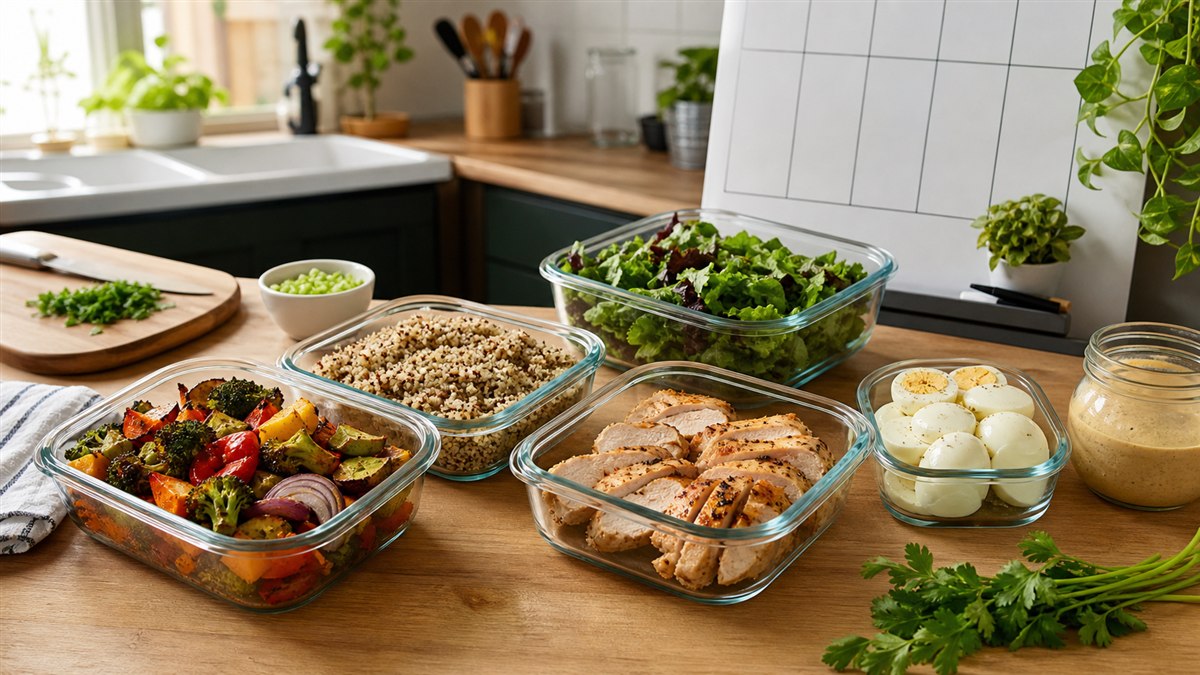
A useful meal-prep system should make weekday food easier without turning Sunday into a second job. Two focused hours are enough to prepare a set of flexible components for several meals, provided the plan is small, the oven and stovetop work in parallel, and late-week portions are frozen instead of left in the refrigerator too long.
This plan is designed for one or two adults and can be scaled. It prepares building blocks rather than five identical containers, so the same ingredients can become bowls, wraps, salads, or a fast skillet dinner.
By MunchieCooking Team · Last reviewed July 23, 2026
What the two-hour plan produces
Choose one item from each group before shopping:
- Protein 1: sheet-pan chicken thighs, baked tofu, or roasted chickpeas.
- Protein 2: hard-cooked eggs, lentils, or canned beans rinsed just before serving.
- Grain or starch: brown rice, quinoa, farro, couscous, or roasted potatoes.
- Cooked vegetables: two sheet-pan vegetables with similar cooking times.
- Fresh vegetables: washed greens plus one sturdy raw vegetable.
- Sauce: lemon-tahini, yogurt-herb, peanut-lime, or a vinaigrette.
That combination gives you enough structure to assemble meals without deciding every finished recipe in advance. For example, chicken, rice, broccoli, greens, and lemon-tahini can become a warm bowl, a wrap, a chopped salad, or a quick fried-rice-style skillet.
Before the timer starts
Read the full plan and select foods that fit your equipment. The schedule assumes one oven, two sheet pans, two stovetop burners, a cutting board, a chef’s knife, and storage containers. If you have one sheet pan, roast in sequence and choose a quick-cooking second protein.
Make a precise shopping list
For two adults preparing roughly eight main-meal portions, a practical list might include:
- 2 to 2 1/2 pounds chicken thighs or two 14-ounce blocks of extra-firm tofu;
- 2 cups dry grain, or an equivalent amount of potatoes;
- 2 large heads or 2 pounds of sturdy roasting vegetables;
- one box or head of greens;
- two cucumbers, carrots, peppers, or another sturdy raw vegetable;
- six eggs or two cans of beans;
- ingredients for one sauce;
- lemons, herbs, scallions, or another fresh finishing ingredient.
Scale down if the household will eat out during the week. Preventing waste is more valuable than filling every container.
Set up safe zones
Keep raw meat and its tools separate from produce and ready-to-eat food. Use a dedicated cutting board or prepare produce first, then wash and sanitize the board and work area before and after handling raw meat. Keep a food thermometer nearby.
The two-hour Sunday schedule
0:00–0:15: Heat, rinse, and start the longest cook
- Preheat the oven to 425°F.
- Start the grain according to package directions.
- If using eggs, place them on a second burner.
- Wash produce and set out containers.
Starting heat-driven tasks first creates time for chopping while the oven and stovetop work.
0:15–0:35: Prepare vegetables and protein
Cut roasting vegetables into similar sizes. Toss lightly with oil, salt, pepper, and a seasoning that works with several meals, such as garlic and smoked paprika. Spread them across a sheet pan with enough room to brown.
Prepare the main protein on a separate board and pan. Season simply so the finished meals can change direction later. Chicken might use salt, pepper, garlic, and oregano; tofu might use soy sauce, oil, and garlic. Put both pans in the oven, adjusting timing for the specific ingredients.
0:35–0:55: Make the sauce and prepare fresh items
Whisk one sauce in a jar or bowl. A basic lemon-tahini sauce combines tahini, lemon juice, water, garlic, and salt; add water gradually until pourable. For vinaigrette, combine one part acid with roughly three parts oil, then season to taste.
Wash and dry greens thoroughly. Cut sturdy raw vegetables. Keep wet sauces and cut tomatoes away from greens until serving to preserve texture.
0:55–1:15: Check temperatures and rotate pans
Stir or turn roasting vegetables. Rotate pans if the oven browns unevenly. Check the protein early instead of relying only on the timer. The USDA safe temperature chart specifies 165°F for all poultry, 160°F for ground meats, and 145°F plus a three-minute rest for whole cuts of beef, pork, lamb, and veal.
Tofu, beans, and lentils do not use those meat temperatures, but they still need clean handling and prompt cooling.
1:15–1:35: Finish cooking and clear the work area
Remove each item when it is done. Fluff the grain and spread it in a shallow container or on a clean tray so heat can escape more quickly. Peel eggs when cool enough to handle, or store them unpeeled for better protection.
While cooked food begins cooling, wash tools that contacted raw ingredients and reset the counter for portioning. Do not place cooked food back on a plate or pan that held raw meat.
1:35–1:50: Portion for flexibility
Store components separately when possible. Separation protects texture and lets you change combinations. If grab-and-go convenience is essential, assemble two or three complete meals for the first part of the week and keep remaining components in larger containers.
Label containers with the item and preparation date. Put portions intended for later in the week into freezer-safe containers now, rather than waiting until they are nearly too old to use.
1:50–2:00: Cool, store, and plan the order
Perishable food should not sit at room temperature for more than two hours, or one hour when the temperature is above 90°F. Divide large quantities into shallow containers and refrigerate promptly. Arrange the refrigerator so the earliest-use food is visible.
Write a five-line meal map on the refrigerator. It is a guide, not a contract:
- Monday: warm grain bowl;
- Tuesday: wrap with greens and sauce;
- Wednesday: chopped salad plus eggs or beans;
- Thursday: thawed portion turned into a skillet meal;
- Friday: leftovers, pantry pasta, or a planned meal out.
How long prepared food keeps
The USDA’s leftover safety guidance says most cooked leftovers can be refrigerated for three to four days and frozen for three to four months. Reheat leftovers to 165°F.
That means food cooked Sunday should not automatically remain refrigerated through Friday. Freeze portions for Thursday or Friday and thaw them safely in the refrigerator. When in doubt about a specific ingredient, follow its package instructions and use the shorter safe window.
Cool food promptly, but do not wait for it to reach room temperature before refrigerating. Shallow containers allow faster cooling. Keep the refrigerator at 40°F or below and the freezer at 0°F or below.
Four meal formulas from the same components
The balanced bowl
Combine grain, protein, roasted vegetables, fresh greens, and sauce. Add a fresh finish such as lemon, herbs, toasted seeds, or chopped scallions after reheating.
The wrap
Warm a tortilla, then add sliced protein, greens, a dry vegetable, and a modest amount of sauce. Keep wet ingredients separate until assembly if the wrap will be packed for later.
The quick skillet
Heat a small amount of oil, add cold grain and vegetables, then stir in protein. Season with soy sauce, salsa, curry paste, or another flavor base. Heat leftovers thoroughly to 165°F.
The emergency snack plate
Pair eggs, beans, or leftover protein with raw vegetables, fruit, crackers, and sauce. This option requires almost no cooking and can prevent unused components from becoming waste. For another make-ahead option, try our no-bake energy balls.
Common meal-prep failures and their fixes
Everything tastes the same
Keep the base seasoning neutral and change the finish. One batch of roasted chicken can pair with lemon-tahini, salsa, or peanut-lime sauce. Store fresh herbs and crunchy toppings separately.
Vegetables become soggy
Dry produce well, avoid crowding during roasting, cool cooked vegetables before sealing, and keep dressings separate. Choose sturdy vegetables such as broccoli, cauliflower, carrots, cabbage, and peppers for later in the week.
The session takes much longer than two hours
Too many recipes are usually the cause. Return to one protein, one grain, two vegetables, and one sauce. Use the oven and stovetop simultaneously, and clean during passive cooking periods.
Prepared food goes uneaten
Plan fewer portions and leave one flexible night. Freeze late-week food on day one. Keep an inventory on the refrigerator so containers do not disappear behind condiments.
The plan feels too rigid
Prepare components rather than complete meals. You can also use the air fryer for a fresh protein or vegetable during the week; our air-fryer guide explains the core method.
Does meal prep save money?
It can, but the amount depends on what it replaces. The Bureau of Labor Statistics reported average household spending of $3,945 on food away from home in 2024 in its Consumer Expenditures report. That national average does not predict an individual household’s savings.
Track your own result for four weeks. Record grocery spending, restaurant or delivery spending, and discarded food. Meal prep is financially useful when it reduces a cost you were actually incurring. Buying extra ingredients that go unused is not a saving.
Make the system smaller before making it more complicated
The best first goal is not a refrigerator filled with identical containers. It is two or three easier decisions during a busy week. Start with one protein, one grain, roasted vegetables, washed greens, and one sauce. Freeze what will not be eaten within the safe refrigerator window.
After two weeks, keep the parts you used and remove the parts you avoided. A repeatable 75-minute session is more valuable than a perfect two-hour plan that happens once.