
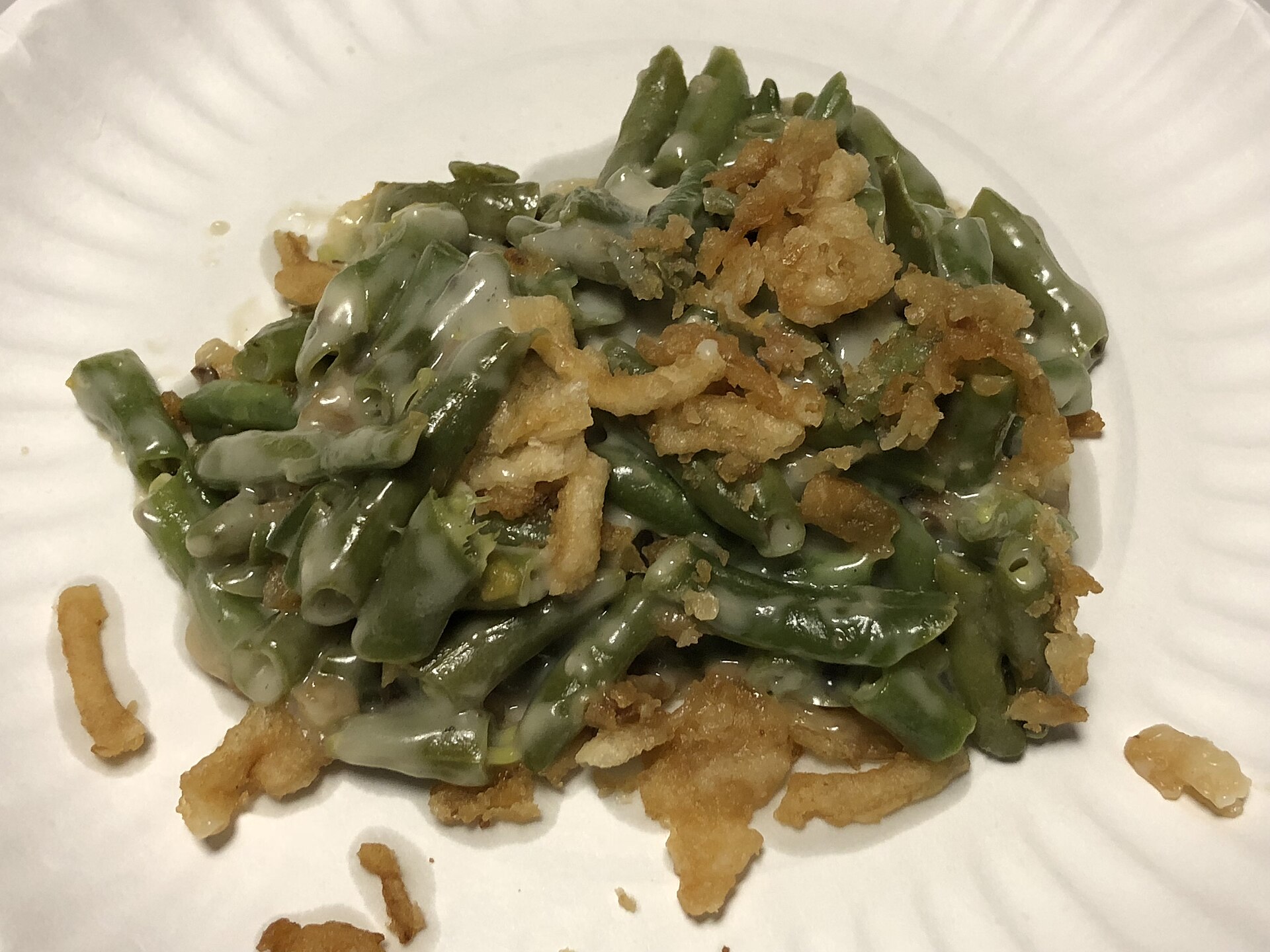
Cream of mushroom soup did one job well for seventy years: it made a casserole in ten minutes of assembly. It never made the best-tasting version, and the same 45 minutes on the clock is enough time to build a real mushroom cream sauce from a skillet instead of a can, using fresh beans that hold a bite the canned ones never had.
The trade isn’t more time, it’s the same time spent differently. Canned soup assembly takes ten minutes, then thirty-five minutes of baking with almost nothing to do but wait. From-scratch assembly takes closer to twenty-five minutes of actual cooking, and the bake drops to twenty, since the sauce and beans are already hot going in rather than cold from a mixing bowl.
The other trade is flavor, and it isn’t subtle. A skillet of real mushrooms, cooked down until they’ve released and reabsorbed their own liquid, tastes like mushrooms. Canned soup tastes like salt and a faint mushroom suggestion, and no amount of extra seasoning fully closes that gap.
- Total time: about 45 minutes, same as the canned version
- Beans: fresh, blanched 4 minutes, shocked in ice water
- Sauce: one skillet, mushrooms, butter, flour, chicken or vegetable stock, cream
- Topping: thinly sliced shallots, fried crisp, instead of canned fried onions
- Bake: 375 degrees, 18 to 20 minutes, until bubbling at the edges
Why the canned version became the default in the first place
Condensed cream of mushroom soup was originally marketed specifically as a shortcut casserole binder in the 1950s, and it succeeded because it removed the two hardest parts of a sauce, thickening and seasoning, into a single shelf-stable can. For a generation of home cooks without much time or confidence with a roux, that trade made total sense.
The trade-off nobody questioned for decades is that the soup’s flavor is built for shelf stability first and taste second, loaded with salt and starch rather than real reduced mushroom flavor. Once the actual from-scratch version takes roughly the same total time, that trade-off stops making sense for anyone willing to stand at a stove for twenty-five minutes instead of ten.
The one-skillet mushroom cream that replaces the can
Sliced cremini mushrooms cooked in butter over medium-high heat until they release their liquid and then brown, about eight minutes, build the actual base flavor this whole dish depends on. Adding a diced shallot and two cloves of minced garlic partway through, cooked until softened, layers in the aromatic base a can of soup skips entirely.
A tablespoon of flour stirred in and cooked for a minute removes the raw flour taste before a cup of stock goes in, whisked to smooth out any lumps, followed by a half cup of heavy cream once the mixture has thickened slightly. Salt, pepper, and a small pinch of nutmeg finish it, and the whole sauce is ready in under fifteen minutes from the moment the mushrooms hit the pan.
Fresh beans instead of canned, and why the bite matters
Fresh green beans, trimmed and cut into two-inch pieces, blanched in boiling salted water for four minutes and immediately shocked in ice water, hold a firm bite that survives the subsequent bake without turning to mush. Canned beans arrive already fully cooked and soft, and a second round of baking on top of that pushes them well past the point of any real texture at all.
Frozen green beans, thawed and patted dry, are a genuinely good middle-ground substitute on a day with no time to blanch, and they hold texture noticeably better than canned while still saving the step of trimming and cutting fresh beans by hand.
Crisp shallots instead of the fried onion can
Thinly sliced shallots, tossed lightly in flour and fried in a half inch of neutral oil until deep golden, about three minutes, deliver a sharper, more savory crunch than the sweeter, more processed canned fried onion topping most people grew up with. Draining them on paper towels and salting immediately while still hot keeps them crisp rather than soggy by the time they hit the casserole.
Making the shallots first and setting them aside, rather than frying them last-minute, actually works better here, since they crisp up fully as they cool and stay that way through the bake, whereas onions added raw to a hot casserole for the final few minutes never get quite as crisp.
Assembling and baking without drying it out
Folding the blanched beans directly into the warm mushroom cream sauce, then transferring the whole mixture into a buttered baking dish, means everything going into the oven is already hot, which is the main reason this version bakes faster than the canned assembly. Twenty minutes at 375 degrees is enough to bring it fully to a bubble at the edges without needing the full thirty-five minutes a cold, from-the-fridge canned version requires.
Holding the crispy shallots back until the final five minutes of baking, rather than adding them at the start, keeps them from steaming soft under the casserole’s own moisture and preserves the crunch that makes this topping worth the extra step in the first place.
From-scratch versus canned, side by side
| Canned soup version | From-scratch version | |
|---|---|---|
| Total time | About 45 minutes | About 45 minutes |
| Active cooking time | 10 minutes | 25 minutes |
| Bean texture | Soft, no bite | Firm, holds a bite |
| Sodium | High, from the can | Controlled, added to taste |
| Dishes to wash | One bowl, one dish | One skillet, one dish |
The dish count barely changes between the two versions, since the mushroom sauce comes together entirely in the same skillet used to fry the shallots, wiped out between steps rather than swapped for a second pan.
Making the components a day ahead
The mushroom cream sauce holds well in the refrigerator for up to two days, reheated gently over low heat with a splash of extra stock or cream stirred in to loosen it back to its original consistency. Blanched beans also keep for a day or two, patted dry and stored in a sealed container so they don’t sit in their own moisture.
The fried shallots are the one component best made no more than a few hours ahead, since they gradually lose crispness the longer they sit, even in an airtight container. Frying them the morning of, rather than the night before, keeps them at their crunchiest by dinner.
Making it dairy-free without losing the sauce
A neutral dairy-free butter for the initial mushroom sauté, full-fat coconut milk or a cashew cream in place of the heavy cream, and a vegetable stock in place of chicken stock produce a sauce close enough in texture and richness that most guests won’t clock the substitution. The mushroom flavor, which is doing most of the actual work in this dish, comes through regardless of the dairy swap.
Cornstarch mixed with a little cold water, whisked in near the end instead of relying on the flour roux, is a reliable thickener for anyone avoiding both dairy and gluten in the same dish, and it thickens the sauce just as effectively as the flour version does.
Green bean casserole from scratch: the shopping list
The full ingredient list runs shorter than most people expect once the canned soup and canned onions are both gone: fresh or frozen green beans, cremini mushrooms, a shallot, garlic, butter, flour, stock, and heavy cream cover the entire sauce and vegetable portion of the dish. A second shallot and a light dusting of flour handle the topping, which means the whole recipe pulls from about eight ingredients most of which are already pantry or fridge staples during the holiday season.
Buying the mushrooms and shallots a day or two ahead is fine, since both hold well in the refrigerator, but the green beans are worth buying as close to cooking day as reasonable, since their texture and snap decline noticeably after about a week in the crisper drawer.
Scaling it up for a bigger table
Doubling the recipe for a table of sixteen or more works best as two separate batches of the mushroom sauce rather than one large pot, since a bigger volume of mushrooms in a single pan releases more liquid than can evaporate off efficiently, leaving a thinner sauce than intended. Two 9×13 dishes baked side by side, rather than one oversized pan, also bake more evenly for the same reason a doubled turkey casserole does.
Frying the shallots in batches rather than crowding the pan keeps each batch crisping properly instead of steaming, which matters more as the topping quantity scales up for a larger crowd.
What actually made the canned version taste the way it does
Beyond the shortcut of skipping a roux, canned condensed mushroom soup carries a heavy dose of monosodium glutamate and a starch-based thickener that gives it a distinct, slightly gluey mouthfeel most people who grew up with the dish associate with the holiday itself as much as with the actual flavor of mushrooms. That association is real and worth acknowledging, since a from-scratch version tastes noticeably different, not just better in the abstract.
For a household where that specific canned flavor is genuinely part of the holiday memory, folding a small amount, a tablespoon or two, of the same canned soup into the from-scratch sauce bridges the two versions without going back to using the can as the entire base.
The bake times worth watching for smaller households
A half batch made in an 8×8 dish for a table of five or six needs closer to fifteen minutes at the same 375 degrees rather than the full eighteen to twenty a 9×13 dish requires, since there’s less volume for the heat to penetrate. Checking for a steady bubble at the edges, rather than relying on the clock alone, is the more reliable way to judge doneness across different pan sizes.
A smaller batch also cools faster once out of the oven, so timing it to come out closer to when the table is actually ready avoids serving it lukewarm, which is a more common problem with smaller portions than with a full 9×13 dish that holds its heat longer.
Frequently Asked Questions
Can I use a different mushroom variety for more flavor?
A mix of cremini and a smaller amount of dried porcini, rehydrated and chopped, adds a noticeably deeper mushroom flavor than cremini alone, and it’s a worthwhile upgrade for anyone who wants to push the dish further past the canned version’s flavor profile.
Why did my sauce turn out too thin?
This usually means the roux, the butter and flour cooked together, wasn’t given enough time to cook before the liquid went in, or too much stock was added at once. Simmering a bit longer, uncovered, reduces it back down to the right consistency.
Can this be made completely ahead and assembled cold the morning of?
Yes, combine the sauce and beans the night before, refrigerate, and bake straight from cold, adding about ten extra minutes to the bake time to account for the colder starting temperature.
Is there a good substitute if I can’t find shallots?
Thinly sliced yellow onion, fried the same way, works as a substitute, though the flavor is slightly more pungent and less delicately sweet than shallots provide.
How do I keep the topping from getting soggy if there are leftovers?
Store any leftover crispy shallots separately from the casserole rather than mixed in, and add a fresh sprinkle when reheating, since the shallots will soften considerably if left sitting on top of the sauce overnight.
Can I use pre-sliced mushrooms from a bag to save time?
Pre-sliced mushrooms work fine and save a few minutes of knife work, though they tend to be cut slightly thinner than a hand-sliced batch, so watching the cook time closely helps avoid overcooking them into something closer to mushroom paste than distinct slices.
Blanch the beans while the mushrooms cook, and this version lands on the table in the same window the canned one always did, just with a flavor nobody mistakes for a shortcut.