
A single oven has one temperature setting at a time and a finite number of racks, and a Thanksgiving menu routinely asks it to hold a turkey at 325, a casserole at 350, and rolls at 400, all in the final ninety minutes before serving. The math has never worked, and every year it gets solved the same way: something waits, gets rushed, or comes out lukewarm.
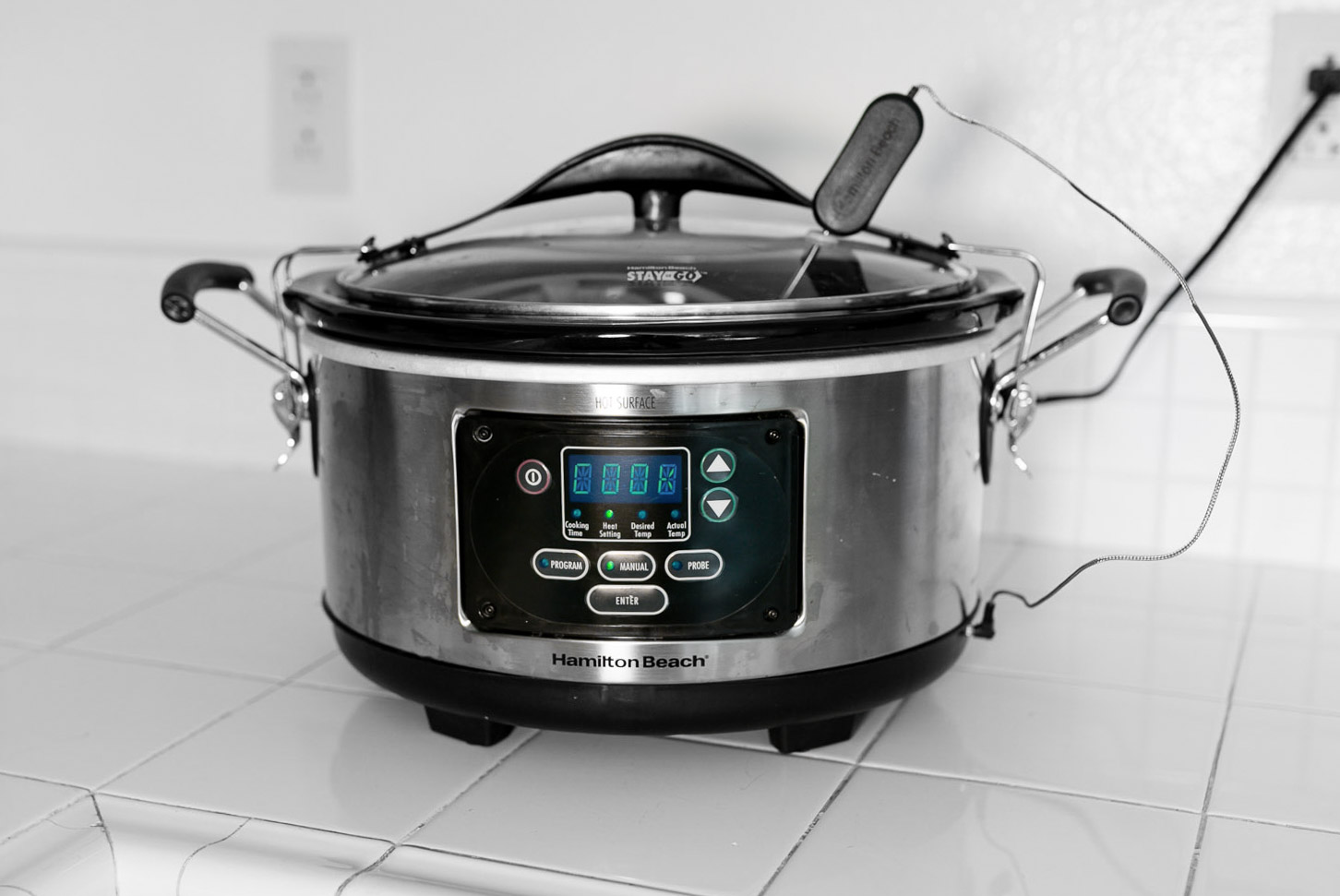
The actual fix is not a bigger oven. It is moving whatever does not strictly need that specific oven’s exact heat onto a slow cooker and a toaster oven instead, two appliances that sit unused in most kitchens on a day when they could be doing real work.
Five dishes move off the main oven cleanly with this approach, freeing up the racks and the schedule for the two things that genuinely cannot be moved: the turkey and whatever needs a hot, dry, high-temperature blast right before serving.
None of this requires new equipment for most households. A slow cooker and a toaster oven already sit in a cabinet in a large share of American kitchens, used occasionally for weeknight soups or reheating leftovers, and simply never considered part of the plan for the one day of the year an extra oven would help the most.
- Moves to the slow cooker: mashed potatoes, stuffing, mac and cheese
- Moves to the toaster oven: dinner rolls, a small casserole
- Stays in the main oven: the turkey, and anything needing high, dry heat at the end
- Slow cooker hold temperature: above 140 degrees on the warm setting
- Toaster oven capacity: usually one 8×8 dish or a half sheet of rolls
- Timing win: everything hot at the same moment, without oven-shuffling
The oven math that never works on Thanksgiving
A standard oven has room for two, maybe three racks used effectively at once, and a turkey alone often occupies the middle rack for hours at a stretch, leaving limited room above or below for anything else, particularly once a roasting pan’s height is accounted for. Layering a casserole, a pan of rolls, and a side dish into whatever space remains around that turkey rarely produces good results for all three simultaneously.
The deeper problem is temperature, not just space. A turkey wants a moderate, steady heat for hours, while rolls and many casseroles want a hotter oven for a shorter burst, and an oven can only hold one temperature at a time. Every dish forced to share the turkey’s oven either bakes at the wrong temperature or waits for a turn that may not come until the turkey is already resting.
Five dishes moved off the main oven entirely
| Dish | Appliance | Setting |
|---|---|---|
| Mashed potatoes | Slow cooker | Warm, after cooking on stovetop |
| Stuffing | Slow cooker | Low for 2 to 3 hours |
| Mac and cheese | Slow cooker | Low for 1.5 to 2 hours |
| Dinner rolls | Toaster oven | 350 degrees, 12 to 15 minutes |
| Small casserole | Toaster oven | 375 degrees, 20 to 25 minutes |
Moving these five dishes off the main oven’s schedule entirely means the turkey gets the oven’s full, undivided attention for its entire cook time, and none of the five moved dishes are competing for a rack or a temperature that the turkey is already using.
Thanksgiving without enough oven space: the fix
The fix is treating the slow cooker and the toaster oven as two additional ovens rather than as backup appliances only used when something goes wrong. Planned deliberately from the start of the menu, rather than reached for in a panic once the main oven is already overbooked, both appliances handle their assigned dishes just as well as the main oven would, often with less active attention required.
This reframing matters because most hosts default to treating the main oven as the only real cooking appliance in the kitchen, leaving the slow cooker in a cabinet and the toaster oven used only for reheating. Built into the plan from the menu-writing stage, both appliances take real pressure off the single biggest bottleneck in a Thanksgiving kitchen.
Writing the appliance assignment directly onto the printed or handwritten menu, next to each dish’s name, keeps the plan visible throughout a busy cooking day rather than relying on memory once the kitchen gets loud and crowded with helpers moving in different directions.
What the slow cooker actually handles well
Mashed potatoes, made on the stovetop and then transferred to a slow cooker on its warm setting, hold their temperature and texture for hours without drying out or forming a skin, as long as a little extra butter or milk is stirred in occasionally to keep them from tightening up. Stuffing, if it is a moist, casserole-style stuffing rather than a dry, crisp-topped version, cooks acceptably from raw in a slow cooker on low, though the top will not develop the same crisp crust an oven produces.
Mac and cheese follows a similar pattern to stuffing: it cooks well enough from a stovetop base finished in the slow cooker, but anyone wanting a genuinely crisp, browned breadcrumb topping should finish it under a toaster oven’s broiler for the last few minutes rather than relying on the slow cooker for that specific texture.
What the toaster oven handles better than the slow cooker
Anything that needs a truly hot, dry environment to develop a crisp exterior, dinner rolls, a casserole with a browned top, or a small tray of roasted vegetables, belongs in the toaster oven rather than the slow cooker, which cooks with trapped moisture and cannot replicate dry, high-heat browning no matter how long something sits in it.
A toaster oven’s smaller interior volume also means it preheats in a fraction of the time a full-size oven does, often under five minutes, which matters for a dish that only needs a short final blast of heat squeezed in between other tasks.
For a household with two toaster ovens or a toaster oven plus an air fryer with a bake function, running both at slightly different temperatures at the same time covers rolls and a small casserole simultaneously, further reducing how much still depends on the main oven’s single rack in the final rushed half hour before serving.
Timing them so everything is hot at once
Working backward from the serving time, the slow cooker dishes should go in first, since they have the longest, most flexible cook windows and can hold safely on warm for an extra hour if the rest of the meal runs late. The toaster oven items go in last, timed to finish within about fifteen minutes of when the turkey comes out of its resting period, since they are quick enough not to need the same early head start.
Writing out a simple timeline the day before, working backward from the target serving time for each dish, prevents the common Thanksgiving problem of several dishes finishing an hour apart from each other despite everyone’s best intentions.
Keeping side dishes at a safe temperature for hours
A slow cooker’s warm setting is designed to hold food above 140 degrees, the threshold below which bacteria begin multiplying more quickly in what food safety guidance calls the danger zone. Checking a dish’s temperature with a food thermometer partway through a long hold, particularly for anything that started on the stovetop and was transferred over rather than cooked in the slow cooker from raw, confirms it is actually holding at a safe temperature rather than assuming the setting alone guarantees it.
Stirring occasionally and keeping the lid on as much as possible both help maintain an even temperature throughout the dish rather than letting the edges run hot while the center lags behind, a more common issue in a fuller slow cooker than in one holding a smaller portion.
What genuinely cannot be moved off the main oven
The turkey itself is the one dish with no reasonable substitute appliance for most households, needing the volume and controlled roasting environment only a full-size oven provides. A large, deep-dish pie or a dish requiring precise, even baking throughout a tall volume of batter, like a layer cake, also generally needs a real oven’s more consistent heat distribution rather than a toaster oven’s smaller, sometimes uneven interior.
Recognizing which one or two dishes genuinely need the main oven, and building the rest of the menu around freeing that oven up for exactly those dishes, is the planning shift that makes this whole approach work rather than just adding two more appliances to juggle.
A borrowed-appliance plan if you own neither
A slow cooker is one of the more commonly owned small appliances and is often easy to borrow from a neighbor or relative for a single day if the household does not already have one. A toaster oven is a similarly common household item, and even a basic countertop convection oven or air fryer with an oven function can substitute for most of the same quick, high-heat tasks described here.
For a household planning to host multiple future holidays, investing in a basic slow cooker specifically for this kind of oven-overflow use pays for itself quickly, since the same problem repeats every major cooking holiday, not just Thanksgiving.
The reheat pass right before serving
A five-minute pass just before the meal is served, quickly checking each moved dish’s temperature and giving anything that has cooled slightly a brief stir or a few extra minutes of heat, catches any dish that has drifted cooler than ideal during a longer-than-planned wait. This is a much smaller task than the full reshuffle a single overbooked oven would otherwise demand at the same moment.
Bringing dishes to the table directly from their slow cooker or toaster oven, rather than transferring everything to serving dishes far in advance, also helps them stay at a better temperature for longer once the meal actually starts.
Frequently Asked Questions
Can I cook stuffing from raw entirely in a slow cooker?
Yes, though it works better for a moist, casserole-style stuffing than a bread-forward one meant to have a crisp top. Cooking on low for two to three hours, stirring once partway through, produces a fully cooked, safely heated stuffing, just without the crackling top a hot oven provides.
Will food dry out on the slow cooker’s warm setting for several hours?
Some dishes, particularly mashed potatoes, can dry out or form a skin over a very long hold unless a little extra liquid or fat is stirred in periodically. Checking and adjusting once an hour during a long hold prevents most of this.
Is a toaster oven big enough for a real Thanksgiving side dish?
Most countertop toaster ovens fit an 8×8 baking dish or a half sheet pan comfortably, which covers a reasonably sized casserole or a batch of a dozen rolls. For a much larger dish, splitting it into two smaller pans that fit the toaster oven’s capacity is a workable adjustment.
Can I use a slow cooker and toaster oven if I only have one outlet free?
Most kitchens have more than one outlet available even if the counter space near the stove is crowded, and running an extension cord to a nearby outlet for one of the two appliances is a reasonable solution if outlet access, rather than counter space, is the actual constraint.
What if my slow cooker doesn’t have a dedicated warm setting?
The lowest cook setting, typically labeled low, generally holds food in a safe temperature range for an extended hold if a dedicated warm setting is not available, though it is worth checking the temperature with a thermometer the first time to confirm it stays above 140 degrees on that particular model. Testing this once, on an ordinary weekend well before the holiday itself, removes any uncertainty about how a specific machine behaves under a long hold.
Write the timeline the night before, decide which one or two dishes genuinely need the main oven, and move everything else onto the two appliances already sitting quietly in a cabinet, unused, every other day of the year.