
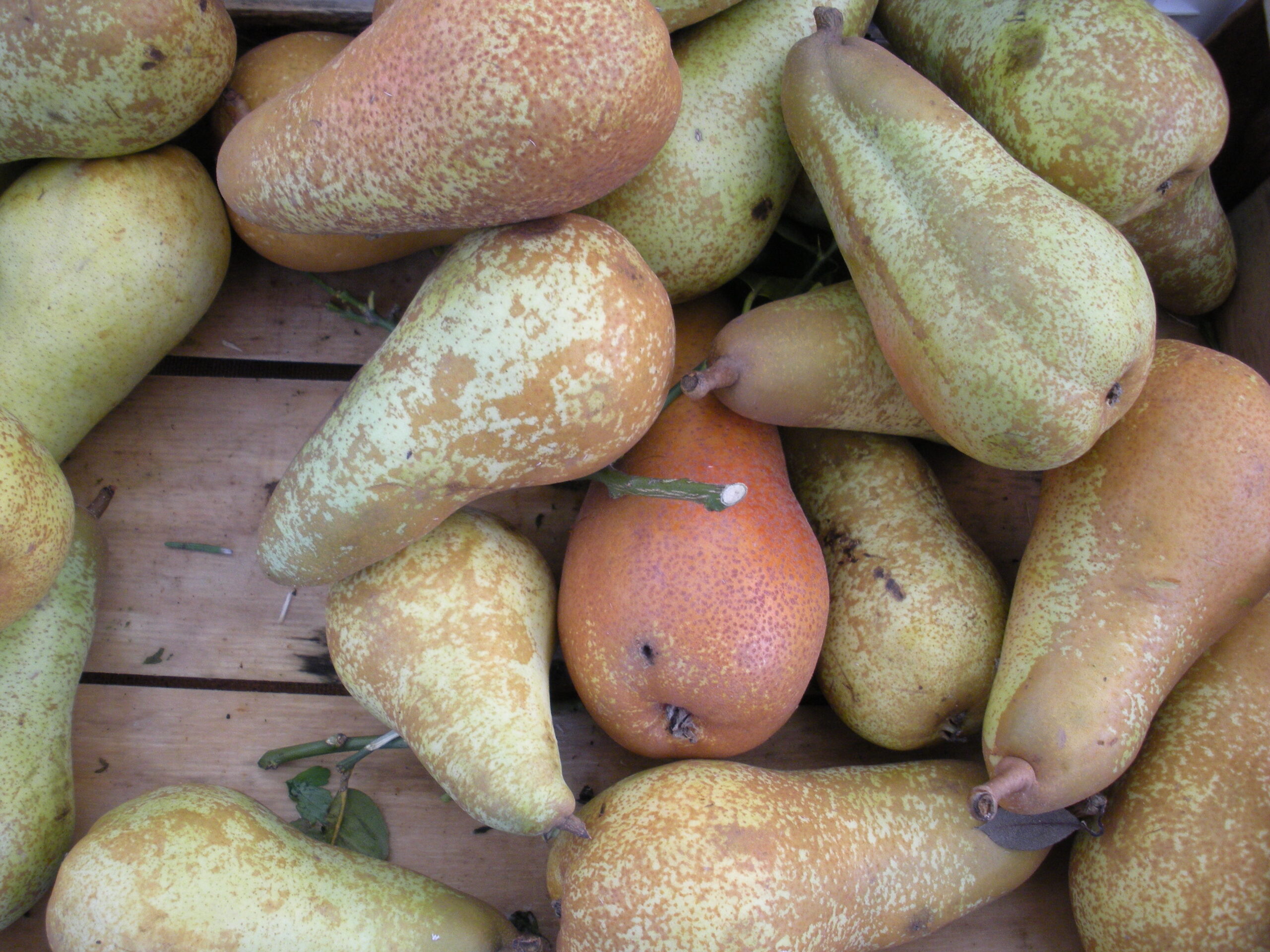
Squeeze the pears at the market and every one of them is hard as a cricket ball. That is not a display of bad fruit. It is how pears are supposed to arrive, and the fruit that feels soft and promising in the bin is usually the one that will be brown and grainy in the middle by the time it gets home.
Pears are one of the few fruits that genuinely improve after picking. Left on the tree to soften, the flesh goes coarse and gritty near the core; picked firm and ripened off the tree, it turns buttery. Growers know this, which is why a commercial pear is picked mature but hard, and why the last four days of its life are your job rather than theirs.
The whole skill is knowing when it is ready, and there is exactly one place on the fruit that tells you. It is not the part everyone squeezes.
- Buy them: firm, unbruised, with the stem still attached
- The test: press the neck by the stem with your thumb, not the belly
- Counter timeline: 3 to 10 days depending on variety
- Paper bag: cuts that roughly in half, faster with a banana in it
- Refrigerate: only once ripe, then 3 to 5 days
- Best for heat: Bosc, then Anjou, then Seckel
Why the fruit in the store is hard on purpose
The pear belongs to a small group of fruits that continue to ripen after they are cut from the plant, converting stored starch into sugar and softening the cell walls as they go. Bananas, avocados and tomatoes do the same thing. Apples do it only slightly, which is why an apple that was picked underripe stays underripe forever.
What makes pears unusual within that group is that ripening on the tree produces a worse fruit. The stone cells that give an overripe pear its sandy, gritty texture develop as the fruit hangs, so a pear left to soften in place ends up coarse. Picked at maturity and ripened in a cool room, the same fruit comes out smooth.
The winter varieties add another wrinkle. Bosc, Anjou and Comice need a stretch of cold before they will ripen properly at all, which the packing house handles in storage. By the time they reach a shelf, that cold period is done and the clock is waiting on room temperature.
The neck-press test, and why the belly lies

A pear ripens from the inside out and from the stem end down. That means the flesh around the core softens first, then the neck, and the wide bottom last. Press the belly and you learn nothing until the middle has already gone.
The test takes two seconds. Put your thumb against the neck, right where the fruit narrows below the stem, and press gently. If it yields slightly, the pear is ready to eat today. If it is rock solid, it needs days. If it gives easily and feels soft, the core is already past its best and that fruit belongs in a pan rather than a lunchbox.
Color is close to useless for most varieties. Bartlett is the one exception, moving from green to clear yellow as it ripens, which is the reason it is the pear most people think they can read. Bosc stays brown, Anjou stays green, Comice barely changes, and all three can be perfectly ripe looking exactly as they did on the day they were picked.
Check every fruit in the bowl separately and every day. Pears move from ready to overripe in about twenty-four hours, which is the shortest window of any common fruit and the reason a whole bag seems to turn at once.
How to ripen pears on the counter, with the real timeline
Nobody needs a technique for how to ripen pears so much as a realistic schedule, because the usual instruction to leave them at room temperature omits the part where that means a week.
| Variety | Loose on the counter | In a paper bag | With a banana in the bag |
|---|---|---|---|
| Bartlett | 4 to 5 days | 2 to 3 days | 1 to 2 days |
| Comice | 3 to 5 days | 2 to 3 days | 1 to 2 days |
| Bosc | 5 to 7 days | 3 to 4 days | 2 to 3 days |
| Anjou | 7 to 10 days | 4 to 5 days | 3 to 4 days |
| Seckel | 5 to 7 days | 3 to 4 days | 2 to 3 days |
Room temperature means around 65 to 72 degrees. A kitchen that runs cold stretches every number in that table, and a windowsill in direct sun does the opposite and produces uneven fruit that is soft on one side.
Keep them in a single layer with a little space, stem up, on a plate or in a shallow bowl. Piled into a deep bowl, the ones at the bottom bruise under the weight of the ones above them, and a bruise is where the rot starts.
The paper bag, and what it is actually doing
Ripening fruit gives off ethylene, a gas that acts as a plant hormone and triggers further ripening in anything nearby. A paper bag holds that gas around the fruit instead of letting it drift off across the kitchen, so the pears effectively ripen each other.
Paper matters, not plastic. Paper traps the gas while still letting moisture escape, whereas a sealed plastic bag holds humidity against the skin and produces mold before it produces a ripe pear. Fold the top over loosely rather than sealing it.
A banana or an apple in the bag speeds things up further, because both are heavy ethylene producers. A ripe banana is the strongest of the common options and roughly halves the time again. Check daily once a banana is involved, since it is easy to overshoot by a day and end up with five soft pears at once.
When the refrigerator is the right move
Cold stops ripening. That is a problem before the fruit is ready and a gift afterward. An unripe pear put in the refrigerator on the day it is bought will sit there for two weeks and come out exactly as hard as it went in, and it will often never ripen properly once it comes back to room temperature.
Once the neck yields, refrigeration buys three to five days. Whole, uncovered or loosely bagged, on a shelf rather than in the crisper drawer if the drawer is set to high humidity. That window is the difference between eating a bag of pears and watching half of it go.
Keep them away from strong-smelling foods. Pears take on odors readily, and a fruit stored next to an open container of onions tastes like it.
Five varieties, and what each one is actually for
| Variety | Raw | Cooked | Recognizable by |
|---|---|---|---|
| Bartlett | Excellent, very juicy | Collapses into sauce | Green turning bright yellow |
| Bosc | Firm, spicy, less juicy | The best for heat, holds shape | Long neck, russeted brown skin |
| Anjou | Sweet, mild, dense | Holds shape reasonably well | Egg shaped, stays green or red |
| Comice | The best eating pear there is | Too soft, turns to liquid | Squat, round, often blushed |
| Seckel | Tiny, very sweet | Good poached whole | Smaller than a plum |
Asian pears sit outside this list because they behave differently. They are picked ripe, stay crisp like an apple rather than turning buttery, and do not soften meaningfully on the counter. They are excellent raw and sliced into salads and they do not belong in a poaching pan.
If a store sells only one variety it is almost always Anjou or Bartlett, which are the two easiest to grow and ship. Bosc is the one worth going out of the way for if anything is going into an oven, and Comice is worth buying whenever it appears, which is a short window in late autumn.
Which ones survive heat and which turn to sauce
The variable is water content and cell structure. Bosc carries less water and denser flesh, so a wedge of it comes out of a hot oven still recognizably a wedge. Bartlett is built the opposite way and breaks down within about fifteen minutes of any real heat.
Neither is a fault. A pear that collapses is exactly what you want for a sauce, a compote or a filling, and trying to make Bartlett hold its shape is fighting the fruit. Match the variety to the job and both work.
Ripeness matters as much as variety once heat is involved. A pear at the just-yielding stage roasts well; a pear two days past that has softened cell walls and turns to puree regardless of what it says on the label. For anything that needs to hold shape, use fruit that is still slightly firm at the neck.
Poaching, roasting, and the timing that decides texture
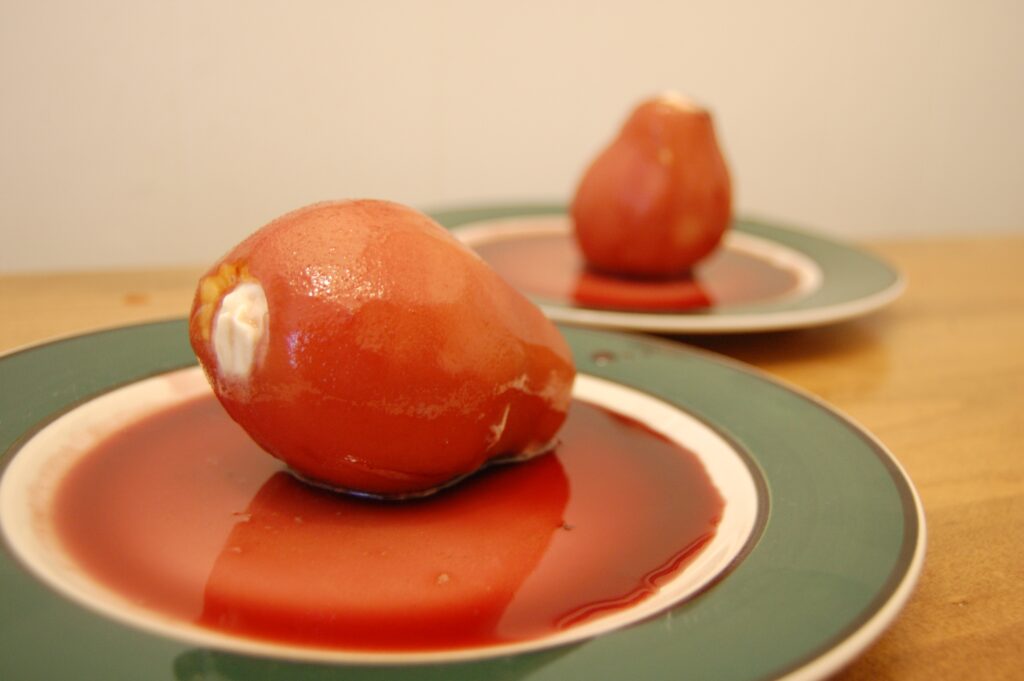
Roasting is the low-effort route. Halve them, scoop the core with a melon baller or a teaspoon, cut side up on a lined tray with a little butter and honey, 375 degrees for 25 to 35 minutes depending on ripeness. A knife should slide in with slight resistance, not fall through.
Poaching is more forgiving and takes longer. Peeled whole pears, stems on, simmered gently in liquid that just covers them, 20 to 30 minutes for Bosc and closer to 15 for a ripe Anjou. Simmer, never boil: a rolling boil knocks them around and takes the surface off. Red wine, cider, or water with sugar, a strip of lemon peel and a spice all work, and the poaching liquid reduces down into a syrup afterward.
For slices in a pan, two minutes a side over medium-high is the whole method. Any longer and the sugars scorch before the fruit softens. Cut pears brown quickly once exposed to air, so a squeeze of lemon over the slices buys an hour if they are not going straight into heat. The classic pairings hold up well here, and a poached pear alongside a blue cheese is a straightforward exercise in matching sweetness against salt.
A whole box ripened at once: the triage
The situation that brings most people to an article like this is a case of pears from an orchard or a neighbor’s tree, all of which decide to be ready on the same Tuesday. The answer is to sort them into three piles within an hour of noticing.
Pile one is the fruit that is ripe and unblemished. Refrigerate it immediately, which stops the clock and gives you five days to eat it raw. Pile two is fruit that is ripe with a soft spot or a small bruise. Cut the damaged part away with a wide margin and cook it the same day. Pile three is anything still firm at the neck, which goes back on the counter and buys you a few more days of runway.
Cooking down pile two is the highest-value hour. Peeled, cored, chopped and simmered with a splash of water and a squeeze of lemon for 20 minutes gives a pear sauce that freezes for months. Roasted halves freeze well on a tray and then in a bag. Sliced raw pears freeze poorly and come out watery, so freeze them cooked.
Canning is the other route and it is the one with rules. Pears are acidic enough for a boiling water canner, which means no pressure canner is needed, but that only holds if you follow a tested recipe with the correct acid addition and processing time for your altitude. Improvised canning of low-acid produce is the classic route to botulism, and it is the one preserving job where following the method exactly is not optional. Anyone going that way should work from a tested guide alongside the rest of a season of preserving.
Bruises, mold, and what gets cut away
A bruise on a pear is crushed tissue that has oxidized, and it is not dangerous. Cut it out with a generous margin and use the rest, ideally that day, because the damaged area is where mold and bacteria get a foothold.
Mold is different. Firm fruits and vegetables can have a small mold spot cut out with an inch of clearance, but a pear that has gone soft and ripe is a high-moisture food, and mold on a soft fruit sends threads well beyond what is visible. A ripe pear with fuzz on it goes in the bin whole.
Wash pears under cold running water and rub the skin before cutting, including any fruit you plan to peel, since a knife carries whatever is on the surface into the flesh. Skip soap and produce washes; running water and friction do the job. Most of the fiber is in the skin, so there is a good argument for leaving it on for anything eaten raw, and a similar argument for taking it off for anything poached, where it goes tough.
Windfall fruit from a garden tree needs one extra rule. Anything that has been lying on the ground is worth washing carefully and cooking rather than eating raw, and anything that has split open where it landed is worth skipping entirely. It is the same caution that applies to most fruit picked at the peak of a short season.
Frequently Asked Questions
My pears went from hard to mushy overnight. What happened?
Nothing went wrong except the checking. The window between ripe and overripe is roughly a day at room temperature, and it shortens in a warm kitchen. Press the necks daily from about day three and refrigerate each fruit the moment it yields.
Can I ripen a pear faster in the microwave or the oven?
No. Heat softens the flesh but does not convert starch to sugar the way ripening does, so what you get is a warm, bland, slightly cooked hard pear. If a recipe needs soft fruit today, poach an unripe one instead, which works properly.
Why is the flesh gritty near the core?
Stone cells, which are clusters of hardened cells that develop as a pear matures and become more pronounced in fruit left on the tree too long or held too long after ripening. Some varieties are grittier than others, and Bartlett and Comice have the least.
Are pears with brown skin going bad?
Not usually. The brown, sandpapery patches on a Bosc are russeting, which is a natural feature of the skin and has no effect on the fruit inside. Actual spoilage looks wet and sunken rather than dry and matte.
Do pears count toward a day’s fruit if they are canned or in juice?
They do, with a caveat about what they are packed in. Fruit canned in heavy syrup carries a good deal of added sugar, while fruit packed in juice or water does not. Draining and rinsing syrup-packed pears removes some of it.
Buy six the next time they are firm and cheap, put four in a paper bag and leave two loose, then press the necks each morning. Two days of watching a bowl of fruit teaches the test better than any description of it can.